
Reviewed · WALKING TOURS
Chennai: Mylapore Walk for an immersive cultural experience
This Mylapore walk works because it connects the streets you pass to the meaning behind what you see inside. I like that the guide explains the logic behind temple rituals, including why so many gods appear across the sites. If you get a guide like Kennan or Kalpana, the history turns practical and human fast, not like a textbook.
I also like the tight mix of four major landmarks in one route, from the St Thomas Basilica relic shrine to the Shiva-focused Kapaleeswar Temple and a Shwetambara Jain temple dedicated to Mahavira. One possible drawback to plan around: the dress code is strict (cover knees and shoulders, no sleeveless tops, no shorts), and you remove footwear at temples.
Key highlights you will actually feel on this walk

- Rituals made logical with explanations of what ceremonies are doing and why they look the way they do
- Four faiths, one neighborhood covering Hindu, Jain, and Christian sites plus the Ramakrishna Math philosophy
- A guided walk through Chennai’s timeline, from Roman trade legends to Portuguese and British eras
- St Thomas Basilica relic shrine, tied to the story of Apostle Thomas arriving about 2000 years ago
- Ramakrishna Math’s universal temple plus a multimedia museum and library stop
- Easy time management with a 2.5 to 3 hour format that fits limited free time
Why Mylapore is a smart choice for Chennai religious culture
Mylapore is one of those parts of Chennai where faith is not hidden in a museum case. It is active. It is built into daily movement, morning routines, and street life. The value of this walk is that you do not just check boxes of monuments. You learn how each place thinks, worships, and teaches.
The tour also helps you make sense of something that can feel confusing at first in India, especially when you are used to one main temple style. Here, you see many gods and many rituals, but the guide focuses on the purpose behind the performance. You end up understanding the pattern, not only the names.
You will be walking with a live English guide, and the format is built for a compact route across key religious sites. If you have only a half-day in Chennai, this is the kind of plan that prevents decision fatigue.
More Walking Tours in Chennai
- Gods of Mylapore walking tour- tourism ministry approved company
★ 5.0 · 267 reviews - Georgetown heritage walking tour in Chennai about the founding of Chennai
★ 5.0 · 144 reviews - Mahabalipuram walking tour by tourism ministry approved company
★ 5.0 · 102 reviews
Meeting at Ramakrishna Math and getting the neighborhood story first
You start at the entrance of Ramakrishna Math in Mylapore. The first win here is pacing. Instead of jumping straight into a single temple and hoping you will connect the dots, you start with a monastic organization dedicated to Sri Ramakrishna, the 19th-century philosopher-saint.
Before you even enter the temple spaces, your guide sets up Mylapore’s setting with a timeline that reaches back to Roman times, when the area reportedly traded pepper and fine cloth with Rome for gold. Then the story moves through major shifts: Portuguese control in the 16th century, and British rule until independence in 1947. You do not need to memorize dates. The point is that this neighborhood has been a crossroads for centuries, which explains why multiple religions and influences coexist here.
Inside the Ramakrishna Math area, the tour gives you a feel for the institution’s approach to spirituality. You are guided through the universal temple concept and see things that are part worship space and part teaching environment. Expect time around the shrine area, a beautiful Mantapam, and also a multimedia museum and an enchanting library. That combo matters because you get two learning styles at once: what you can see with your eyes and what you can absorb through exhibits and reading.
If you enjoy learning that connects ideas to daily practice, this stop is often the anchor of the walk. Even if you are not religious, you can still appreciate the way the Math frames spirituality as something that should apply to real life.
Kapaleeswar Temple: Dravidian design, Shiva rituals, and practical meaning
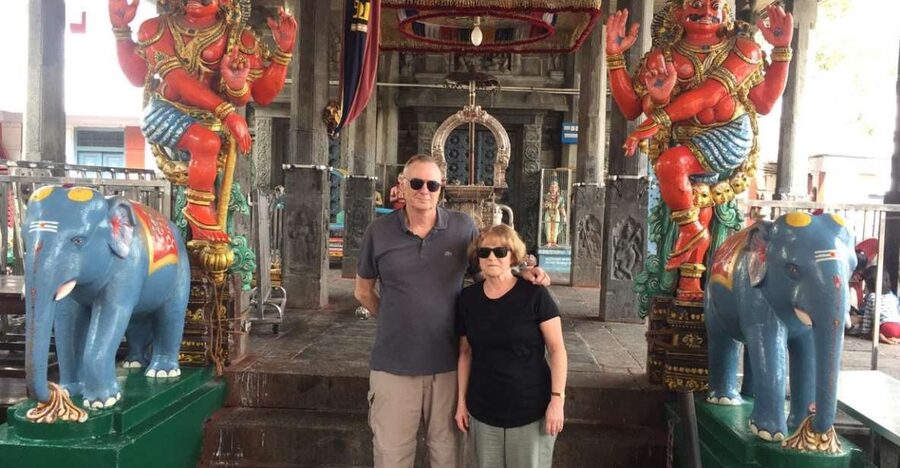
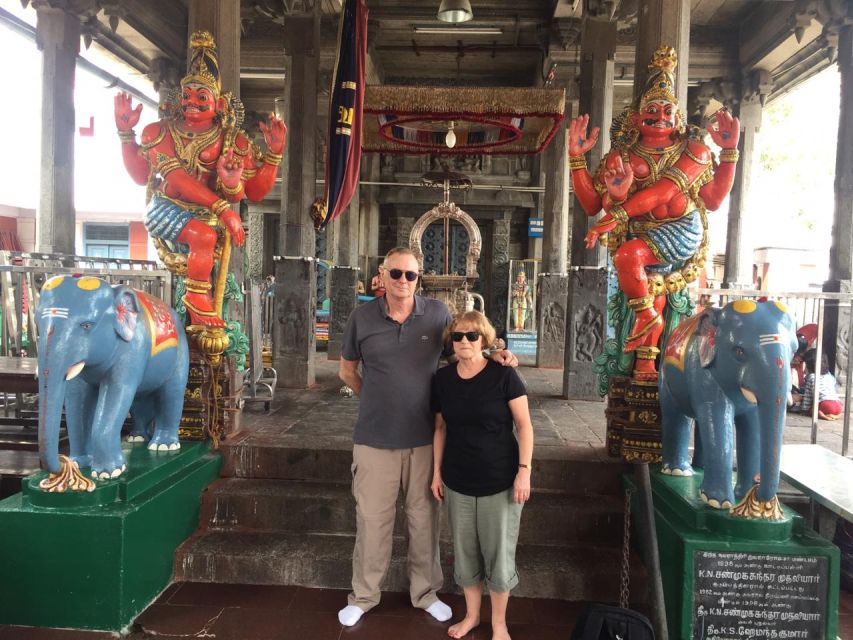
Next comes Kapaleeswar Temple, a 7th-century Shiva temple famous for Dravidian architecture and its towering gopuram. This is where the walk earns its keep as more than a sightseeing loop. You are guided through what you see, including ritual logic.
When you walk into older South Indian temples, it is easy to feel like you are watching a performance without a script. The guide helps with that. You will likely notice patterns in the way devotees move, the sequence of rituals, and the symbolism around sanctums. The tour is built so the guide can explain why things happen in a certain order, not just describe them.
One practical tip for this stop is to watch what people around you do, then wait for the guide to translate it. That keeps you from turning your brain into a guessing game. If you are the type who likes to understand the intent behind actions, you will enjoy this part a lot.
Also, keep your expectations steady. Kapaleeswar can feel serene inside, but it is still a working temple with ongoing devotion. You are there to observe respectfully, not to treat it like a photo studio.
Vasupujya Swami Jain Temple: marble calm and the 24 Tirtankaras
After Shiva comes Jain spirituality at the Vasupujya Swami temple, a Shwetambara Jain temple dedicated to Lord Mahavira and the 24 Tirtankaras, which are spiritual teachers. This is a great pivot stop because it changes your visual and spiritual frame.
The Jain temple experience here is about atmosphere as much as architecture. You get an impressive building style, and you can feel how different the focus is compared with a Shiva temple. Instead of one dominant rhythm of worship, you get a more contemplative mood. That shift is the point of this route.
You are also learning the role of the Tirtankaras. Even if you only remember the basics, it helps you understand why Jain temples can feel structured and deliberate. Your guide explains context so you are not stuck only with unfamiliar names. By the time you move on, you can connect what you learned about teaching and spiritual progress across traditions.
This stop is also a nice reminder that Mylapore’s religious diversity is not decorative. It is lived. You are seeing it in how buildings are designed for devotion and how the community gathers.
A different shape of Chennai day:
- Mahabalipuram tour by Tourism Ministry approved company
★ 5.0 · 405 reviews - Mahabalipuram & Kanchipuram by tourism ministry approved company
★ 5.0 · 264 reviews - Chennai tour in car with guide-winner of traveller’s choice award
★ 5.0 · 258 reviews - Mahabalipuram Private tour from Chennai by car with guide and lunch by Wonder
★ 5.0 · 137 reviews
St Thomas Cathedral Basilica: Portuguese neo gothic and the relic shrine
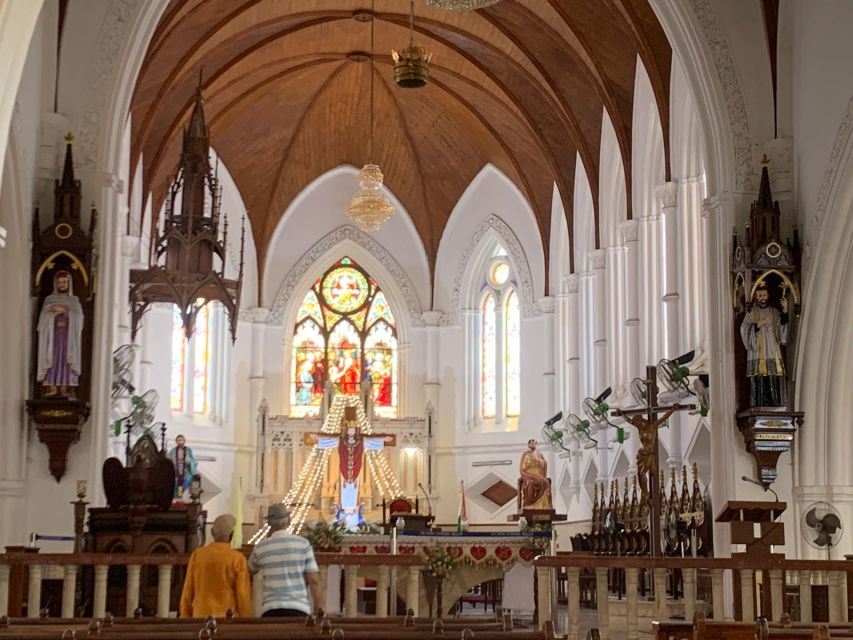
The final major landmark is St Thomas Cathedral Basilica, also known as San Thome Basilica. It is the principal church of the Roman Catholic Archdiocese of Madras and Mylapore.
Expect a big contrast after Hindu and Jain spaces. The basilica is neo gothic, built by Portuguese explorers in the 16th century. Even if architecture is not your thing, you will feel the difference. It reads like a different century, a different set of aesthetics, and a different way of framing faith.
The standout learning moment is the shrine connected to Apostle St Thomas. The tour is designed so you can see the relic-related shrine and understand the apostle story tied to a visit to this area about 2000 years ago. That is what makes this stop feel more than scenic. You are not just looking at a church. You are connecting the site to a specific religious narrative.
You will also appreciate the guided framing here. Christianity in India can feel layered to outsiders, because local history and global tradition mix. A good guide helps you keep those layers straight without overwhelming you.
Walking in Chennai: timing, footwear, and what you should bring
The tour runs about 2.5 to 3 hours, with guided time planned around each major site. There are multiple stops where you spend roughly 45 minutes with the guide, so you are not rushing past everything. Still, it is a walking experience, and you will be moving between religious buildings.
The tour is described as private or small groups. That matters for temples. Smaller groups usually mean fewer bottlenecks, more chances to ask questions, and less pressure to keep up for the entire route.
Because you are entering temples and religious buildings, follow the rules early so you do not get stuck later. The dress code requires you to cover knees and shoulders. Shorts, short skirts, and sleeveless shirts are not allowed. Also, footwear needs to be removed before entering temples. Plan to wear easy-to-remove shoes. If you have ankle socks, pack an extra pair, because taking off and putting on footwear in humid weather can get annoying quickly.
Food is not included. If your schedule includes this walk during a busy part of the day, I recommend planning water and a simple snack option outside temple areas, then letting the guide know what you need. If your group energy dips, some guides have been flexible with short breaks, such as helping with coffee or light snacks when timing allows.
Price and value: what $49 buys you in real terms
At $49 per person for a 2.5 to 3 hour tour, you are paying for more than transportation. Your price includes:
- A live English guide
- Entrance charges
That matters in India, where entry fees and rules can vary from site to site. Paying up front also tends to reduce friction, so you spend your time learning instead of negotiating.
This tour is organized by Five Senses Tours Private Limited, recognized by the ministry of tourism. They also support local communities by providing livelihood, training, and employment for local guides, plus procurement of local products. In practical terms, that usually means better local context and a stronger connection to the neighborhood, compared with generic tours that just hit landmarks.
If you are comparing options, ask yourself what you want from Chennai. If you want a quick checklist, you can do it on your own. If you want the why behind rituals and the connections between sites, the guide and included admissions are where the value comes from.
Who should book this Mylapore walk
This is a strong fit if you:
- Want to understand religious diversity in Mylapore without feeling lost
- Have limited time and want four major sites in one compact outing
- Like guides who explain what you are seeing, not just where to stand
It is also a good match for families and mixed-age groups, as long as everyone can handle walking and the temple dress code. The route includes multiple religious environments, so younger kids will need patience and help with rules like keeping shoulders and knees covered.
Guides you might meet, and why that matters
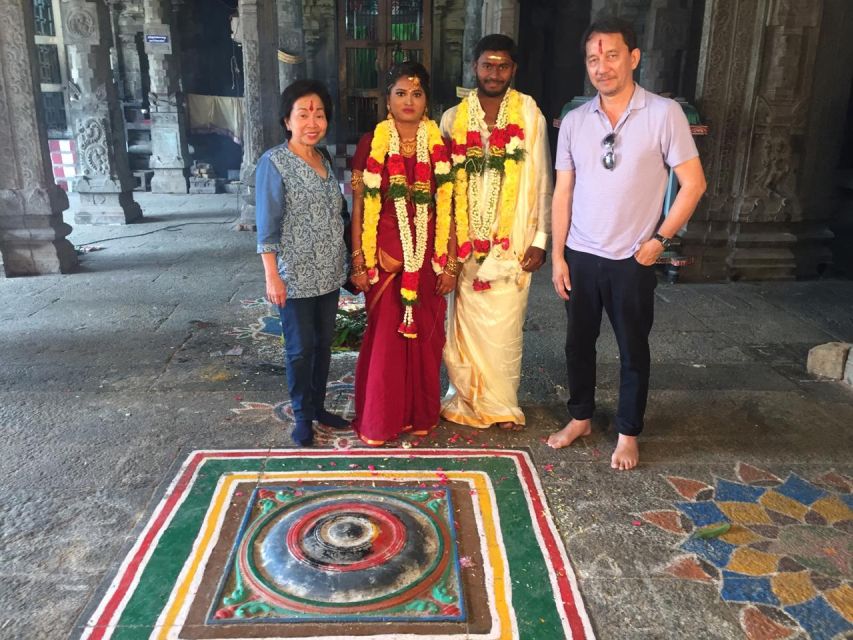
The walk experience is heavily influenced by the guide, and the tour has a history of strong guide-led storytelling. Names you might see include Kennan, Kannan, Kalpana, Jaunth, and Harish. Across those guide styles, the common thread is clear: they tend to explain meaning in a way that keeps the pace comfortable, even when you are bouncing between temples and a basilica.
If you have a preference for humor, clear explanations, or a gentler pace, you can take that into account when you book a private or small-group option.
Should you book this Mylapore walk?
I think this is an easy yes if you want a guided understanding of Chennai’s religious world, not just a set of photos. The combination of Ramakrishna Math, Kapaleeswar Temple, a Jain temple, and St Thomas Basilica in one 2.5 to 3 hour walk is efficient, and the guide-led ritual explanations are the main reason it feels worth the money.
Book it if you like learning with context, and if you can follow the temple etiquette rules without grumbling. Skip it only if you are looking for a purely leisurely stroll with no strict dress expectations, because you will be inside active worship spaces and you will need to cooperate with the entry requirements.
FAQ
How long is the Mylapore walk?
The duration is about 2.5 to 3 hours.
Where does the tour start?
You meet at the entrance of Ramakrishna Mutt Temple, Mylapore.
Is the tour guided in English?
Yes, the tour has a live guide in English.
How much does it cost?
The price is $49 per person.
What sites are included on the walk?
You visit Ramakrishna Math, Kapaleeswar Temple, a Vasupujya Swami Jain temple, and St Thomas Cathedral Basilica.
Are entrance fees included?
Yes, entrance charges are included.
Is food included?
No, food is not included.
Do I need to remove my shoes?
Yes. Footwear needs to be removed before entering temples.
What should I wear?
You need to cover knees and shoulders. Shorts, short skirts, and sleeveless shirts are not allowed.
Is pickup available?
Pickup is optional from the hotel lobby, depending on the selected option.
Latest reviews in from Chennai
- Marina Beach walking tour by tourism ministry approved company★ 5.0 · 45 reviews
- Following the foot steps of St Thomas in Chennai★ 5.0 · 45 reviews
- Private Peacock Trail Walking Tour in Mylapore★ 5.0 · 50 reviews
- British Architecture Walk, an immersive walking tour in Chennai★ 5.0 · 60 reviews
- Private Bazaar Trail Walking Tour in George Town★ 5.0 · 66 reviews
- Full-Day Private Tour to the Kanchipuram Temples from Chennai★ 5.0 · 73 reviews
- Total Chennai city tour in Private car with guide & lunch by Wonder tours★ 5.0 · 79 reviews
- Sowcarpet Street Food Walking Tour in Chennai with guide★ 5.0 · 83 reviews
Walking Tours, compared.


The Great Indian Food Tour: Old Delhi Food and Heritage Walk
Read our review →
Old Delhi Food, Heritage&Cultural Walk with Rickshaw ride to Masterji Kee Haveli
Read our review →
Fontainhas Heritage Walk At Latin Quarters of Goa
Read our review →Browse the lists this tour appears in