
Reviewed · WALKING TOURS
Spiritual City Walking Tour-THE Pushkar Route
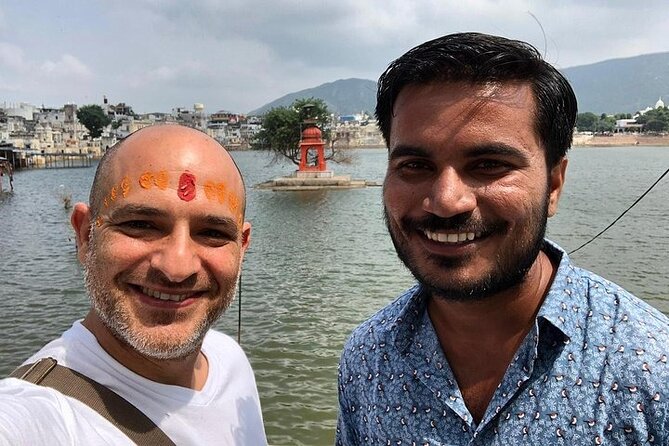
Pushkar is one of Rajasthan’s holiest towns, and this walking route turns the spiritual sites into something you can understand while you’re actually there. I love the mix of temples and the Pushkar Lake moments, and I like how the guide ties Hindu and Sikh traditions into one easy-to-follow story. The only drawback is pacing, you’ll be walking through crowded areas, so you’ll want comfortable shoes and you’ll need decent weather.
With pickup offered and a maximum of 6 people, it stays personal instead of rushed. You start at Gurudwara Sahib, move through major temples like Varaha and Brahma, then finish near the lake and ghats where prayers and photos naturally happen. Overall, think 1 to 3 hours, depending on timing and how many questions you ask.
Key highlights worth your attention
- Small group walk (up to 6) that makes it easier to ask questions at temples and ghats
- Three temples plus the lake and key ghats, so you see more than a random temple hop
- Gurudwara Sahib stop, with context for Sikh faith and Pushkar’s meaning for the community
- Masala tea served in a claypot plus traditional malpua for breakfast
- Brahma Ghat and the lake area, where the atmosphere is built for prayer and photography
- Entrance fees and guiding fees included, so you can focus on the experience
Value and pacing, 1 to 3 hours with a max of 6
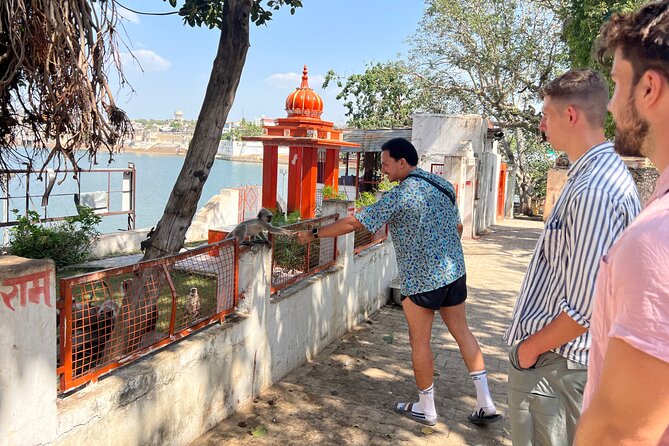
This is a budget-friendly spiritual walking tour, priced at $6.76 per person with a typical booking window around 9 days in advance. For a town like Pushkar, where the best sights are spread out and often hard to locate without local guidance, that price makes a lot of sense. You’re paying for the guide’s ability to explain what you’re seeing, not just for someone to point.
The tour length is listed as 1 to 3 hours, and the small group size (up to 6 travelers) matters. In a place full of shrines, signage can be confusing and crowds can change quickly. A tiny group helps you keep your footing, hear the explanations, and not feel like you’re getting dragged past things.
Weather is also part of the reality here. The experience notes that good weather is required, and if it’s canceled due to poor weather, you should be offered another date or a full refund. So if you’re traveling in monsoon season or during heavy rain forecasts, plan accordingly.
More Walking Tours in Pushkar
- Afternoon Walk Tour with Sunset & Fire Ritual -The Pushkar Route
★ 5.0 · 119 reviews - Evening Walking Tour with Fire Rituals-The Pushkar Route
★ 4.9 · 108 reviews - Spiritual Walking tour with Puja Ceremony -The Pushkar Route
★ 5.0 · 101 reviews
Start at Gurudwara Sahib, the Sikh chapter of Pushkar
You begin at Gurudwara Sahib for about 30 minutes. This stop sets the tone right away because Pushkar is famous for Hindu temples, but it also has strong Sikh connections. Your guide explains the Sikh religion and the importance of Pushkar to the Sikh community.
Even if you know little about Sikh practices, this is a smart opening. It gives you a framework before you start comparing different worship spaces. You’ll also notice how welcoming behavior often works in these sacred areas, especially when you approach with respect and a willingness to learn.
Practical note: the admission ticket at this stop is listed as free. That matters, because it keeps the experience focused on understanding rather than paying for entry.
Varaha Temple, 150 feet up, with a statue from 1784
Next comes Varaha Temple, timed at about 25 minutes. This is not a quick roadside stop, the details here are part of the story.
You’ll hear that the temple is 150 feet high, and that the present statue was set up in 1784. The construction is described as heavy stone and plaster, in typical Rajasthani haveli style, and it sits inside a walled temple compound. In plain terms, this is a site where you’ll want to slow down a little. The guide’s explanation helps you look beyond the main structure and notice how the building materials and layout signal tradition and permanence.
Entrance fees are included for this stop. That’s a small detail, but it makes a difference in budgeting, because temple entry costs can add up if you do these places on your own.
Old Rangji Temple, Rama Vaikuntha and temple craft you can see
Your third major stop is the Old Rangji Temple, about 15 minutes. This temple is also known as the Rama Vaikuntha Temple. The emphasis here is workmanship and architecture, and you’re told the temple is built of heavy stone with beautiful Rajasthani style.
Why this stop works on a walking tour: it’s not just another temple name. The route is structured so you see different “types” of sacred spaces. After Gurudwara Sahib and Varaha, Old Rangji helps you understand how temple art and design communicate religious ideas in a visual way.
Admission is included at this stop too. You also get more time to absorb what you’re looking at, because the route keeps shifting between explanations and actual visual attention.
A different shape of Pushkar day:
- Walking Sightseeing Tour – The Shine Pushkar
★ 5.0 · 64 reviews - From Jaipur : Private Ajmer Pushkar Tour by Cab
★ 4.5 · 29 reviews - Fullday pushkar tour from jaipur with guid+camel/jeep safari
★ 4.4 · 12 reviews
Atmateshwar Mahadev Mandir, Shiva with his family
Then you move to Ati Prachin Shri Atamteshwar Mahadev Mandir, about 25 minutes. This temple represents Lord Shiva, and it’s described as the oldest Shiva temple in Pushkar. You’ll be able to see the statue of Shiva along with his complete family.
This is one of the stops that can feel especially meaningful when your guide explains the relationships and symbolism. Hindu worship often includes family groupings and interconnected forms, and seeing it framed as part of the temple identity helps you understand why certain statues get positioned the way they do.
Admission here is listed as free. So it’s another stop where you spend your money on understanding, not on ticket logistics.
Brahma Temple, the only Brahma temple in the world (as told here)
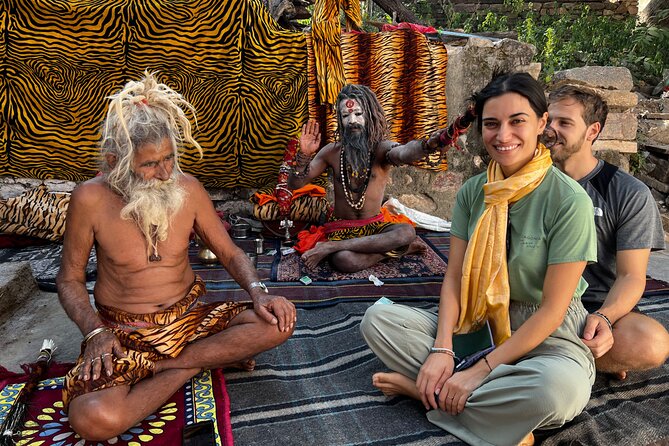
Your route then heads to the Brahma Temple, timed around 30 minutes. This is one of the most identity-defining temples in Pushkar, and the guide explains why Brahma has only one temple in the world, plus mythology connected to the site. Architecture is also a key theme at this stop.
If you only have a short time in Pushkar, this is typically the temple people remember later. The reason is simple: it makes Pushkar feel specific, not generic. A Brahma temple is not something you stumble across in most Indian cities, and having a guide explain why it’s unique changes the way you experience the visit.
Admission is listed as free for this stop as well, which helps keep the overall cost tight.
Pushkar Lake and Brahma Ghat, prayers, photos, and the edge of ritual time
After Brahma Temple, you head to Pushkar Lake and the Brahma ghat area, with a combined feel of roughly 30 minutes at Pushkar Lake and about 30 minutes more specifically at the ghat side. The route notes that you go toward Brahma Ghat, where family people offer prayers for happiness and tribute dead souls.
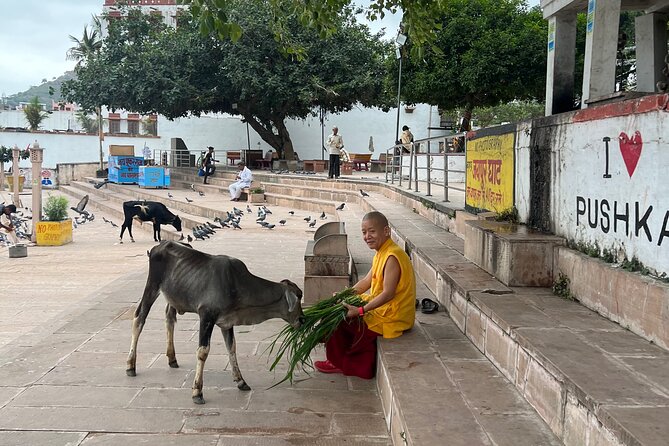
This is where Pushkar stops feeling like a museum of temples and starts feeling like a living religious town. The lake and ghats are the backdrop for daily practice, and your guide’s explanation helps you understand what you’re seeing at the waterline, not just that people are there.
The route also flags photography in this area. So if you care about getting images, this is the part of the walk where you’ll likely pause more. The atmosphere is also tied to special moments, and some guides in this program have been associated with ending the day with ritual moments near the ghat area. If that’s important to you, ask when you book which session you’re joining and whether any ceremony timing is included.
Alka Rooftop refresh, then Gau Ghat and Halwai Gali sweets
The route includes a short break after the lake-side portion. You stop at a nearby restaurant, ALKA ROOFTOP RESTAURANT, where you’ll refresh with a lemon ginger honey drink, and you’ll do it with a view of the market. This is listed as a 10 minute stop, and the drink is shown as part of what you’re getting on the tour.
Then comes Gau Ghat, about 15 minutes. You’re told Gau Ghat is the oldest ghat in 52 ghats, also known as Gandhi Ghat. In front of Gau Ghat is Halwai Gali, known for sweet bakers and confectioners. Even if you don’t buy anything, walking near that food street helps you feel how religion and everyday life sit side by side in Pushkar.
Admission is listed as included at Gau Ghat. That makes this final portion feel like more than just a sightseeing walk, you’re still supported by the structure of guided stops.
The included breakfast and masala chai break
One of the best value points here is the food component, because it keeps you from turning the tour into a hunger test.
You’re served traditional breakfast Malpua, described as sugar syrup coated pancakes made with curd, spices, khoya, dried milk solids, and topped with nuts. This is a classic Pushkar sweet, and it’s exactly the kind of item that makes the experience feel tied to place.
You also get a special masala tea served in a claypot, flavored with cardamom and ginger. This matters for two reasons. First, it gives you a warm reset in the middle of a walking day. Second, it helps you slow down and enjoy a typical local break while your guide keeps the story going.
The route information also says that foods and drinks are not included beyond what’s specified. So if you want additional meals, snacks, or extra drinks, budget for them separately.
Optional rituals and ceremonies, what can cost extra
The tour includes guiding fees, entrance fees, and the meal and chai that are specifically listed. What’s not included is the cost of holy rituals and ceremonies that you choose to participate in.
This is a big point for managing expectations. In a sacred place, it’s normal that you might be invited to take part in something, and you might be asked for a donation or a fee depending on the ritual. If you’re on a tight budget, simply decide ahead of time whether you want to participate or only observe.
Either way, bring the mindset of respectful participation. If you do join a ritual, watch what others do first, and follow your guide’s pace.
How to make the walk easier, shoes, clothes, and cameras
This experience is listed as near public transportation and it offers hotel pickup and drop-off. In real life, that usually helps you avoid spending precious time on getting to scattered temple lanes.
For comfort, plan around walking in tight spaces. Even though the route is short, Pushkar can be crowded near the ghats and in temple corridors. Comfortable shoes are the difference between enjoying the tour and feeling rushed.
If you’re bringing a camera or bigger items, the experience notes lockers facilities for Cameras and big languages. The wording is awkward, but the intent is clear: there’s storage help available so you don’t carry everything in your hands the whole time.
Clothing is worth thinking about too. Temples and religious buildings generally expect modest dress. If you’re unsure, choose clothing that covers shoulders and knees and keeps you comfortable for walking.
When this tour is a great fit, and when you should adjust your plan
This walking tour is a strong choice if you want a guided orientation to Pushkar’s sacred layout in a short amount of time. The route includes Hindu and Sikh context, multiple temple styles, and the lake and ghats where daily worship happens. If you’re curious about why specific temples exist, and how worship works beyond the architecture, you’ll get more from a guide than from a self-guided wander.
I also think it’s a good option if you like small groups. A max of 6 people means the guide can pace the explanations and answer questions without the whole experience feeling like a conveyor belt.
You might want to adjust expectations if you are very specific about food or ceremony timing for a certain departure. One reported issue in the feedback mentioned confusion around differences between time options, including food elements and temple stops. The good lesson for you is simple: when booking, check that the time slot you choose matches what you want, especially if you’re hoping for a particular ceremony moment.
Should you book The Pushkar Route Spiritual City Walking Tour, THE Pushkar Route?
Yes, I’d book it if you want a guided Pushkar walk that hits the big spiritual landmarks, includes tea and malpua, and keeps you in a small group for about 1 to 3 hours. The value is strongest when you’re short on time and want local explanations for the temples and the lake-side prayer areas.
Skip or re-check details if you have very strict expectations about exactly which ceremony moments or meal items you’ll get at your chosen time. In that case, message before you go and confirm what your specific session includes.
FAQ
How long is the Pushkar spiritual city walking tour?
The duration is listed as about 1 to 3 hours.
What places will I see during the walk?
The route includes Gurudwara Sahib, Varaha Temple, Old Rangji Temple, Ati Prachin Shri Atamteshwar Mahadev Mandir, Brahma Temple, Pushkar Lake, Brahma Ghat, Gau Ghat, and a short stop at ALKA ROOFTOP RESTAURANT.
Is hotel pickup and drop-off included?
Yes. The experience includes hotel pickup and drop-off.
Are entrance fees included?
Yes. Entrance fees are included for the temple and ghat stops that specify admission.
What food and drink are included?
You get masala tea served in a claypot and malpua, described as a traditional Pushkar sweet. The route also includes a short refreshment stop at ALKA Rooftop for a lemon ginger honey drink.
Is there a mobile ticket?
Yes. The experience includes a mobile ticket.
How many people are in the group?
The tour has a maximum of 6 travelers.
Does the tour require good weather?
Yes. The experience notes that it requires good weather, and if it is canceled due to poor weather, you’ll be offered a different date or a full refund.
Are holy rituals and ceremonies included in the price?
No. Charges for holy rituals and ceremonies that you choose to participate in are not included.
Latest reviews in from Pushkar
- Walking Sightseeing Tour – The Shine Pushkar★ 5.0 · 64 reviews
- Afternoon Walk Tour with Sunset & Fire Ritual -The Pushkar Route★ 5.0 · 119 reviews
- Spiritual Walking tour with Puja Ceremony -The Pushkar Route★ 5.0 · 101 reviews
- Fullday pushkar tour from jaipur with guid+camel/jeep safari★ 4.4 · 12 reviews
- From Jaipur : Private Ajmer Pushkar Tour by Cab★ 4.5 · 29 reviews
- Evening Walking Tour with Fire Rituals-The Pushkar Route★ 4.9 · 108 reviews
Walking Tours, compared.


The Great Indian Food Tour: Old Delhi Food and Heritage Walk
Read our review →

Old Delhi Food, Heritage&Cultural Walk with Rickshaw ride to Masterji Kee Haveli
Read our review →
Fontainhas Heritage Walk At Latin Quarters of Goa
Read our review →
Browse the lists this tour appears in