
Reviewed · WALKING TOURS
Group Guided Walking Tour in Fort and Colaba
What makes this Fort and Colaba walk interesting is how quickly it explains Mumbai’s layers, from older coastal life to the city it became. I like the small group (max 12), because you actually hear the details and can ask questions instead of getting swept along. One possible drawback: it’s weather-dependent, so if skies are ugly, your date may need to change.
I also love that this isn’t just a photo run. You’ll get a 500-year story thread through iconic landmarks, including the Town Hall area, old churches, and the Jewish quarter. If you prefer long museum-style breaks, note the pace is still a walking tour, so plan for compact stop times.
Key highlights worth planning around

- A 12-person maximum group for a more personal pace and better Q and A
- Big-name photo stops like the Gateway of India and Taj Mahal Palace area
- Multiple landmark types (church, garden, clock tower, synagogue), not just one theme
- Tight, efficient timing at about 2 hours 30 minutes with frequent short stops
- Local recommendations you can use after the walk, not only history facts
Why Fort and Colaba makes a great first-time neighborhood walk
Fort and Colaba are where Mumbai’s “big postcard” identity lives, but the best part is how the stories connect. You start with the Town Hall and library area, then move through a sequence of civic, religious, and public spaces. The tour helps you notice how the city’s colonial-era buildings, public parks, and places of worship shaped what you see today.
This is ideal if you’re short on time, but still want more than a checklist of sights. By the end, you’ll understand why people gravitate to these blocks, not just because the views are good, but because the landmarks mark major shifts in Mumbai’s urban life.
You’ll also get a clear sense of how Mumbai moved from an older fishing and farming village into a modern metropolis. That sounds broad, but on foot it becomes concrete, stop by stop, with architectural cues and historical context that make the streets feel legible.
More Walking Tours in Mumbai
- Private Guided Walking Tour in Fort & Colaba
★ 5.0 · 895 reviews - Private Guided Walking Tour in Bandra Queen of Suburbs
★ 5.0 · 383 reviews - Private Guided Spiritual Walk in Banganga Hindu Temples
★ 5.0 · 271 reviews
Price and logistics: $16.73 for a lot of landmark time
At $16.73 per person for about 2 hours 30 minutes, the value comes from the combination of small group size and the sheer density of major stops. You’re paying for a guide who can connect the dots across different eras and building types, not for a single attraction.
One thing that makes the pricing feel more reasonable is that the tour’s stops come with free admission tickets listed for each stop. That means you are not constantly wondering about extra costs, at least for the specific sites on the route.
You’ll also use a mobile ticket, which is practical in a city where paper can feel like extra hassle. And since the meeting point is near public transportation, you’re less likely to feel stuck trying to reach the start area.
If you’re trying to squeeze in one high-impact walk on your first Mumbai day, this one is a strong candidate.
Stop 1: Asiatic Society Town Hall area and the Portuguese and British thread
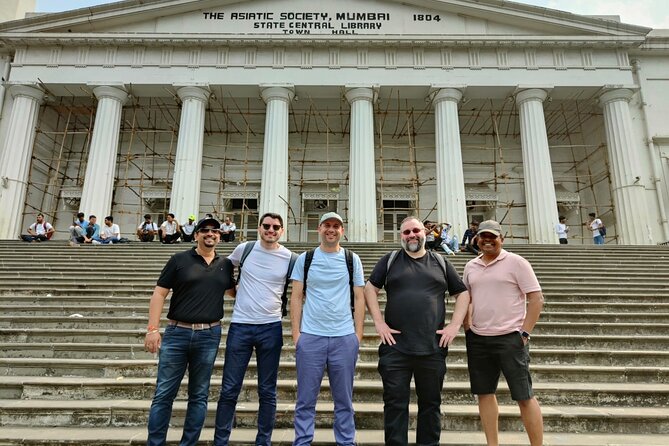
You start at The Asiatic Society, in the Town Hall area of Fort. This is a smart opening stop because it frames the rest of the walk. Instead of jumping straight to the most famous exterior, you begin with a place tied to how the city reorganized after Portuguese and British influence.
What I like about starting here is that it gives you a mental map for the next few blocks. The guide’s stories help you interpret why certain building styles appear, why public life shaped itself around these spaces, and how colonial-era changes affected what Mumbai became.
Plan for about 20 minutes at this first stop. It’s enough time to orient yourself, without dragging. If you’re the type who loves to understand the “why” behind architecture, this start will feel like a good investment of your time.
Stop 2: Horniman Circle Garden, Victorian edges, and everyday city life
Next you reach Horniman Circle Garden, known as Mumbai’s oldest garden. The surrounding Victorian buildings make it feel like a green pause inside an urban machine.
The garden is more than a pretty stop. You’ll learn what used to happen here and how the space fit into public life. That detail matters because it changes how you look at a garden. You stop seeing it as only scenery and start seeing it as a historical social space.
This stop runs about 15 minutes, which is perfect if you want a breath of air without losing momentum. Bring your eyes for the edges, not just the trees, because that contrast is part of the lesson.
A different shape of Mumbai day:
- Dharavi slum tour in Mumbai by Female tour guides of the slum
★ 5.0 · 1,976 reviews - Mumbai: Full-Day Sightseeing Tour of Mumbai
★ 4.9 · 1,822 reviews - Private Mumbai Sightseeing Tour (Traveller’s Choice Award Winner)
★ 5.0 · 1,565 reviews - Elephanta Caves & Island Guided Private Tour
★ 5.0 · 1,327 reviews
Stop 3: St. Thomas Cathedral, Mumbai’s oldest Anglican church, and quiet interior time
St. Thomas Cathedral Mumbai is where the tour turns more reflective. You spend around 15 minutes inside Mumbai’s oldest Anglican church, looking at memorials and the grand altar.
Religious buildings can feel intimidating to photograph or even enter, especially if you’re unsure about behavior. This stop helps you slow down and look with a purpose, so you know what to notice.
A practical tip: if you want photos, do them carefully and respectfully. Spend a few minutes just standing and taking in the memorials and altar area first. Once you understand the layout, your photos improve.
Stop 4: Flora Fountain and the main town square energy
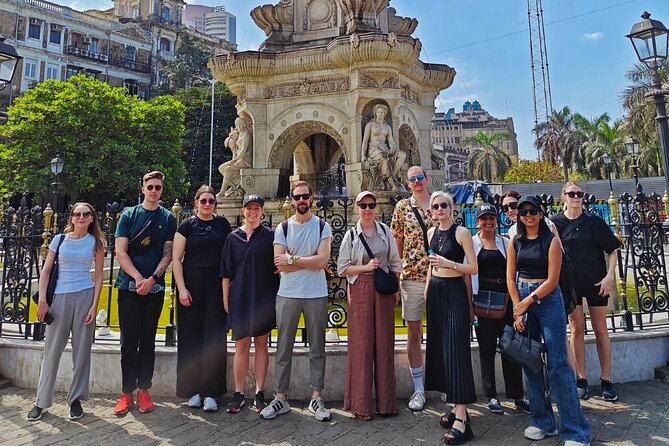
Then it’s back to the street vibe at Flora Fountain. The tour frames it as Mumbai’s answer to Piccadilly Circus and the Martyrs’ Memorial, which is a fun way to understand its role as a landmark meeting spot.
This is a quick stop, about 15 minutes, but it’s valuable because it helps you connect the city’s public symbolism with how people actually use open spaces. If you’ve walked in large cities before, you know plazas work when they help you orient and regroup. This square does that, and the guide’s context makes it more than a roundabout background.
If you love city photography, this is the kind of stop where you’ll want to get a few shots from different angles, then move on before the group clumps.
Stop 5: Oval Maidan and the birthplace of Indian cricket, plus UNESCO context
Oval Maidan is next, with around 20 minutes here. You’ll look at the grand buildings that surround it and hear how the square relates to the birthplace of Indian cricket. The tour also links Oval Maidan to a UNESCO World Heritage connection, so the guide’s explanation helps connect sports culture, civic space, and global recognition.
Even if you’re not a cricket super fan, this stop works because it’s about how public squares shape identity. Big lawns in the middle of a city often become stages for everything, sports included. The buildings around it also help you see how the city’s power centers looked outward to the public.
A nice thing about this timing is it acts like a mid-walk reset. You get enough time to understand the surroundings, then the route shifts again toward academic and arts areas.
Stop 6: Rajabai Clock Tower and the University of Mumbai story
Rajabai Clock Tower is one of those landmarks you recognize instantly once you’ve seen it. The tour uses it as Mumbai’s answer to Big Ben, then guides you through stories about the evolution of the University of Mumbai.
This stop is about 15 minutes, and the best way to use that time is to focus on the clock tower as a symbol. It represents institutional confidence, education as a public-facing project, and the way architecture can broadcast status.
If you like history that connects to buildings, you’ll probably appreciate this stop a lot. It’s not just a structure, it’s a timeline you can see.
Stop 7: Kala Ghoda and the art district buildings with secrets
Kala Ghoda is where the walk leans into architecture and urban character. The guide frames it as Mumbai’s premier art district, and you’ll spend about 15 minutes absorbing the area’s diverse architecture.
The phrase you’ll hear is about the secrets buildings hold. That’s the right way to think about this stop, because the buildings are the show. You’re not only looking at façades, you’re learning what makes them distinctive and why the neighborhood feels like it does.
If you like wandering with a purpose, this is your moment. Snap photos, but also look for details that a quick street glance misses, because that’s where the guide’s explanations usually land.
Stop 8: Keneseth Eliyahoo Synagogue and Jewish enclave signs
Keneseth Eliyahoo Synagogue brings the tour to a neighborhood story that many first-time visitors don’t know they should be looking for. You’ll spend about 15 minutes in this part of the walk, hearing about Mumbai’s Jewish enclave and noticing signs of Jewish life that are now almost extinct in the city.
This stop is important not because it’s dramatic, but because it fills in a piece of Mumbai’s identity puzzle. You see how a minority community shaped a specific area, then you also learn what change looks like over time.
If you want to be a respectful visitor, keep it simple: be quiet, follow the guide’s cues, and keep your questions focused on history and local context.
Stop 9: Gateway of India and the Taj Mahal Palace Hotel, the grand finish
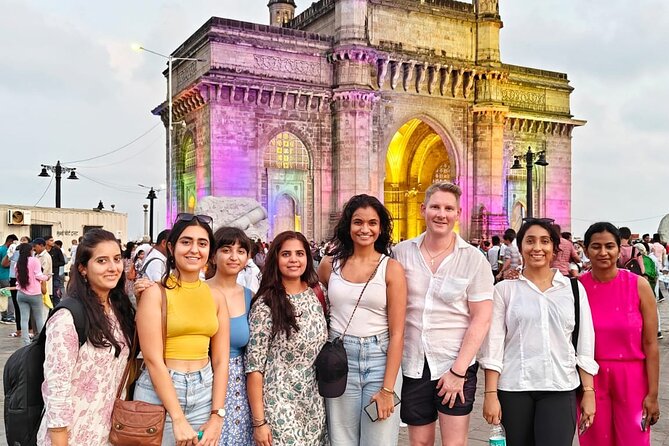
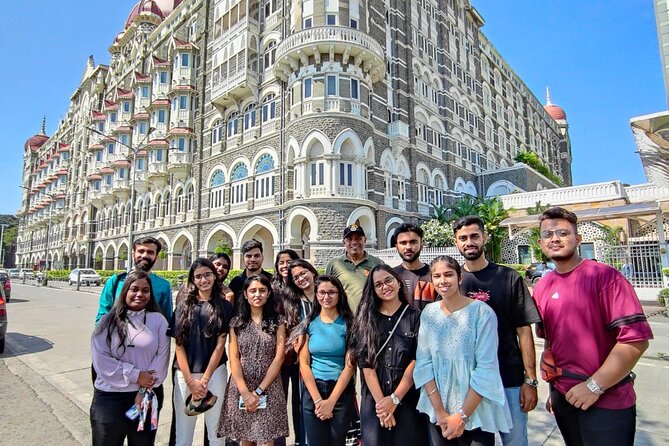
The tour ends near two of Mumbai’s iconic symbols, the Gateway of India and the Taj Mahal Palace Hotel area. You get about 20 minutes at the finish, which is enough for photos and a slow final take-in of the waterfront atmosphere.
This is the stop most people picture first, so it’s nice that the walk builds toward it. By the time you reach the Gateway of India, it feels less like a random landmark and more like the visible endpoint of Mumbai’s shifting eras and trading connections.
Here’s how to get more from the final minutes:
- Take one wide shot first to capture the full scene.
- Then move closer for details and faces.
- Keep a little time buffer if you want to grab a drink or simply watch the crowd for a minute.
If you care about photos, this is the easiest part of the walk to nail. If you care about understanding Mumbai, this is where the story becomes scenery.
Getting the most from your guide (and why the group size matters)
A big part of the value is how the tour is run. The route is structured, but the guide has room to answer questions and offer local recommendations and tips. With a maximum of 12 travelers, you’re not lost in a crowd.
One name you may run into on this tour is Palak, who has led people through both the origins of Mumbai and how it became the city it is today. That kind of guide experience shows up in the small moments, like explaining why a building looks the way it does and pointing out features you might miss on your own.
There’s also been an added perk on at least some departures, a short complimentary coffee break mid-walk. It’s not listed as the main schedule, but it’s a nice reminder that this isn’t just marching from one photo spot to another.
If you do this tour, come with one or two questions ready, like what neighborhood you should visit next or what to skip. The guide’s local tips are most useful when you can steer the conversation.
Timing, weather, and what to wear for a 2.5 hour walk
This experience runs around 2 hours 30 minutes, which is a steady chunk of walking and standing. The good news is the stops are short and varied, so you won’t be stuck in one place for long.
Weather matters here. The tour specifically notes it requires good weather, and if it’s canceled due to poor weather you’ll be offered a different date or a full refund. That’s your cue to check forecasts and pack accordingly.
For comfort, plan for Mumbai’s street realities:
- Wear shoes you trust for uneven sidewalks.
- Bring water, especially if it’s warm.
- Have a light layer or sun protection, because the route includes open squares and garden time where you may get more sun.
Because you’ll be taking photos at multiple stops, also think about phone storage and battery life. The walk ends at the Gateway of India, and that last stretch is where you’ll want your camera ready.
Should you book the Fort and Colaba guided walking tour?
Book it if you want a high-value introduction to old Mumbai without spending half a day on transit or trying to guess what you’re looking at. The small group size and the mix of landmark types make it feel educational and practical at the same time.
Skip it or switch to a different style of tour if you need lots of indoor time, or if you hate standing and moving frequently. The route is built around walking between stops, so it’s best for active travelers.
One more decision helper: if you care most about the famous hits, you’ll still get them, especially at the Gateway of India. But if you care about why those hits exist, the Town Hall start and the architecture-led stops are what make this worth your money.
If your schedule allows and the weather looks decent, this is the kind of tour that helps you enjoy Mumbai right away, instead of waiting until later to understand what you’re seeing.
FAQ
Where does the tour start and end?
The tour starts at The Asiatic Society, Town Hall area in Fort, Mumbai, and ends at the Gateway of India near Apollo Bandar in Colaba, Mumbai.
How long is the Fort and Colaba walking tour?
It’s approximately 2 hours 30 minutes.
What is the maximum group size?
The tour has a maximum group size of 12 travelers.
Is this tour ticketed on mobile?
Yes, you receive a mobile ticket.
Are there admission fees at the stops?
The stops listed include free admission tickets for each location on the itinerary.
What is the cancellation policy?
You can cancel for a full refund up to 24 hours before the experience’s start time. If you cancel less than 24 hours before, the amount paid is not refunded, and good weather is required, with options to reschedule or get a full refund if the tour is canceled due to poor weather.
Latest reviews in from Mumbai
- Mumbai Spice Markets and Bazaars Tour with Guide and Transport★ 5.0 · 42 reviews
- Mumbai Dharavi Slum, Dhobi Ghat & Dabbawala Lunchbox Tour★ 5.0 · 43 reviews
- Private Dharavi Slum Tour with Mumbai Sightseeing★ 5.0 · 43 reviews
- Private Guided Tour in Kanheri Cave with Transfers★ 5.0 · 44 reviews
- Private Guided Walking Tour in Dharavi Slums★ 5.0 · 44 reviews
- Mumbai Private Cultural Tour with Lunch and Transport★ 5.0 · 44 reviews
- Unveiling Bollywood: Grand Tour of Iconic Real Sets & Their Story★ 4.5 · 44 reviews
- Bollywood Tour with Original founder★ 4.5 · 44 reviews
Walking Tours, compared.

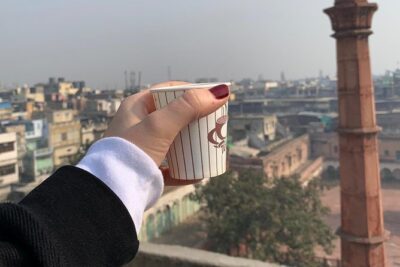
The Great Indian Food Tour: Old Delhi Food and Heritage Walk
Read our review →
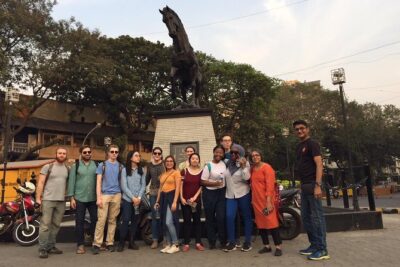
Old Delhi Food, Heritage&Cultural Walk with Rickshaw ride to Masterji Kee Haveli
Read our review →
Fontainhas Heritage Walk At Latin Quarters of Goa
Read our review →
Browse the lists this tour appears in