
Reviewed · HERITAGE WALKS
Why Pune? : A Heritage Walk through Old Pune
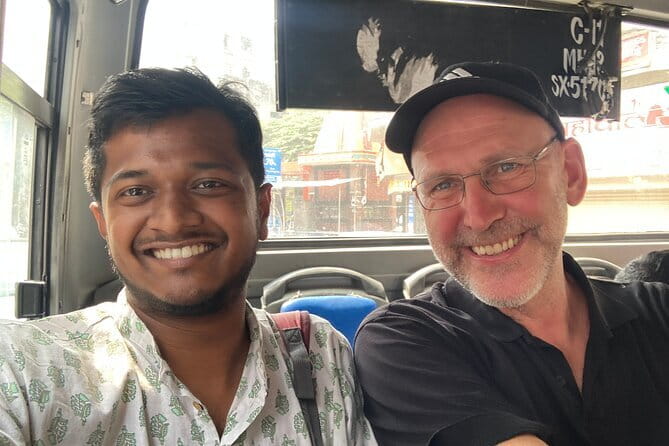
Old Pune is interesting because it is still running. You are not touring empty monuments. You are walking a working neighborhood where politics, faith, and street markets grew side by side. This heritage walk connects the dots in a tight route, and I especially like the focus on Shaniwar Wada’s Peshwa-era context and the way the guide, Dhruva Kalita (often called Dhruv), makes the story clear and human with clear English.
Two hours 30 minutes to 3 hours 20 minutes also means real walking through a dense city center, about 2.2 km total. If you hate crowds or you have limited stamina, plan carefully. You will want comfortable shoes and an easy pace.
The route is built around 9 key stops, most of them admission-free, plus snacks included. The tour runs with a small group, up to 15 people, and it ends at the Mahatma Jyotiba Phule Mandai market area, so you can keep exploring right after.
Key things that make this Pune heritage walk worth your time
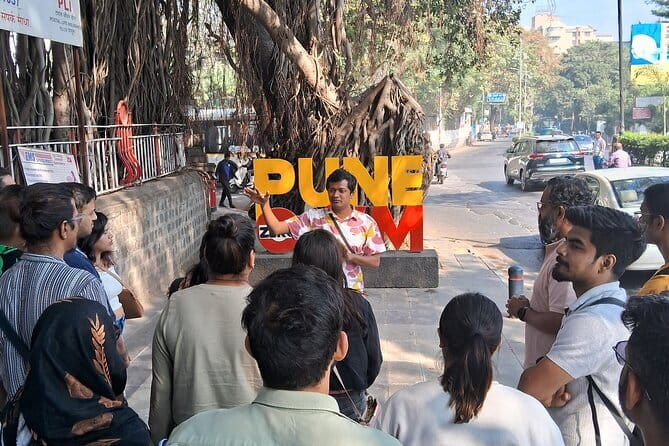
- Small group size (max 15), so you are not just standing in a line.
- A 2.2 km walk in the dense old city, with about 9 landmarks and plenty of “why it matters” context.
- Dhruva Kalita leads the walk, with deep local storytelling and a style that works for international visitors.
- Snacks included, plus market stops that help you feel the daily rhythm of Old Pune.
- Most sites are free, but Shaniwar Wada entry is not included, so budget a little extra if you want to go inside.
- You end at Mahatma Jyotiba Phule Mandai, a great place to wrap up and keep wandering locally.
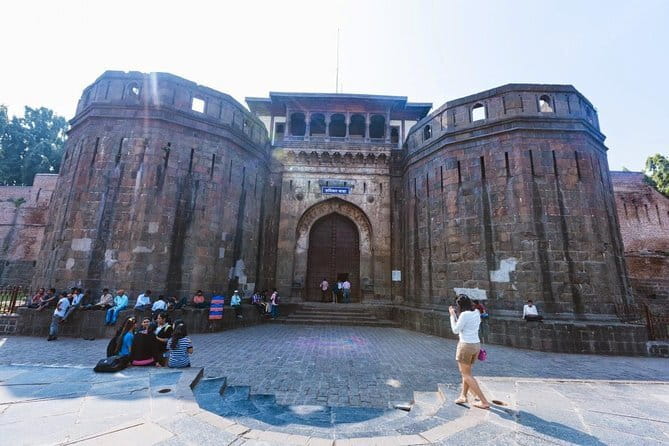
Starting at Shaniwar Wada, the Peshwa-era anchor of Old Pune
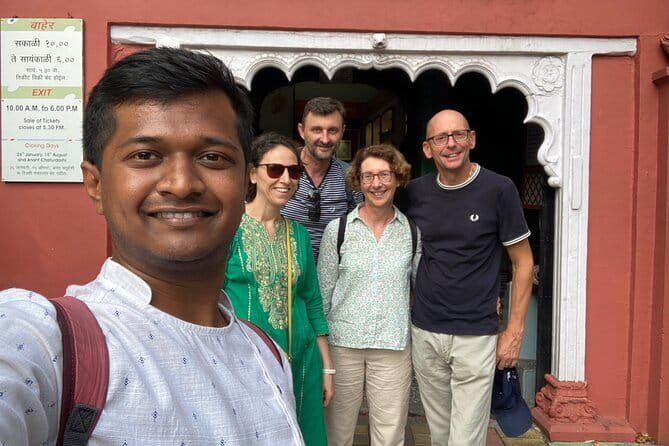
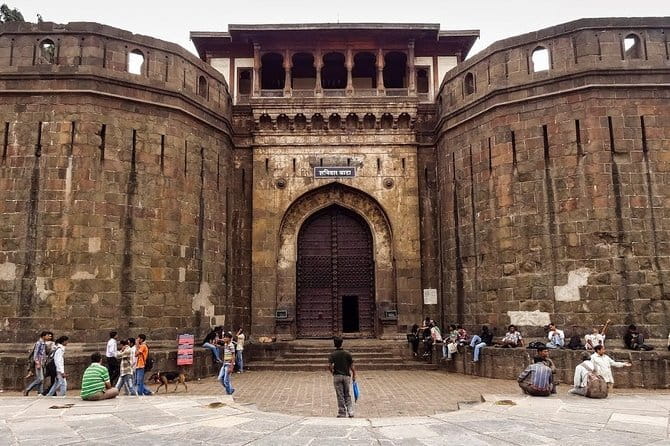
Most heritage walks in Pune start with a famous building. This one starts with the famous building that also sets the rules for how to read the rest of the city: Shaniwar Wada.
You begin at Shaniwar Wada at 480, Shaniwar Peth. The guide takes you to key locations inside the palace area to set the stage for what you are about to see. It matters because the rest of the route is not random temple-hopping. The tour keeps returning to the same big question, how Pune grew from small settlements into a power center, and how that power showed up in streets, homes, and public spaces.
A practical catch: Shaniwar Wada tickets are not included. The walk does cover time there, but if you want full access to areas that require entry, you will need to plan that separately. If you have already been inside and just want street-level context, you might still enjoy the framing.
This stop also shapes the whole tone of the walk. You get a “before and after” lens early on, so later scenes make more sense, like why certain communities built and protected temples, or why reformers became visible in the urban fabric.
More Heritage Walks in Pune:
- Fontainhas Heritage Walk by Make It Happen
★ 5.0 · 2,834 reviews - The Great Indian Food Tour: Old Delhi Food and Heritage Walk
★ 5.0 · 1,698 reviews - Old Goa Heritage Walk by Make It Happen
★ 5.0 · 797 reviews
Lal Mahal Chitra and Nana Wada, politics you can map on foot
After Shaniwar Wada, the walk shifts to political memory you can feel in the neighborhoods. Two quick stops do a lot of work here: Lal Mahal Chitra and Nana Wada.
At Lal Mahal Chitra, you hear stories connected to the former residence of Chhatrapati Shivaji Maharaj. The guide also connects that setting to Pune’s political landscape at a time when this area was still closer to a village than a metropolis. The short duration, around 10 minutes, is not a problem here because the goal is context, not a long museum-style visit.
Then you move to Nana Wada. This is where the “human geography” part kicks in. Nana Wada is presented as the house of a former statesman, and the walk uses it to explain shifting demographics and how the Old City grew. This is the kind of explanation that helps you stop seeing Pune as only modern infrastructure. You start noticing how power and settlement patterns shaped the street grid and community presence.
If you like history that explains who lived where and why, these two stops are strong. If you only want landmark photos and minimal talking, you might wish the guide spent longer in each place. Still, the compact pacing is part of why the whole walk stays within a half-day window.
Kasba Peth Ganpati and Rangari Ganpati, where faith meets local identity
The route naturally turns toward religion, especially Ganpati. You get more than temples as scenery. You get a sense of how community faith anchored neighborhoods for centuries.
At Kasba Peth Ganpati Temple, you visit a temple described as about 400 years old. This is where you feel the local vibe. The guide uses it to explain the religious character of the city and its origins, which is useful if you want to understand Pune as a living city, not a collection of sights.
Next is Shrimant Bhausaheb Rangari Ganpati, with time set aside at around 20 minutes. Here the story expands beyond worship into social and political contribution. The stop is framed as the house of a former revolutionary, and the guide shares how Pune contributed to India’s freedom movement. You also get to see a well-maintained house, which matters because it shows continuity, not just ruins and legends.
One more thing: the walk includes time to pass through the city’s iconic Ganesh area and a famous temple known for being among the richest in India. The exact name is not a focus in the tour description you get, but the guide makes the point that wealth, patronage, and community involvement have shaped these sites over time.
If you are traveling with a mix of interests, this section usually lands well. It has spirituality, architecture, and political background in the same walk, without feeling forced.
Bhide Wada and the reformers’ story, Pune’s education and social change thread
A heritage walk that only focuses on kings and temples can feel one-note. This one adds social change through reformers, especially around Bhide Wada.
At Bhide Wada, you spend about 10 minutes. The framing is that the location connects to a former reformer and highlights Pune’s political, social, educational, and reformist aspects. The walk even references the name Prashant Phule in connection with a local movement associated with Bhide Wada, which helps turn the discussion from vague “reform happened” to a more specific human story.
Why this matters on foot: reform movements do not stay in books. They show up in schools, civic spaces, and the way communities organize. When the guide links this to surrounding neighborhoods, you start seeing the city as an ecosystem of ideas, not only monuments.
This section also benefits from the small group size. With up to 15 people, it is easier to ask questions when you want clarity on names, dates, or the big “so what” behind a reform story.
If you prefer strict sightseeing with minimal context, this part might be the most talk-heavy. But if you enjoy understanding why Pune became Pune, you will likely find it rewarding.
More Walking Tours in Pune:
- Pune Walking Tour with a Punekar
★ 4.5 · 76 reviews - Pune: Old City & Camp Cultural Walking Tour with Local Snack
★ 4.9 · 65 reviews - Immersive walking tour in Pune for cultural immersion with guide
★ 5.0 · 35 reviews - Group Guided Walking Tour in Fort and Colaba
★ 5.0 · 1,073 reviews
Tulshibaug Shri Ram Temple and the market streets you actually pass through
After the reformer and revolutionary themes, the tour slows down into the street texture of Old Pune with Tulshibaug.
At Tulshibaug Shri Ram Temple, you get around 20 minutes. The stop is described as a quaint temple, and the guide uses it to connect architecture and the history of the area to what you can see in the surrounding lane network. The real charm here is that you are not only standing at the temple. You are also making your way through the Tulshibaug market area.
That market walking time is important because it tells you how the heritage story lives today. People trade, buy, chat, and move. The past is not sealed behind a rope. It is part of the street flow.
Practical note: market areas can be lively and crowded depending on the time of day. Keep your pace easy, protect your phone and wallet, and remember you are walking for about 2.2 km total, not sprinting between landmarks.
Mahatma Jyotiba Phule Mandai, a colonial-era market and a smart end point
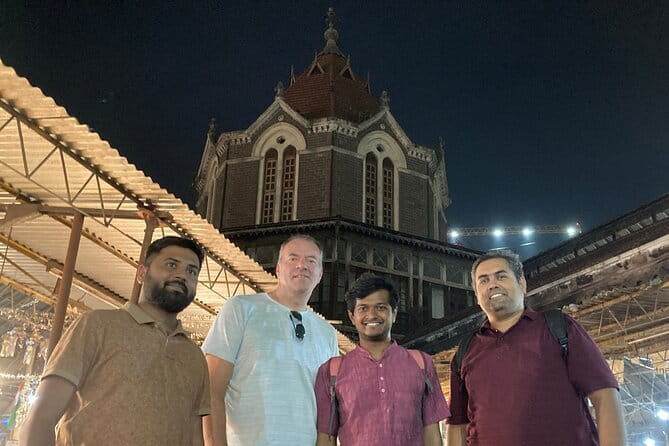
The final stop is one of the best possible endings for a heritage walk: Mahatma Jyotiba Phule Mandai.
You spend about 15 minutes here at a colonial-era vegetable market. The guide uses the market to explain Pune’s transition into a colonial city and beyond. The goal is to close the loop between past, present, and future, so the last minutes feel like a payoff rather than a detached ending.
The walk ends at the Mahatma Phule vegetable market area, near Shanipar Chowk, Mahatma Phule Market, Gayakwad Path, Mandai, Shukrawar Peth, Pune, Maharashtra 411002. The route is about 2 km from the start point, so it is short enough to keep energy, but long enough to give you real city orientation.
If you like practical travel flow, this ending works. Market areas tend to make it easier to find snacks, local food, and souvenirs right after the tour. Even though meals are not included, the walk sets you up in the right neighborhood to keep exploring without backtracking.
Timing, walking comfort, and how to plan your day
This is a half-day walking tour in the old city zone. Expect a duration of 2 hours 30 minutes to 3 hours 20 minutes, plus the fact that you may spend more time at certain points if questions come up.
The route covers about 2.2 km through a dense city center, so the “fitness level” requirement is mostly about comfort walking on foot, not athletic ability. The tour description says most travelers can participate, and the maximum group size is 15, which usually keeps the pace manageable.
What I would plan around:
- Wear shoes you can stand and walk in for a few hours.
- Bring a light layer if weather is unpredictable.
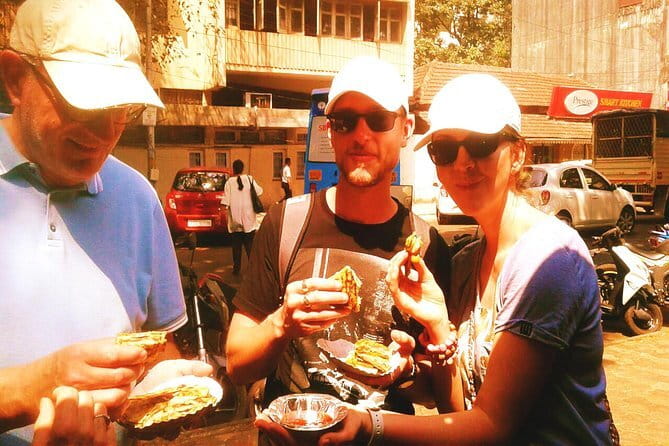
- Snack time is included, but meals are not, so either eat before you go or plan something afterward, especially since the tour finishes at a market.
Also, keep in mind public transit proximity. The tour meets at Shaniwar Wada, near public transportation, and that helps you build a simple day plan. Since private transportation is not included, you will be on foot and public transport for the day.
Price and value: what $16.84 gets you in Old Pune

At about $16.84 per person, this is priced like a very practical local experience, not a “big ticket” museum day.
Here is what you get for that price:
- A guided heritage walk that ties together politics, religion, and social change
- Snacks included
- A route with multiple stops, most of them admission-free
- A mobile ticket, which is convenient
What costs extra:
- Shaniwar Wada tickets are not included
- Meals are not included
- Private transportation is not included
The value is strongest if you care about context and storytelling. You are not just paying to see nine stops. You are paying for a guide who can explain why those stops connect, and who can point out architectural and street-level details you would miss if you wandered alone.
If you are the type who enjoys learning names and understanding how a city formed, this price feels fair. If you only want quick photos and minimal explanation, you might feel like it is slightly more guided talk than you wanted. Still, the route is short enough that you are not committing to a whole day.
Dhruva Kalita as your guide, and why this walk scores so high
The big reason this tour earns a near-perfect rating is the guide’s delivery style. Dhruva Kalita is described as having conducted over 300 heritage walks, and the walk clearly leans on that experience.
In a practical sense, here is what you should expect:
- Explanations in clear English, which matters when names and dates can get confusing
- A focus on historical facts, but also on entertaining details that explain daily life and community choices
- Side-street context, so you see more than just the obvious frontage of each landmark
- Attention to architecture and small features, the kind you might not notice on your own
- Snacks built into the experience, which makes the timing more comfortable
- The ability to customize based on your preferences, at least when possible within the walk format
One more review-based plus you will likely appreciate: the guide’s helpful, caring attitude comes up repeatedly, including support beyond just the walk. That kind of flexibility can be useful when you are trying to buy gifts or figure out what to do next.
Who should book this walk, and who should skip it
This is a good fit if:
- You are visiting Pune for the first time and want a fast, guided orientation to Old Pune
- You like history that includes religion, civic reform, and political change, not only rulers
- You enjoy walking and you do not mind being in small lanes with market activity
- You want a local-feeling experience that ends in a neighborhood where you can keep going
You might want to skip or choose something else if:
- You dislike walking or you have limited mobility for a 2.2 km city route
- You need guaranteed quiet, since old city streets and markets can be active
- You want a long, deep time at one single monument, because this walk is designed for multiple stops and connections
Should you book Why Pune? A Heritage Walk through Old Pune
If your goal is to understand Pune instead of just collecting photos, I think you should book it. The route is compact, the group size is small, and the guide, Dhruva Kalita, brings a level of storytelling and clarity that makes the city click.
Book it if you can handle walking a few kilometers, and if you are okay paying extra for Shaniwar Wada tickets if you want full access. Also, you get snacks, and you finish at Mandai, so the day is well paced.
If you are short on time but still want real context, this is also a good deal. It is long enough to connect multiple themes, but short enough to fit into a normal itinerary without exhausting you.
FAQ
Where does the tour start and end?
It starts at Shaniwar Wada, 480 Shaniwar Peth, Pune. It ends at Mahatma Jyotiba Phule Mandai near Shanipar Chowk, Mahatma Phule Market, Gayakwad Path, Mandai, Shukrawar Peth. The end point is about 2 km from the start.
How long is the heritage walk?
The duration is approximately 2 hours 30 minutes to 3 hours 20 minutes.
How far do we walk?
The walk covers about 2.2 km through the dense city center.
How many landmarks are visited?
The tour covers 9 key landmarks over the walk.
Are tickets to Shaniwar Wada included?
No. Shaniwar Wada tickets are not included.
What is included in the price?
Snacks are included, and you’ll receive a mobile ticket. Admission is listed as free for several stops, but Shaniwar Wada entry is not included.
Is private transportation included?
No. Private transportation is not included.
How big is the group?
The tour has a maximum of 15 travelers.
Can I cancel for free?
Yes. You can cancel for a full refund up to 24 hours in advance of the experience start time.
More Historical Tours in Pune
- Old Delhi Food, Heritage&Cultural Walk with Rickshaw ride to Masterji Kee Haveli
★ 5.0 · 742 reviews - Fontainhas Heritage Walk At Latin Quarters of Goa
★ 5.0 · 531 reviews - Blue City Heritage Private Walking Tour With Pickup and Drop-Off
★ 5.0 · 441 reviews - Kolkata Heritage Tram Tour
★ 4.0 · 395 reviews
Latest reviews in from Pune
- Best of Pune Private City Tour with Lunch and Transport★ 5.0 · 17 reviews
- Pune to Lonavala Monsoon Drive in Private Vehicle★ 4.5 · 20 reviews
- Sinhagad Fort Trip (Guided Half Day Sightseeing Tour)★ 5.0 · 29 reviews
- Immersive walking tour in Pune for cultural immersion with guide★ 5.0 · 35 reviews
- Immersive culture tour of Pune by private car with guide and local lunch★ 5.0 · 38 reviews
- Skip the Line: Meher Retreat Day Picnic Ticket, Near Pune★ 3.5 · 57 reviews
- Private 2-Day Tour to The Taj Mahal and Agra with Both Side Commercial Flights★ 5.0 · 63 reviews
- Pune Walking Tour with a Punekar★ 4.5 · 76 reviews
Heritage Walks, compared.


The Great Indian Food Tour: Old Delhi Food and Heritage Walk
Read our review →
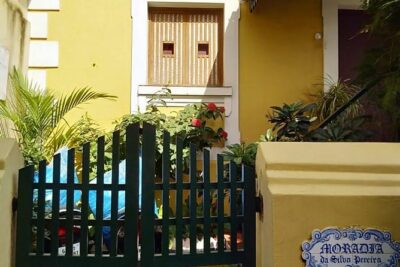
Fontainhas Heritage Walk At Latin Quarters of Goa
Read our review →
Private Heritage Walking Tour in Jaisalmer Fort and Old Bazaar
Read our review →
Browse the lists this tour appears in