
Reviewed · HISTORICAL TOURS
Kolkata Heritage Tram Tour
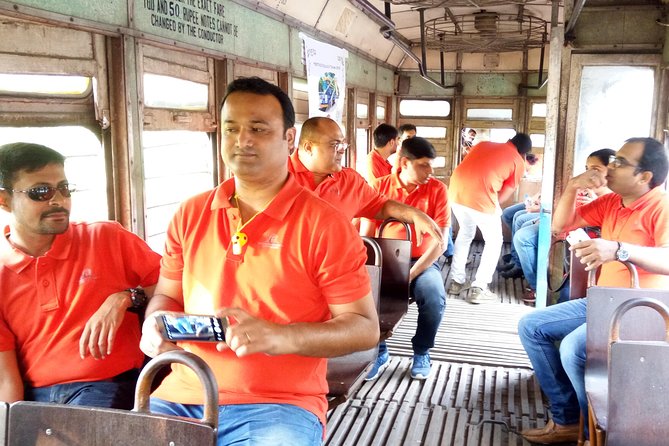
Kolkata’s heritage tram tour is interesting because it lets you see the city by rails, not just by foot. You get a rare look at India’s only tram network, then you hop off at stops that cover religion, education, and everyday Kolkata life. Two things I really like are the fun of riding the old trams and the way the route adds context with landmark stops like Tipu Sultan Masjid and Mother Teresa’s House.
The main thing to consider is the early start and the noise. The tour begins at 7:00 am, and if the street noise is high, the guide’s voice can be harder to catch (headsets are on the way). Still, the small-group feel, plus the snacks and refreshments, makes this a solid way to get oriented fast.
Key things to know before you ride
- Heritage tram ride with a throwback feel on a working system
- Early 7:00 am start so you see sights before heavy traffic takes over
- Landmark mix: temples, churches, mosques, schools, and cemeteries
- Stops with time built in, including Nonapukur Tram and Mother House
- Snacks and refreshments included, and the portions are generous
- Small group (max 20), which helps the tour feel less rushed
Kolkata Heritage Tram Tour: why the old rails matter
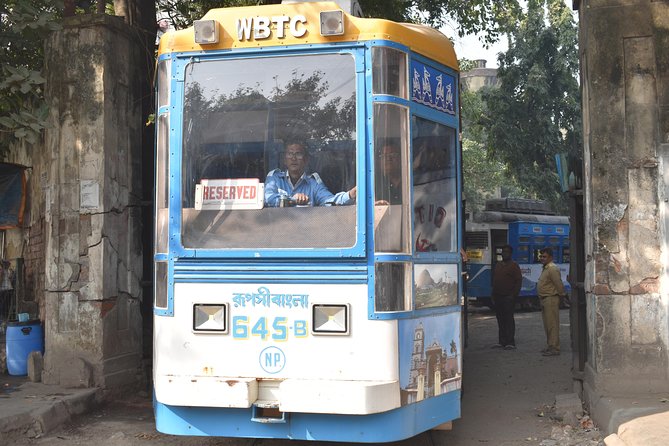
If you’re trying to understand Kolkata, there are two problems with walking tours. First, you cover distance fast but miss the city’s rhythm. Second, you miss the city’s “how things move” story. This tram tour fixes both by doing the one thing that Kolkata does differently: it keeps a tram network running, with heritage vehicles that make the ride part of the attraction.
I also like the fact that this isn’t a one-note museum stop. The tour uses the tram as your moving base, then layers on real neighborhood landmarks. You’ll pass big-name places like the Maidan and the Victoria Memorial, but the trip also takes you toward everyday life sites, religious heritage, and local institutions.
The route is a good fit when you want a “get your bearings fast” overview without turning it into a marathon. In about 2 to 3 hours, you get a snapshot of central Kolkata and nearby areas, plus short breaks to actually look around.
More Historical Tours in Kolkata:
- Raj Heritage Walk
★ 5.0 · 93 reviews - British Raj Heritage walk in Kolkata with guide
★ 5.0 · 54 reviews - Kolkata: Guided Heritage Walking Tour
★ 4.6 · 23 reviews
What you get for $60, and why it can feel worth it
At $60 per person, this is priced like a serious guided activity, not a casual add-on. The value comes from a few specific ingredients that add up: the guided experience, the heritage tram ride, and snacks and refreshments included.
You also get convenience. Pickup is offered, and you’ll use a mobile ticket, which saves time when you’re already juggling heat, traffic, and whatever your hotel can provide that morning.
Then there’s the time factor. For the money, you’re not just sitting on a vehicle. You have scheduled stops, including places where entry is listed as free for the specific segments (for example, Sacred Heart Church, Tipu Sultan Masjid, Nonapukur Tram, and Mother House). Even when free entry is listed only for certain stops, it’s a useful baseline to budget your morning.
One more value point: the group size is capped at 20 travelers. That usually means you’re not standing in a giant line while the city spins past you.
The 7:00 am start: practical pros and one real tradeoff
This tour starts at 7:00 am. That matters more than it sounds. Early usually means calmer streets, better photo light, and fewer traffic delays that can throw off a tight schedule. It also makes the tram ride feel like something you’re part of, not just something you’re watching from the curb.
The tradeoff is that you’ll need to be ready early. You’re trading sleep for clarity. If you’re the type who hates waking up before you’re fully awake, set a backup plan for the night before. Charge your phone, keep water handy, and make sure you can get to the meeting point without last-minute scrambling.
The tour meeting area is described as near public transportation, which is helpful if you’re not relying on pickup. But if you do choose pickup, treat it like a real appointment. Being late can throw off the whole flow, since the tour depends on moving between several stops in a short window.
Riding the Kolkata heritage tram: what the experience feels like
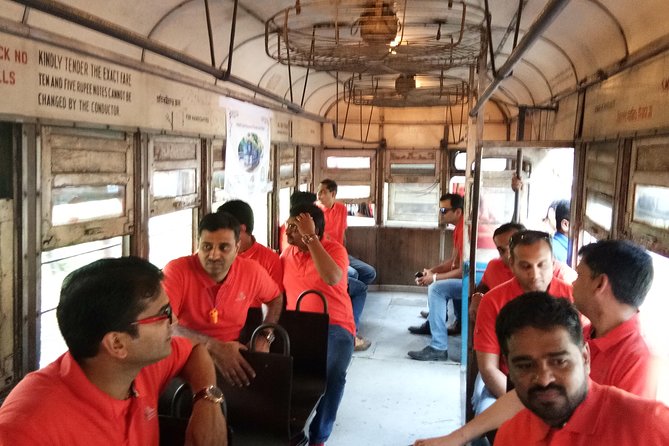
The tram ride is the anchor. Kolkata has more than one way to move through the city, but this one is special because it keeps the heritage character alive while still functioning in real life.
You’ll spend enough time on the tram that it doesn’t feel like a token ride. It’s also paced so you can get off, look around, and then re-board. That rhythm is great when you want the city’s landmarks without losing your energy.
There’s also a mindset shift. Instead of thinking, “I’m rushing to the next photo,” you can think, “I’m traveling through the city’s story.” As you glide past places like the Maidan and Victoria Memorial area, the tram gives you a steady viewpoint, and you notice how the city is arranged along main corridors.
Line these Kolkata options up side by side
- Cultural Confluence of Kolkata – Culture Kaleidoscope Tour
★ 5.0 · 701 reviews - Bengali Nights Kolkata Food Tour with 13+ Tastings
★ 5.0 · 325 reviews - Magic Hour Tour
★ 5.0 · 241 reviews - Alleyway Food Tour
★ 5.0 · 137 reviews
Stop by stop: how the route tells Kolkata’s story
This tour’s stops cluster around religion, heritage institutions, and the city’s social fabric. Some stops are listed with short times like 20 minutes, others like 30 minutes. Either way, think of each stop as a quick introduction, not a deep research expedition.
Birla Mandir and the Birla family landmarks
The morning begins with Birla Mandir, a Hindu temple built by the Birla family on Asutosh Chowdhury Avenue in Ballygunge. It’s dedicated to Vishnu avatars such as Rama and Krishna. Even if you’re not visiting for worship, it’s a strong example of how Kolkata’s heritage architecture carries religious meaning in everyday space.
There’s also another landmark marvel built by the Birla family on the route. You’ll see how one family’s imprint shows up across the city through major public works and prominent buildings.
Practical note: temples can have dress expectations. The data doesn’t spell them out, so if you’re unsure, use conservative clothing as your default choice for this kind of stop.
Churches with Portuguese and Christian heritage
The tour includes several churches with different backgrounds. One stop highlights Sacred Heart Church, where the Portuguese legacy of Bengal is described as still palpable. The mention of a dramatic past incident, tied to attempts at violence or street conflict, is the kind of detail that helps you understand how European influence and local life intersected.
Another stop is Thoburn Memorial Methodist Church, established in 1873, which makes it a useful reference point for understanding how long organized Christian communities have been shaping Kolkata.
You’ll also visit or pass by the Lord Jesus Church, a Catholic church in Taltala. It was formerly a Church of Scotland Presbyterian place of worship before being handed over to the Jesuits in the 19th century. That change alone tells a story about shifting church governance and cultural influence.
Even with limited time, these stops give you variety. If your Kolkata plan is mostly temples and sightseeing, this is the section that adds balance.
Tipu Sultan Masjid, named for Mysore’s ruler
One of the signature stops is Tipu Sultan Masjid. It’s named after Tipu Sultan, the ruler of Mysore, and it’s presented as a relic of architectural and cultural heritage.
This is one of those stops where a guided explanation matters. Without context, you’d just see a historic mosque. With a guide, you understand why it carries meaning beyond its walls and why the name links different regions of South Asian history.
The stop time is listed as 20 minutes, and entry is marked as free for this segment.
Lower Circular Road Cemetery, General Episcopal Cemetery
Next up is Lower Circular Road Cemetery, also known as the General Episcopal Cemetery. It was established in 1840 and is still operating as a functional cemetery. You’ll also learn it contains approximately 12,000 graves, including many former residents of some sort of group described in the tour details.
This stop can be surprisingly moving if you approach it with respect. It also gives you a different view of Kolkata heritage: not just buildings and celebrations, but memory and everyday continuity.
If you’re the type who wants quiet stops in your itinerary, this is it. If you prefer only lively places, it may feel heavy, but it still fits the goal of understanding Kolkata fully.
Schooling and institutions: assembly of God church school and Maulana Azad College
The route includes education-related heritage. One segment describes Pastor Buntain setting up the first Assembly of God Church School in Kolkata in January 1964, with 200 children enrolled. That’s a human-scale piece of history, the kind that connects to how communities tried to create opportunity.
Another institutional stop is Maulana Azad College, a government-administered liberal science and arts college founded in 1926 near the junction of Rafi Ahmed Kidwai Road and S N … (the details end there, but the key point is its age and role as a long-running institution).
These stops help you understand Kolkata as a city built not only on monuments, but on systems that keep running over decades.
Muslim Institute and the West Bengal Urdu Academy
The tour also reaches into language and community institutions. You’ll hear about the Muslim Institute, with the foundation laid in July 1902 by students and youth.
Then there’s the West Bengal Urdu Academy, described as a heritage institution set up by the Left Front Government to support and uplift the Urdu language. If language matters to your understanding of culture, this stop is one of the most useful because it explains how policy and identity can live in real public institutions.
Heritage Book Store
The route ends up at a Heritage Book Store. Even without deep details, it’s a logical stop for this kind of tour because it turns the story you’re hearing into something you can take home. If you like buying a single thoughtful book or local pamphlet to anchor your trip, this is where it fits.
Nonapukur Tram: the birthplace of Calcutta Tramways
Then you reach a particularly tram-focused stop: Nonapukur Tram, described as the birthplace of Calcutta Tramways. Admission is listed as free for this segment, and the stop time is 20 minutes.
This is where the tour’s theme clicks. You’re not just riding heritage vehicles, you’re also learning where the tram story began. For anyone who likes transport history, this segment is a highlight.
Mother House, Mother Teresa’s final resting place
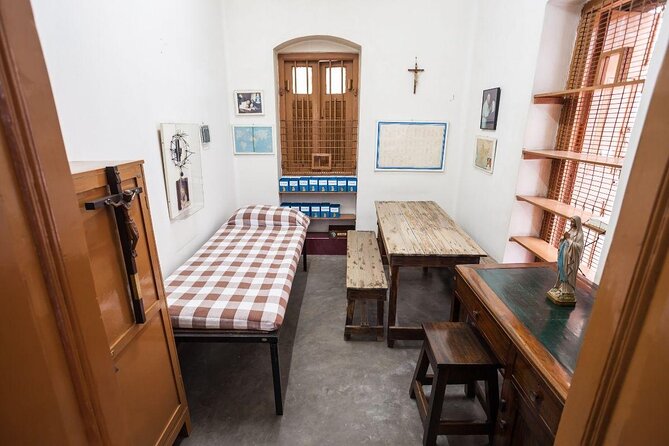
The tour’s final major stop is Mother House, also described as Mother Teresa’s House, and the final resting place of St. Teresa. The stop time is 30 minutes, with admission listed as free for this segment.
This stop adds emotional gravity to the morning. After temples, churches, and the cemetery, this is a different kind of heritage, one that is tied to modern spiritual impact and a global legacy.
If you want a moment to slow down, this is the one. Give yourself enough time to look around without rushing.
Snacks, refreshments, and the comfort factor that matters
This is a short tour, so the included snacks and refreshments are more than a nice touch. They make the schedule easier to handle, especially since you’re out at 7:00 am and moving quickly between locations.
One review notes a generous bag of snacks and drinks. That matches the tour’s structure: quick stops, re-boarding, more walking than you might expect at each landmark edge, and then back into the tram.
Bring any personal preferences too. If you have dietary needs, plan ahead and consider carrying your own backup snack. The tour provides refreshments, but the data doesn’t specify options.
Guide quality, and what to do if you can’t hear
The guide is a big deal on this tour because you’re crossing multiple landmark types. When the guide is clear, the stop times feel meaningful. When they’re not, you lose context.
One review called out that the guide was sometimes not audible due to high noise levels and suggested headsets, and the operator responded that headsets will be implemented soon. Until then, you can protect yourself with a couple practical moves: sit where you can see the guide, avoid standing too far back if you’re on the tram, and consider bringing simple earplugs if you’re sensitive to noise.
When you catch the explanations, you’ll understand why the tour spends time on specifics like Birla family building projects, the date anchors like 1840 and 1873, and the way church histories connect to Portuguese and Jesuit influence.
Also, for local connection, the tour has been led by guides like Mr. Arif and Haris, and another guide named Mr. Jan showed up in comments. Even if your group gets a different guide, the pattern is that the tour aims for someone with deep Kolkata ties and strong explanation skills.
Who should book this tram tour
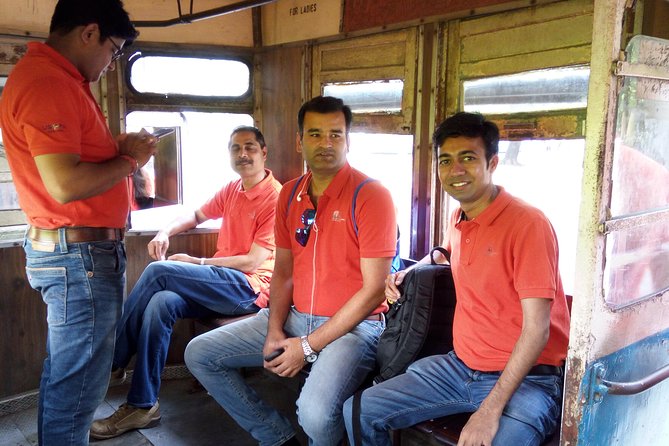
This tour is best if you want an overview that’s more than a checklist. It fits first-time visitors who want the feel of central Kolkata and a guided route that threads together religion, institutions, and tram heritage.
It’s also ideal if you like transport history. The Nonapukur Tram segment and the working heritage ride give the trip a clear theme, not just a collection of stops.
If you dislike early mornings, it’s still doable, but you should plan for it. And if you prefer long museum-style visits, this is not that. The stops are short by design, built for getting bearings and making you curious for follow-up exploring.
Should you book this Kolkata Heritage Tram Tour?
If your goal is a guided 2 to 3 hour orientation of Kolkata that combines a real heritage tram ride with landmark stops, I think this is a strong booking. At $60, it feels like fair value when you factor in pickup, the tram experience, and snacks and refreshments plus multiple stop segments that include free entry for listed highlights.
Skip it or choose a different style if you hate waking up at 7:00 am or you know you’re sensitive to loud street noise and you don’t want to troubleshoot hearing. Otherwise, this tour is one of the easiest ways to see Kolkata’s main characters in one morning, from Birla Mandir and Tipu Sultan Masjid to Mother House and the city’s tram beginnings.
FAQ
How long is the Kolkata Heritage Tram Tour?
The tour runs about 2 to 3 hours.
Where does the tour take place?
It takes place in Kolkata, India.
What time does the tour start?
The start time is 7:00 am.
Is pickup offered?
Yes, pickup is offered.
Do I need a paper ticket?
No, it uses a mobile ticket.
What is the group size?
The tour has a maximum of 20 travelers.
What is the cancellation policy?
You can cancel for a full refund if you cancel up to 24 hours in advance. If it’s canceled due to poor weather, you’ll be offered another date or a full refund.
Latest reviews in from Kolkata
- Calcutta Contrast Tour★ 5.0 · 46 reviews
- Kolkata – A Sea of Faces and A Thousand Places (local guide)★ 5.0 · 52 reviews
- Private Calcutta Tour★ 5.0 · 54 reviews
- Private Full Day Sightseeing Tour of Kolkata★ 5.0 · 79 reviews
- Explore Kolkata- Private Tour with Lunch★ 5.0 · 87 reviews
- Kolkata – Sounds and Sights – Private Full Day City Tour★ 5.0 · 106 reviews
- Private Half-Day Kolkata Tour★ 5.0 · 125 reviews
- Private Custom Full Day Sightseeing Tour of Kolkata★ 5.0 · 128 reviews
Historical Tours, compared.

The Great Indian Food Tour: Old Delhi Food and Heritage Walk
Read our review →
Old Delhi Food, Heritage&Cultural Walk with Rickshaw ride to Masterji Kee Haveli
Read our review →
Fontainhas Heritage Walk At Latin Quarters of Goa
Read our review →
Blue City Heritage Private Walking Tour With Pickup and Drop-Off
Read our review →
Private Heritage Walking Tour in Jaisalmer Fort and Old Bazaar
Read our review →
Browse the lists this tour appears in