
Reviewed · WALKING TOURS
Immersive walking tour in Pune for cultural immersion with guide
Pune is interesting because it reads like a history book you can actually walk through, from Maratha power centers to the temples people treat like a daily heartbeat. I love the small-group pace and a guide named Ajit, because he turns landmarks into stories you can picture. I also love that entrance fees and light refreshment are built in, so you are not constantly pulling out your wallet. The main drawback to plan for is simple, you must cover knees and shoulders, and you will be walking on uneven sidewalks.
This is a practical half-day route for first-timers. You start at Shaniwar Wada and end at Laxmi Market, with pickup offered and a drop-off around early afternoon. With a maximum of 15 people, you get enough attention to ask questions without feeling rushed, but if you want total freedom to wander off-script, this format is less your style.
Key highlights I’d center in your decision

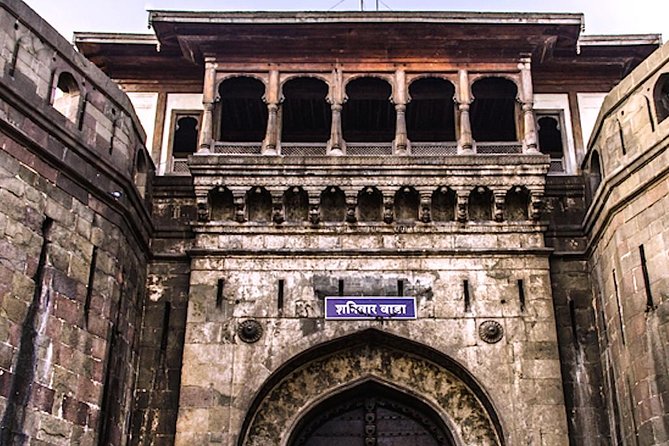
- Maratha power in real stone at Shaniwar Wada, home of the Peshwas and the Maratha Empire’s seat of authority
- Ganesh temple stops with strong local meaning, including Dagdusheth Halwai Ganpati (1892) and Kasba Peth Ganpati (1630)
- Shopping with context at Laxmi Market, named for the goddess of wealth and known for its local bazaar feel
- Lal Mahal Red Palace and the Shivaji story, including the historic encounter between Shivaji Maharaj and Shaista Khan
- Ajit’s added touches, like weaving in extra local culture when timing fits, including freedom-fighter museum visits and Ganesh festival energy when you are there
Walking Pune’s Maratha trail, one stop at a time
The big idea here is that you see the core heritage sites in a single 3-hour window. That matters in Pune, because traffic and distance can eat up a day fast if you try to do everything on your own. With a local guide and entrance fees handled, you get more time looking closely and asking questions.
The route is arranged like a timeline with breathing room. You start with the seat of power, then you move to the kind of religious landmark that anchors neighborhoods, then you finish with a market stop and a palace site. I like that the pacing keeps you from overheating mentally, you are not stuck at one place waiting for a group photo cycle.
One practical note: even though the tour is only about three hours, your legs do the work. If you have mobility limits, plan for sustained walking and short climbs around temple areas and older lanes. Good shoes beat fancy sandals, every time.
More Walking Tours in Pune:
- Pune Walking Tour with a Punekar
★ 4.5 · 76 reviews - Pune: Old City & Camp Cultural Walking Tour with Local Snack
★ 4.9 · 65 reviews - Why Pune? : A Heritage Walk through Old Pune
★ 5.0 · 26 reviews
Shaniwar Wada: Peshwas power, 30 minutes that set the tone
You begin at Shaniwar Wada, the seat of power of the Peshwas, the prime ministers of the Maratha Empire. This is not just a postcard stop, it is where you learn how political power shaped the city in the 17th to 19th centuries. Once you understand what this place represented, the other stops feel more connected.
You will have about 30 minutes here with an admission ticket included. That short time is intentional. It gives you enough context to recognize what you are looking at, without dragging you through a long, stop-and-go museum day.
The downside is time pressure. If you like reading every plaque and taking deep photos, 30 minutes can feel tight. Use the guide time for big-picture questions, like how the Peshwas fit into the Maratha story, and save detail walking for later when you have more time.
Dagdusheth Halwai Ganpati Mandir: why this temple has such a draw
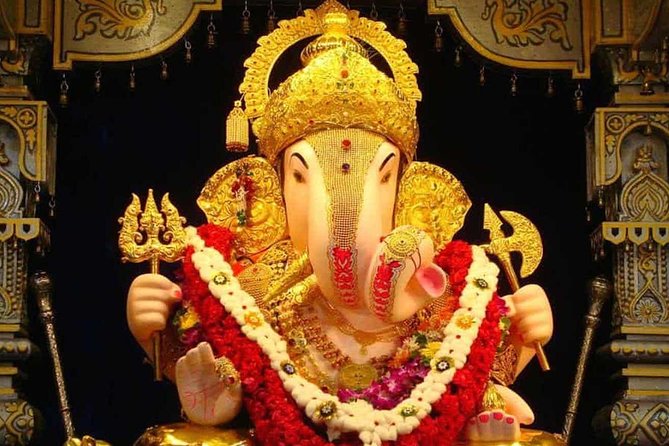
Next up is Shrimant Dagdusheth Halwai Ganpati Mandir, one of Pune’s most famous Ganesh temples. Dagdu Sheth was a sweet maker, and the temple has a backstory tied to tragedy: he lost his son to the plague and built the temple in 1892. That mix of devotion and community memory is exactly why this stop lands for many people.
You will spend about 45 minutes here, and admission is included. Expect time for a slow look at the temple area and space to understand why Ganesh is not just a deity people visit, but a presence woven into local life and festival rhythms.
A consideration: temple areas can be busy, and your attention needs to switch modes from history to etiquette. Keep shoulders and knees covered, and move with the flow rather than trying to stop in the middle of foot traffic. This is a great moment to ask Ajit what locals do differently during major Ganesh celebrations, since that kind of detail is usually where the real culture shows up.
Laxmi Market: shopping for souvenirs with a story behind the streets
Then you shift gears to Laxmi Market, a popular bazaar and flea-market style shopping stop. You get about 45 minutes here, and you are walking through local shops with the goddess of wealth connection in mind, since the market is named after Hindu wealth symbolism.
What I like about ending up here is that it is not random shopping time. You are already in the old city atmosphere from the heritage sites, so the market feels like another chapter rather than a separate tourist detour. If you want gifts that feel tied to Pune rather than generic tourist goods, this is where you have the best chance to browse and compare.
The only drawback is that markets are easy to over-shop in. With a set time limit, it is tempting to buy the first item that looks good. I suggest you set a budget before you arrive, and treat this as browsing time first, then buying second. If something feels overpriced, take two minutes to check a couple of nearby shops, then decide.
Line these Pune options up side by side
- Guided Highlights of Pune Car Tour with a local (4 Hrs Sightseeing in AC Car)
★ 4.5 · 88 reviews - Private 2-Day Tour to The Taj Mahal and Agra with Both Side Commercial Flights
★ 5.0 · 63 reviews - Skip the Line: Meher Retreat Day Picnic Ticket, Near Pune
★ 3.5 · 57 reviews - Immersive culture tour of Pune by private car with guide and local lunch
★ 5.0 · 38 reviews
Kasba Peth Ganpati Temple: installed in 1630, still the presiding deity
Your next temple stop is Kasba Peth Ganpati Temple, where history is part of the official story. The idol of Ganesh was installed by Shivaji Maharaj and his mother Jija bai in 1630. That date gives you a direct line from the Maratha era to the religious identity of Pune city.
This is shorter, about 20 minutes, and admission is free. I actually like that. You get the most important context without getting temple fatigue, and you can carry what you learned from the Dagdusheth stop into a comparison of style, location feel, and local meaning.
The etiquette here matters too. You will likely be close to other worshippers, so keep your phone ready but do not treat this as a content shoot. If you want photos, position yourself respectfully, then wait for gaps in foot traffic.
Lal Mahal Chitra: the Red Palace and the Shivaji vs Shaista Khan encounter
Next comes Lal Mahal, also called the Red Palace, established in 1630 by Shahaji Bhosle, Shivaji Maharaj’s father. This stop is famous for a historic encounter between Shivaji Maharaj and Shaista Khan, a story that helped shape how people remember that era in Pune.
You will have about 30 minutes here, and admission is included. The wording around the palace site matters, because the original building fell into ruin, so you are experiencing a place shaped by time rather than a perfectly preserved structure. That is a good thing. Ruins make stories feel closer to reality, not like a staged set.
A consideration: because the site is not one big, fully intact palace interior experience, you need the guide’s narration to connect details. This is a stop where you will benefit from asking Ajit what to look for visually, since the meaning is partly in what survived and what you are meant to infer.
Ajit’s guiding style, and what it means for your day
One of the strongest reasons to book this walk is the guide factor. Ajit stands out for being friendly and enthusiastic, and that matters when you are walking straight from arrival into a new city. If you come to Pune right after a travel day, the right guide can keep the energy up and help you get your bearings without boring lectures.
The other advantage is how he handles pacing and little touches. People often remember the extra cultural connections, like when Ajit includes time for a freedom-fighter museum visit. If you happen to be in Pune during Ganesh festival season, he also tends to steer the route toward celebration energy, which can add a vivid layer to the temple stops.
None of those extras are guaranteed in the strictest sense, so treat them as possibilities. Still, the overall effect is clear: you are not just collecting sites, you are learning how Pune thinks about history, faith, and everyday life.
Dress code, shoes, and simple planning tips that help a lot
The tour requires knees and shoulders covered for both men and women. That is not just for temples in general, it is a rule for the experience. If you show up in shorts or a tank top, you may get shut down at the start, so plan your outfit like it is part of the itinerary.
For shoes, go comfortable and grippy. Older lanes can be uneven, and you will likely move between open areas and temple approaches. Bring something for sun and dust, because outdoor walking does not care about your schedule.
If you have questions, ask early. The first stop sets the historical frame, so you can build confidence fast. You will also get more value from coffee or tea breaks, since included refreshment helps you stay focused instead of searching for a shop in the middle of the walk.
Price and value: why $55 feels fair for what you get
At $55 per person for about 3 hours, this tour can be good value if you care about guidance and included costs. The main reason is that entrance fees are included, plus you get coffee and/or tea and light refreshments. You also get taxes, fees, and handling charges included in the stated price.
If you were to visit these heritage sites on your own, you would still spend time figuring out tickets and walking routes. That time adds up. With a guided walk, you trade a chunk of control for less friction and more context.
You also get a maximum of 15 travelers, which keeps the experience from turning into a herd walk. Group discounts may apply, but even without that, the price makes sense for a half-day packed with named landmarks and a guide who connects the themes.
Who should book this walk, and who might prefer something else
This is a strong fit if you are a first-time visitor and want a clear introduction to Pune’s key heritage sites. It also works well for history-minded travelers, because the Maratha Empire context ties together the fort, palace, and temples into one coherent story.
I’d also recommend it if you like local culture in small doses. You get temple time, you get market time, and you get light refreshments, without committing to a full day itinerary.
If you are the type who wants long unstructured browsing time, you might find the time limits too strict. This is a guided route where the value comes from staying on track.
Should you book 5 Senses Walks’ Pune heritage walk?
Yes, if your goal is to get your bearings fast and understand why Pune’s landmarks matter. I’d book it if you want a guided half-day that includes entry tickets and keeps costs predictable.
I would think twice if you hate dress-code rules or you have trouble with sustained walking. Otherwise, this is the kind of tour that helps you enjoy the city on the rest of your trip, because you leave with the names and stories in your head, not just photos on your phone.
FAQ
How long is the Pune walking tour?
It lasts about 3 hours.
What does the tour cost?
The price is $55.00 per person.
Does the tour offer pickup?
Yes, pickup is offered.
Where does the tour start and end?
It starts at Shaniwarwada, Kasba Peth, Pune, Maharashtra 411011, India, and ends at Laxmi Market on Laxmi Rd, Tulshibaug, Budhwar Peth, Pune, Maharashtra 411002, India.
Are entrance fees included?
Yes, entrance fees are included for the stops that list admission tickets in the itinerary.
Is lunch included?
No, lunch is not included.
What’s included in the price besides the guide?
The tour includes all taxes, fees, and handling charges, plus coffee and/or tea and light refreshments.
How big is the group?
The maximum group size is 15 travelers.
What is the dress code?
Knees and shoulders must be covered for both men and women.
Can I cancel for a full refund?
Yes, you can cancel up to 24 hours in advance for a full refund. If you cancel less than 24 hours before the experience starts, the amount paid is not refunded.
Latest reviews in from Pune
- Best of Pune Private City Tour with Lunch and Transport★ 5.0 · 17 reviews
- Pune to Lonavala Monsoon Drive in Private Vehicle★ 4.5 · 20 reviews
- Why Pune? : A Heritage Walk through Old Pune★ 5.0 · 26 reviews
- Sinhagad Fort Trip (Guided Half Day Sightseeing Tour)★ 5.0 · 29 reviews
- Immersive culture tour of Pune by private car with guide and local lunch★ 5.0 · 38 reviews
- Skip the Line: Meher Retreat Day Picnic Ticket, Near Pune★ 3.5 · 57 reviews
- Private 2-Day Tour to The Taj Mahal and Agra with Both Side Commercial Flights★ 5.0 · 63 reviews
- Guided Highlights of Pune Car Tour with a local (4 Hrs Sightseeing in AC Car)★ 4.5 · 88 reviews
Walking Tours, compared.


The Great Indian Food Tour: Old Delhi Food and Heritage Walk
Read our review →
Old Delhi Food, Heritage&Cultural Walk with Rickshaw ride to Masterji Kee Haveli
Read our review →
Fontainhas Heritage Walk At Latin Quarters of Goa
Read our review →Browse the lists this tour appears in