
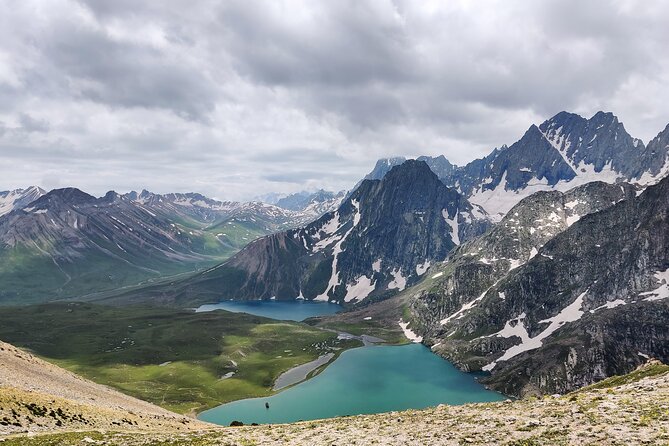
Reviewed · HIKING & TREKKING
The Best Monsoon Trek: Kashmir Great Lakes
The Kashmir Great Lakes trek is interesting because it can deliver two very different looks in the same week, snow up high with fresh meadow bloom below, especially when you time it for early July. This one runs out of Srinagar with a small group and a team that includes guides like Surendra Rana and Rishabh, who focus on getting you through safely when conditions change.
I love the way this trek treats food like part of the experience, with hot meals served in camp and mountain dishes that can include trout. I also like the camp setup, with standard A-shape tents plus a dedicated kitchen, dining, and toilet tent, and clean sleeping bags and mats so you can actually sleep after long hiking days.
The main drawback to plan for is weather swings, since rainfall can be abrupt in late July into August and wind can make slippery trails and colder nights more likely.
Key things I’d lock in before you go
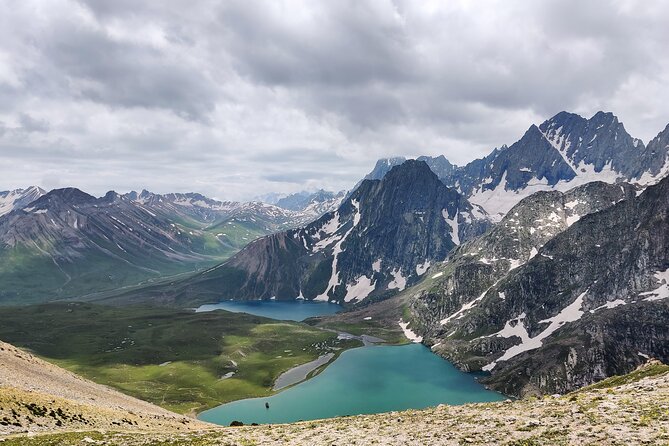
- Small group size (up to 11), so it feels more controlled and less crowded on narrow trails.
- BMC-certified trek guide with first aid kit, plus a team that stays alert when conditions turn.
- Standard tent camping for 6 nights, including sleeping bags and mats, not just barebones shelter.
- Major altitude checkpoints like Nichinai Pass (around 4,100 m), Gadsar Pass (about 4,210 m), and Zaj Pass (13,280 ft).
- Meals included across the trek, with breakfast, lunch, and dinner, and mountain-style comfort food.
- A good seasonal window where early July can show snow in the distance while meadows are in fresh bloom.
Timing the trek: snow meets bloom, then rain and cold move in
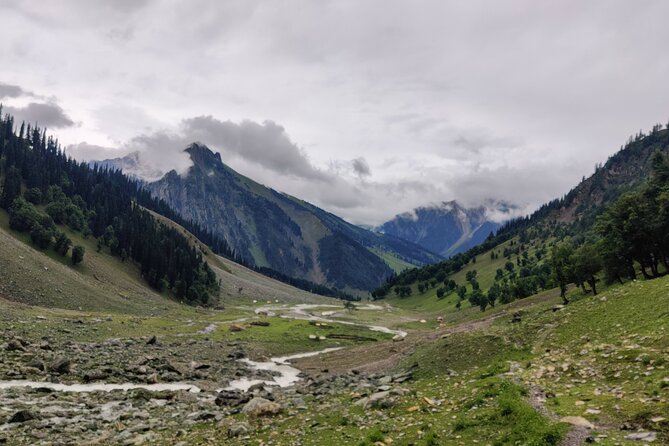
This trek starts in early July, and that’s a big part of why people chase it. In early July, you can still spot snow on higher altitudes while the meadows are in fresh bloom. If you want that classic contrast, early July is the sweet spot.
By late July into end of July, the snow melts away and the meadows move into full bloom. This is a better fit if you want more color and less snow in your views, and you still get warmer temperatures than mid-summer peak.
Late August changes the feel. Temperatures begin to drop again, flowers start to wither, and rainfall can be more than expected. If you go in this window, plan for damp trails and colder mornings and nights.
You can often continue into the second week of September, before snow starts to take over the higher reaches again. My practical advice is to pick your “look” first, snow or bloom, then build in extra weather tolerance.
More Hiking & Trekking in Srinagar:
- Kashmir Great Lakes Trek
★ 5.0 · 56 reviews - Mountain Hiking in Munnar (half day) By Munnar Info
★ 5.0 · 390 reviews - Half day trekking (munnar valley Trekking & Tours )
★ 5.0 · 310 reviews
Value check: what your $481 really buys on the trail
At $481 for an approximately 7-day trek, you’re paying for more than hiking. You get tent camping for 6 nights with double occupancy, plus transport support once you’re in Srinagar. You also get all fees and taxes handled, and a qualified guide who carries a first aid kit.
Food is included in a structured way: 6 breakfasts, 5 lunches, and 6 dinners. That matters because on trekking days, meal planning is usually what drains time and energy. Here, you get camp meals handled so you can focus on your pace and staying warm.
On the gear side, you’re not just getting a tent. You’re also provided clean sleeping bags and mats, plus an organized camp with a kitchen, dining space, and toilet tent with portable seats and camping stools. That kind of setup is one of those “small details” that becomes a big deal after a long day on steep ground.
What’s not included is equally important. You’ll cover personal expenses like tips and phone calls, you’ll handle transport to reach Srinagar from your hometown, and there’s no accommodation in Srinagar on the last day (you return to Srinagar late afternoon or early evening). If you need a porter for personal luggage, it’s INR 500 per bag per day (for bags under 12 kg), so pack what you can carry comfortably.
Srinagar to Sonamarg: the ride that sets the tone
You meet in Srinagar with a start time listed as 11:00 am, then the plan is to leave around 1:00 pm. You drive to Sonamarg and reach by about 4:30 pm, following the Sind River.
On the way, you cross over to the true right of the river at Wayil Bridge, which is about 25 km ahead of Srinagar. You’ll also pass Anchar Lake on the drive. I like this first day because it’s not a forced hike. It’s a scenic transfer that helps you settle into altitude and weather before the real trekking begins.
Day-by-day route: Nichinai, Vishansar, Gadsar, Tarsar, Gangabal
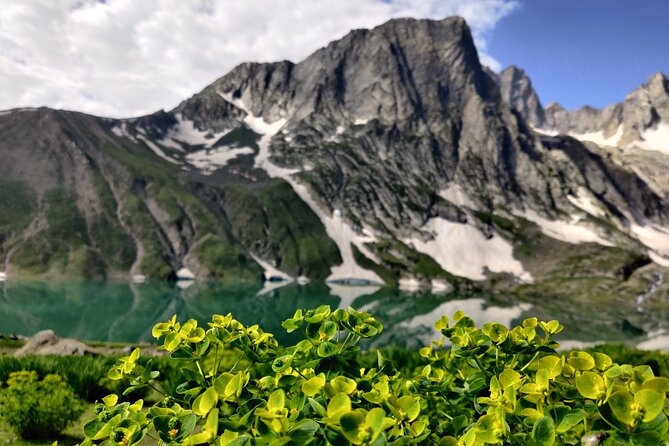
This circuit is all about moving between passes and alpine lake basins. Some days are long and demanding, others are comparatively easier, but every day has its own rhythm.
Line these Srinagar options up side by side
- Private 5-Day Kashmir Package Tour from Srinagar
★ 5.0 · 179 reviews - Kashmir Family Tour – 07 Days Includes Accommodation and Private Transport
★ 5.0 · 164 reviews - 6 Days Private Tour in Kashmir Valley
★ 5.0 · 140 reviews - Private 5-Day Charming Kashmir Package Tour from Srinagar
★ 5.0 · 138 reviews
Day 1: Drive Srinagar to Sonamarg, then settle for camp
You leave Srinagar after midday and land in Sonamarg by late afternoon. By the next day, your camp base is at Shitkadi, where the trekking starts. Think of Day 1 as your acclimation and camp prep day, not a fitness test.
Day 2: Shitkadi to Nichinai camp, follow the Nichinai stream (about 5 hours)
From your camp at Shitkadi, you start trekking toward Nichinai camp. The route follows the Nichinai stream to your right. After about 1.5 km upstream, you reach a meadow area with maple trees.
This is a good warm-up day because it builds you gradually into the higher terrain. You’re not sprinting, but you’re also not doing a long grind right away. If you’re the type who likes to feel legs working before you commit to the steeper passes, this day helps.
Day 3: Nichinai Pass to Vishansar Lake (about 4 hours)
Today begins with an ascent to Nichinai Pass, around 4,100 meters. The climb takes a couple of hours at a moderate pace, and then you cross over and continue toward Vishansar Lake.
This is the day you’ll feel altitude most, not because the hiking is the longest, but because the pass altitude is significant and your breathing will change. I’d keep your effort steady and avoid pushing to “finish fast.”
Day 4: Vishansar to Gadsar Lake via Gadsar Pass (about 10 hours, demanding)
This is one of the harder days. The trek from Vishansar to Gadsar is described as beautiful but demanding, and it crosses the highest point of the entire trek at Gadsar Pass, about 4,210 meters.
Expect a long day, with the extra strain that comes from the height and time on your feet. Plan on it being slow and methodical. If you like to race on descents, resist that urge. The goal is to arrive feeling strong enough for camp, not wiped out.
Day 5: Gadsar to Tarsar Lake (about 6 hours, comparatively easier)
Today is relatively easier compared with other days. You start with an initial steep hike that takes a little over an hour, then you transition to a trail that is gradual and mostly level plain.
This is the day I’d use to reset mentally. You’re still hiking at altitude, but the terrain is friendlier. If your calves got tight on Day 4, this is where they get a chance to recover a bit.
Day 6: Zaj Pass and onward to Gangabal Lake (about 6 hours)
You start with an ascent to Zaj Pass, and the pass is comparatively lower in altitude than the earlier two. Still, the numbers are real: Zaj Pass is listed as 13,280 feet (about 4,000+ meters).
The climb takes about two hours to reach the pass. After that, you continue onward toward Gangabal Lake.
I see days like this as “second pass day” fatigue. You might feel you already did the hardest part, but your legs are older today than they were on Day 3. Keep your pacing conservative and let the guide set the tempo.
Day 7: From Gangabal down to Naranag, then back to Srinagar (arrival 5 to 7 pm)
The last trekking day alternates between minor ascents and descents for about halfway. After that, there’s a steep descent all the way to Naranag.
You arrive back in Srinagar between 5 and 7 pm, depending on your start time from Gangabal. This day is great for views if you can enjoy moving downhill, but it can be tough on knees and shins. Give your legs careful support and don’t overstep on slippery sections.
Camp life you’ll actually appreciate after pass days
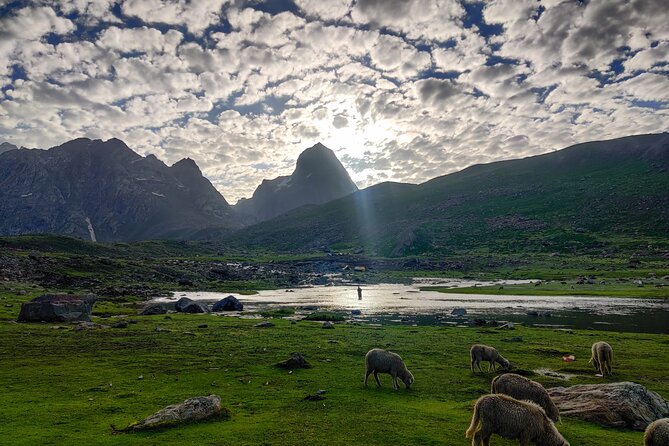
The trek includes 6 nights in standard tents with double occupancy. These are not flimsy shelters. You get an A-shape tent plus a kitchen and dining tent, and a separate toilet tent. Portable seats and camping stools are included, which sounds small until you’ve eaten a hot meal after a hard day.
You also get clean sleeping bags and mats. That’s a key value point for a trek like this, because cold, wet ground and uncomfortable sleep can wreck your energy for the next day.
Then there’s food. The consistent praise in the supplied trip feedback focuses on camp cooking and comfort, including hot, steaming soups, dals, rajma, pasta, and even popcorn. One specific highlight includes trout dishes cooked on the mountain.
In my view, this is where group trekking can succeed or fail. A great trek isn’t just about the lakes. It’s about showing up to camp and being able to warm up and eat something satisfying, without turning every evening into a logistics problem.
Fitness and altitude: what moderate means on paper
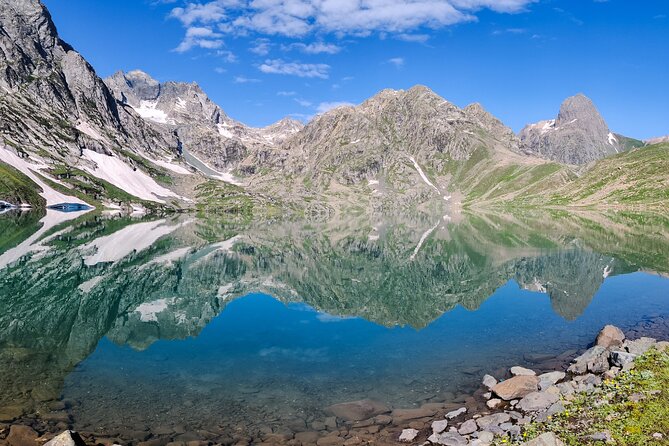
The trek is listed as requiring moderate physical fitness. In practice, you should be ready for a mix of steep climbs and at least one long demanding day.
The pass altitudes alone are enough to make you adjust your effort:
- Nichinai Pass around 4,100 m
- Gadsar Pass about 4,210 m, plus a long Day 4 (around 10 hours)
- Zaj Pass at 13,280 ft
Also, the weather can amplify difficulty. In late summer, sudden rain and wind can make footing trickier. Even if the route is well managed, your pace will slow when conditions turn.
My practical suggestion is simple: train for endurance and steady uphill walking, and make sure your legs can handle descents. The last day includes a steep descent to Naranag, and that’s usually the one that catches people off guard.
Weather reality: why guide vigilance matters on the Kashmir Great Lakes
In this part of Kashmir, the plan needs a weather backup. The trek is timed for monsoon season, and that means you can get abrupt rainfall, especially around late August. Temperatures also drop again late in the season, and you may see alpine flowers wither as cold moves in.
Good guide performance matters here. In the provided feedback, the work of Surendra Rana and Rishabh is highlighted for keeping the group safe when weather turned bad on the KGL trek. That kind of vigilance is exactly what you want when the sky changes fast and visibility and trail grip can shift quickly.
If weather forces changes, you should stay flexible. There isn’t a guarantee you’ll get an identical schedule every time, since mountain seasons, permits, and conditions can influence timing. The best mindset is to treat the trek as a guided route through changing conditions, not a fixed stopwatch event.
Should you book this Kashmir Great Lakes trek?
Yes, I think you should book if you want a supported Kashmir Great Lakes trek with tent camping that includes your sleeping setup, organized camp life, and meals. The value at $481 looks strongest if you don’t want to manage permits, guide logistics, and camp cooking yourself. The small group size, maximum 11 travelers, is also a plus if you prefer less crowd pressure on narrow trails.
Book with extra caution if you hate uncertainty in weather. Late July into August can bring rain and wind, and the terrain includes high passes plus long hiking days like the Vishansar to Gadsar push. If you’re sensitive about knees on steep descents, plan to take the final day slowly.
Finally, pick your month based on your goal:
- Early July for snow on higher reaches with fresh meadow bloom
- End of July for full meadow bloom with less lingering snow
- Late August to early September for cooler conditions and more rain risk
FAQ
What are the dates and season for the Kashmir Great Lakes trek?
The trek starts in early July. Snow is still present in higher altitudes in early July, and meadows are in fresh bloom. By end of July snow melts away and meadows are fully blooming, while late August brings colder temperatures, with flowers beginning to wither and rainfall becoming more likely.
How long is the trek?
It lasts about 7 days (approx.).
Where do I start and where do I end?
You start in Srinagar, and the trek ends back at the meeting point. On the last day, the activity returns to Srinagar between 5 and 7 pm.
How many nights are spent camping, and what’s the lodging like?
You get accommodation for 6 nights in standard tents with double occupancy.
Is food included?
Yes. Breakfast is included 6 times, lunch 5 times, and dinner 6 times.
What kind of guide support do I get?
You travel with a mountaineering qualified and BMC certified professional trek guide who carries a first aid kit.
What are the big altitude points on the route?
Nichinai Pass is around 4,100 meters. Gadsar Pass is about 4,210 meters. Zaj Pass is listed as 13,280 feet.
What transportation support is included?
There is transport support from Srinagar onwards.
Do I need to arrange a porter for my luggage?
A porter is not included. Porter service is available at INR 500 per bag (under 12 kg) per day.
Are there any limits on group size?
Yes, the maximum group size is 11 travelers.
Latest reviews in from Srinagar
- Glimpse of Kashmir★ 5.0 · 17 reviews
- 5 Days Kashmir Beauty Tour with Accommodation and Transport★ 5.0 · 21 reviews
- Innova To and Fro Pvt. Airport Transfer from Srinagar / Dal Lake★ 5.0 · 26 reviews
- 6 Days Private Tour in Kashmir★ 4.5 · 31 reviews
- Kashmir Tulip Festival★ 5.0 · 43 reviews
- Private Sedan Cab to and from Srinagar Airport and Dal Lake★ 5.0 · 46 reviews
- Pahalgam Gulmarg Srinagar Tour★ 4.5 · 47 reviews
- Kashmir Great Lakes Trek★ 5.0 · 56 reviews
Hiking & Trekking, compared.
Mountain Hiking in Munnar (half day) By Munnar Info
Read our review →
Half day trekking (munnar valley Trekking & Tours )
Read our review →
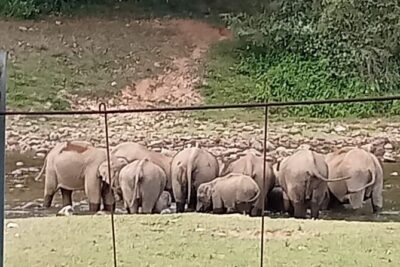
Wild Elephant Anakulam & Waterfalls Tour(munnar valley Trekking)
Read our review →
Browse the lists this tour appears in