
Reviewed · WALKING TOURS
3 Hour Walking Tour of Buddhism in Sarnath
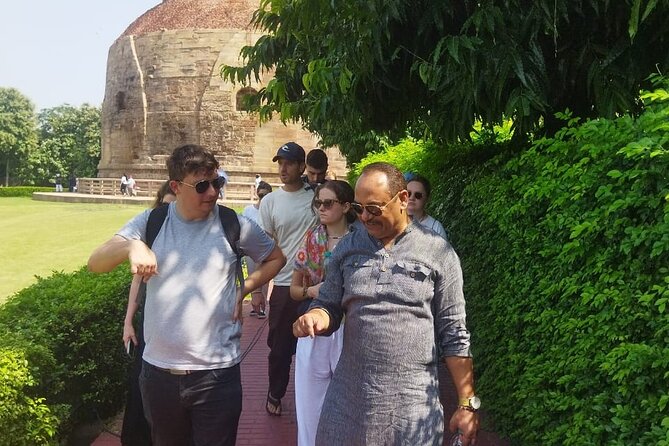
Sarnath is one of those places where the story matters as much as the setting. In just about 3 hours, this walking-focused tour takes you to the quiet heart of Buddhism here, centered on Dhamekh Stupa and the nearby museum and temple areas. I like that it is structured as a private experience, so the guide can actually pace the walk around what you want to understand.
Two things I especially like: first, the tour mixes walking with key stops instead of turning it into a long “drive and glance” session. Second, you get inside the context, not just the photos, with the Ashoka Pillar (the four-lion emblem) explained in the museum stop. The main drawback to think about is simple: this is a weather-dependent walk, so if rain or bad conditions hit, your day may shift or pause.
Key Points at a Glance
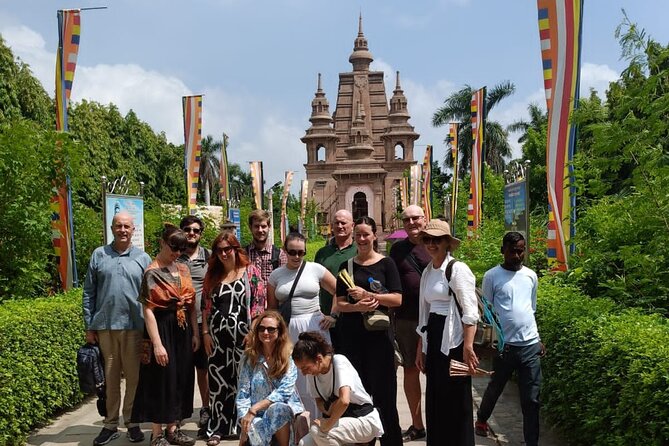
- Private group pacing so you can ask questions and slow down when something clicks
- Dhamekh Stupa as the anchor stop, tied to the Buddha’s first sermon after enlightenment
- Ashoka Pillar museum visit, including the famous four guardian lions used for India’s national emblem
- A walking route through ruins, temples, stupas, and monuments without feeling rushed
- Roundtrip tuk tuk from Varanasi, which keeps time focused on Sarnath instead of transit
- Good-weather requirement, since this is an outdoor walk
Sarnath in 3 Hours, What You Really See Around Dhamekh Stupa
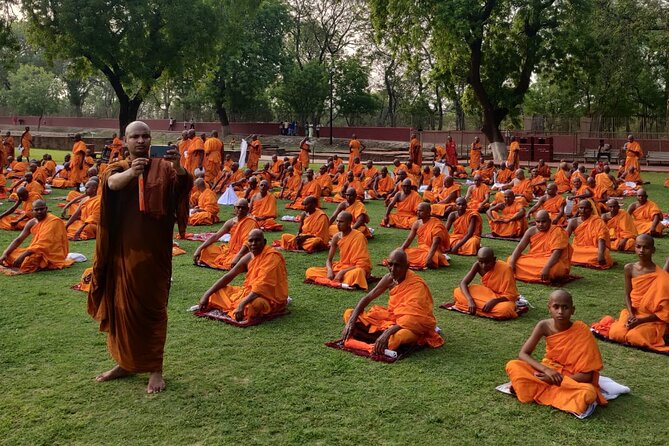
Sarnath is about 10 km from Varanasi, close enough for a half-day outing, but it feels worlds away the second you settle into the sacred core. The tour’s design is smart for time-poor travelers: you get a focused loop that concentrates on the most important Buddhist landmarks, with walking as the main mode.
Your centerpiece is Dhamekh Stupa. Sarnath is famous as the place where Gautama Buddha gave his first sermon after enlightenment, and Dhamekh Stupa is one of the most meaningful visual anchors for that story. This is not a “check the box” stop. With the guide explaining what you are seeing, you start connecting the physical site to the ideas behind it.
A big bonus is the way the walking route works. You are not just standing at one monument. You move through the wider Sarnath area where ruins, temple buildings, stupas, and other monuments shape the overall feel of an ancient center of learning and devotion. Sarnath was known as a major school of learning from roughly the 6th century BC through the 12th century AD, and the tour gives you enough time to sense that long arc.
More Walking Tours in Varanasi
- Private Heritage and Spiritual Walk Tour – Varanasi Kashi
★ 5.0 · 172 reviews - Cultural & Spiritual Trails of Old Town Varanasi Guided Walking Tour
★ 4.5 · 73 reviews - City of good life walk (South Varanasi Walk)
★ 5.0 · 37 reviews
Starting at JHV Mall and How the Tuk Tuk Keeps You On Time
The meeting point is JHV Mall, The Mall Rd, Varanasi cantonment. You end back at the same place, which makes the day easier to plan. If you like clear start and finish points, this is a good match.
Transportation is roundtrip tuk tuk from Varanasi. That matters more than it sounds. In Varanasi, traffic and route choices can be a wild card, and time evaporates fast. A scheduled roundtrip ride means you can arrive with less stress and focus on what you came for.
You also get a mobile ticket, which is useful when you are carrying limited paperwork. And the tour is described as being near public transportation, so even if you are staying off the most convenient routes, you usually have options.
One more practical note: because this is a half-day walking tour, your comfort will depend on your readiness to walk for about three hours total. If you know you need frequent breaks, it is worth telling your guide early so the pacing can adapt.
Dhamekh Stupa and the Ashoka Pillar Museum, the Core Story
Dhamekh Stupa is the first stop, and it is the kind of site where the guide’s explanations change what you notice. You will visit the stupa area and the surrounding complex, including ruins and a Buddhist temple presence in the vicinity. The tour also includes a museum visit connected to this heritage.
The museum stop is one of the most valuable parts for first-timers, because it brings in a tangible piece of symbolism: the Ashok Pillar with its four guardian lions. These lions are tied to independent India’s national emblem, so you get a link between ancient art and modern identity. Even if you only skim museums on other trips, this one tends to land because you can connect the object to what you just saw at the sacred site.
If you enjoy history through artifacts, you will probably find this museum component more satisfying than another “temple photo and move on” experience. It gives you something to look at while your guide connects the dots.
Timing-wise, this stop is where you build the mental map for the rest of Sarnath. Once you understand why Dhamekh Stupa matters, it gets easier to interpret the ruins, smaller stupas, and the overall sacred layout you pass later.
Ruins, Temples, Stupas, and Monuments You Walk Past
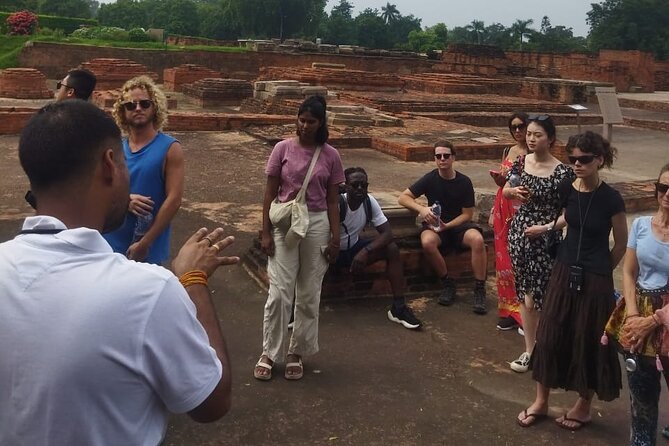
A lot of walking tours say “you’ll see ruins and temples,” then spend half the time in transit or outside without much context. Here, the walking route is clearly meant to maximize sightseeing time.
As you explore the Sarnath area, expect to move through:
- ancient ruins tied to Sarnath’s long role as a learning center
- temple areas and stupas that visually reflect how devotion and study coexisted
- monuments that help you understand the layered history
The value is not just what you see, but how you see it. When the guide explains what each area likely represents, you stop treating the site like a random set of buildings. Instead, you start recognizing patterns, like how sacred structures cluster around core significance.
One practical consideration: because Sarnath includes archaeological ruins, you might see uneven ground or areas that require a careful step. If you have foot issues, wear supportive shoes and plan for slow walking.
A different shape of Varanasi day:
- Varanasi : Full Day City Highlights Day Tour & Ganges Cruise
★ 4.8 · 520 reviews - Hidden Secrets of Varanasi: lively Tradition (Guided Tour)
★ 5.0 · 429 reviews - Varanasi: Sunrise Boat Tour with Arti Ceremony
★ 5.0 · 375 reviews - Banaras Wala Tours
★ 5.0 · 329 reviews
Mulagandhakuti Vihara Temple and the Sri Lankan Mahabodhi Society Connection
Another named highlight is the Mulagandhakuti Vihara Buddhist temple at Sarnath. It’s described as a temple built by the Sri Lankan Mahabodhi Society in 1931, and it is associated with where Lord Buddha had spent time in this sacred area.
Even if you know little about modern Buddhist institutions, you will probably like this stop because it shows continuity. Sarnath is ancient, but the religious story does not freeze in the distant past. A temple built in the early 20th century still sits in conversation with older ruins, reminding you that pilgrims and scholars kept returning and building.
This temple stop also tends to add a slightly different mood from the Dhamekh Stupa focus. Dhamekh is monumental and symbolic, while a vihara temple setting can feel more like a living religious space, even while you are sightseeing.
If you like when a tour includes both the ancient and the more recent layers of cultural memory, this is a strong inclusion.
Guide Style, English Clarity, and How to Make the Walk Work for You
This is where a good guide earns their fee. One highlight from past experiences is that the guide experience can be both knowledge-rich and lightly humorous. In one account, the guide is named Shyam, and the key point is that the explanations come in clear English, easy to follow even if you are not used to fast travel storytelling.
You should not assume every guide will be exactly the same, but the overall tour concept depends on your guide giving you the narrative thread. If you enjoy hearing the “why” behind religious sites, this tour is designed for you.
How to get the most out of it:
- Ask your guide to explain the first-sermon connection while you are at Dhamekh Stupa, not after
- If you notice the Ashoka Pillar lions, ask what makes them such a strong national symbol today
- If you are traveling solo, use the private format to ask more questions than you would on a group walk
Also, since this is a private tour for your group only, you can request a pacing adjustment if you want more time inside the museum area or slightly more time walking between monuments.
Price and Value, What You Pay for in This 3-Hour Format
At $33.55 per person, this tour is priced in a way that often feels fair for Varanasi, especially when you compare it to the cost of cobbling together transportation plus paid entry plus a guide.
Here is what the price is effectively covering:
- private tour format (you are not mixing into a larger group dynamic)
- roundtrip tuk tuk transport from Varanasi
- a walking itinerary designed for a compact half-day
- admission ticket included
- a museum stop, not just outdoor sightseeing
You also benefit from the fact that the tour is often booked ahead, with an average of about 24 days in advance. That suggests demand is steady. If Sarnath is a top priority, you will likely have the best choice by booking early rather than hoping for last-minute availability.
Is it worth it if you are the type who likes to wander independently? Maybe not. If you are fully comfortable reading your way through sites with a guidebook, you could save money. But if you want the site story stitched together in a few hours, the guide plus included admissions is what makes this feel like a good deal.
Who This Private Sarnath Buddhism Walk Suits Best
This tour fits best if you like history and spirituality, and you also like efficiency. In three hours, you can cover the essentials of Sarnath without turning the day into a half-day of chaos.
You will probably enjoy it most if:
- You want a guided explanation of major Buddhist sites rather than self-guided wandering
- You like the mix of monuments plus a museum artifact like the Ashoka Pillar
- You appreciate a private, only-your-group format
- You are traveling with limited time in Varanasi and want a clear plan
It may be less ideal if you are determined to do everything at your own pace with no structured stops. Still, you can soften that issue by asking your guide to adjust time at the museum or walking segments.
Because most travelers can participate and the overall time is about three hours, it is a reasonable “first Sarnath day” option.
Practical Tips for a Comfortable Walk in Sarnath
Since this is a walking tour, a few basics matter. I always plan for:
- Comfortable shoes you can trust on uneven or worn stone
- Water in your bag if you tend to get thirsty while walking
- Sun protection, especially if your tour day is bright
- Light layers for evenings or changing weather
Also pay attention to the weather requirement. The experience notes that good weather is needed. If rain is in the forecast, plan your day with some flexibility, because the tour can be canceled due to poor weather and offered a different date or a full refund.
Finally, since your tour ends back at the meeting point, you can more easily plan dinner or the next activity without hunting for a new pickup location.
Should You Book This 3-Hour Buddhism in Sarnath Tour?
I’d book this if Sarnath is high on your list and you want a tight, well-paced orientation to the most important Buddhist sites. The strongest selling points are the compact timing, the private format, and the way Dhamekh Stupa plus the Ashoka Pillar museum stop gives you both spirituality and symbolism in one loop.
I would skip it or swap to a different plan if you hate guided walks or if you are traveling on a day when weather is likely to be poor. The tour depends on good conditions, and three hours of walking is easier when the ground and visibility are pleasant.
If you are deciding now, here is my quick call:
- If you value context, book it.
- If you want independence and zero structure, consider self-guided options.
- If you are traveling during peak demand, book sooner, since it is commonly reserved about a month in advance.
FAQ
How long is the 3 Hour Walking Tour of Buddhism in Sarnath?
The tour lasts about 3 hours.
Where do I meet, and where does the tour end?
You start at JHV Mall, The Mall Rd, Varanasi cantonment, Varanasi, Uttar Pradesh 221002, India, and the tour ends back at the meeting point.
Is this tour private or shared?
It is a private tour/activity, so only your group participates.
Does the tour include transport from Varanasi?
Yes. Roundtrip tuk tuk transport from Varanasi is included, and pickup is offered.
What stops are included during the walk?
Dhamekh Stupa, plus visits around Sarnath that include ruins, a Buddhist temple, and a museum. The museum features the Ashok Pillar with four guardian lions, and you also visit the Mulagandhakuti Vihara Buddhist temple.
What happens if the weather is bad or I need to cancel?
The tour requires good weather. If it is canceled due to poor weather, you will be offered a different date or a full refund. You can also cancel for free up to 24 hours in advance for a full refund.
Latest reviews in from Varanasi
- Private Day Tour in Varanasi★ 5.0 · 44 reviews
- Group Yoga Class with Siddharth from Beginner to Advance★ 5.0 · 45 reviews
- Pilgrimage Varanasi★ 5.0 · 50 reviews
- Experience Varanasi Tour: 3 Days Private Guided Tour★ 5.0 · 51 reviews
- Complete tour of varanasi with official guide★ 5.0 · 51 reviews
- Varanasi Street Food Crawl (2 Hours Guided Food Tasting Tour)★ 4.5 · 69 reviews
- 3 Days Admirable Tour in Varanasi with private tour guided★ 5.0 · 72 reviews
- Photo Tour In Holy Varanasi★ 5.0 · 73 reviews
Walking Tours, compared.

The Great Indian Food Tour: Old Delhi Food and Heritage Walk
Read our review →
Old Delhi Food, Heritage&Cultural Walk with Rickshaw ride to Masterji Kee Haveli
Read our review →
Fontainhas Heritage Walk At Latin Quarters of Goa
Read our review →Browse the lists this tour appears in