
Reviewed · WALKING TOURS
Cultural & Spiritual Trails of Old Town Varanasi Guided Walking Tour
If you want to understand Varanasi fast, this 2-hour walking route is interesting in a very practical way: you are walking the same lanes pilgrims use, then pausing at major ghats and temples while your guide explains what you are actually seeing. It is also timed around big daily ritual energy, especially at Dashashwamedh Ghat, where the famous Ganga aarti happens every evening.
I like that it is built for first-time visitors who feel overwhelmed by Varanasi’s street maze. I also like the small-group format and the fact that your storyteller guide makes room for questions in English or Hindi. One thing to consider: the riverfront and temple areas can be intense, and the route may include stops that some people consider a sales pitch, so set your expectations before you go.
Key Points Worth Your Time
- A 2-hour walking format that helps you get bearings without committing to a long day
- Dashashwamedh Ghat for the oldest, holiest ghat atmosphere and evening Ganga aarti
- Manikarnika Ghat for a sobering look at cremation traditions tied to Moksha beliefs
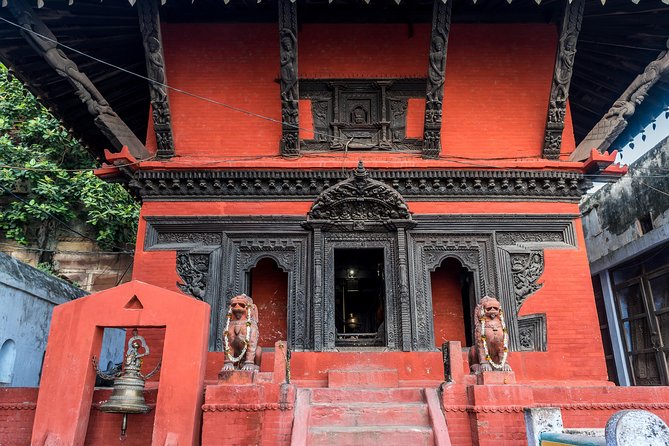
- A Nepali-style wooden temple often described as a Mini Khajuraho
- Narrow lanes, old markets, and passed-by sights like masonry observatories for context beyond the big ghats
- A guide who answers questions in English and Hindi, with group size capped at 20
Why This 2-Hour Old Town Varanasi Walk Works
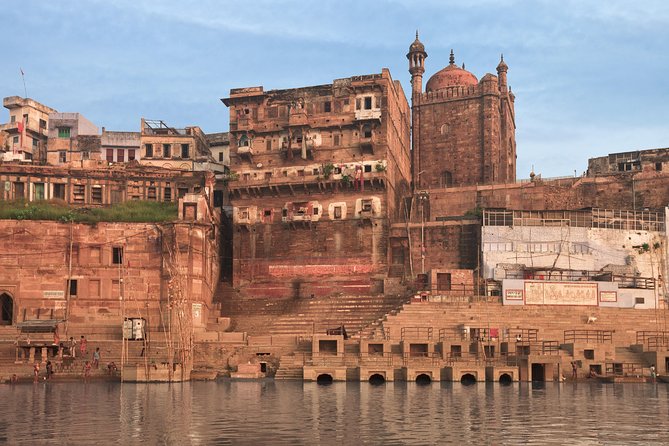
Varanasi can be gorgeous and confusing at the same time. Streets twist, ghats stack up like staircases into the river, and every corner seems to have a temple, a story, or both. If you try to do it alone, you can easily miss what matters most, or get turned around when you are trying to reach one key spot.
This tour gives you a focused, walkable spine through Old Town. Two hours is just long enough to connect dots, but short enough that you are not stuck fighting crowds for your whole day. Since it is a walking tour, you will spend your time where the city’s meaning lives, along the ghats and through the lanes, rather than bouncing between stops in a vehicle.
It also helps that the tour is positioned as an overview. Instead of pretending you will master Varanasi in one afternoon, you get your basic framework. Then you can return later with a better sense of what to look for and why.
More Walking Tours in Varanasi
- Private Heritage and Spiritual Walk Tour – Varanasi Kashi
★ 5.0 · 172 reviews - 3 Hour Walking Tour of Buddhism in Sarnath
★ 5.0 · 160 reviews - City of good life walk (South Varanasi Walk)
★ 5.0 · 37 reviews
Meeting at St. Thomas Church and Getting Oriented
Your tour starts at St. Thomas Church on Luxa Rd (Luxmanpura, Laxmanpura, Ramapura Luxa area). The activity ends back at the same meeting point. That is a small but important detail, because it keeps your stress level lower. You do not have to figure out how to return after walking in tight lanes near the river.
This is also near public transportation. Even if you are not using a car, you can plan a simple route to the start and back. The tour does not include hotel pickup and drop, and there is no air-conditioned vehicle, which makes sense for a walking experience, but it also means you should plan for heat and sunlight when conditions are rough.
Group size is capped at 20 travelers, so it does not feel like a stampede. With a cap that size, you can actually hear explanations, and the guide can respond when questions pop up.
Dashashwamedh Ghat: The Oldest Ghat and the Evening Aarti Energy
You begin at Dashashwamedh Ghat, described as the oldest and holiest ghat, and the heart of the daily action. The big draw here is the Ganga aarti, which takes place every evening, along with the dense mix of ritual, chanting, and sightlines that make the Ganges feel like the city’s central nervous system.
What I love about starting here is that it sets the tone. Even if you are not deeply religious, you can sense how Varanasi works as a lived-in place, not just a museum. Your guide’s job is to translate the symbolism into something you can understand on the spot, including the idea of energy transformation and why people come to these steps again and again.
You should also remember what a ghat is, practically. It is not just a viewpoint. It is a working, shared space where ceremonies, washing, prayers, and daily life overlap. So expect movement. Expect layers of people. And if you are hoping for a quiet, empty scene, adjust your expectations.
Manikarnika Ghat, Moksha Beliefs, and a Reality Check
Next comes Manikarnika Ghat, called the holiest among the sacred riverfronts and famous for the belief that if a person is cremated there, the soul finds salvation, Moksha. This stop is spiritual, but it is also a direct look at a tradition that is not staged for tourists.
Be mentally prepared for the intensity. One of the most important values of a guided walk here is context. Without explanation, you may only react emotionally or misread what you are seeing. With the guide, you are more likely to understand the why behind the ceremonies, even if you do not share the beliefs.
Also, this is the part where you should decide what kind of experience you want. If you feel uncomfortable with death-related rituals, you can still walk with the group, but keep your boundaries clear. If you want to understand the city’s spiritual logic, this ghat gives you a raw piece of it.
A different shape of Varanasi day:
- Varanasi : Full Day City Highlights Day Tour & Ganges Cruise
★ 4.8 · 520 reviews - Hidden Secrets of Varanasi: lively Tradition (Guided Tour)
★ 5.0 · 429 reviews - Varanasi: Sunrise Boat Tour with Arti Ceremony
★ 5.0 · 375 reviews - Banaras Wala Tours
★ 5.0 · 329 reviews
Passing a Holiest Shiva Temple: How the Sacred Gets Linked Together
As you move along the route, you will pass by the holiest Shiva temple on the way. Even without stopping for a long time, having a guide point out what you are seeing changes your experience. Varanasi is full of temples, but the guide helps you understand how the pieces connect, so you start seeing the city as a system of worship rather than a collection of buildings.
This is also where your walking pace matters. With narrow lanes and frequent turns, stopping too long at one place can throw off the flow. The tour format keeps it moving, so you can cover multiple layers without feeling like you are constantly rushing.
The Wooden Temple (Mini Khajuraho) in Nepali Style
One of the standout cultural stops is the Wooden Temple, also known as Mini Khajuraho, built in a Nepali style of architecture. I like this kind of stop because it breaks the pattern of only looking at riverfronts. It reminds you that Varanasi’s culture is not just about the Ganges. It is also about artistic traditions, temple design, and the ways different regions influenced what you see here.
This temple also makes a great photo moment. If you enjoy architectural details, you will likely spend extra time looking upward, not just at eye-level altars. Wooden structures often show wear and craftsmanship that you can miss if you are only chasing the biggest landmarks.
One more practical note: a temple stop can mean tight spaces and lines, even if the group is small. Wear footwear you can stand in and walk in for the whole tour. This is a two-hour walk, and the “easy stretches” can still be uneven underfoot.
Centuries-Old Lanes, Old Markets, and Masonry Observatories
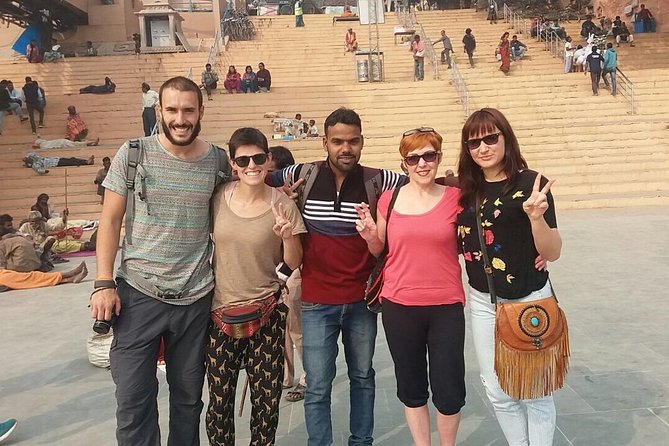
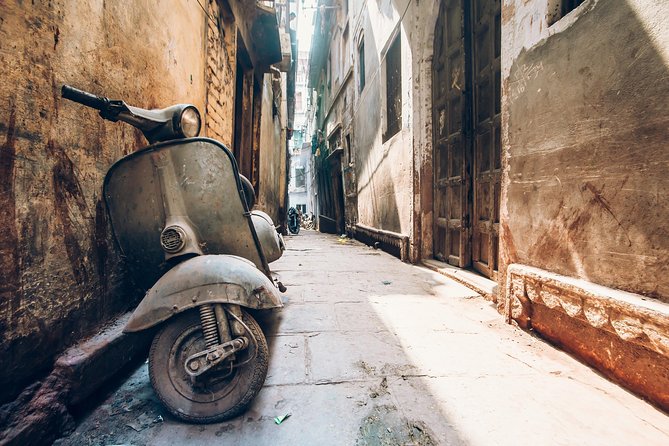
After the major religious anchors, the tour shifts into the texture of Old Town: centuries-old buildings, narrow lanes, and old markets of Kashi. This part is what makes the tour feel more like “understanding the city” than just “checking off sights.”
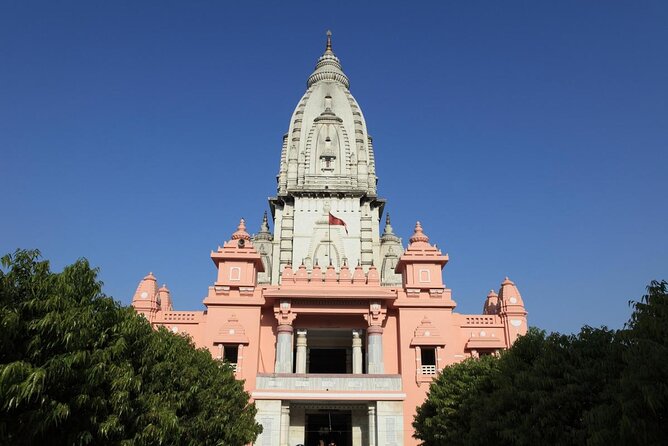
You are also guided past some of the most photographed temples in the city. That matters because you can see why those spots attract attention, instead of just noticing that everyone else is taking pictures.
Then there are masonry observatories passed along the route. Even if you do not know what they are at first glance, a guide can help you connect them to the idea that people built tools and structures to make sense of the world. In a city where religion dominates the headlines, it is interesting to notice how practical knowledge shows up in stone too.
Storytelling, Questions, and the Guide Factor (Manish Example)
The best walking tours in a place like Varanasi are really guide tours. The information on your route matters, but how it is explained matters just as much.
This is where the guide’s role shines. You get a friendly storyteller/guide who can speak English and Hindi, and you get time for questions. That is not a throwaway feature. When you ask why people do something, or what a symbol means, the whole stop stops feeling like a blur.
One guide name that stands out from the experience is Manish, who was described as arriving early, being friendly, and answering questions. You can use that as a confidence signal: the tour is designed around real human explanation, not a script you listen to while you walk.
Price, Value, and What You Are Really Paying For
The price is $11.17 per person, which is unusually low for a guided walking tour that covers major ghats plus temple and architecture stops. You are not paying for luxury here. You are paying for a guide to translate a complicated city into something you can follow.
The value comes from three parts:
- You get a structured route through major areas without getting lost.
- You get explanations for meaning, especially at sacred stops where context is everything.
- You get a small-group experience that stays manageable, capped at 20.
There is also mention of group discounts and a mobile ticket, which helps keep it easy to use. If you are trying to keep costs down while still seeing the right things, this is one of those “you cannot really do this alone as well” moments.
Just remember what is not included. There is no food, no drinks, and no hotel pickup/drop. So budget for water and snacks on your own if you need them. Also, since there is no air-conditioned vehicle, you will feel the climate more than you would on a car-based tour.
Timing in Varanasi: Plan Around Crowds and the Ghat Rhythm
You should know that the tour is weather-dependent. If conditions are poor, you may be offered a different date or a full refund. So before you count on it, check the local forecast and be ready to adjust.
You are also on a 2-hour timeline, so you want your energy level to match the walk. Ghats and lanes tend to get crowded fast, especially around major ritual moments. Starting with Dashashwamedh Ghat means you are near a key point in the daily rhythm, and the rest of the route follows that momentum.
If you are visiting Varanasi for the first time, this is a smart way to choose one “guided” block in your schedule, and then let the rest of your day be free exploration with better direction.
Who This Tour Suits Best
This experience is especially good for:
- First-time visitors who want an overview of Old Town without getting lost
- People who like asking questions and learning the meaning behind religious sights
- Travelers who want a walkable route that includes both ghats and temple architecture
- Anyone who prefers a small group rather than a large tour bus crowd
It may be less ideal if:
- You want a purely sightseeing walk with zero chance of discomfort at death-related rituals, since the route includes Manikarnika Ghat
- You strongly dislike any shopping-style stop or sales pressure, since one past participant raised concerns about a silk shop after a good start
Should You Book This Old Town Varanasi Walking Tour?
I think you should book it if you want to understand the city’s spiritual geography quickly. The combination of Dashashwamedh Ghat, Manikarnika Ghat, a Nepali-style wooden temple, and the surrounding lanes is exactly the kind of route that gives you context, not just photos.
You should pass or be cautious if you know you cannot handle the intensity that comes with riverfront cremation traditions, or if shopping pitches will sour the experience for you. Also, treat it like what it is: a walk. Comfortable shoes and heat-smart planning matter.
For $11.17, with a small group and English or Hindi storytelling, this is strong value. You are paying for a guide to help you read a city that otherwise can feel like a maze.
FAQ
How long is the Cultural & Spiritual Trails of Old Town Varanasi guided walking tour?
It runs for about 2 hours.
Where does the tour start?
The meeting point is St. Thomas Church on Luxa Rd in the Luxmanpura area of Varanasi.
Does the tour include hotel pickup or drop-off?
No. Hotel pickup and drop-off are not included.
Is it mostly walking?
Yes. It is a guided walking tour focused on the ghats and the lanes of Varanasi.
Which major stops are included?
You visit Dashashwamedh Ghat, Manikarnika Ghat, pass by a Shiva temple, and explore the Wooden Temple. The route also includes old lanes, old markets, and sights such as masonry observatories.
Is there an admission ticket fee?
The information provided notes free admission for the Dashashwamedh Ghat stop. Other costs are not stated.
What languages does the guide speak?
The guide can speak English and Hindi.
How large is the group?
The tour has a maximum of 20 travelers.
What is the cancellation policy?
Free cancellation is offered. You can cancel up to 24 hours in advance for a full refund.
What happens if the weather is poor?
The experience requires good weather. If it is canceled due to poor weather, you will be offered a different date or a full refund.
Latest reviews in from Varanasi
- Private Day Tour in Varanasi★ 5.0 · 44 reviews
- Group Yoga Class with Siddharth from Beginner to Advance★ 5.0 · 45 reviews
- Pilgrimage Varanasi★ 5.0 · 50 reviews
- Experience Varanasi Tour: 3 Days Private Guided Tour★ 5.0 · 51 reviews
- Complete tour of varanasi with official guide★ 5.0 · 51 reviews
- Varanasi Street Food Crawl (2 Hours Guided Food Tasting Tour)★ 4.5 · 69 reviews
- 3 Days Admirable Tour in Varanasi with private tour guided★ 5.0 · 72 reviews
- Photo Tour In Holy Varanasi★ 5.0 · 73 reviews
Walking Tours, compared.

The Great Indian Food Tour: Old Delhi Food and Heritage Walk
Read our review →
Old Delhi Food, Heritage&Cultural Walk with Rickshaw ride to Masterji Kee Haveli
Read our review →
Fontainhas Heritage Walk At Latin Quarters of Goa
Read our review →Browse the lists this tour appears in