
Reviewed · WALKING TOURS
Evening Walking tour with Fire Ceremony – The Pushkar Route
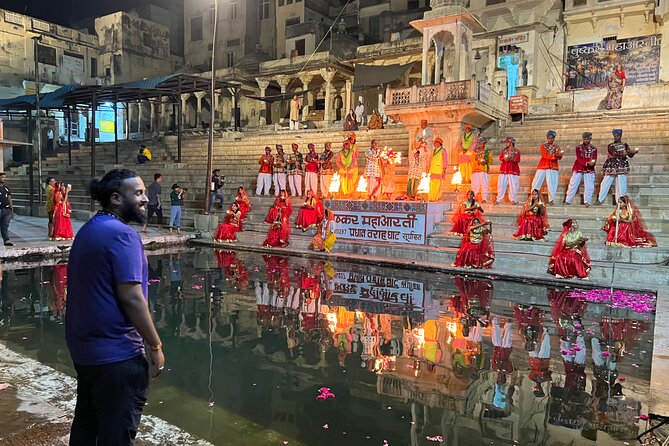
Pushkar at night feels gentler than Pushkar in daylight, and this walking tour is built for that mood. You’ll move temple to temple, and then you’ll end up at the water for the Maha Aarti (fire ceremony), where bells and ritual sounds do a lot more than just look pretty.
Two things I especially like: the focus on temple spirituality without shopping pressure, and the calm, guided walk that helps you understand what you’re seeing.
The one thing to consider is that this is a religious, nighttime experience, so you should be comfortable with the sights, sounds, and the idea of respectful participation around active worship areas, including the ghats by the lake.
Key Highlights You’ll Notice Fast
- Maha Aarti at Brahma Ghat at Pushkar Lake, with the whole ritual atmosphere in one place
- A no-shopping walking format, so the evening stays focused on temples and customs
- A guided route that reaches places you may struggle to find on your own, especially smaller temple stops
- Multiple worship sites in one 3-hour circuit, including Brahma Temple, Varaha Temple, and Gurudwara Sahib
- A slow lake walk around the 52 Ghats, with breaks for photos and small, older temple corners
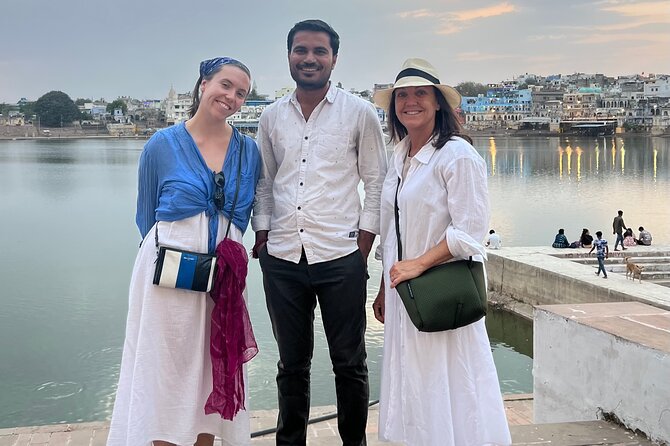
- Friendly local guiding, with guides like Manish and Kapil praised for being approachable and good at answering questions
Evening Pushkar: why 5 pm changes everything by the lake
Pushkar is famous in the day. But after the sun drops, the town shifts into something more reflective. You trade daytime traffic for temple bells you can actually hear, and you start to notice details you’d miss when everything is moving fast. This is exactly the kind of evening walk that helps you see the town as more than a checklist of sights.
The tour starts at 5:00 pm, and it’s paced for a real evening experience, about 3 hours total. The group stays small, with a maximum of 6 travelers, which matters in a place like Pushkar where temple steps, street corners, and lake access can make crowds feel tighter. With a small group, your guide can point things out and keep the walking comfortable.
For me, the big draw is that it’s not only about viewing temples. It’s about understanding the why behind the rituals, especially once you reach the lake for the fire ceremony. And because it’s described as a shopping-free tour, you won’t get pulled into souvenir stops that can drain the mood.
More Walking Tours in Pushkar
- Spiritual City Walking Tour-THE Pushkar Route
★ 5.0 · 907 reviews - Afternoon Walk Tour with Sunset & Fire Ritual -The Pushkar Route
★ 5.0 · 119 reviews - Evening Walking Tour with Fire Rituals-The Pushkar Route
★ 4.9 · 108 reviews
How the tour runs: pickup, tickets, and a small-group pace
If you like tours that feel organized without feeling rushed, this one fits that style. You’ll have pickup offered, and the tour uses a mobile ticket, which is handy for a city where meeting points can be confusing at dusk.
They also note that the tour is near public transportation, so you have options if you don’t want pickup. The “most travelers can participate” note is a good sign that the route is designed for typical visitors, not just hardcore hikers.
What you should plan for: it’s an evening walking route with multiple stops, including along the lake area. That means you’ll want comfortable shoes and a bit of patience as you move through worship zones. This is also a fire-ritual experience, so expect a few moments where you’ll pause and watch, rather than constantly moving.
The tour includes admission tickets for the listed stops. That’s a practical value win because you don’t have to scramble for entry fees while also trying to keep up with the group.
Brahma Ghat: where the evening Maha Aarti feeling really hits
Your route begins at Brahma Ghat, one of the lake ghats known for the Maha Arti (fire ceremony). This is the kind of place where the waterfront isn’t just scenic, it’s functional. It’s where rituals happen, where the crowd gathers, and where the meaning of Pushkar Lake becomes obvious.
The ghat area has a temple connection right at the entrance side of the waterfront, and the tour makes time for you to take it in. When you’re standing there with your guide, you’ll get more context than you would on your own, including why this spot is singled out for the evening rituals.
One reason I like starting here is that it sets the tone for the rest of the evening. After you see the setting and learn what the ceremony is about, the later temple stops feel less random. You start to connect the dots between the gods, the architecture, and the worship patterns around the water.
There is also a second visit timed for the evening rituals. That means you’re not only seeing a location, you’re seeing the rhythm change as night settles in.
Brahma Temple: a 14th-century stop that explains the creator-god focus
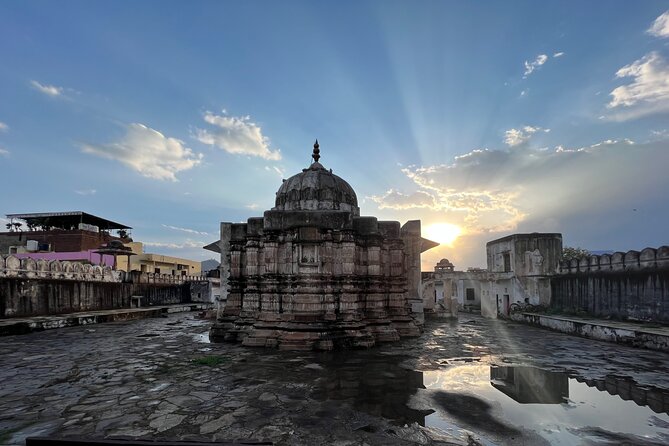
Next, you visit the Brahma Temple, one of the few existing Hindu temples dedicated to Brahma. Pushkar is one of those places where religion is not a museum thing. It’s living practice, and the temple is a core part of that.
The temple is described as dating to the 14th century, with later changes to parts of the structure. That matters because older temples can feel confusing if you don’t know what you’re looking at. A guided stop helps you connect the visual features to the temple’s place in local devotion.
You’ll get about 30 minutes here, which is enough time to see the main areas, read the mood on people’s faces, and ask questions without feeling like you’re standing still forever. It’s not just a photo stop. It’s a chance to understand why Brahma is honored here and why this is a key stop on a Pushkar route.
Potential drawback to keep in mind: temples are active worship spaces. Even when a tour is “scheduled,” you’ll want to follow your guide’s instructions and keep your movements respectful. If you’re traveling in a very casual, joking mindset, you might feel out of place.
A different shape of Pushkar day:
- Spiritual Walking tour with Puja Ceremony -The Pushkar Route
★ 5.0 · 101 reviews - Walking Sightseeing Tour – The Shine Pushkar
★ 5.0 · 64 reviews - From Jaipur : Private Ajmer Pushkar Tour by Cab
★ 4.5 · 29 reviews - Experience Private Food And Culture Walk-The Pushkar Route
★ 5.0 · 26 reviews
Back to Brahma Ghat for the evening rituals
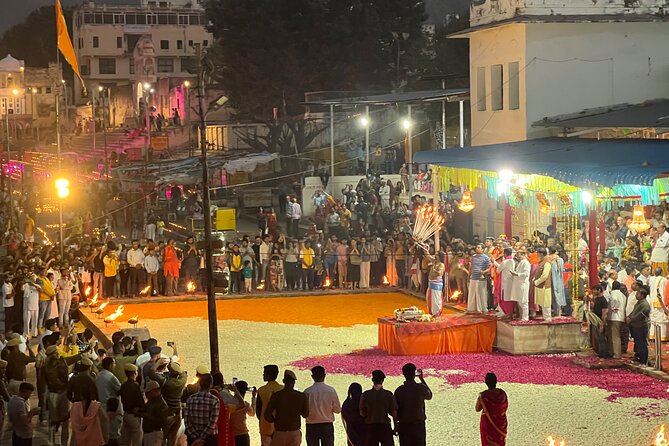
After the Brahma Temple, the tour returns again to Brahma Ghat for the evening ritual experience. This second stop is shorter, around 25 minutes, but it’s the part you remember most because the ritual timing gives it intensity and focus.
This is where the tour’s promise becomes real: you’re not just walking past temples, you’re watching the evening Aarti at the lake. The description highlights the calm and tranquility you can find in this kind of ritual viewing, especially when you’re in the right spot with the right explanations.
I also like that the route is built around the idea that this ceremony is for everyone looking for calm. You don’t have to be an expert in Hindu worship to appreciate the structure of the ritual and the sense of community around it.
Practical note: since it’s evening, light can get tricky for photos. Keep your phone settings simple, and think in terms of framing rather than constant zooming. Your guide will help you find good angles when possible.
Varaha Temple: Vishnu’s ancient connection in Pushkar
After Brahma-focused stops, the route balances things with Varaha Temple, dedicated to Lord Vishnu. Varaha is associated with one of Vishnu’s avatar forms, and this temple is described as one of the ancient sites in Pushkar, tied to the idea of Swayambhu Kshetra for Vishnu.
The tour gives you about 25 minutes, which works well here because a guided explanation can turn what might look like another temple doorway into a meaningful stop. When the guide frames how Varaha relates to the local sacred geography, it changes how you experience the space.
Another reason I appreciate this temple in the itinerary is variety. The evening already has fire ceremony energy. Adding a Vishnu-centered stop keeps the evening feeling grounded and multi-layered rather than one-note.
If you’re someone who likes temples but dislikes long, repetitive visits, this stop can feel like a nice reset.
Gurudwara Sahib: Sikh worship and Pushkar’s religious mix
Pushkar is known for its religious diversity, and the tour reflects that by including Gurudwara Sahib. This Sikh temple stop is described as famous for its beauty and tranquility, and it’s also a place where you can sense how different faith traditions coexist in the same town.
You’ll have about 30 minutes here, and that time is important because it gives you a chance to shift your focus. A lot of visitors come to Pushkar thinking it’s only Hindu temple culture, but the Sikh presence is part of the town’s real character.
Even if you don’t know Sikh worship details, you can still appreciate the atmosphere. A calm gurudwara moment in the middle of an evening circuit gives your senses a breather before you return to the lake.
The drawback is simple: if you’re only interested in one religion’s sites, this stop might feel like an unexpected tangent. But if you want Pushkar in a more honest, human sense, it’s a good inclusion.
Pushkar Lake and the 52 Ghats walk: photos plus meaning
The heart of the route is the Pushkar Lake walk, including a loop around the 52 Ghats with time for photography and for visiting smaller, older temple corners at the water’s edge.
This part is listed as about 25 minutes, which tells you they’re aiming for momentum. You won’t walk every single ghat in full, long detail. Instead, you’ll get a guided selection that helps you understand the lake’s structure and why the ghats matter in daily religious life.
What I like about doing this at night is that the lake edge can feel intimate. Lights reflect. Temple bells sound closer. And because the rest of the tour has given you context, you’re less likely to treat this as scenery only.
Photo tip: pick a few good frames instead of trying to photograph everything. If you try to capture every ghat, you’ll miss the quiet atmosphere your guide is showing you how to look for.
Also, since the tour includes admission tickets for the listed stops, you can focus on walking and observing instead of spending your time thinking about what is or isn’t included.
Old Rangji Temple near Varaha Ghat: the quieter ending
To close out, the tour visits Old Rangji Temple, near Varaha Ghat. This temple is described as around 200 years old and dedicated to Lord Vishnu.
This last stop is only about 15 minutes, but that makes sense because it’s meant as a final connection point. After the fire ceremony atmosphere and the broader lake walk, a shorter temple stop can feel like a soft landing.
I find that end-of-tour temple moments are where you absorb the evening best. By then, you’re less overwhelmed, and the guide’s explanations have helped you notice patterns: gods referenced in different locations, sacred geography around the lake, and the way worship spaces share similarities while still feeling unique.
This is also a good time to ask any last questions. Short stops are where you can leave with clarity rather than ending the evening with confusion.
Value and shopping-free focus: why the $8 price makes sense
At $8 per person, this tour is priced like a local-style evening walk, not like a big-ticket production. The real question is what you get for that price, and the answer is: you get a guided route through important religious stops, plus the admission tickets noted for each stop.
The best value isn’t only the low cost. It’s that the evening stays shopping-free. When a tour sneaks in souvenir stops, it can turn a meaningful spiritual walk into an awkward errand. Here, the emphasis stays on temples, customs, and the fire ceremony.
You also get a strong “small-group” element. A max group of 6 means the guide can respond to questions and adjust pacing in real time, especially during the more crowded ritual areas.
If you’re budget-minded, this is exactly the kind of experience you want: a low-cost way to see Pushkar’s evening side with real context.
Who should book this Pushkar evening walk
This tour is a great match if you want to:
- See Pushkar at night without feeling lost
- Understand what you’re looking at, especially around the Maha Aarti
- Do multiple temple stops in a single evening with a guide who answers questions
- Keep the evening focused on spirituality and customs, not shopping
It might not be the best fit if:
- You strongly dislike religious rituals or active worship spaces
- You prefer purely historical lectures with no ceremony viewing
- You need a fully flexible itinerary with zero time spent pausing at sacred sites
If you do want a “calm and tranquil” evening, this format makes sense because it’s built around nighttime worship flow rather than random sightseeing.
Also, because the tour says most travelers can participate, it’s a reasonable choice for many visitors who are comfortable walking several blocks and making short stops.
Should you book The Pushkar Route evening walking tour?
If you’re staying in Pushkar for only a short time and want the most meaningful evening experience, I think this is an easy yes. The combination of temple stops, a guided explanation, and the fire ceremony at Brahma Ghat gives you a Pushkar evening you can’t easily recreate on your own, especially without local context.
Book it if you like small groups, respectful cultural experiences, and a tour that stays shopping-free. I’d also book it if you’re the type of traveler who enjoys asking questions, because guides like Manish and Kapil have a reputation for being friendly and for explaining the religious side clearly.
If you’re unsure, go with this simple rule: if you want Pushkar at night to feel spiritual and coherent, this evening walk fits. If you want a purely secular, pass-by-the-sights evening with no ceremony focus, you might prefer a different kind of tour.
FAQ
What time does the tour start?
The start time is 5:00 pm.
How long is the evening walking tour?
It runs for about 3 hours.
Is pickup available?
Yes, pickup is offered, and the tour is also described as being near public transportation.
Does the price include entry or admission tickets?
Yes, admission tickets are included for the stops listed on the route.
Is there any shopping during the tour?
No. This is described as a shopping-free tour, meaning no shopping stops.
How big is the group?
The tour has a maximum of 6 travelers.
Can I cancel and get a full refund?
Yes, there is free cancellation. You can cancel up to 24 hours in advance for a full refund.
Latest reviews in from Pushkar
- Dhiraj’s painting classes and art workshop★ 5.0 · 24 reviews
- Experience Private Food And Culture Walk-The Pushkar Route★ 5.0 · 26 reviews
- Walking Sightseeing Tour – The Shine Pushkar★ 5.0 · 64 reviews
- Afternoon Walk Tour with Sunset & Fire Ritual -The Pushkar Route★ 5.0 · 119 reviews
- Spiritual City Walking Tour-THE Pushkar Route★ 5.0 · 907 reviews
- Spiritual Walking tour with Puja Ceremony -The Pushkar Route★ 5.0 · 101 reviews
- Fullday pushkar tour from jaipur with guid+camel/jeep safari★ 4.4 · 12 reviews
- From Jaipur : Private Ajmer Pushkar Tour by Cab★ 4.5 · 29 reviews
Walking Tours, compared.

The Great Indian Food Tour: Old Delhi Food and Heritage Walk
Read our review →
Old Delhi Food, Heritage&Cultural Walk with Rickshaw ride to Masterji Kee Haveli
Read our review →
Fontainhas Heritage Walk At Latin Quarters of Goa
Read our review →Browse the lists this tour appears in