
Reviewed · WALKING TOURS
Walking Sightseeing Tour – The Shine Pushkar
A walking sightseeing tour in Pushkar is interesting because it pairs scenery with real religious rhythm, not just photos. I like how this route focuses on the holy Pushkar Lake and the town’s temple cluster, so you get stories as you move. I also like that you’ll stop at both Hindu and Sikh sites, which helps you understand how the town actually works day to day. One consideration: it’s mostly walkable, but you should be ready for uneven ground and some steps, with a moderate fitness level.
The pace is built for a half-day, about 2 to 4 hours, and the guides tend to be a big part of the experience. If you’re with someone like Akash Sharma or Awash, the tour is known for punctual, professional, and genuinely friendly guidance, plus clear explanations of what you’re seeing.
Key Highlights I’d Prioritize
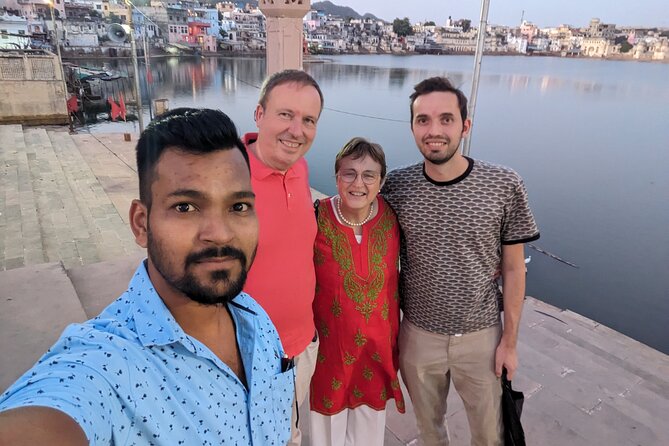
- Pushkar Lake loop with 52 ghats, a sunset point vibe, and a spiritual walk around the water
- Brahma Temple context including why there is one Brahma temple in the world, plus VIP entry for that stop
- Two Rangji temples, one comparison (Old vs New Rangji), explained so it makes sense instead of feeling random
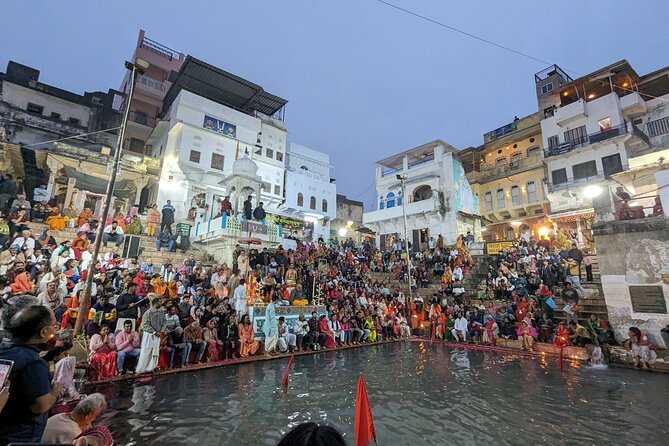
- Morning and evening ghat life with Brahma Ghat, including the chance to join Aarti of Shri Pushkar Raj
- Shiva and Vishnu stops in walking distance at Ati Prachin Atamteshwar Mahadev Mandir and Varaha Temple
- Big-town views optional via the Savitri hill temple, with a cable car cost if you choose it
Why This Pushkar Walk Works: Lake, Ghats, and Temples in a Tight Route
Pushkar can be confusing the first day. Everything seems close on a map, yet the real flow of the town is guided by ghats, temple lanes, and religious timing. This tour keeps you on the places where Pushkar energy concentrates, so you can get your bearings fast and still feel like you’re part of the town, not just passing through.
What I appreciate most is that the route isn’t just “look at that temple, take a photo.” You’re given meaning for what you’re seeing. For example, you don’t only visit the lake, you learn why the water matters and how people move around it. Then you shift to the temples, where the guide ties architecture to stories, including specific historical details where they’re known.
It also stays practical. The stops are short, most admission is free for those sites, and you get tea along the way. If you’re short on time, you’ll cover the key spiritual highlights without needing to plan a complicated self-guided route.
More Walking Tours in Pushkar
- Spiritual City Walking Tour-THE Pushkar Route
★ 5.0 · 907 reviews - Afternoon Walk Tour with Sunset & Fire Ritual -The Pushkar Route
★ 5.0 · 119 reviews - Evening Walking Tour with Fire Rituals-The Pushkar Route
★ 4.9 · 108 reviews
Getting Started in Pushkar, Without Turning It Into a Project
You meet in Pushkar, Rajasthan 305022, and the tour ends back at the meeting point. Pickup is offered, which matters in a place where traffic can be unpredictable and you do not want to burn half your tour trying to find the right lane.
This is also set up as a private tour/activity, meaning only your group participates. That’s a big deal for a walking route, because you can go at a comfortable rhythm. If your group includes older folks or kids, the guide can usually pace the walking and keep stops manageable.
You’ll want comfortable shoes. Even with moderate fitness level, temple lanes can be uneven, and you’ll likely handle stairs for some viewpoints and temple entries.
Stop-by-Stop: Pushkar Lake to Brahma Ghat in Real Order
The tour’s flow follows the spirit of the town, starting with water and then moving through major sacred sites.
Pushkar Lake: The Sacred Water and the 52 Ghats
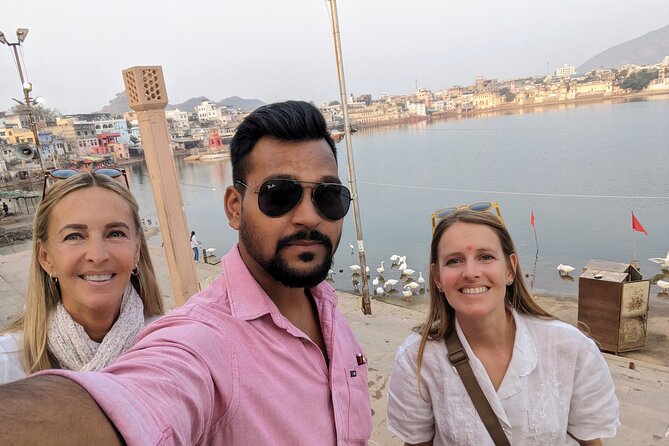
You begin at Pushkar Lake, the holy lake in town. The guide points out that Pushkar Lake has 52 ghats, and that detail is not just trivia. It explains why the shoreline feels like a series of meaningful spots, not one generic waterfront.
You’ll also hear about a sunset point, a holy bridge, and take a spiritual walk around the lake area. Even if you’re not a ritual person, the lake gives you context. It’s the baseline for understanding why the temples and ghats matter.
Admission here is free, so it’s a strong start for value.
A different shape of Pushkar day:
- Spiritual Walking tour with Puja Ceremony -The Pushkar Route
★ 5.0 · 101 reviews - From Jaipur : Private Ajmer Pushkar Tour by Cab
★ 4.5 · 29 reviews - Fullday pushkar tour from jaipur with guid+camel/jeep safari
★ 4.4 · 12 reviews
Brahma Temple: VIP Entry and the One-Temple Story
Next is the Brahma Temple, where you learn the history of God Brahma and why there is one Brahma temple in the world. That last part matters, because it frames your visit as more than another temple stop.
Inside the temple, you’ll see beauty in the structure and details. There’s also VIP entry/admission included for this stop, which helps you avoid any hassle and keeps the visit smooth.
Admission is free, and you spend about 30 minutes here, which is a good amount of time to look without feeling rushed.
Gurudwara Sahib: Sikh Community and a Different Sacred Style
Then you shift religions with a visit to Gurudwara Sahib, a Sikh place of worship. The guide shares more about the Sikh community so you get a sense of the town’s spiritual mix, not just Hindu landmarks.
This is one of those stops that makes the tour feel grounded. Pushkar isn’t only temples on a brochure. It’s a living town where different faith traditions share the same geography.
Old Rangji Temple: Why Two Similar Temples Exist
Old Rangji Temple is next, followed by the idea that Pushkar has two temples with the same structure: New Rangji and Old Rangji. Here you’ll learn the history and the reason for having two, which helps you see the difference instead of treating them as duplicates.
You spend around 25 minutes, and that’s enough time for a meaningful comparison, especially if you like architecture and naming stories.
Rangji, Brahma Ghat, and the Town’s Ritual Center
This middle section is where the tour starts to feel like “Pushkar proper,” the part you’d want to return to on your own later.
Brahma Ghat: Holy Dip and Aarti Timing
At Brahma Ghat, you’ll learn about the practice where people take a holy dip. You may also have the option to participate in Aarti of Shri Pushkar Raj in the evening and morning every day.
Even when you’re not joining a ritual, the ghat is the kind of place where you understand the town’s heartbeat. People gather with purpose, and the guide can explain what you’re seeing so it doesn’t feel like a scene from afar.
This stop is brief, about 10 minutes, but it’s memorable because it connects directly to daily practice.
Shri Rama Vaikunth Nath (Naya Rangji) Temple: Golden Detail and a Known Builder
Then you head to Shri Rama Vaikunth Nath, also called Naya Rangji or New Rangji. It’s described as being east of the town, and the guide shares a key detail: the temple was built by Marwari Seth Bangarh of Didwana.
You’ll see the golden pillar and the temple’s structure, which is likely the most visually striking detail in this section. It’s a good stop if you like “specifics you can point at,” not just general impressions.
Plan for about 25 minutes.
Ati Prachin Shri Atamteshwar Mahadev Mandir: Chauhans, 1816, and a Shiva Timeline
Now you switch into Shiva territory at Ati Prachin Shri Atamteshwar Mahadev Mandir. This is one of the oldest Shiva temples in the area, and the guide gives timeline context.
You’ll hear that the old temple was built during the reign of the Chauhans, and that the upper part was built by Guman ji Rao, the subedar of Ajmer in 1816. Those dates help you feel anchored in time. This is not just a place you pass, it’s a building with layers.
It’s a shorter stop, around 15 minutes, but the historical specifics make it stick.
Varaha Temple and the Oldest Varaha Ghat Detail
At the Varaha Temple, you’re near Varaha Ghat, described as the oldest. The guide connects the ghat to the Vishnu temple presence, which helps you understand how temple and riverside ritual reinforce each other.
This stop is also about 15 minutes. It’s a compact visit, but the “oldest” marker gives it weight, especially if you like seeing how age and tradition translate into physical places.
Entry/admission for Brahma Ghat and Varaha Ghat is included, so you’re not scrambling for extra small costs.
The Savitri Hill Temple View, Plus the Cable Car Choice
On a hill in the west of Pushkar, you can visit a temple connected to Savitri, described as the wife of God Brahma. From this spot, you can see the whole town.
There is mention of a cable car service that is available and carries a cost if you choose to go. In other words, you can decide how you want to handle the hill portion: stairs on foot, or cable car for comfort.
This is a good decision point to bring up early with your guide, especially if your group has mixed mobility.
What You Actually Get for the Price, and Why It Feels Fair
The listed price is $5.58 per person, with a duration of 2 to 4 hours. That’s low for a guided route through multiple sacred sites, especially in a town where self-guided navigation can be tricky.
Included in the tour:
- Guide fees
- Arrival and departure
- All fees and taxes
- Coffee and/or tea
- Entry/admission for Brahma Ghat and Varaha Ghat
- VIP entry/admission for the Brahma Temple
Not included:
- Savitri temple cable car charge if you choose to go
That mix is where the value comes from. You’re paying mostly for the guide and the time planning. With several admissions being free for the stops, you’re not getting nickeled and dimed at each door.
Also, the tour uses mobile tickets, which is convenient if you prefer less paperwork.
The Guide Factor: What to Expect from Akash Sharma and Awash Style Touring
The tour is repeatedly linked to guides who are punctual, professional, and hospitable. Names that come up include Akash Sharma and Awash, and both are associated with strong local context and making the time feel memorable.
What that means for you: you should expect clear explanations, calm handling of the route, and a sense that the guide is helping you connect dots between places. A good guide also knows when to slow down, like around lake viewpoints or ghat areas where the flow of people matters.
If you care about getting answers instead of just seeing buildings, the guide quality is the main reason this tour works.
Who This Tour Is Best For, and Who Might Want Another Plan
This tour fits best if you:
- Want a guided “high coverage” Pushkar route in a short window
- Like learning stories behind temples, not only taking photos
- Prefer a private group so pacing stays comfortable
- Travel solo, as a couple, or with family, and want structure without heavy planning
It may be less ideal if you:
- Want a long, open-ended explore-all-day day
- Have very limited mobility, since it is a walking route and includes temple areas that can require steps and uneven paths
The moderate physical fitness note is the honest guide here. You don’t need to be an athlete, but you should not assume this is a sit-and-watch tour.
Should You Book The Shine Pushkar Walking Tour?
Book it if you want a compact, meaningful Pushkar experience that doesn’t leave you guessing. The combination of Pushkar Lake, the Brahma Temple, major ghats, and the Shiva and Vishnu stops gives you a balanced spiritual overview in just a few hours. Add tea, free admissions for several key sites, and VIP entry for the Brahma Temple, and the pricing looks sensible.
I’d especially recommend it as a first visit. It gives you the “why” behind what you’re seeing, plus the visual anchors you can return to later on your own.
If you’re booking, do one thing for yourself: ask the guide what time of day you’ll go for the best sense of lake and ghat atmosphere, and whether the cable car is worth it for your group.
FAQ
How long is the Walking Sightseeing Tour – The Shine Pushkar?
The tour lasts about 2 to 4 hours.
Where does the tour start and end?
It starts in Pushkar, Rajasthan 305022, India, and ends back at the meeting point.
Is pickup available?
Yes, pickup is offered.
Are temple and ghat admissions included?
The tour includes entry and admission for Brahma Ghat and Varaha Ghat, and VIP entry/admission for the Brahma Temple. For several stops, admission is listed as free.
Is the Savitri temple cable car included?
No. The cable car charge for the Savitri temple is not included if you choose to go.
What is the cancellation policy?
Free cancellation is available. You can cancel up to 24 hours in advance for a full refund. If you cancel less than 24 hours before the experience starts, the amount you paid will not be refunded.
Latest reviews in from Pushkar
- Afternoon Walk Tour with Sunset & Fire Ritual -The Pushkar Route★ 5.0 · 119 reviews
- Spiritual City Walking Tour-THE Pushkar Route★ 5.0 · 907 reviews
- Spiritual Walking tour with Puja Ceremony -The Pushkar Route★ 5.0 · 101 reviews
- Fullday pushkar tour from jaipur with guid+camel/jeep safari★ 4.4 · 12 reviews
- From Jaipur : Private Ajmer Pushkar Tour by Cab★ 4.5 · 29 reviews
- Evening Walking Tour with Fire Rituals-The Pushkar Route★ 4.9 · 108 reviews
Walking Tours, compared.


The Great Indian Food Tour: Old Delhi Food and Heritage Walk
Read our review →


Old Delhi Food, Heritage&Cultural Walk with Rickshaw ride to Masterji Kee Haveli
Read our review →
Fontainhas Heritage Walk At Latin Quarters of Goa
Read our review →Browse the lists this tour appears in