

Reviewed · HISTORICAL TOURS
14 Days Golden Triangle with Wildlife Safari & Heritage Rajasthan
Mixing the classic Golden Triangle (Delhi, Agra, Jaipur) with wildlife time in Ranthambore and Jhalana is what makes this itinerary feel different from a standard sightseeing loop. I like that you get private, door-to-door transfers with air-conditioned vehicles, so the day-to-day logistics feel lighter. I also like that the tour builds in standout heritage stops plus guided time in the places that usually feel rushed.
One thing to think about first: it is a packed 14 days with early mornings (sunrise Taj Mahal is part of the plan) and long drives between cities, so you will want to travel at a steady pace and not plan extra solo sightseeing that depends on a slow rhythm.
Key points to know before you go
- Private transfers with small-group vehicle options (sedan, wagon, or minivan depending on group size)
- Two Ranthambore safari slots included (morning and evening)
- Sunrise Taj Mahal plus battery bus to the monument area
- Lots of guided heritage across Delhi, Agra, Jaipur, Udaipur, Jodhpur, Pushkar, and Mandawa
- Hotel-and-breakfast option exists, with 13 nights and daily breakfast included in that version
A 14-day Golden Triangle that adds real wildlife time
This tour is built around the India most people picture first: the Mughal icons in Delhi and Agra, the royal architecture in Jaipur, and the heritage towns that make Rajasthan feel like a living museum. Then it adds two safari experiences. Ranthambore National Park is the big one, with a morning and an evening drive. Jhalana Safari Park gives you a second wildlife moment closer to Jaipur.
What you gain from this mix is variety. You are not bouncing between landmarks only. You also get long-standstill time in the safari jeeps, where the day becomes about patience, light, and animal sightings. That balance is part of why this route works for people who want more than photos.
More Historical Tours in Delhi
- The Great Indian Food Tour: Old Delhi Food and Heritage Walk
★ 5.0 · 1,698 reviews - Old Delhi Food, Heritage&Cultural Walk with Rickshaw ride to Masterji Kee Haveli
★ 5.0 · 742 reviews - Old Delhi Heritage Walking Tour
★ 5.0 · 247 reviews
Private transport and guides, and what it means for your schedule

The tour is private, meaning only your group participates. That matters because it usually changes how you move through major sites. Instead of fitting into someone else’s pace, your guide and driver can keep your timing sensible.
Here is how the vehicle setup is described:
- 4-seater sedan for groups of 1 to 2
- 6-seater wagon for groups of 3 to 4
- 10-seater minivan for groups of 5 to 10
All transport is air-conditioned with a driver, and you have hotel or airport pick-up and drop-off. During travel days, bottled mineral water is included, which sounds small until you are doing repeated long road segments.
One more practical detail that helps: the tour includes all sightseeing with private local guides. So when you spend time at places like Humayun’s Tomb or Amber-area monuments, you are not just standing in a line with a map app. You get context while you walk.
Day 1 in Delhi: sacred stops that set a respectful tone
Your first day starts with arrival at Delhi’s Terminal 3. After pick-up, you head straight into Old Delhi and nearby landmarks. The plan includes a visit to Gurdwara Bangla Sahib, then Agrasen Ki Baoli.
- Gurdwara Bangla Sahib is a Sikh gurdwara known for its story around healing during a past epidemic, and it is one of those places where the atmosphere is calm and purposeful. It is a strong first-day choice because it is more about people and place than monument size.
- Agrasen Ki Baoli is a stepwell site. The key detail here is the scale and that it is a protected monument. Stepwells can look like simple stonework until you see the geometry and realize how central water management was to old city life.
Admission notes in the plan show these stops as free, but Agrasen Ki Baoli is listed as not included for admission. That is worth keeping in mind as you plan your budget.
Day 2 in Delhi: Qutub Minar, Old Delhi streets, and Mughal Delhi highlights
Day 2 is a big classic Delhi day, mixing the Sultanate era with Mughal-era power and then ending in the chaos-and-character of Old Delhi markets.
You can expect:
- Qutub Minar, a UNESCO World Heritage tower (73 meters, five storeys in description).
- Lotus Temple, with its flower-like shape and open access regardless of religion.
- India Gate, a war memorial and popular picnic spot.
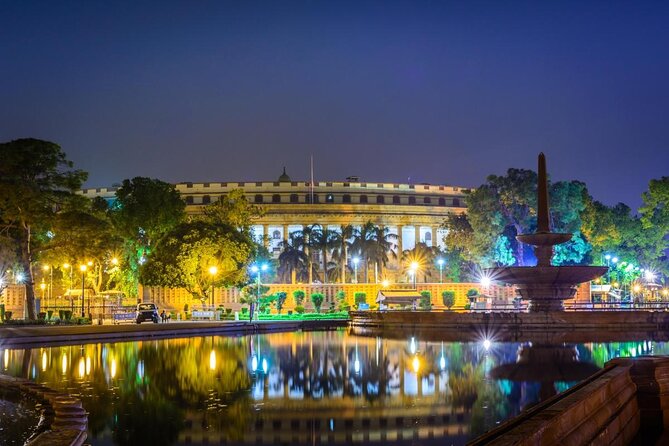
- Parliament House seen as part of the drive-by plan (called out in the itinerary text).
- Jama Masjid, one of the largest mosques in Delhi, built by Shah Jahan between 1650 and 1656.
- Humayun’s Tomb, another UNESCO-style Mughal landmark.
- Chandni Chowk, the Old Delhi market area, known for spices, dried fruit, silver jewelry, and tight streets.
This day has a lot of moving parts, and the trade-off is that you will spend more time in vehicles and guided transitions. The upside is you get a clear overview of why Delhi feels layered: Sultanate architecture, Mughal tomb-culture, and street-level commerce all in one loop.
More Golden Triangle circuits:
- 3-Days Private Golden Triangle Tour: Delhi, Agra & Jaipur by Car
★ 5.0 · 1,107 reviews - 3-Days Private Golden Triangle Tour: Delhi, Agra & Jaipur by Car
★ 5.0 · 1,098 reviews - 3-Day Delhi, Agra and Jaipur Private Tour – India Golden Triangle
★ 5.0 · 812 reviews - Four-Day Private Luxury Golden Triangle Tour to Agra and Jaipur From New Delhi
★ 5.0 · 807 reviews
Day 3 and Day 4 in Agra: Taj Mahal in the daylight and at sunrise
Agra is where the trip really tightens. You drive from Delhi to Agra, about 222 km and roughly four hours. Then you check in and start seeing Mughal architecture in a focused way.
Day 3 includes:
- Taj Mahal (visit time listed as about two hours)
- Agra Fort (UNESCO World Heritage, described as tied to Akbar, Shah Jahan, and Aurangzeb)
- Itmad-ud-Daula (the tomb often called Baby Taj in the itinerary text)
- Mehtab Bagh, the “Moonlight Garden” for a Taj Mahal viewing angle across the Yamuna
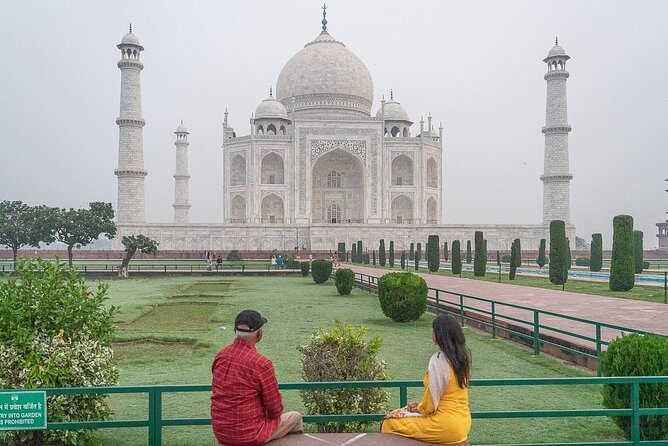
Day 4 is the payoff: sunrise at the Taj Mahal, followed by a guided tour inside for about two hours. The itinerary specifically notes a guided explanation of the Taj Mahal as a tomb built by Shahjahan in the 1600s to honor Mumtaz Mahal.
Also included is a battery bus ride to and from the Taj Mahal parking area up to the monument area. That small inclusion helps with energy and walking time on a morning when you will already be up early.
A caution I would give you: Taj Mahal days can feel physically intense even when you are taking breaks. Start hydrating early since travel water is included, but sunrise plans compress your day.
Fatehpur Sikri and Chand Baori, then straight to Ranthambore
Day 4 continues after Agra. You visit:
- Fatehpur Sikri, described as Akbar’s “City of Victory” and a former capital for about a decade
- Chand Baori, a stepwell in Abhaneri, listed as roughly 30 meters deep in the itinerary description
Then you shift from heritage architecture into safari mode. You arrive at Ranthambore, check in, and overnight near the park area.
This is a smart pivot in the pacing. You go from stone grandeur to open savannah, and the mental switch keeps the days from feeling repetitive.
Ranthambore Safari Park: two game drives built into the plan

Ranthambore is where this trip earns the wildlife title. The inclusions are clear: Ranthambore Safari Park entrance with canter or jeep, plus the schedule includes two safari sessions.
- Morning safari after breakfast (3 hours listed)
- Evening safari later the same day (another 3 hours listed)
Even if you are not a hardcore wildlife person, two drives are a big deal. Animal activity often changes with light and temperature, and having two attempts in the same trip slot increases your odds of something memorable.
You will also notice the tour keeps the structure simple: after the safari, you go back to the hotel for the next day. That calm time matters because safari days can be tiring just from waiting, scanning, and staying ready for sudden sightings.
Jaipur starts with temples and ends with Jhalana wildlife
After Ranthambore, you head to Jaipur. Day 6 begins with:
- Galtaji Temple (Monkey Temple), described as a complex structure with three sacred pools of water
- Birla Mandir, a Hindu temple located at Moti Dungri base
Then you check in to your hotel in Jaipur.
In the evening, you get Jhalana Safari Park time, with entry included and a 3-hour safari slot.
This is a nice second wildlife component because Jhalana is a different feeling than Ranthambore. Instead of a single dramatic safari day, you get a wildlife moment paired with Rajasthan city life. It also gives you a chance to see how the tour balances “heritage, then animals, then back to monuments” without skipping either.
Jaipur heritage day: stepwells, palaces, instruments, and the Palace of Winds
Day 7 is Jaipur at full volume, with guided stops and photo-friendly moments.
You will cover:
- Panna Meena ka Kund, a stepwell
- A Jaipur District palaces, squares, and monuments tour tied to the area’s royal story and described as built by Raja Man Singh I
- Jal Mahal, a quick stop at the palace on Man Sagar Lake for photos
- City Palace, with about one hour to explore
- Jantar Mantar, a UNESCO World Heritage site with astronomical instruments built in the 1700s by Sawai Jai Singh II
- Hawa Mahal, the five-storey Palace of Breeze, described as built with red and pink sandstone
Here is what makes this day enjoyable for me: it is not only “big fort and done.” You get a range of scales. Stepwells and lake palaces are different from instrument gardens and palace courtyards. Even the quick Hawa Mahal stop can work because the architecture is meant to be seen from close and from angles around it.
If you like shopping, Chandni Chowk is your Delhi day, and Jaipur’s plan includes less shopping detail but does include enough time for wandering around markets when the guide suggests it.
Udaipur by early drive, then Lake Pichola and city palaces
Day 8 shifts to Udaipur with an early drive. It is listed as about 8 hours. Once you arrive and check in, the plan mentions market time and dinner at a restaurant of your choice.
Day 9 focuses on Udaipur’s classic waterfront heritage:
- Lake Pichola, with optional private boat ride mentioned (not included in admission notes)
- City Palace, with a 2-hour visit and an emphasis on the collection described in the itinerary text
- Jagdish Temple, within the City Palace complex
- Bagore Ki Haveli Museum, with guided tour and private transportation
This is one of those days where you feel the purpose of the private guide. City Palace and its collections are easier to understand when someone explains what you are looking at, and the same goes for the temple style.
Jodhpur: Mehrangarh Fort and the Marwar side trip to Bishnoi village
Day 10 is the drive to Jodhpur and a first look around:
- Clock Tower Market and local market time
Day 11 is the main heritage day:
- Mehrangarh Fort, described as a 15th-century fort now functioning as a museum with weapons, paintings, and royal sedan-chair items
- Umaid Bhawan Museum, described as a palace museum and referenced as one of the world’s largest private residences
- Jaswant Thada, described as a marble cenotaph and mausoleum
- Bishnoi village excursion, listed as 3 hours and marked as highly recommended in the itinerary text, with time for a local village feel
The Bishnoi village add-on is valuable because it shifts you out of monument mode. Even when you are moving through Rajasthan’s famous architecture, it helps to spend time in a living community.
Pushkar and Mandawa: lakeside prayers and painted haveli streets
Day 12 heads to Pushkar. You check in and visit:
- Brahma Temple, with the itinerary noting it is famous as one of the few Brahma temples
- Pushkar Lake, including the Brahma Ghat for prayers, tribute rituals, and photography opportunities in the description
Day 13 goes to Mandawa. You visit:
- Francisco painted havelies (spelled that way in the itinerary text), with about 5 hours set aside
- Then you explore the village area in the evening (the itinerary text cuts off, so plan for general wandering time rather than a single named stop)
These two days add a slower, more devotional feel compared with the monument-heavy Delhi and Agra segments.
Getting good value from the included breakfast, guides, and safaris
Let’s talk money in a way that helps you decide. The price is listed as $835.72 per person for about 14 days, starting from New Delhi’s airport.
What you likely get for that cost depends on the option you choose, but these inclusions are clearly stated:
- 13 nights accommodation with the hotel-included option
- Daily breakfast (13 breakfasts) if you choose the hotel option
- Private guides for sightseeing
- Hotel or airport pick-up and drop-off
- Battery bus ride around Taj Mahal parking
- Bottles of mineral water during journeys
- Ranthambore Safari Park entrance with canter or jeep
- Jhalana Safari Park entrance
- Breakfast is also listed as included repeatedly
Not included:
- Monument entrance fees (many sites in the plan are marked not included)
- Any meals beyond breakfast
- Tips for driver and guide
- Travel insurance
- Flights or train tickets
So the value equation is this: you are paying for private movement, guided time, and the wildlife access that can be expensive or complicated to arrange on your own. If you have your own rhythm for booking hotels and guiding, you might feel you could do parts cheaper. But if you want everything organized into one route with safaris scheduled, this package tends to make sense.
Who should book this private Golden Triangle safari route
This works best if you want:
- A single, guided 14-day loop with city-to-city transfers already handled
- Wildlife time on two fronts (Ranthambore plus Jhalana) rather than only one safari day
- Guided heritage across Delhi, Agra, Jaipur, Udaipur, and Jodhpur, plus Pushkar and Mandawa
It may not be ideal if you:
- Hate early mornings, since sunrise Taj Mahal is specifically part of the plan
- Prefer fewer driving days and more free time in each city
If you do book, pay attention to the hotel option you choose and plan for monument entrance fees separately, since those are not generally included.
FAQ
Is this tour truly private for my group?
Yes. It is listed as a private tour/activity, and only your group will participate.
What kind of vehicles are used for the private transfers?
The plan states a 4-seater sedan for groups of 1 or 2, a 6-seater wagon for groups of 3 or 4, and a 10-seater minivan for groups of 5 to 10.
Are hotels and breakfast included?
Accommodation and daily breakfast are included only if you book the option that includes hotels. The plan mentions 13-nights accommodation and a breakfast plan tied to that option.
Do monument entrance fees cost extra?
Yes. Monument entrance fees are listed as not included, and many individual stops also show admission ticket not included.
What wildlife safari experiences are included?
Ranthambore Safari Park entrance is included with canter or jeep access, and Jhalana Safari Park entrance is included. The itinerary includes both a morning and an evening safari at Ranthambore, and an evening safari session at Jhalana.
How is the Taj Mahal visit handled?
The plan includes a battery bus ride to and from the Taj Mahal parking area up to the monument. It also includes a sunrise experience and a guided tour inside Taj Mahal for about two hours.
What is the cancellation timeline?
Free cancellation is available up to 24 hours in advance for a full refund. If you cancel less than 24 hours before the start time, the amount you paid is not refunded. It also notes the experience requires good weather, and if canceled for poor weather, you are offered a different date or a full refund.
Should you book this tour?
If you want one organized route that combines the Golden Triangle highlights with two safari opportunities and guided heritage across multiple Rajasthan cities, this is a strong fit. The big decision is pacing. If sunrise Taj Mahal and long travel days sound good to you, this itinerary gives you a lot of ground covered without making you piece everything together yourself. If you want slower days and lots of unscheduled time, you may find the 14-day schedule feels tight.
More Historical Tours in New Delhi
- 13 Nights 14 Days Private Tour of Heritage Rajasthan from New Delhi
★ 5.0 · 149 reviews - Gandhi Delhi Private History Adventure Tour
★ 5.0 · 127 reviews - Delhi’s historical 7 hours experience tour
★ 5.0 · 115 reviews - Timeless Treasures: An Old Delhi Heritage Walking Tour
★ 5.0 · 69 reviews
Latest reviews in from New Delhi
- Private Day Trip to Taj Mahal by Car from Delhi★ 5.0 · 16 reviews
- New Delhi to Agra Airport/Hotel – One-Way Cab Private Transfers★ 4.5 · 16 reviews
- “Overnight Taj Mahal Tour from Delhi by Private AC Car”★ 5.0 · 16 reviews
- Private One Day Tour of Taj Mahal, Agra Fort & Fatehpur Sikri from New Delhi★ 5.0 · 16 reviews
- 10 Day Private Luxury Golden Triangle with Khajuraho and Varanasi★ 5.0 · 16 reviews
- All Inclusive : 5 Days Golden Triangle Tour : Delhi, Agra, Jaipur★ 5.0 · 16 reviews
- Delhi & Taj Mahal Private Day Tour with Lunch and Tickets★ 5.0 · 16 reviews
- From Delhi: Taj Mahal Sunrise Tour with Elephant Conservation★ 5.0 · 16 reviews
Historical Tours, compared.


The Great Indian Food Tour: Old Delhi Food and Heritage Walk
Read our review →
Old Delhi Food, Heritage&Cultural Walk with Rickshaw ride to Masterji Kee Haveli
Read our review →
Fontainhas Heritage Walk At Latin Quarters of Goa
Read our review →
Blue City Heritage Private Walking Tour With Pickup and Drop-Off
Read our review →
Private Heritage Walking Tour in Jaisalmer Fort and Old Bazaar
Read our review →Browse the lists this tour appears in