
Reviewed · HISTORICAL TOURS
Gandhi Delhi Private History Adventure Tour
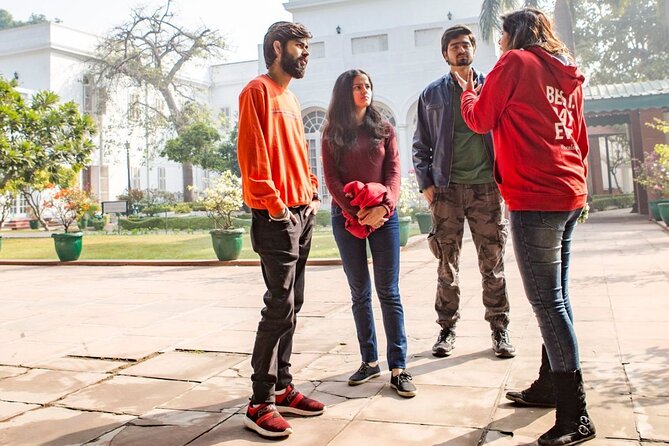
Gandhi’s Delhi feels interesting because this tour takes you to the exact places tied to his final days, from Gandhi Smriti to Raj Ghat, with a small private group and an English-speaking guide. You get a focused, walkable route in a city that can otherwise feel overwhelming.
Two things I really like: first, the tour is carbon neutral and run by a B Corp certified company, so your sightseeing lines up with your values. Second, the visit order keeps the story flowing, with Gandhi Smriti, then the National Gandhi Museum, and finally Raj Ghat.
One possible drawback to consider is simple timing. It’s about 4 hours, so you will not have hours and hours to read every document or stare at every artifact. If you want very slow museum time, plan to add a little independent time after.
Key things to look for on this Gandhi tour
- Private group size capped at 12, which keeps questions flowing
- Admissions included at Gandhi Smriti, the National Gandhi Museum, and Raj Ghat
- Pickup included from a centrally located Delhi hotel, plus a taxi option at the end
- Meaningful route through Gandhi’s last-day sites, museum items, and the cremation ground
- Carbon-neutral + B Corp certified operator for more responsible travel
Why Gandhi’s Last-Day Sites Feel Personal in Four Hours

This is a half-day tour built around one question: what did Gandhi stand for, in daily life, not just in textbooks? The stops are not random. They connect his final days, the record of his work, and the place where his story physically ends in Delhi.
You start at Gandhi Smriti, where he spent his last days. You then move into a museum filled with books, manuscripts, journals, and photographs owned by and depicting him. Then you finish at Raj Ghat, the cremation site with the inscription of his final words, Hey Ram. That three-part flow makes the tour feel like a narrative, not a checklist.
Also, the private-group format matters more than you might think. Delhi has traffic, noise, and constant motion. With a small group, your guide can pace the day and adjust on the fly, especially at the quieter moments when you want to actually take in what you’re seeing.
More Historical Tours in Delhi
- The Great Indian Food Tour: Old Delhi Food and Heritage Walk
★ 5.0 · 1,698 reviews - Old Delhi Food, Heritage&Cultural Walk with Rickshaw ride to Masterji Kee Haveli
★ 5.0 · 742 reviews - Old Delhi Heritage Walking Tour
★ 5.0 · 247 reviews
Hotel Pickup and Private Transport: Keeping the Afternoon Easy
Starting at 1:00 pm means you can sleep in a bit, then still have time to do something else the same day. Pickup is included from a centrally located Delhi hotel using private transportation. Translation: no hunting for a meeting point in a city that loves complicated streets.
You’ll also get a mobile ticket. That may sound small, but it reduces stress when you’re juggling heat, traffic, and museum lines. And at the end, you can either explore on your own or ask your guide to help arrange a taxi back to your hotel.
Practical note: while this tour is set for most people to join, it does lean on a conservative dress expectation. Delhi afternoons can be hot, so aim for lightweight fabric that still covers your shoulders and knees.
Stop 1 at Gandhi Smriti: The Birla House Story in the Room and Grounds
Gandhi Smriti is where the tour becomes emotionally real. You visit the Birla House that was turned into a memorial after Gandhi was assassinated there in January 1948. The visit includes a well-preserved room Gandhi called home during his final days, plus the surrounding grounds where he was killed during his routine evening walk.
What makes this stop valuable is that it combines space with context. It is not only a memorial marker. You are seeing the location and the sequence of events that shaped the last chapter of his life. That makes the story hit harder than a general biography.
Plan how you’ll spend your time. The scheduled stop is about 40 minutes with the admission ticket included. If you tend to read every label, go a little slower early, so you do not rush through the most meaningful parts at the end.
Also, Gandhi Smriti includes a multimedia museum component. That means you should expect more than static exhibits. Give yourself permission to pause, because the multimedia element is often what turns names and dates into something you can actually picture.
Stop 2 at the National Gandhi Museum: Books, Manuscripts, and Real Evidence
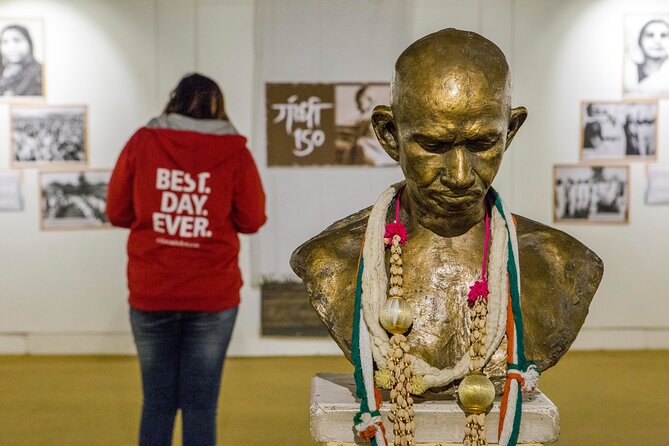
Next you head to the National Gandhi Museum, known by locals as the National Gandhi Museum. This is where you shift from place to proof. Instead of just seeing where things happened, you get a strong dose of Gandhi’s thoughts through materials connected to his life and work.
This stop is scheduled for about 20 minutes. That’s short, but it’s also a good time box for a half-day format. You do not need to try to absorb everything. Instead, focus on what you want to understand about him: his writings, the way he argued for non-violent protest, and how his words were preserved and shared.
Why this museum visit works: it gives you objects, not just speeches. The collection includes books, manuscripts, journals, and photographs owned by and depicting Gandhi. If you came to Delhi expecting slogans, this stop brings you back to the actual tools behind the movement: documents and communication.
If you want more value from the museum time, choose one thread before you walk in. For example:
- look for writing that shows how he explained non-violence
- scan photographs for how the message spread across years
- spend extra time on manuscripts that show his process, not just results
More Historical Tours in New Delhi:
- 13 Nights 14 Days Private Tour of Heritage Rajasthan from New Delhi
★ 5.0 · 149 reviews - Delhi’s historical 7 hours experience tour
★ 5.0 · 115 reviews - Timeless Treasures: An Old Delhi Heritage Walking Tour
★ 5.0 · 69 reviews - Old Delhi Heritage Walk with Rickshaw Ride
★ 5.0 · 68 reviews
Stop 3 at Raj Ghat: The Gardened Cremation Ground and Hey Ram
Raj Ghat is the final stop, scheduled for about 20 minutes with admission included. This is the memorial where Gandhi was cremated after his assassination, now shaped into a green garden space.
The focal point is the memorial inscription of his final words, Hey Ram. Even if you do not know every detail of his last days, that single phrase gives the stop a clear emotional center. The garden setting also changes the pace from museum rooms to quiet outdoor reflection.
It’s also important that Raj Ghat is not a one-person memorial in the larger sense. Alongside Gandhi, other Indian leaders were also cremated there at different points. That context can help you understand why Raj Ghat functions as a national place of memory, not only a local landmark.
In practical terms, the short time means you should plan for a quick rhythm: a moment to take in the layout, a moment to read the key inscriptions carefully, and a final pause before you move on. This is the kind of place where rushing tends to feel a little disrespectful, even if you do it by accident.
The Role of the English Guide: What You Want Them to Add
A big part of your experience is your guide, and this tour is built around an English-speaking guide who tells the stories behind the stops. The format is not lectures in a classroom. It’s commentary that helps you connect Gandhi’s life to the specific physical locations you’re visiting.
If you get a guide like Abhi, Indira, or Audesh C. Mishra, you’ll likely notice the same pattern people praise: the ability to explain Gandhi with clarity and a real sense of why it mattered. That kind of guide can turn “Father of the Nation” into something practical, like how non-violent protest works and why his ideas traveled beyond India.
Here’s what to do to make your guide time count:
- ask one question that links today’s stop to his principles
- ask what detail you should pay attention to at the next room or garden
- if something feels confusing, ask for a simple timeline, not a long speech
Also, many departures use friendly and professional drivers. That means you should spend less mental energy on navigation and more on absorbing the day.
Private-Group Pace: Why Cap of 12 Matters More Than You Think
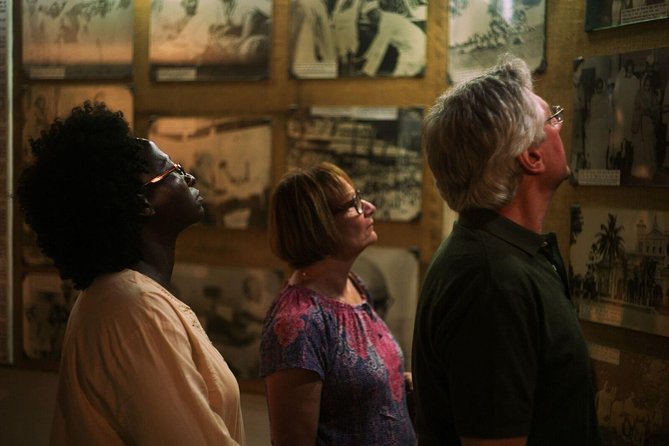
This is a private tour, so it’s just your party. The group is kept small, with a maximum of 12 people. In Delhi, that matters because it changes how you experience crowded sites.
With a small group:
- you can move at a human pace
- your guide can pause when you need time to look
- questions are easier to answer, and you are less likely to feel rushed
It also helps you manage the half-day timing. When each stop is 20 to 40 minutes, small adjustments make a big difference. You might spend more time at Gandhi Smriti if the multimedia museum grabs you, or you might breeze through the museum labels if you prefer outdoor reflection at Raj Ghat.
The end of the tour gives you flexibility, too. You can continue exploring on your own, or ask for help arranging a taxi back to your hotel. That’s a nice way to keep your afternoon from feeling stranded.
Price and Value at About $40.03 Per Person
At $40.03 per person for about 4 hours, this is one of the more approachable ways to do a private, guided history route in central Delhi.
Here’s what that price includes, and why it matters:
- Pickup with private transportation from a centrally located hotel
- English-speaking local guide
- Admission tickets included for all three stops
- Tips on what else to see and do, plus help arranging a taxi at the end
- A carbon-neutral approach backed by a B Corp certified operator
If you are trying to do Gandhi sites independently, you’ll still pay for admissions and transportation. You also have to piece together the order and timing yourself. That’s where the guide earns their place. You are paying for context, pacing, and reduced stress.
So the value isn’t just that it’s cheap. It’s that it’s structured. You get a clean route, a guided story, and included tickets that make it harder to get stuck waiting or guessing.
Dress Code and Delhi Timing: Small Things That Make It Smoother
The tour recommends modest clothing throughout Asia, especially outside major cities. For comfort and respect, cover shoulders and knees. Loose, lightweight long clothing works well in hot weather.
Plan for the afternoon sun. Even if your day stays mostly indoors at the memorial and museum, you will still be outside at Raj Ghat and during transitions. Bring water and wear something breathable.
Also think about how you’ll handle phones and photos. The sites are memorial spaces. A calm, respectful approach usually goes farther than speed-clicking everything.
Finally, be realistic about time. This tour is about 4 hours. That means you might not finish every reading, and that’s fine. Choose what you want to understand, and let the guide help connect the dots.
Who Should Book This Gandhi Delhi Private Adventure Tour
This tour is a strong fit if you:
- want a focused route through Gandhi Smriti, the National Gandhi Museum, and Raj Ghat
- prefer a private group setting with a cap of 12
- want admission tickets included so you do not waste time figuring out logistics
- care about how travel affects the planet, thanks to the carbon-neutral and B Corp operator angle
It might be less ideal if you:
- need a very long museum session at each stop
- expect a deep, slow reading of every document and label within the scheduled time
This is a good “first Gandhi” tour in Delhi. It gives you a meaningful foundation that you can build on later with additional sites or reading.
Should You Book It?
Yes, I’d book it if you want a guided half-day that connects Gandhi’s last days to his writings and his cremation memorial, all with pickup, private transport, and included admissions. The small group size, the story-led English guidance, and the clear three-stop route make it a solid value at about $40.
If you’re the type who likes to linger for hours in museums, plan extra time afterward for independent exploration. Otherwise, this is an efficient way to experience Gandhi’s Delhi with both context and respect.
FAQ
What time does the Gandhi Delhi tour start?
The start time is 1:00 pm.
How long is the tour?
The duration is approximately 4 hours.
Is pickup included, and where does it pick you up?
Pickup is offered with private transportation from a centrally located hotel in Delhi.
Which Gandhi sites are included?
The tour includes Gandhi Smriti, the National Gandhi Museum, and Raj Ghat.
Are admission tickets included?
Yes, admission tickets are included at Gandhi Smriti, the National Gandhi Museum, and Raj Ghat.
Is food included?
No, food and drinks are not included.
Can I cancel for free?
Yes. You can cancel for free up to 24 hours in advance for a full refund. If you cancel less than 24 hours before the start time, the amount paid is not refunded.
Latest reviews in from New Delhi
- Taj Mahal Day Tour By Superfast Train From Delhi: TOP BOOKED TOUR★ 5.0 · 42 reviews
- Same Day Tour of Taj Mahal with Our Real Historical Experience★ 5.0 · 42 reviews
- Manali Tour Package★ 4.5 · 43 reviews
- Taj Mahal Tour with Agra Fort – All-Inclusive Day Trip from Delhi★ 5.0 · 43 reviews
- Taj Mahal Same Day Tour by India’s Fastest Train★ 5.0 · 43 reviews
- Private Day Trip to Haridwar and Rishikesh from Delhi by Car★ 5.0 · 43 reviews
- Royal Taj Mahal Day Experienc From New Delhi By First Class Train★ 5.0 · 43 reviews
- 5-Day Private Delhi, Agra and Jaipur with Ranthambhore Tiger Tour From Delhi★ 5.0 · 44 reviews
Historical Tours, compared.


The Great Indian Food Tour: Old Delhi Food and Heritage Walk
Read our review →

Old Delhi Food, Heritage&Cultural Walk with Rickshaw ride to Masterji Kee Haveli
Read our review →
Fontainhas Heritage Walk At Latin Quarters of Goa
Read our review →
Blue City Heritage Private Walking Tour With Pickup and Drop-Off
Read our review →

Private Heritage Walking Tour in Jaisalmer Fort and Old Bazaar
Read our review →Browse the lists this tour appears in