
Reviewed · 3-DAY EXPERIENCES
3-Day Delhi, Agra and Jaipur Private Tour – India Golden Triangle
If you want India’s big-name sights without the hassle of planning every leg yourself, this 3-day Golden Triangle route is a smart way to do it. I like the way it strings together Delhi, Agra, and Jaipur with a private air-conditioned car, and I especially like the early start for the sunrise Taj Mahal. One thing to consider is the schedule is packed, so you will feel like you are moving, not meandering.
The best part, in my view, is the human side. You spend a lot of time with a driver and city guide, and safety and calm navigation come up again and again in the feedback, including praise for drivers like Neeraj Bhai, Sumit, Mukesh, and Riyaz. Guides also get credited for making the stories click, with names like Faiz in Agra and Abbas in Jaipur often mentioned as standouts when available.
Value also depends on what you pay on the ground. The tour price covers the private vehicle, guides, rickshaw ride, two hotel nights with breakfast, and transfers, but monument entrance fees are listed separately (about $65 per person), and lunch and dinner are on you. Also, some shopping stops can show up, so go in with a plan, say yes or no clearly, and keep your day on your own timeline.
Key things I’d focus on before you book
Private AC transport between Delhi, Agra, and Jaipur keeps you comfortable through long drives.
Sunrise Taj Mahal timing is the payoff that’s hard to beat.
Two hotel nights with breakfast reduce logistics and daily decision fatigue.
Old Delhi by rickshaw gives you a different feel than buses and cars.
Entrance fees and meals are extra in real-world budgeting.
Shopping stops can happen, so set boundaries early.
Golden Triangle in 3 Days: What You’ll Actually See
This is built for people who want maximum impact in minimum time. You are basically doing three mini-city visits in one trip, with the middle city (Agra) anchored by the sunrise Taj Mahal. That structure makes sense because the Golden Triangle is famous for a reason, and splitting it across three days keeps you from burning an entire week just getting between highlights.
The “private” part matters. You are not waiting around for a large group to shuffle, argue about photos, or miss a meeting point. Instead, you follow your guide’s pacing, with enough flexibility to shift if you need a breather, a bathroom stop, or a quick change in focus.
The tradeoff is simple: you will cover a lot of ground. If you hate tight schedules, you might find it a little intense. If you like seeing the big monuments and learning how they fit together, this format is satisfying.
More Golden Triangle circuits:
- 3-Days Private Golden Triangle Tour: Delhi, Agra & Jaipur by Car
★ 5.0 · 1,107 reviews - 3-Days Private Golden Triangle Tour: Delhi, Agra & Jaipur by Car
★ 5.0 · 1,098 reviews - Four-Day Private Luxury Golden Triangle Tour to Agra and Jaipur From New Delhi
★ 5.0 · 807 reviews
Price and Logistics: Where the Real Value Comes From
At $110 per person, this tour is positioned as an affordable way to get a guided, door-to-door Golden Triangle experience. The value is not just the car. It’s the combination of pickup and drop, a live tour guide, airport or hotel transfers, rickshaw time in Old Delhi, mineral water bottles, and two nights of hotel with breakfast and taxes.
The big budgeting detail is that entrance fees are listed as not included, at about $65 per person. Meanwhile, lunch and dinner are also not included. So your “all-in” cost will usually look like:
- Tour price: $110 per person
- Monument entrance fees: around $65 per person
- Lunch and dinner: on your own
- Tips: optional, but typically expected for good service
In plain terms, you are paying for convenience and guided time. If you tried to arrange everything yourself, you would still pay for transport and guides, and you would lose the clean, chore-free flow between cities.
Day 1 in Delhi: Qutub Minar, Humayun’s Tomb, and Old Delhi by Rickshaw
Day 1 starts with a pickup from your Delhi hotel at 9:00 AM. From there, you move through both “newer” Delhi landmarks and the older Mughal-era and trade-era core.
Qutub Minar and the Qutub Complex
You start at Qutub Minar, a UNESCO site and the world’s tallest brick minaret, built in 1193. The visit typically includes stops within the Qutub Complex such as the Iron Pillar and nearby structures. Even if you are not a hardcore architecture nerd, this is a worthwhile first stop because it sets the tone for the Mughal and earlier influences you’ll keep seeing later.
What to watch for: take your time with the layout. These sites can feel like a cluster of buildings until your guide explains how the complex developed over time.
Line these New Delhi options up side by side
- Old & New Delhi City Tour – Half or Full Day Options Available
★ 5.0 · 4,811 reviews - Half Day Private Delhi City Tour
★ 5.0 · 4,474 reviews - Same Day Taj Mahal, Agra Fort & Baby Taj Tour from Delhi by Car
★ 5.0 · 4,304 reviews - Taj Mahal Day Tour from Delhi by Superfast Train – TOP RATED TOUR
★ 5.0 · 4,166 reviews
Humayun’s Tomb: the Mughal blueprint
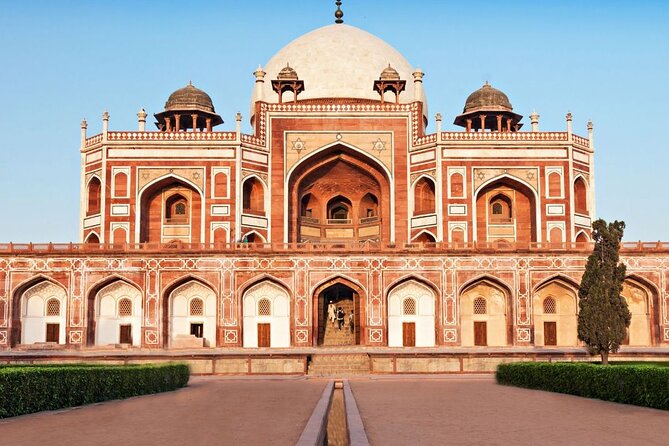
Next is Humayun’s Tomb, another UNESCO highlight and a key Mughal architecture landmark built in 1570. It’s often described as an inspiration for the Taj Mahal, and the garden setting is part of why it feels so important.
This stop is especially good if you want a deeper payoff on Day 2. When you see the Taj Mahal at sunrise, you will get more meaning out of it.
India Gate, then Jama Masjid
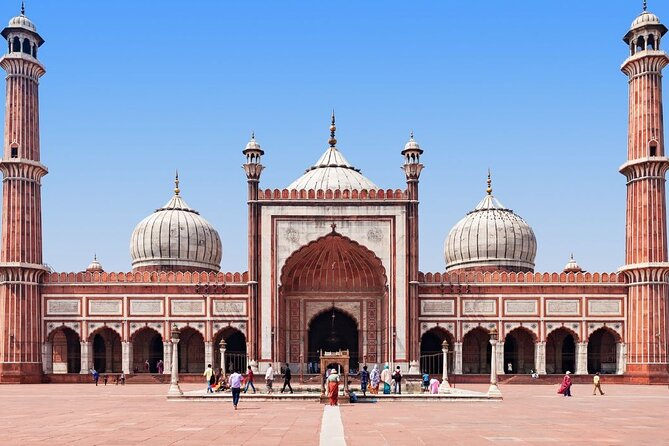
You also pass by India Gate, a World War I memorial, then head to Jama Masjid, one of India’s largest mosques, built by Shah Jahan in 1656. Plan for crowds at the right time of day. Also, dress matters here, since this is a working religious site.
Old Delhi: Chandni Chowk and the Spice Market
The tour then shifts gears into Old Delhi. You get a rickshaw ride through Chandni Chowk, plus time around the spice market area (Khari Baoli). This is one of those experiences where the senses do half the work. Streets narrow, smells hit fast, and you see daily life rather than just monuments.
One practical tip: wear comfortable shoes. Even with a guide, Old Delhi is not a “one smooth photo and done” kind of place.
Red Fort from outside, then drive to Agra
Later, you view the Red Fort from outside, then get lunch time and drive to Agra via Yamuna Expressway. This part is about transition. The goal is to arrive, check in, and leave the heavy sightseeing for the next morning.
Overnight is in Agra, with free time in the afternoon and evening.
Day 2 in Agra: Sunrise Taj Mahal and Agra Fort in One Big Morning
Day 2 starts early. Pickup is at 6:00 AM for sunrise at the Taj Mahal. This is the moment most people come for, and the early timing changes everything. It’s quieter, the light is gentler, and the mood feels less like a sightseeing checklist and more like a once-in-a-lifetime encounter.
You’ll explore the Taj Mahal for about 3 hours, then return for breakfast and a change of pace.
Agra Fort and a short stop at “Baby Taj”
After breakfast and check-out, you visit Agra Fort. This is a historical fort complex, and it adds context beyond the Taj Mahal alone. The Taj is the symbol, but the fort helps you understand the broader imperial setting.
Next is Itmad-ud-Daula, often nicknamed the Baby Taj. It’s smaller, and you get a different kind of appreciation here. The time slot is shorter, but it’s a good balance after the big Taj.
Transfer to Jaipur
After Agra, you continue to Jaipur and check in for your overnight stay. The day is long, but the sightseeing shape is clear: sunrise first, then fort and tomb, then the road to Jaipur.
Day 3 in Jaipur: Amber Fort, Hawa Mahal, City Palace, and Jantar Mantar
On Day 3, you’re picked up at 8:00 AM for Jaipur sightseeing. Jaipur is a lot like Delhi in one way, the day can feel like a series of “here’s the next iconic thing,” but Jaipur also rewards you for slowing down to notice details.
Amber Fort: the main event
You start with Amber Fort. This stop lasts about 2 hours and is one of the most important Jaipur experiences on the itinerary. Forts in Rajasthan are not just walls and views, they are designed spaces, and your guide can help you read what you’re seeing.
If you do one “big” monument in Jaipur, make it this one. It’s the anchor.
Stepwell, water palace views, and Hawa Mahal
Next is Panna Meena ka Kund, a stepwell near Amber Fort. The visit is brief, but the geometry and symmetry are the point, and it’s a nice change from palaces and forts.
Then you stop near Jal Mahal, the Water Palace set in Man Sagar Lake. On this kind of itinerary, you typically spend less time here, so manage expectations. You’re there for the visual impact and quick appreciation.
After that comes Hawa Mahal (Palace of the Winds). You get a short visit around it. The famous feature is the honeycomb-like windows, and it’s easier to grasp with a guide pointing out why the design is unusual.
City Palace and Jantar Mantar
You wrap with City Palace of Jaipur, then Jantar Mantar, a UNESCO World Heritage Site and an astronomical observatory built in the 18th century.
City Palace gives you the royal seat in more detail. Jantar Mantar gives you a science-and-society angle that most Golden Triangle trips sometimes rush through. If you like ideas behind the monuments, this is a strong way to end the tour.
You finish with drop-off options: either at Jaipur Airport or a return drive to Delhi, with arrival by about 8:00 to 9:00 PM.
How the Guides and Drivers Affect Your Day
This tour runs on a simple formula: good guidance makes monuments feel meaningful, and good driving keeps the day from turning into stress.
Safety comes up a lot, with repeated praise for drivers such as Sumit, Riyaz, Mukesh, and others. That matters because Delhi and Jaipur traffic can be chaotic. When the driving is calm, you can relax and actually enjoy the stops instead of white-knuckling the ride.
Guides are also a major reason this tour earns such high marks. You’ll see people credit guides like Sajul in Delhi, Faiz in Agra, Arbab in Jaipur, and Abbas in Jaipur. The common thread is that guides help you connect what you see to why it matters.
Do note one pattern from the feedback: the commentary can get intense if you want slow travel. If you feel tired by facts, ask for a lighter pace. You can also request more time for photos, or focus on what you care about most.
Shopping Stops and Time Pressure: What to Do If You Want Control
This is where you should be a little street-smart.
Some days include stops at shops, and in at least some experiences that felt like pressure to buy. That doesn’t have to ruin the day. You can handle it by making your boundary clear at the start, for example: you’re happy to look only, or you are not interested, and you want to keep moving.
Also, the schedule can get squeezed by local conditions, especially around major festivals. If you travel during a peak traffic period, understand that it may shift what you see and how long you stay.
Your best defense is planning your priorities before you arrive: Taj Mahal at sunrise, Amber Fort, and the big Delhi tomb and mosque stops. Everything else becomes a bonus rather than a stress point.
Practical Tips for Comfort, Photos, and the Early Starts
The itinerary has two early mornings: 6:00 AM for Taj sunrise on Day 2 and 8:00 AM for Jaipur on Day 3. That means your comfort depends on how you manage jet lag and sleep.
Bring:
- Comfortable walking shoes for Old Delhi and fort areas
- A hat or sun protection (especially for midday gaps)
- Basic patience for crowds at major monuments
Also, drink water. Mineral water bottles are included, but you still need to pace yourself so you don’t end up feeling wrecked halfway through the day.
For photos, the Taj Mahal and forts are where you’ll spend real time. If you want the best shots, tell your guide your photo goals early. Many guides are used to helping with photo timing and angles.
Choosing Between the Two End-Options in Day 3
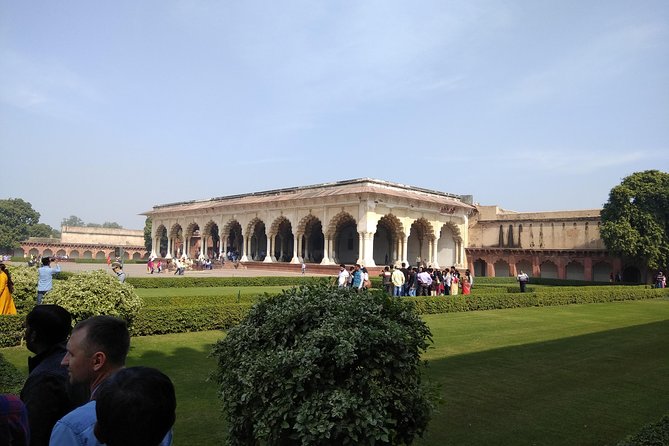
On Day 3, you can either:
- Be dropped at Jaipur Airport, or
- Return to Delhi, arriving by roughly 8:00 to 9:00 PM
Pick the one that matches your departure schedule. If you fly out the same day from Jaipur, the airport option saves you from another long stretch of road time. If you need to be back in Delhi, the return is workable, but treat it as your final travel day, not a sightseeing day.
Should You Book This Delhi, Agra, and Jaipur Private Tour?
I would book this if you want a guided Golden Triangle that is genuinely organized: pickup in Delhi, strong Delhi monument coverage, the sunrise Taj Mahal, and a full Jaipur day that includes Amber Fort, Hawa Mahal, City Palace, and Jantar Mantar.
I’d think twice if you hate tight schedules or you want more time to wander without an agenda. This tour is “see a lot in a short span,” and it rewards curiosity more than slow strolling.
Final check before you go:
- Budget for monument entrance fees (about $65 per person)
- Expect lunch and dinner to be your responsibility
- Decide in advance how you want to handle shop stops
- If you can, ask for guides who are known for making stops enjoyable, such as Faiz in Agra or Abbas in Jaipur, when available
If those points work for you, this is a solid value way to hit the Golden Triangle without doing the planning heavy lifting.
FAQ
What time do you get picked up in Delhi on Day 1?
Pickup from your Delhi hotel or preferred location is at 9:00 AM on Day 1.
Is this tour private or shared with other groups?
It’s a private tour, meaning only your group participates.
Are meals included on the tour?
Lunch and dinner are not included. Breakfast is included on the hotel stay nights, listed as two breakfasts.
Are monument entrance fees included in the tour price?
Entrance fees to monuments are listed as not included, with an additional cost of about $65 per person.
How many nights of accommodation are included?
You get two nights of hotel accommodation with breakfast and taxes.
What time do you start the Taj Mahal visit?
You’re picked up at 6:00 AM for the sunrise Taj Mahal experience on Day 2.
What happens if a Friday falls on the second day of the tour?
If there is Friday on the second day, the itinerary may switch to Delhi, Jaipur, Agra, then Delhi. If you booked your own hotel, you should message the operator for the revised plan.
Where can you be dropped off at the end of Day 3?
You can be dropped at Jaipur Airport, or you can choose to drive back to Delhi, arriving about 8:00 to 9:00 PM.
Is there free cancellation?
Yes, you can cancel up to 24 hours in advance for a full refund.
Latest reviews in from New Delhi
- Taj Mahal Day Tour By Superfast Train From Delhi: TOP BOOKED TOUR★ 5.0 · 42 reviews
- Same Day Tour of Taj Mahal with Our Real Historical Experience★ 5.0 · 42 reviews
- Manali Tour Package★ 4.5 · 43 reviews
- Taj Mahal Tour with Agra Fort – All-Inclusive Day Trip from Delhi★ 5.0 · 43 reviews
- Taj Mahal Same Day Tour by India’s Fastest Train★ 5.0 · 43 reviews
- Private Day Trip to Haridwar and Rishikesh from Delhi by Car★ 5.0 · 43 reviews
- Royal Taj Mahal Day Experienc From New Delhi By First Class Train★ 5.0 · 43 reviews
- 5-Day Private Delhi, Agra and Jaipur with Ranthambhore Tiger Tour From Delhi★ 5.0 · 44 reviews
3-Day Experiences, compared.

3-Day Private Luxury Golden Triangle Tour to Agra and Jaipur From New Delhi
Read our review →
3-Day Luxury Golden Triangle Tour: New Delhi, Agra & Jaipur
Read our review →
Award-Winning 3-Day Private Golden Triangle Tour of India
Read our review →3 Days 2 Night Golden Triangle Tour – Private Luxury Experience
Read our review →
The Ultimate 3 Days in Varanasi – How to Spend 39 Hours – For First Timers
Read our review →
3-Day Private Golden Triangle Tour to Agra &Jaipur from New Delhi
Read our review →
Browse the lists this tour appears in