

Reviewed · WALKING TOURS
Small- Group Delhi Slum Walking Tour
This tour is interesting because it shows daily life in and around Sangam Colony, not as a headline, but as a working neighborhood with real routines. I like the focus on learning from a local guide and talking with people directly, including a chance to share tea with a family. I also like that the walk connects street-level life to education and vocational training.
One possible drawback: the route can include areas right along the railway line, and this is a 2 to 3 hour walking experience, so you will want comfortable shoes and a flexible mindset.
Key things to know before you go

- Small group size (max 9 travelers) means you are not shuffled along like part of a crowd
- Pandav Nagar + Sangam Colony gives you both the everyday economy and the on-the-ground social picture
- An educational and vocational training center visit adds context beyond what you see on the streets
- Drinks and tea are part of the experience, not an afterthought
- About 80% of proceeds support a local non-profit, so your ticket is doing work locally
- Mobile ticket and a simple start and end point make it easy to plan
Why Sangam Colony is the point of this half-day

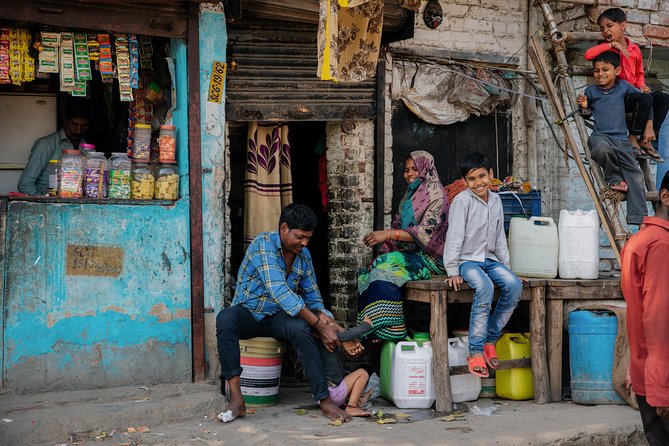
If you are in New Delhi and you want more than monuments, this is the kind of tour that shifts your view. You walk through Sangam Colony, an informal settlement area in West Delhi, and you hear the stories behind survival, work, and community ties. The guide keeps it grounded in daily life and the neighborhood’s socioeconomic reality, so you come away with more than vague sympathy.
I also appreciate how the tour tries to connect three dots that most visitors never see in one outing. You start in Pandav Nagar, where you get a sense of industries, temples, and fruit markets. Then you walk into the settlement context by passing through areas on both sides of the railway track. Finally, you return to Pandav Nagar for a visit to an educational and vocational training center, where you can see how people work toward skills and stability.
The vibe from the guide side matters too. The names Sunny and Abhishek come up in the feedback I reviewed, and both are described as friendly ambassadors who make you feel safe and welcome. That is not just nice wording. In this kind of tour, your comfort and respect set the tone for every conversation you have.
More Walking Tours in Delhi
- The Great Indian Food Tour: Old Delhi Food and Heritage Walk
★ 5.0 · 1,698 reviews - Old Delhi Food, Heritage&Cultural Walk with Rickshaw ride to Masterji Kee Haveli
★ 5.0 · 742 reviews - Breakfast Walk in Old Delhi
★ 5.0 · 449 reviews
Pandav Nagar first, with rails, temples, and everyday trade
The tour begins at Main Patel Rd, Block B, Baljit Nagar, Shadipur, New Delhi 110008, and the first stop is Pandav Nagar. Plan for about 1 hour here, and expect a mix of sights and context rather than one single attraction. You will see the kinds of spaces people live with, including temples, small industry areas, and fruit markets.
One detail that makes this stop memorable is the geography. You will also be able to observe parts of the area alongside the railway track, with trains passing by as you walk. That sound and movement are part of daily life here, so it is not a staged environment. It is the real setting your guide uses to explain how the neighborhood functions.
What I like about starting here is that it gives you scaffolding. Before you walk into Sangam Colony itself, you get the broad “how it works” picture: work happens nearby, community spaces matter, and commerce is built into daily routines. If you tend to overthink unfamiliar places, this first hour helps you get your bearings fast.
A practical note: this is still a walking tour. Even with the different stops, you are on your feet, and some paths can feel tight. Wear shoes that you do not mind getting a little dusty.
Walking Sangam Colony, including the railway-edge side
Next comes Sangam Colony, the settlement area itself. This section is about 30 minutes, and it is the heart of the experience. The tour takes you through a small slum built on both sides of the railway track, so you will be seeing how homes, daily movement, and infrastructure share space.
This is where the socioeconomic context becomes real. Your guide from the area helps you understand how people carve out stability in an informal setting, and you may hear stories that explain what life looks like when resources are limited. The conversations can be direct, but the tone is meant to be respectful and human, not sensational.
The best mindset for this stop is curiosity with caution. Ask questions, but do it gently. If people are busy, it is fine to pause and let the moment breathe. You will get a lot more from the walk if you treat it like meeting a neighborhood, not consuming an experience.
Also, small-group format helps here. With a maximum of 9 travelers, you are less likely to crowd someone or block a path. It is a big difference compared to the large-constant tour style that can make conversations feel rushed.
The educational and vocational center stop at Pandav Nagar
After Sangam Colony, you return to Pandav Nagar for a visit to the educational and vocational training center. This segment runs about 25 minutes. While the street scenes help you see the present day, this stop adds the “what next” element.
The center focus matters because it reframes the neighborhood story away from only hardship. You learn that education and job skills are part of ongoing community projects, not just abstract hopes. It also gives you a concrete place to connect your visit to real outcomes.
If you like tours that leave you with something usable, this stop is your payoff. You are not just seeing buildings. You are seeing a pathway that people are actively building.
One thing to keep in mind: this is not described as an open-ended campus stroll. It is a guided visit with a set timeframe, so expect a planned walk-through and explanations rather than time to wander.
More Walking Tours in New Delhi:
- Delhi Food Walk: Rickshaw Ride, Street Eats & Market Tour
★ 5.0 · 401 reviews - New Delhi Slum Walking Tour
★ 5.0 · 360 reviews - Old Delhi Heritage Walking Tour
★ 5.0 · 247 reviews - Old Delhi Walking Tour: Food, Culture & Spice Bazaars
★ 5.0 · 94 reviews
Tea with a local family, and what it changes
A key part of the experience is the chance to share an optional tea break with a local family, alongside cold drinks and tea options included with the tour (black tea, milk tea, and cold drinks). This is where the tone shifts from walking and observing to sitting and listening.
I find tea breaks in community-based tours useful because they create a pause. Walking can feel like “seeing.” Sitting changes it to “meeting.” You get to slow down, and that helps you ask better questions without the pressure of moving on every minute.
The most meaningful part is that the sharing feels like hospitality, not a performance. The feedback I read emphasizes how guides can introduce you in a way that makes people comfortable. When a tour keeps the atmosphere respectful, conversations can stay focused on real life: family routines, kids, community ties, and practical hopes for the future.
If you do this, bring basic social manners. Offer simple courtesy, accept a drink if offered, and remember that you are inside someone’s social world, even if it is brief.
Price, group size, and the local impact math
The price is $23.47 per person, and this is a tour you can book relatively close to travel time (on average, about 13 days in advance). The big question is value: what do you get for a budget-friendly half day?
You get several high-value pieces bundled together. The tour includes:
- a local guide from the same area
- visits to slum areas, fruit market, temples, and local homes
- time at the educational and vocational training center
- cold drinks or tea during the experience
There is also an important financial detail: 80% of proceeds benefit a local non-profit organization. That changes how I look at the cost. You are not only paying for interpretation, you are supporting community projects with your ticket.
Group size plays into value too. A max of 9 travelers keeps the experience personal. That matters because good explanations are hard to do when you are herding a bigger group.
Now for the reality check. This is not a “comfort-first” sightseeing product. It is a socially engaged walking tour, and the setting can be basic. If you expect polished logistics and a theme-park vibe, you may not love it. If you want a real, respectful look at how people live and work, this price is a strong fit.
Timing, meeting point, and how to plan your day
The tour runs about 2 to 3 hours. It ends back at the meeting point, which makes it easier to plug into a day of Delhi exploring.
You meet at Main Patel Rd, Block B, Baljit Nagar, Shadipur, New Delhi 110008. It is also described as near public transportation, so you are not trapped in complicated last-mile planning.
Because the activity is weather-dependent, aim for a day when conditions are reasonable. It also helps to travel with a bit of patience. One feedback note described a late start and confusion about who the guide would be, but the overall pattern in the feedback is that the guides handle things kindly and keep you safe. Still, if you have a tight schedule afterward, build in a buffer.
What to bring:
- comfortable shoes for uneven ground and walking near active areas
- a light layer (Delhi weather can change fast)
- a small amount of cash if you want to browse a fruit market during the visit
Who this tour suits best (and who should skip it)
This is a great fit if you:
- want a small-group neighborhood experience with real local context
- care about how people support themselves through work, markets, and community spaces
- like tours that connect street life to education and vocational training
- prefer respectful conversations over scripted photo stops
You might choose a different type of tour if you:
- dislike walking for 2 to 3 hours, or you have mobility limits
- want a purely visual, museum-style experience
- get uneasy with active community settings where life continues around you
The strongest theme in the feedback is that the experience feels uplifting and humbling, not voyeuristic. If you approach it with respect and clear intent, it is the kind of outing that can shift how you understand a city.
Should you book this Sangam Colony walking tour?
My take: if you want an honest, locally led view of West Delhi that goes beyond monuments, yes, book it. The price is modest, the group size is small, and the tour includes more than just walking. You get context, conversations, a market glance, a temple setting, and a visit to an educational and vocational training center.
I would book it especially if you like tours where your money supports local programs, not just interpretation. The 80% proceeds line is meaningful, and the structure of the tour makes it easy to see where your time and ticket dollars go.
If you do book, go in with the right frame: ask thoughtfully, follow your guide’s cues, and treat the tea break like hospitality you should honor, not a stop you rush through. That is when this tour becomes the kind of story you will actually remember.
FAQ
How long is the Small-Group Delhi Slum Walking Tour?
The tour lasts about 2 to 3 hours.
What areas does the tour visit?
You visit Pandav Nagar and Sangam Colony, including a stop at an educational and vocational training center in Pandav Nagar.
What is the group size limit?
The maximum group size is 9 travelers.
What does the tour include?
It includes a local guide, visits to slum areas, a fruit market, temples, and local homes, plus cold drinks and/or black tea or milk tea.
Is transportation to the tour included?
No hotel pick-up or drop-off is included.
Where do I meet for the tour?
The meeting point is Main Patel Rd, Block B, Baljit Nagar, Shadipur, New Delhi 110008, India, and the tour ends back at the meeting point.
Is there an admission fee for the stops?
The stops listed show free admission tickets.
Is a mobile ticket used?
Yes, the tour uses a mobile ticket.
What happens if the weather is poor?
The experience requires good weather. If it is canceled due to poor weather, you will be offered a different date or a full refund. There is also free cancellation up to 24 hours in advance for a full refund.
Latest reviews in from New Delhi
- Private Day Trip to Taj Mahal by Car from Delhi★ 5.0 · 16 reviews
- New Delhi to Agra Airport/Hotel – One-Way Cab Private Transfers★ 4.5 · 16 reviews
- “Overnight Taj Mahal Tour from Delhi by Private AC Car”★ 5.0 · 16 reviews
- Private One Day Tour of Taj Mahal, Agra Fort & Fatehpur Sikri from New Delhi★ 5.0 · 16 reviews
- 10 Day Private Luxury Golden Triangle with Khajuraho and Varanasi★ 5.0 · 16 reviews
- All Inclusive : 5 Days Golden Triangle Tour : Delhi, Agra, Jaipur★ 5.0 · 16 reviews
- Delhi & Taj Mahal Private Day Tour with Lunch and Tickets★ 5.0 · 16 reviews
- Full day Private tour from Delhi to Agra★ 5.0 · 16 reviews
Walking Tours, compared.


The Great Indian Food Tour: Old Delhi Food and Heritage Walk
Read our review →


Old Delhi Food, Heritage&Cultural Walk with Rickshaw ride to Masterji Kee Haveli
Read our review →
Fontainhas Heritage Walk At Latin Quarters of Goa
Read our review →Browse the lists this tour appears in