
Reviewed · VARANASI TOURS
Sarnath Tour- Where Buddhism Originated
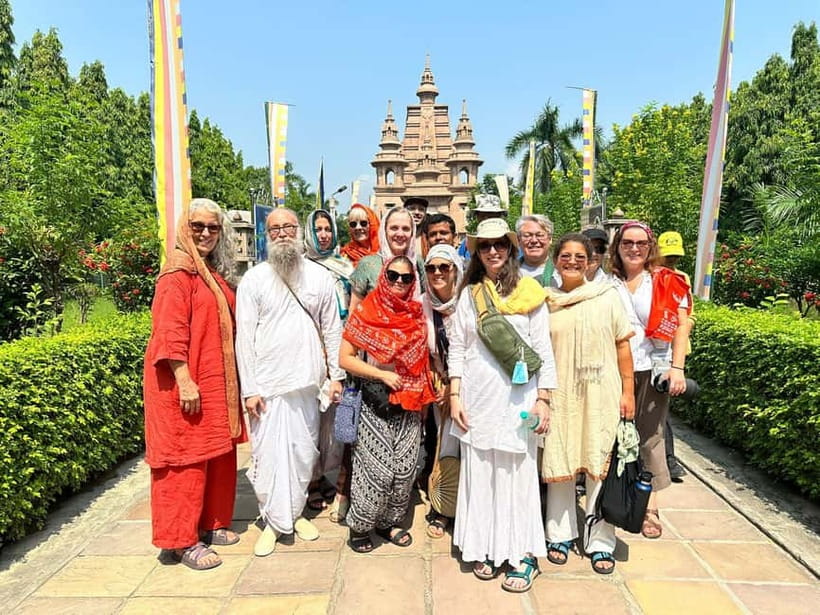
Sarnath is interesting because it takes you from modern India into the exact spiritual geography of early Buddhism. The monuments are physical proof of big ideas, like teaching, relics, and meditation, all packed into a focused half day. I especially like how the route includes Dhamekh Stupa, so you can anchor the story in one place before you move on.
What I love most is the human part of the experience, a guide like Shwetank Rao Tripathi (often called Mono) who keeps everything clear and organized. You’ll also appreciate the comfort upgrade, an air-conditioned car plus entry tickets handled, which means less fuss and more time looking.
The main consideration is simple: you will walk around uneven temple and stupa areas. If you prefer a slow, shaded stroll with lots of breaks, plan your pace and bring what you need, since food and drinks are not included.
Key highlights you will actually care about
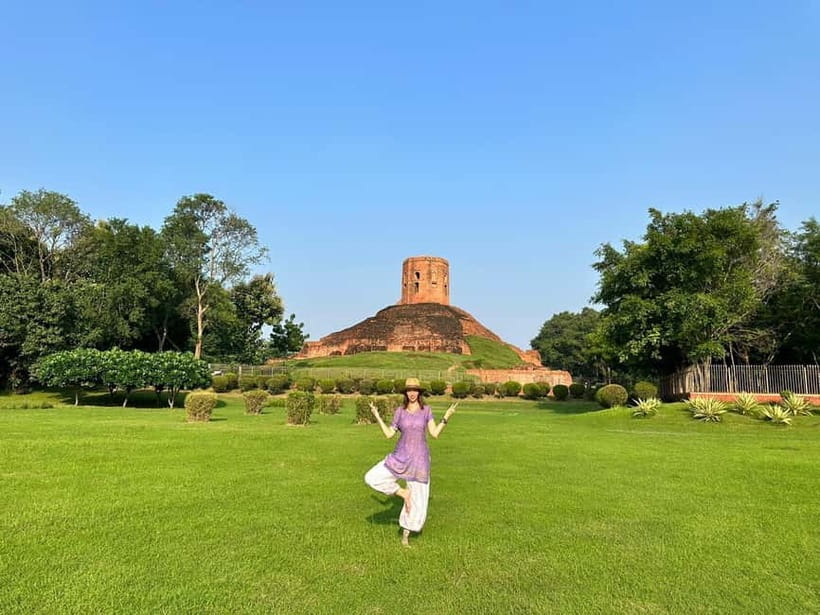
- Dhamekh Stupa and Ashoka’s link: a key teaching site, tied to one of Buddhism’s major historical patrons
- Dharmarajika Stupa and relics: you get the post-death story, not just the “first sermon” headline
- Mulgandh Kuti Vihar’s meditation focus: a Gupta period reminder of practice, not only preaching
- A British-era museum from 1910: useful context through statues and displays, not just stone ruins
- English live guide who handles entry details: smoother visits and better explanations
- 4 hours with an AC car: enough time to see the core sites without burning the whole day
Why Sarnath Matters More Than Its Small Size
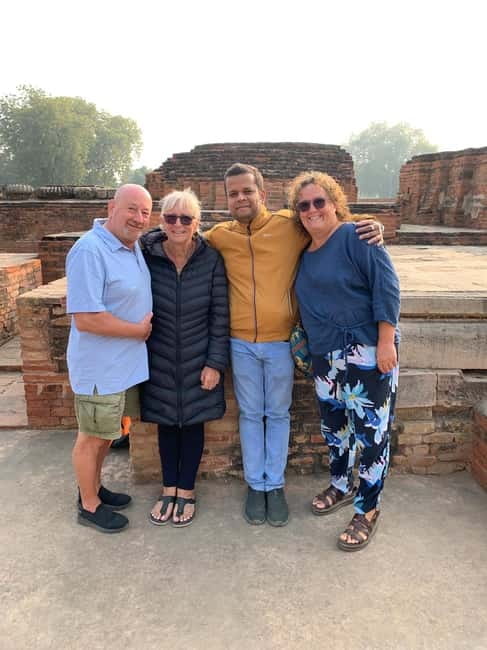
Sarnath is about one thing, early Buddhism in real space. This is the place associated with Buddha’s first sermon, the kind of moment that turns ideas into a tradition. Even if you already know the story, I think Sarnath works because the setting helps you understand what people meant when they talked about teaching, practice, and sacred objects.
You will see several monuments, including stupas, monasteries, temples, and a museum. Some structures reflect very old ruins, which makes the visit feel like a layered timeline rather than a single landmark photo stop. The best part is that you are not stuck in one courtyard either. The sites create a natural arc, from sermon teaching to relic significance to the rhythm of meditation.
One more reason I like this area: it is close enough to Varanasi to do without stress, but far enough away that it feels calmer. That short distance matters when you are coming from river crowds and constant motion.
Line these Varanasi options up side by side
- Varanasi : Full Day City Highlights Day Tour & Ganges Cruise
★ 4.8 · 520 reviews - Hidden Secrets of Varanasi: lively Tradition (Guided Tour)
★ 5.0 · 429 reviews - Varanasi: Sunrise Boat Tour with Arti Ceremony
★ 5.0 · 375 reviews
Getting There from Varanasi, and Why the 4 Hours Works
Sarnath is about 15 kilometers from the city center of Varanasi. That sounds like a detail, but it changes the whole feel. You get time to reset before you start reading stone and symbolism.
Your tour runs for 4 hours, which is a sweet spot for a first visit. You will see the major stops without turning it into a full day of rushed steps. The air-conditioned car is included, and that is a genuine value add in Uttar Pradesh, especially if you are visiting during warmer hours.
You should also expect a guided experience in English. That matters here because Buddhist sites are full of terms, dates, and relationships between monuments. With a guide, you can connect things instead of just collecting names.
Meeting Point Reality: Where to Start So You Do Not Waste Time
The meeting point is outside Hotel ganges Grand Godowlia. Your guide reaches out on WhatsApp using the phone number you provide when booking, so keep your phone charged and available.
Practical tip: plan to arrive a few minutes early. In this area, it is easy to lose a minute or two trying to find the exact pickup spot. Once you meet up, the rest of the visit flows because the guide is handling the entry details and moving you between the key sites.
Also, remember this tour does not include food or drinks. I recommend carrying water and something light for later. Even if the visit feels short on paper, you will likely spend more time standing than you expect, reading walls, looking up at stupa forms, and listening to explanations.
Dhamekh Stupa: Ashoka’s Footprint and the First Sermon Anchor
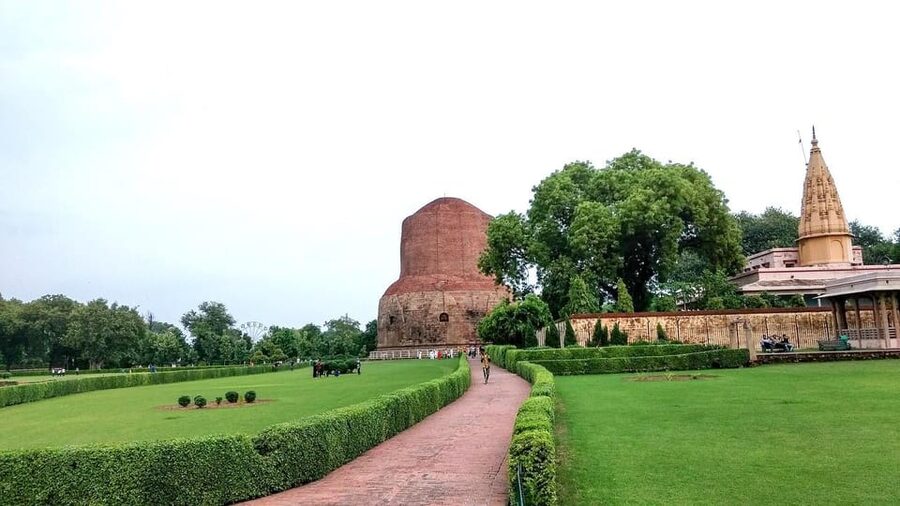
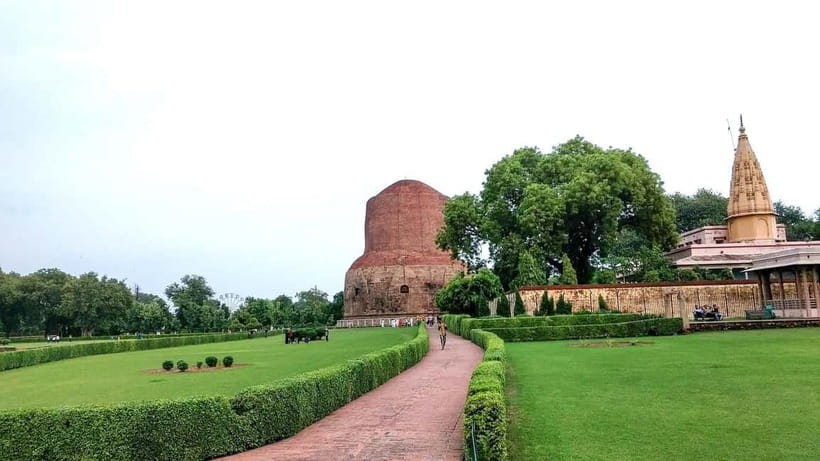
Dhamekh Stupa is the centerpiece for understanding Sarnath. It is strongly associated with the moment when Buddha taught his Dhamma. The story gets even more concrete because Dhamekh is described here as being built by King Ashoka, one of the most important names linked to Buddhism’s growth and state support.
What to notice at Dhamekh Stupa is not just that it is old, but how it acts like a physical anchor. When your brain has a single reference point, everything else becomes easier to follow. You can look at the stupa’s form and then connect it to what the teaching represented, a turning point rather than a casual gathering.
A small practical note: you will likely spend time observing details around the stupa and listening to context. If you are the type who likes to look first and ask questions later, bring that habit here. Ask your guide what to look for, like key symbols or the connection to Ashoka’s era.
If you only visited one site at Sarnath, this would be the one I would pick, because it gives you the narrative spine.
A different shape of Varanasi day:
- Banaras Wala Tours
★ 5.0 · 329 reviews - The Ultimate 1 Day in Varanasi – How to Spend 13 Hours – Private Guided Tour
★ 5.0 · 295 reviews - A Journey of A lifetime
★ 5.0 · 272 reviews - Varanasi: Hidden Secrets of lively Tradition (Guided Tour)
★ 4.9 · 176 reviews
Dharmarajika Stupa: Relics After Death, Sacred Objects That Carry Meaning
Dharmarajika Stupa adds a different kind of understanding. Instead of focusing mainly on the act of teaching, it points you toward the role of relics after Buddha’s death. The site is associated with relics of Buddha being brought here, turning remembrance into something tangible.
This stop works well because it expands your lens. Early Buddhism is not only about words. It is also about how communities preserved meaning through sacred objects and places people could visit. When you see the stupa form in person, it helps you understand why relic traditions mattered so much.
What I suggest you do at this stop is slow down and listen for the difference between the sermon story and the relic story. Your guide can help you see how those two threads connect: teaching leads to community, and community sustains itself through shared sites.
If you like Buddhism history that goes beyond one dramatic moment, you will appreciate Dharmarajika for that reason.
Mulgandh Kuti Vihar: Gupta-Era Meditation, Not Just Pilgrimage Photos
Mulgandh Kuti Vihar represents the place where Buddha used to meditate, and it is described here as an example of the Gupta period. That word, Gupta, matters because it points to a time when Indian art, architecture, and religious expression shaped how later generations pictured earlier events.
This is the stop that often shifts the mood of the visit. Dhamekh Stupa tends to feel like the story’s beginning. Dharmarajika tends to feel like reverence and preservation. Mulgandh Kuti Vihar brings you closer to practice, the quieter side of Buddhism.
Even if you are not meditating on the spot, you can still use this time intentionally. Take a breath, stand still for a moment, and let the explanations land. You are in a site designed to evoke a mental state, not just a historical fact.
Practical consideration: these areas can be warm and sunny. If you are sensitive to heat, pace yourself here and take shade when you find it.
The Museum Built in 1910: A Useful Way to Read the Statues
Sarnath also has a big museum built in 1910 by the British. It contains different types of statues. This is where your visit becomes easier to interpret because the museum offers a more curated way to understand what you saw outside.
In my experience, museums in religious heritage sites do not replace the monuments. They help you connect the dots. You can look at stone pieces and then compare them with what the displays explain, like styles, themes, and how different eras represented Buddhist figures.
Use this time to ask your guide how the museum objects relate to the stupa and temple spaces. When you know what a statue represents, you notice different details outside too, like symbolism and historical layering.
If you enjoy visual learning, this museum stop is a strong reason to pick a guided visit rather than self-exploring. A guide can point out what is worth your attention.
How the Guide Makes Sarnath Feel Effortless (and Respectful)
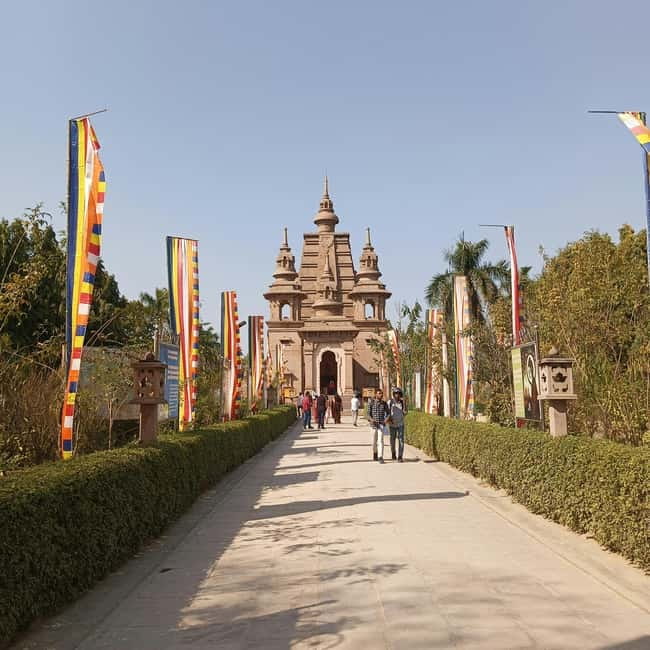
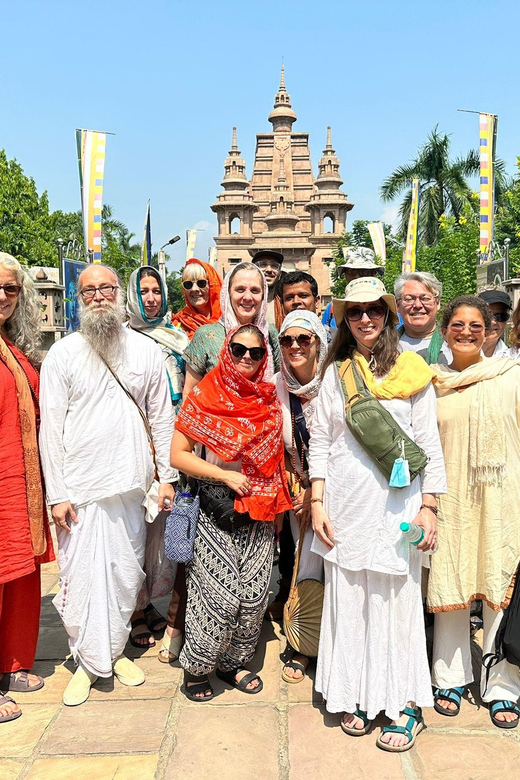
A big part of why this tour works is the guide. Shwetank Rao Tripathi, listed as the provider, is described in a very human way through the nickname Mono. The repeated theme is that he is passionate about guiding and makes the sights easy to manage, including handling entry details.
I like that because Sarnath can be confusing if you arrive without context. You will see multiple structures, some active and some ruined, and it is easy to feel like you are just following a path of names. A good guide turns that into a storyline.
Another praised quality that matters: the reminder to be respectful to the place. That sounds obvious, but on sacred ground, respectful behavior is not just about silence. It is about how you move, where you pause, and how you treat people and symbols you encounter.
This tour also has a high satisfaction level, listed at 4.9 from 15 reviews. That is not a guarantee of your experience, but it is a strong signal that the guide approach is consistent and thoughtful.
Price and Value: Why About $40 Can Be Fair Here
The price is listed at $40 per person for about 4 hours, and for that you get an air-conditioned car plus entry tickets. Food and drinks are not included.
Is $40 worth it? In this case, I think it can be. The two biggest sources of “hidden cost” on heritage visits are entry handling and transit fatigue. When the car is included and someone handles entry details, you spend less time negotiating logistics and more time understanding what you are seeing.
You are also paying for translation of meaning. Buddhist sites are full of references that you would struggle to connect without help, especially when several periods and traditions are represented across different monuments. A good guide saves you from turning the visit into a list of facts you forget.
The main value trade-off is time. If you want to linger for hours in just one area, a 4-hour format might feel tighter than you prefer. But if you want the core Sarnath experience without committing the whole day, this pricing makes more sense.
What the Walk Feels Like, and How to Prepare
This is not an all-bus, sit-and-smile tour. You will be moving between Dhamekh Stupa, Dharmarajika Stupa, and Mulgandh Kuti Vihar, plus time around the museum. That means footwear matters.
I recommend:
comfortable shoes you can stand in for a while
water since drinks are not included
a light layer for sun or shade, depending on the season
your curiosity hat, because the explanations tie the stops together
If you have limited mobility, the monuments and temple grounds may be uneven. You might still enjoy the visit if you can take it slow, but I would treat this as a walking and standing experience, not a fully accessible stroll.
Who Should Book This Sarnath Tour (and Who Might Not)
This tour is a great fit if:
you are staying in Varanasi and want a calmer break near a major spiritual site
you only have half a day and want the main Sarnath stops covered
you want a guide who explains meaning in English
you appreciate practical help like entry handling and convenient pickup
You might choose something else if:
you want a very long, self-paced exploration with no schedule
you dislike guided explanations and prefer to read everything on your own
- you need frequent stops for rest and shade and cannot manage the walking time
Should You Book the Sarnath Tour? My Call
If you are in Varanasi and want a high-impact visit that connects Buddha’s teaching, relic traditions, and meditation practice in one clean circuit, I would book this. The combination of AC transport, included entry tickets, a focused 4-hour format, and an English live guide like Shwetank Rao Tripathi (Mono) makes it easy to do well.
It is also a smart value when you consider what can go wrong on your own, confusion about where to go, and missing the meaning behind what you see. Just be ready for a bit of walking, bring water, and go in with an open mind. You will leave with a clearer story, not just photos of stone.
FAQ
How long is the Sarnath tour?
The duration is 4 hours.
What is the price per person?
The price is $40 per person.
Where do I meet my guide?
Please wait outside Hotel ganges Grand Godowlia.
Is food or drinks included?
No, food and drinks are not included.
What does the tour include?
It includes an air-conditioned car and entry tickets in the monument sites.
What monuments and places will I see?
The highlights include Dhamekh Stupa, Dharmarajika Stupa, and Mulgandh Kuti Vihar, and the visit also covers additional sights such as temples and a museum.
Is the tour guide available in English?
Yes, the live tour guide is English.
Do I get any help with entry details?
The experience includes entry tickets, and the guide handles the details as part of the guided visit.
Can I cancel if plans change?
You can cancel up to 24 hours in advance for a full refund.
Latest reviews in from Varanasi
- Private Day Tour in Varanasi★ 5.0 · 44 reviews
- Group Yoga Class with Siddharth from Beginner to Advance★ 5.0 · 45 reviews
- Pilgrimage Varanasi★ 5.0 · 50 reviews
- Experience Varanasi Tour: 3 Days Private Guided Tour★ 5.0 · 51 reviews
- Complete tour of varanasi with official guide★ 5.0 · 51 reviews
- Varanasi Street Food Crawl (2 Hours Guided Food Tasting Tour)★ 4.5 · 69 reviews
- 3 Days Admirable Tour in Varanasi with private tour guided★ 5.0 · 72 reviews
- Photo Tour In Holy Varanasi★ 5.0 · 73 reviews
Varanasi Tours, compared.
Full Day City Highlights Day Tour & Ganges Cruise
Read our review →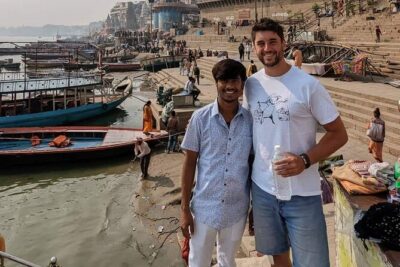
Hidden Secrets of Varanasi: lively Tradition (Guided Tour)
Read our review →

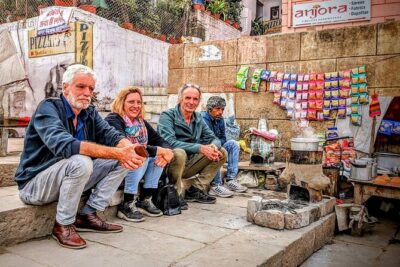
The Ultimate 1 Day in Varanasi – How to Spend 13 Hours – Private Guided Tour
Read our review →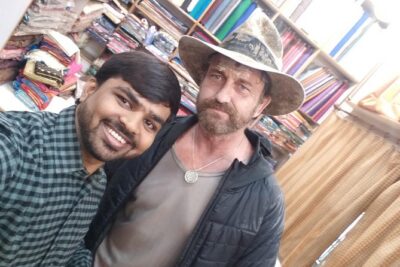
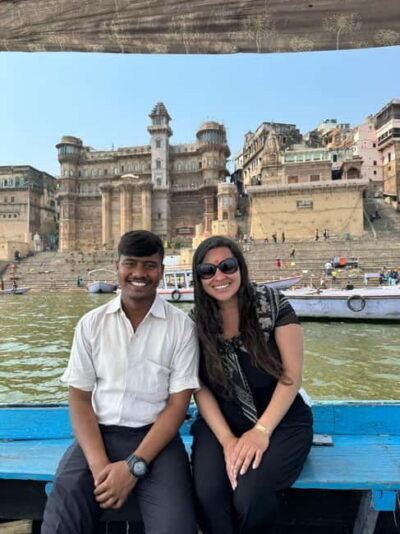
Hidden Secrets of lively Tradition (Guided Tour)
Read our review →
Private Heritage and Spiritual Walk Tour – Varanasi Kashi
Read our review →Browse the lists this tour appears in