
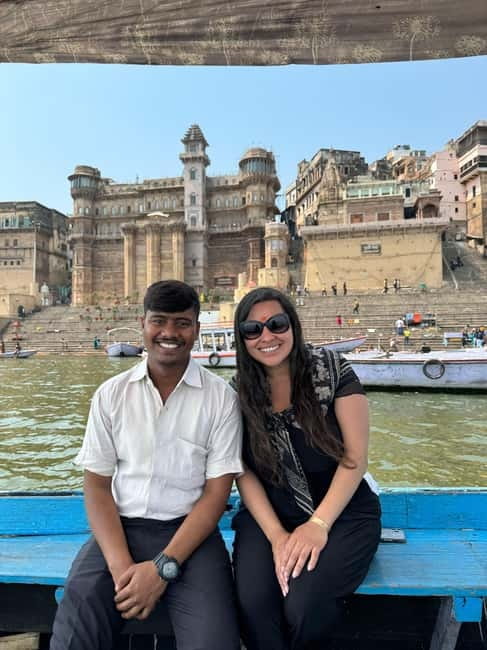
Reviewed · VARANASI TOURS
Varanasi: Hidden Secrets of lively Tradition (Guided Tour)
Varanasi is the kind of place where religion is not a museum piece, it is daily life, especially along the Ganges ghats. This 3-hour guided walk gives you a practical way to understand what you are seeing, from temples to the cremation grounds, without getting lost in the lanes.
I like the clear, local storytelling, because it turns random sights into meaning. I also like that the route hits both famous stops and quieter corners, so you do not just tick boxes. One thing to consider, though, is that the Manikarnika cremation area is intense, and the walking route includes uneven, crowded streets.
Key things you get from this Varanasi walking tour

- Temple and ghat stops you can actually explain afterward, including Vishalakshi Temple, the Nepali Temple, and Manikarnika Ghat
- Meaningful Ganges-side context, with visits tied to Hindu ideas of karma and moksha
- A guide who helps you read the city, with English or Hindi support and strong Q&A time
- Little back-street moments, where you see how locals move through the city, not just tourist fronts
- Included chai or coffee plus bottled water, so you can keep your energy during a hot walk
First Steps at Rajendra Prasad Ghat and the Virtual Experiential Museum

The tour starts at Rajendra Prasad Ghat, right in front of the Virtual experiential museum, with the guide waiting at the museum entrance. This matters more than you might think. Varanasi’s riverfront roads and side lanes can be confusing, and you want to begin with a local who knows the best way to step into the city without wasting time.
The activity is designed as a walking experience, so comfortable shoes are not optional. If you are arriving by auto or tuk tuk, plan extra time to reach the exact meeting area near the ghat zone, since it is not always straightforward for a regular taxi to pull right up. Once you meet your guide, the pace is usually steady, and the walking rhythm tends to fit the narrow lane reality, not the idea of a calm stroll.
Also, a quick reality check: this tour is not for everyone. It is not set up for wheelchair users or people with mobility impairments, and it is not suitable for pregnant women or babies under 1 year. And yes, you will be around active religious spaces, so you should avoid smoking and keep your pet situation handled before you go.
Line these Varanasi options up side by side
- Varanasi : Full Day City Highlights Day Tour & Ganges Cruise
★ 4.8 · 520 reviews - Hidden Secrets of Varanasi: lively Tradition (Guided Tour)
★ 5.0 · 429 reviews - Varanasi: Sunrise Boat Tour with Arti Ceremony
★ 5.0 · 375 reviews
Shri Vishalakshi Mata Shaktipeeth Temple, Kashi, and why Adi Shakti is everywhere

A good Varanasi guide does not just point at buildings. They explain why those buildings matter to daily belief, and how the city’s religious identity shows up in rituals and local life. The tour begins with a visit to Shri Vishalakshi Mata Shaktipeeth Temple, also tied to the idea of Vishalakshi Gauri, a form connected to Adi Shakti, the Divine Mother.
In plain terms, this stop helps you shift your mindset. Before you get to the ghats, you learn the city’s religious language: how Hindu devotion expresses itself through temples, worship rhythms, and the roles of divine feminine power in the larger spiritual framework. If you have ever felt overwhelmed in India because everything seems spiritual at once, this kind of grounding is what makes the rest of the walk click.
You also get a photo moment and time for questions. I like that the tour allows small pauses, because in Varanasi, you will notice details only if you stop trying to rush from one highlight to the next.
Photo stops by the Ganges, including Meer Ghat and the lane-to-ghat rhythm

After the temple, you move into the city’s working geometry, those narrow passages and stair-and-lane transitions between the market side and the river side. The route includes photo stops such as Meer Ghat and another guided segment where you get context while you photograph.
These stops are not filler. They teach you how the ghats function like a living address system. From one angle, you see a ghat as a spiritual stage. From another angle, you see it as a place locals actually use. Even if you are not thinking about it, you are learning where the city bends toward the river and where it turns inward toward neighborhoods and shops.
If you are the type who likes to understand logistics, this is also where you learn how your guide keeps the walk moving through crowds. Some days are busier than others, and when local visitors are out too, you want someone who can guide you through without turning the experience into a stressed line-following exercise.
Kathmandu-style devotion at the Nepali Temple, also called Kathwala
Next comes the Nepali Temple, also referred to as Kathwala Temple, and linked to the Shri Samrajeswar Pashupatinath Mahadev Mandir dedication to Shiva. This stop is a strong reminder that Varanasi is not one single style of worship. Religious life here overlaps cultures and histories, and you see it in how different temple traditions sit side-by-side along the same sacred riverfront landscape.
From a traveler’s perspective, this is where the tour becomes more than sightseeing. The guide helps you connect what Shiva represents in Hindu practice to what you see in the temple space. You also get time for guided explanation, not just a quick look-and-go.
One practical benefit: temple visits are sheltered compared to open ghat areas. If the weather is hot or bright, you will appreciate breaks that are still meaningful but easier on your eyes.
A different shape of Varanasi day:
- Banaras Wala Tours
★ 5.0 · 329 reviews - The Ultimate 1 Day in Varanasi – How to Spend 13 Hours – Private Guided Tour
★ 5.0 · 295 reviews - A Journey of A lifetime
★ 5.0 · 272 reviews - Private Heritage and Spiritual Walk Tour – Varanasi Kashi
★ 5.0 · 172 reviews
Manikarnika Ghat, cremations, and facing the spiritual reality of death

Then you reach Manikarnika Ghat, one of the holiest cremation grounds along the Ganges. This is the moment most first-timers remember. It is not a calm postcard stop. It is a religious space where death is treated as a transition tied to karma, moksha, and the spiritual idea that the soul’s journey continues.
The tour frames this carefully. In Hinduism, cremation at these sacred riverfront sites is understood as a gateway to another life, and the belief here centers on breaking the cycle of rebirth when cremated at Manikarnika. You also hear the symbolism tied to Manikarnikeshwar worship after bathing and worship at the site, connected to the idea that devotees will not return again in the cycle of rebirth.
I am going to say this directly because it helps you decide: if you are squeamish, or if you think you will want a purely scenic experience, this stop may feel heavy. But if you want to understand why Varanasi is Varanasi, you have to face this part of the city. A good guide is the difference between panic and understanding. You also get guidance on what to observe and where to stand, which helps a lot in a busy environment.
Some guides on this route, including people like Akash, Niwas, and Badal, are praised for how they keep you oriented so you do not feel like you are stumbling through a maze alone. That matters here, because you are right next to intensely busy activity and a high-emotion setting.
Manikarnikeshwar Mahadev Temple, Ratneshwar, and Chakra Pushkarini stops

The tour continues with the Manikarnikeshwar Mahadev Temple, dedicated to Lord Shiva, and then additional nearby sacred points, including the Ratneshwar Mahadev Temple and Shri Manikarnika-Chakra Pushkarini.
This part of the walk is where the tour shifts from the dramatic cremation context into the spiritual mechanics that surround it. The Manikarnikeshwar temple stop ties back to the belief described earlier: devotees who take a bath at Manikarnika and worship Manikarnikeshwar are connected to the idea of no return to the mother’s womb, meaning no rebirth. Whether you come from a faith background or not, it helps you understand that the ghats are not only about what happens at cremations. They are about a whole system of belief, worship, and ritual movement that happens before and after.
The added stops, Ratneshwar and the Chakra Pushkarini, round out the meaning. They show that even around the main headline site, there are layered sacred spots with their own devotional logic. I like how this tour refuses to treat Varanasi as one big highlight. You get several stops that connect to each other, which makes the city feel more coherent.
A small note on pacing: some people report guides can walk a bit fast at times. If you prefer slow looking and slower photos, ask your guide to slow down early. The best results come when you set your comfort level, not when you try to match your guide’s speed without speaking up.
Coffee or tea at a local stall, and why it is part of the experience

You also get an included cup of coffee and/or tea at a popular local food stall. This sounds small, but it is actually a smart part of the tour design. You are walking in sun and crowds, and your attention needs a reset.
I use this break as a check-in moment. After a temple and especially after Manikarnika, you can feel mentally overloaded. A warm drink helps you return to the city with patience and lets you process what you just learned. You can also ask your guide practical questions during this pause, like where to eat next or how to handle the lane chaos later in the day.
Also, while the tour includes a drink, it does not include food beyond that. If you want a full meal, plan to buy it separately.
Price and logistics: what $16 buys you for 3 hours

At $16 per person for a 3-hour walking tour, the value is real, mainly because admissions are included. You are paying for entry to multiple sacred sites: Vishalakshi Temple, Nepali Temple (Kathwala Temple), Manikarnika Ghat, Manikarnikeswar Temple, Ratneshwar Temple, and the Chakrapushkarni Kund area.
Then you add the included support items: bottled water plus coffee and/or tea. And transportation is not included, so you still need to handle how you arrive and depart. But once you are on foot with a guide who knows the route, you are basically buying orientation, storytelling, and time in the places most first-timers would struggle to reach confidently.
Language is English or Hindi, and the tour is a live guided experience. If your English is strong, you still benefit from having a guide who can answer questions directly. Many people also appreciate the guide’s local tips, including warnings about scams near the ghats. In a city where it is easy to get pushed into paying for something you did not ask for, that guidance is worth money.
What to bring, and how to make the walk more comfortable

Bring comfortable shoes, and keep your legs ready for short climbs and tight spaces. A hat, sunscreen, and water are on the list for a reason, because the sun near the river can be intense.
Bring your camera, because you will get photo opportunities at set stops, but also because you will see small details along the way. Just stay respectful and follow your guide’s cues, especially near sensitive areas.
You cannot bring pets, and smoking is not allowed. If you plan to wear shorts, keep in mind you are entering temple spaces, so covering appropriately is a smart idea.
Who should book this tour, and who might skip it
This tour is a great fit if you want a first-time introduction that goes beyond the postcard version of Varanasi. I particularly think it works well for people who care about religious meaning, and for solo travelers who do not want to navigate the ghats maze alone. The guide’s local route knowledge helps you avoid wasting energy on getting turned around, and it helps you feel safer in crowds.
If you are sensitive to the subject matter, consider your comfort level before booking. This tour includes the cremation grounds context. It can be educational and respectful, but it is still emotionally heavy.
If you have mobility limits, pregnancy, or are traveling with a baby under 1 year, this one is not suitable based on the tour requirements.
Should you book this Varanasi walking tour?
I think you should book it if you want a guided walk that connects temples, ghats, and belief into one readable story. The biggest advantage is that you do not just see the famous religious sites, you learn why they matter and how people live their beliefs around them. For a small price, you also get admissions covered, plus bottled water and chai or coffee.
I would only hesitate if the cremation setting is something you know will upset you. If that part feels too much, you might prefer a different kind of Varanasi day that focuses on temples and viewpoints only.
If you do book, do yourself a favor and message your guide with your arrival plan so you can find the meeting point quickly at Rajendra Prasad Ghat. And if you need a slower pace for photos or rest, ask early rather than later.
FAQ
Where is the meeting point for this tour?
The meeting point is at Rajendra Prasad Ghat, in front of the Virtual experiential museum. The guide will be standing in front of the entrance of the museum.
How long is the Varanasi walking tour?
The duration is 3 hours.
What sites are included in the tour?
You’ll visit Shri Vishalakshi Mata Shaktipeeth Temple, Nepali Temple (Kathwala Temple), and Manikarnika Ghat. The tour also includes the Manikarnikeshwar Mahadev Temple, Ratneshwar Mahadev Temple, and Shri Manikarnika-Chakra Pushkarini, plus time for photo stops.
Is coffee or tea included?
Yes. Coffee and/or tea is included, along with bottled water.
What is the entry cost of the temples and ghats?
Entry and admission are included for Vishalakshi Temple, Nepali Temple (Kathwala Temple), Manikarnika Ghat, Manikarnikeshwar Temple, Ratneshwar Temple, and Chakrapushkarni Kund.
What should I bring, and what is not allowed?
Bring comfortable shoes, a hat, camera, sunscreen, and water. Pets are not allowed, and smoking is not allowed.
What languages is the live guide available in?
The live tour guide is available in English and Hindi.
Latest reviews in from Varanasi
- Private Day Tour in Varanasi★ 5.0 · 44 reviews
- Group Yoga Class with Siddharth from Beginner to Advance★ 5.0 · 45 reviews
- Pilgrimage Varanasi★ 5.0 · 50 reviews
- Experience Varanasi Tour: 3 Days Private Guided Tour★ 5.0 · 51 reviews
- Complete tour of varanasi with official guide★ 5.0 · 51 reviews
- Varanasi Street Food Crawl (2 Hours Guided Food Tasting Tour)★ 4.5 · 69 reviews
- 3 Days Admirable Tour in Varanasi with private tour guided★ 5.0 · 72 reviews
- Photo Tour In Holy Varanasi★ 5.0 · 73 reviews
Varanasi Tours, compared.
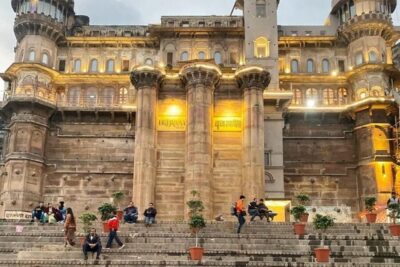
Full Day City Highlights Day Tour & Ganges Cruise
Read our review →
Hidden Secrets of Varanasi: lively Tradition (Guided Tour)
Read our review →
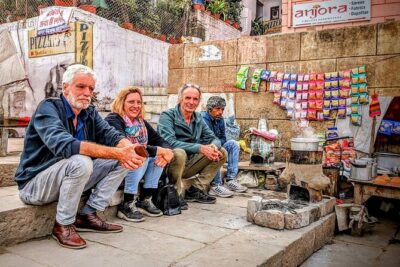
The Ultimate 1 Day in Varanasi – How to Spend 13 Hours – Private Guided Tour
Read our review →
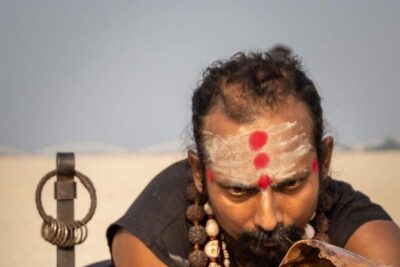
Private Heritage and Spiritual Walk Tour – Varanasi Kashi
Read our review →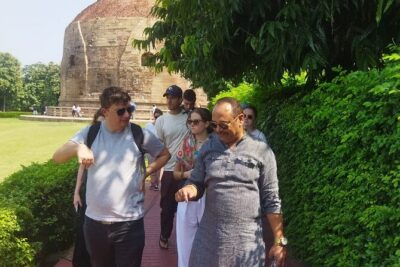
Browse the lists this tour appears in