
Reviewed · WALKING TOURS
Panjim: Guided Walk Tour of Portuguese-Influenced Goa
Panjim can surprise you. This guided walk focuses on the Portuguese influence in Goa, using Fontainhas and other Indo-Portuguese landmarks to help you understand how the city got its look and feel. I love how the route connects everyday streets to real monuments, and I also love the way the guide, often Joaquim, turns architecture and European context into clear, fun stories you remember. The main drawback is simple: it is still a walk. You will deal with uphill sections around Altinho, so comfortable shoes matter.
What makes this tour especially good value is the pacing. You get a mix of big sights and smaller lanes, plus a café stop for food tasting, so it does not feel like you are only being talked at. It also runs in English and Hindi, which helps if you want explanations without guessing.
One more heads-up for logistics. There is no hotel pickup, and you meet at the staircase of Panjim Church. You also should bring your own water plan, since a water bottle is not listed as included. If you want everything super smooth, confirm details ahead of time using the WhatsApp coordination they request.
Key things to know before you go
- Portuguese-era focus in Panjim and Fontainhas helps you connect architecture to the city’s lifestyle, not just names on walls
- A local storyteller style uses a fun infotainment approach, not a lecture
- Hidden lanes plus viewpoint time means you get both photo-worthy streets and a look back over Panjim
- Altinho Hill includes uphill walking so plan for a steady pace
- Food tasting stop adds a real break, but food and drinks are not listed as fully included
- Wheelchair accessible with the tour operating on foot
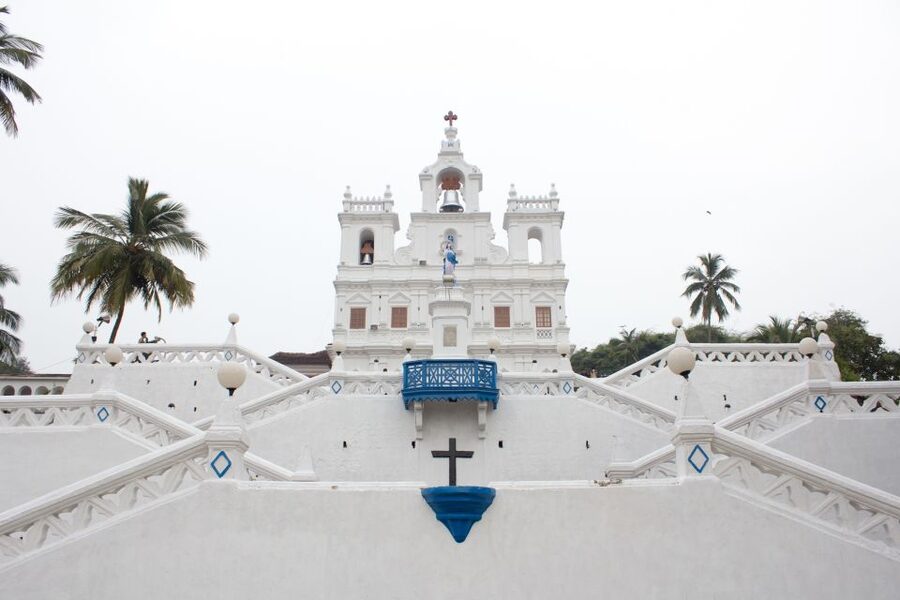
Starting at Panjim Church and setting the Portuguese-era tone
The tour kicks off at the staircase of Panjim Church. Starting at a recognizable landmark helps you get oriented fast, and it also sets the theme right away: this is not a generic old-town stroll. It is specifically about Portuguese influence and how that period left visible marks on Goa’s built environment.
From the start, the guide’s job is to give you a mental map. You are not just passing buildings, you are learning why they matter in the bigger story of Panjim. I like tours that do that, because after 20 minutes you stop thinking only about where you are standing and start noticing the patterns the guide points out.
Expect a slow, walk-and-learn rhythm. You are given time to look, not just move through. If you enjoy photography, this is a good warm-up stretch because the early streets are close enough that you can frame shots without feeling rushed.
More Walking Tours in Goa
- Fontainhas Heritage Walk by Make It Happen
★ 5.0 · 2,834 reviews - Old Goa Heritage Walk by Make It Happen
★ 5.0 · 797 reviews - Fontainhas Heritage Walk At Latin Quarters of Goa
★ 5.0 · 531 reviews
Altinho Hill stepped streets toward the Archbishop’s Palace area
After a short walk, you head toward Altinho Hill, which means uphill walking on stepped streets. This is the portion that most affects comfort. You will want shoes with grip and soles that can handle uneven steps.
The payoff is that the walk gives you a change in perspective. On the way uphill, you pass through older lanes and reach the area near the Archbishop’s Palace. Even if you do not spend long at each spot, you get those visual “oh, that’s why this looks the way it does” moments. The guide usually ties what you are seeing to the Portuguese-era influence in a way that stays understandable, even if history is not your main hobby.
A practical tip from the route design: keep your camera handy but not glued to your face. On hill sections, you want a clear view of where your feet are going, then pause for photos when the guide signals a proper angle or viewpoint.
Old High Court area and colonial-era buildings, with context that clicks
Next comes the Old High Court area, including colonial-era buildings and one of India’s oldest High Courts. This stop is about power and institutions, not just pretty architecture. The guide uses stories to explain how the city’s layout and buildings reflect its past role in administration and public life.
This is also where the tour’s infotainment style shows. Instead of listing facts and names, the guide gives you anecdotes and connections that help the buildings make sense. One of the most praised aspects is exactly this kind of explanation, where the guide does more than describe. They connect Portuguese influence to broader European history, which makes the architecture feel less random and more purposeful.
If you tend to tune out during lectures, this part is still worth it because it alternates between looking at buildings and hearing why they are significant. That mix is what makes the full 2 hours feel like a complete experience instead of a series of quick stops.
The modest art gallery stop, where local and European ideas meet
You then reach an art gallery stop, described as a modest space featuring Scandinavian and local artwork. This is a clever break in the itinerary. Instead of only focusing on churches and streets, the tour briefly shifts to how art and style travel, and how influences can overlap in unexpected ways.
I like this kind of detour because it keeps the tour from becoming one-note. You are still in the Portuguese-influence theme, but now you are also looking at how cultural exchange shows up in creative spaces. If you are the type who likes to understand not only buildings but also the tastes and influences behind them, you will likely enjoy this stop.
The time for this part is also built in. You get enough time to step inside, look around, and reset your legs before the longer walk through Fontainhas.
A different shape of Goa day:
- BLive Electric Bike Tours – Discovery of Divar Island
★ 5.0 · 1,147 reviews - Varca Coastal E-Bike Tour: Scenic Beachside Adventure
★ 5.0 · 668 reviews - Feni and Tapas – Food Trail with Tastings & Drinks by Make It Happen
★ 5.0 · 409 reviews - Village Vibes: Cansaulim Coastal E-Bike & Japanese Tea Tour
★ 5.0 · 292 reviews
Fontainhas Latin Quarter: colorful lanes, cafés, and heritage lanes
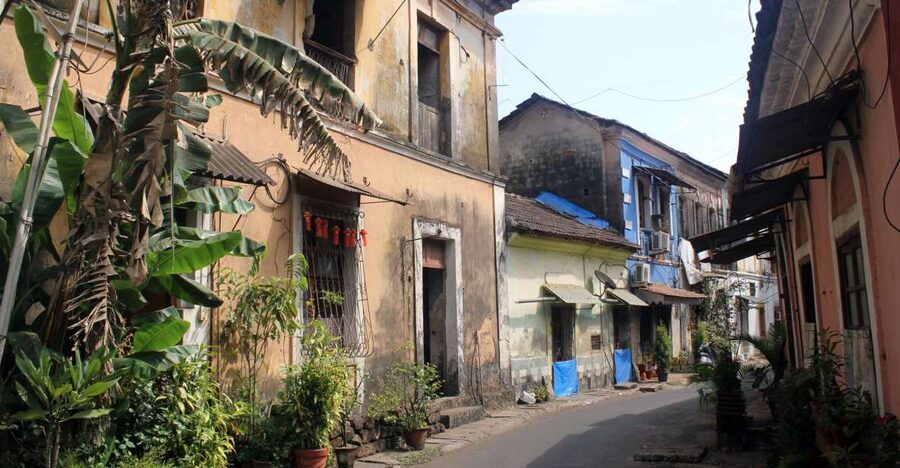
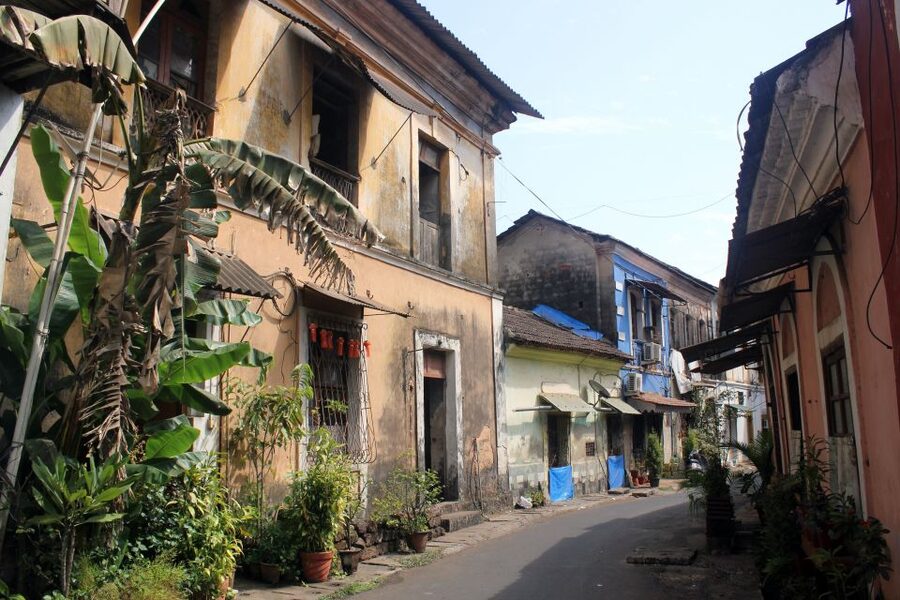
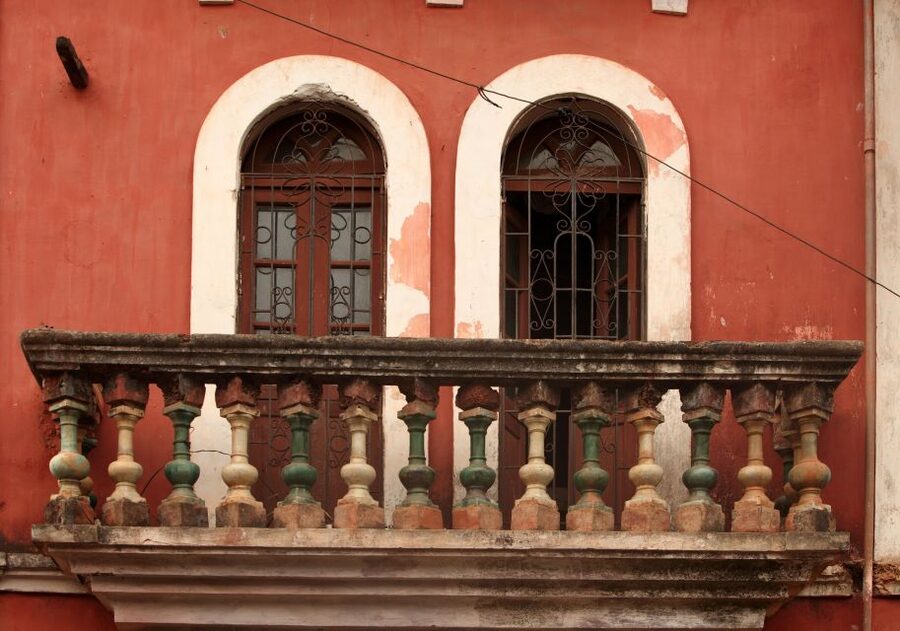
Now you hit the heart of the experience: the Fontainhas Latin Quarter. This is where the tour delivers on the promise of Portuguese-influenced Goa in the most immediate way. Expect colorful houses, cafés, and heritage lanes that feel lived-in rather than staged.
This segment is likely to be your favorite, especially if you care about street-level travel. You are walking through tight lanes where the architecture and the daily rhythm of the neighborhood sit side by side. That is the difference between reading about history and seeing it in the present.
The guide typically helps you notice small details and also encourages you to capture local life, not only monuments. If you want photos that look like your day in Goa, this is where you will get them: façades, street corners, and the kind of scene where someone walks past your frame and suddenly it feels real.
There is also a local café food tasting stop around this area. Use it as a breather. Two hours passes quickly when you are walking and learning, and the café stop gives you a chance to sit down, refuel, and keep the tour from feeling nonstop.
Important practical note: while the route includes food tasting, food and drinks are not listed as included overall. So if you are thirsty, plan to buy what you need, and bring a water strategy since a water bottle is not provided.
Chief Minister’s residence exteriors and the contrast with everyday streets
After Fontainhas, you pass by the Chief Minister’s residence (exteriors). This is not a deep visit, but it adds a different angle to your understanding of the city. You are moving from neighborhood lanes into the orbit of official spaces.
I found this kind of stop useful because it shows Goa is not frozen in time. Portuguese influence shaped parts of the city’s look, but the present still runs through it. Seeing official architecture in the middle of a walking route helps you notice the contrast between heritage streets and seats of power.
It also keeps the walk from feeling like a single mood. Colorful lanes, then institutional exteriors, then you end at a Hindu temple overlooking Panjim. That flow helps you see the city as layered, not one-dimensional.
Finishing at Maruti Temple, Altinho, with a calm view over Panjim
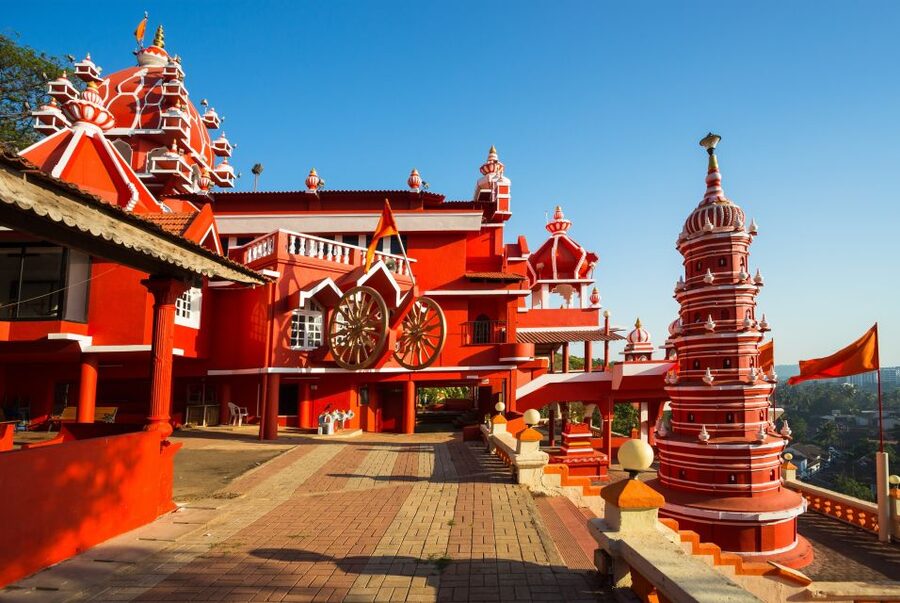
The tour ends at Maruti Temple, Altinho, overlooking Panjim. This final stop changes the tempo. Instead of more buildings and corridors, you get a serene Hindu finish that lets you reset mentally after the Portuguese-era focus.
It is a nice way to close because it gives you a view and a quiet pause. Even if you are not there for religious reasons, the location helps you appreciate Panjim as a whole, spread out under you, not only as a list of sights you checked off.
If you want photos, this is often a good moment because you have a more open viewpoint compared with the tight lanes earlier in the tour. Just remember your legs are probably tired, so take your time and choose stable spots to stand.
Pace, comfort, and the kind of traveler who will enjoy it
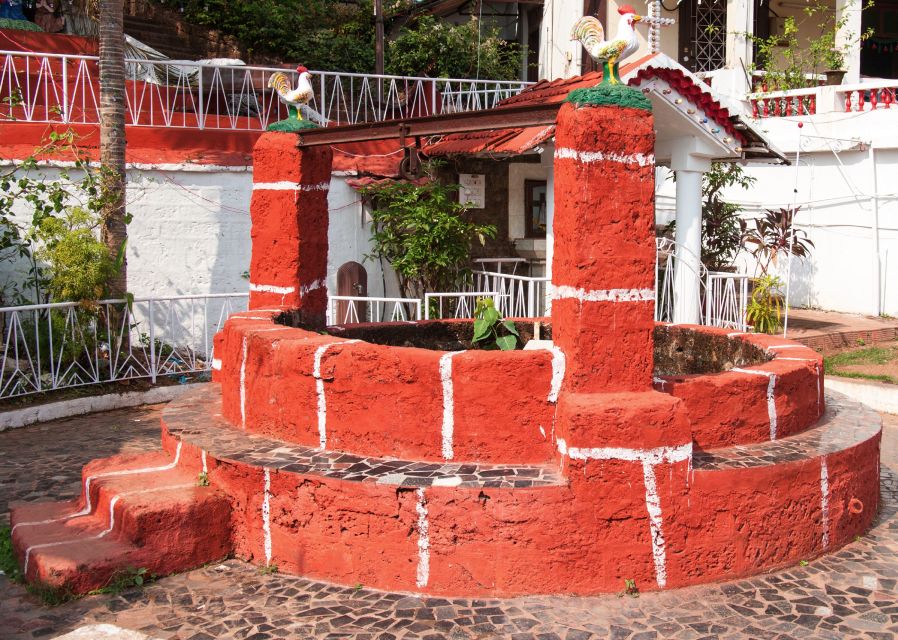
This is a 2-hour walking tour with no transportation included. That means you should plan around your own walking comfort and hydration needs. The itinerary includes uphill sections at Altinho Hillock, so even if you are fit, wear shoes you trust on steps.
The good news is the pacing is designed to stay interesting. The tour uses a mix of architecture stops, a small art space, a café tasting, and viewpoint time. It is not just a straight line through old streets.
Who it suits best:
- You want a guided, story-based look at Portuguese-influenced Goa in a short time
- You like architecture, but you also want the human context behind it
- You enjoy walking tours that stay lively, not dry
Who should be cautious:
- You hate uphill walking or have ankle issues, since the route includes stepped climbs
- You want a full museum-style deep dive with longer indoor time, since this tour is intentionally on foot and paced for variety
One small consideration from experience with similar tours: if you struggle with low volume explanations, you might want to position yourself where you can hear clearly. The route itself is well paced, but some guides do speak more softly than others.
Price and value at $14 for 2 hours of guided Indo-Portuguese storytelling
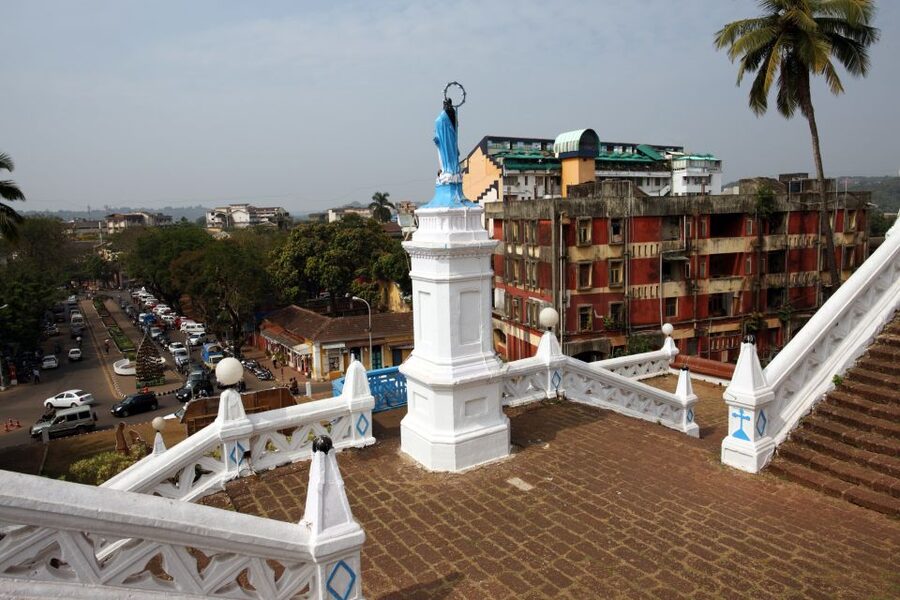
At $14 per person for a 2-hour guided walk, this tour is priced like a practical, local-feeling experience rather than a premium attraction. For the money, you get more than a generic walk through streets.
You are paying for:
- A guide who can speak English and Hindi
- Access to hidden lanes and heritage points you might miss on your own
- A structured route with meaningful stops, not random wandering
- Local tips and recommendations aimed at helping you explore better and maybe save money
- A café tasting stop and viewpoint time that break up the walking
Is it a bargain? Yes, especially if you like the idea of understanding Portuguese influence through what you can actually see in Panjim and Fontainhas. But it is not the right value if you only want a photo walk. You need to be open to stories and context to get the most out of the time.
Also, because water bottle and food and drinks are not included, build a small extra budget in your head for what you might want during the tour.
Should you book this Panjim Portuguese-influenced walk?
Book it if you want a short, guided way to understand Portuguese-era Goa through Indo-Portuguese architecture, heritage homes, and the lived-in lanes of Fontainhas. You will likely enjoy it most if you like walking tours where the guide explains the why behind the sights, and if you are comfortable with uphill sections.
Skip it or choose a different format if you cannot handle stepped climbs, or if you want long indoor time at museums rather than a moving route. For most people who want an authentic, story-driven look at Panjim in two hours, this one is a strong pick.
Latest reviews in from Goa
- North Goa Sightseeing Full Day Tour ( 09 am – 05 pm )★ 3.5 · 44 reviews
- Old Goa Heritage & Culture E-Bike Tour★ 4.5 · 46 reviews
- Latin Quarter Food Trail by Make It Happen★ 5.0 · 47 reviews
- CULTURAL & HISTORIC DAY TOUR ATTRACTIONS – Churches, Temples & Spice Plantation★ 4.5 · 53 reviews
- Glimpses Of Goa: Churches,Temple and Spice Plantation★ 5.0 · 65 reviews
- Saligao Village Saunter by Make It Happen★ 5.0 · 74 reviews
- Private Beach Photoshoot in North Goa by Professional Photographer★ 4.5 · 78 reviews
- Chandor Heritage Trail by Make It Happen★ 5.0 · 79 reviews
Walking Tours, compared.

The Great Indian Food Tour: Old Delhi Food and Heritage Walk
Read our review →

Old Delhi Food, Heritage&Cultural Walk with Rickshaw ride to Masterji Kee Haveli
Read our review →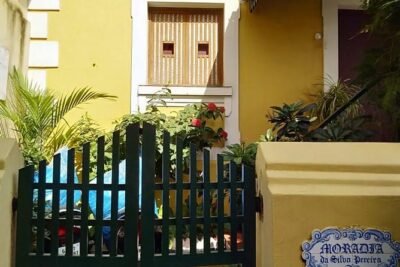
Fontainhas Heritage Walk At Latin Quarters of Goa
Read our review →Browse the lists this tour appears in