
Reviewed · DHARAVI TOURS
Mumbai: Dharavi Slum Walking Tour with Local Slum Dweller
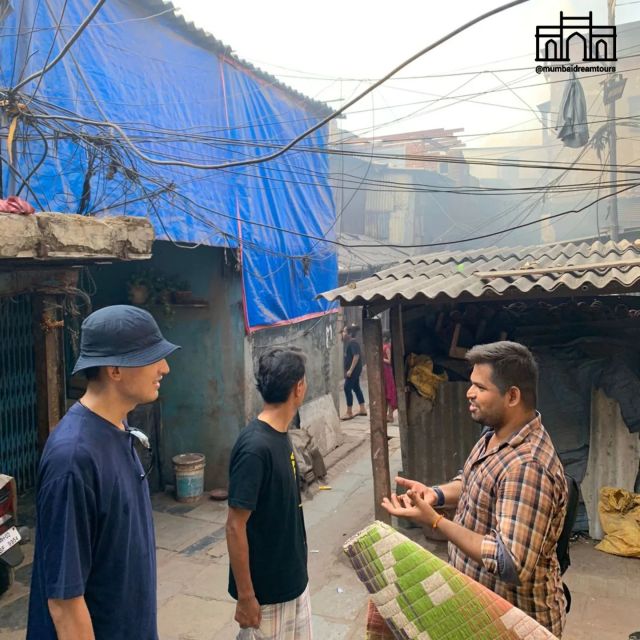
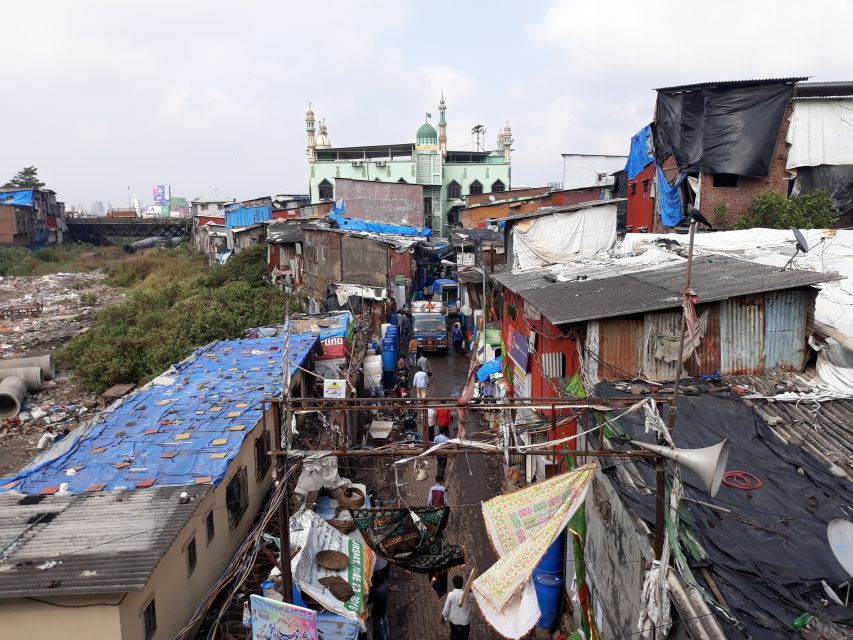
What makes a Dharavi slum walking tour so gripping is that you do not just look at poverty. You see a living, working neighborhood where residents run small businesses, recycle at scale, and keep their community going day to day. In the best runs, guides such as Abhishek or Bharti set the tone with warmth and clear explanations.
Two things I really like about this tour are the hands-on view of recycling and the way it connects craft work to real survival skills. You also get to see everyday places like schools, hospitals, and homes as you walk through tight lanes, not just the most photographed corners. One thing to consider is that you’ll be walking through busy, close spaces, so respect and patience matter a lot.
Key Points You Should Know Before You Go
- Local guide first, not a lecture: expect stories that explain how work actually happens in Dharavi
- Recycling is the backbone: plastic and even vegetable oil can recycling are part of daily life
- Industries in tiny spaces: leather workshops, soap makers, and dye activity show what’s possible with little space
- Art that you can try: optional pottery making with the wheel and Kumbharwade-style work
- Food as a cultural moment: optional vegetarian lunch with a local family, eaten on the floor with hands
- Film location stop: you’ll see the spot tied to Slumdog Millionaire
Dharavi, Seen as Work and Community
A lot of people arrive in Mumbai expecting Dharavi to be a single story. This tour nudges you toward a better one. Dharavi is huge, densely packed, and busy, and the real shock is how much is organized through informal work rather than how much is hidden.
What you get is a resident-guided walk that treats people like people. You meet the neighborhood through daily routines, workshops, markets, and shared spaces. And if your guide is one of the top performers, like Abhishek, Dhruvesh, Hardik Tank, or Rakesh, the experience tends to feel personal without getting intrusive.
Also, it helps that you are not just looking at making, you are learning why it matters. The tour includes context around Dharavi’s economic output, often estimated around $1 billion US dollars annually, with a major share linked to informal recycling industries like Rubie’s.
The Start at Third Wave Coffee, and How the Walk Is Set Up
Your tour begins at Third Wave Coffee, and you end back at the same meeting point. That simple loop matters because it helps you settle into the day and keeps logistics straightforward in a neighborhood that can feel labyrinth-like.
You’ll also have a basic set-up built for comfort and respect: water is included, and you’re asked to bring a scarf and closed-toe shoes. Those are not random rules. A scarf helps with sun and dust, and closed-toe shoes help on uneven ground and crowded lanes.
Tours like this run best when you travel with the right mindset. You are going to be close to people working and living. So I recommend you keep your camera ready, but your posture respectful and calm. If your guide is doing their job well, they’ll help you keep your distance where needed and focus on what the stop is for.
More Walking Tours in Mumbai
- Group Guided Walking Tour in Fort and Colaba
★ 5.0 · 1,073 reviews - Private Guided Walking Tour in Fort & Colaba
★ 5.0 · 895 reviews - Private Guided Walking Tour in Bandra Queen of Suburbs
★ 5.0 · 383 reviews
Slumdog Millionaire Location, Then the Real Industries Behind the Fame
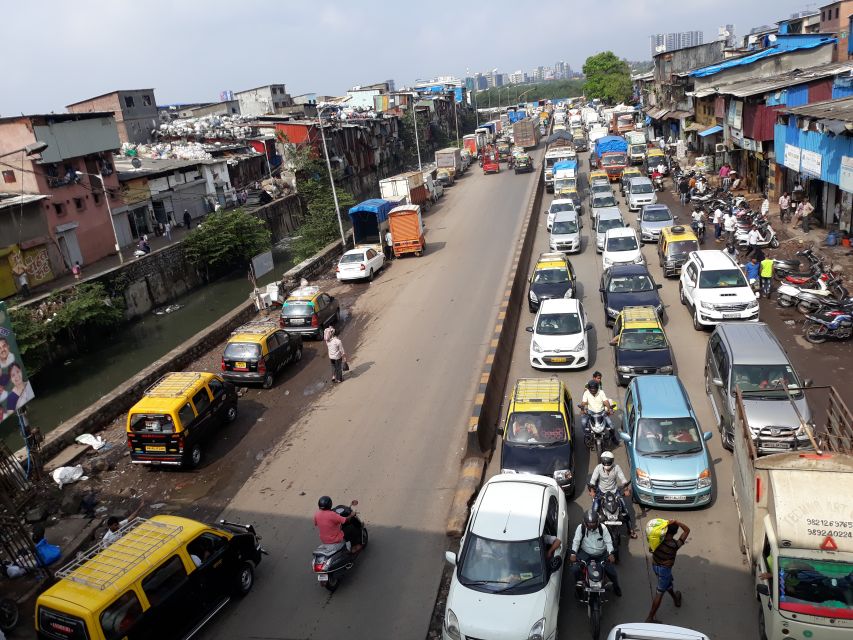
One of the included stops is the place where Slumdog Millionaire was shot. It’s a fast, memorable connection for pop-culture fans. But the point is not trivia. The film location is more like a doorway into the bigger idea that Dharavi has long been “seen” from the outside, while the internal story has always been about labor, skill, and survival.
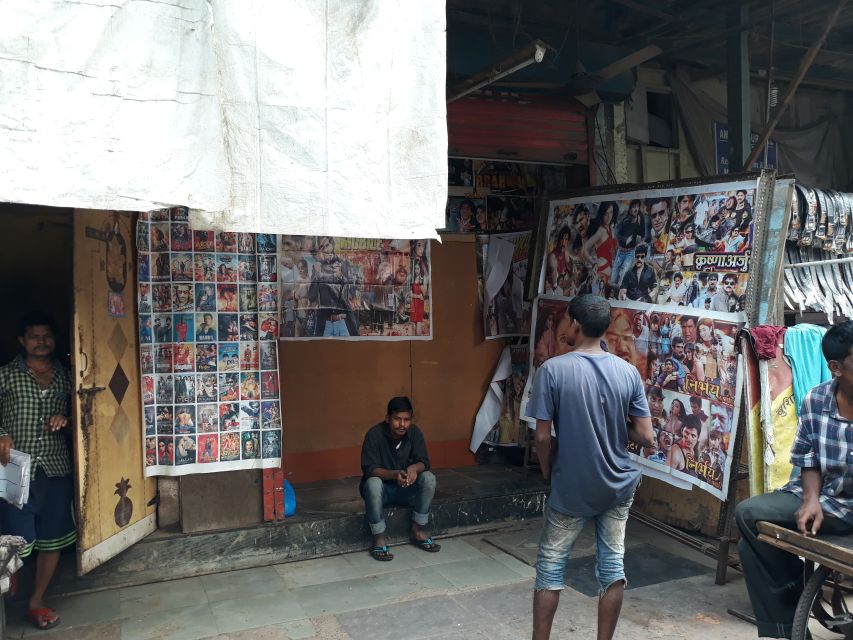
After that, you move into small-scale industry. Depending on the route your guide follows, you may see leather workshops, soap manufacturers, colored dye makers, and other trades powered by local know-how. This is where the tour changes your assumptions the most.
Why? Because these industries are not staged crafts for tourists. You’re watching production steps in real working areas, often in tight spaces, with residents managing tools, materials, and schedules right alongside daily life.
The Walk Through Markets and Daily Life Stops
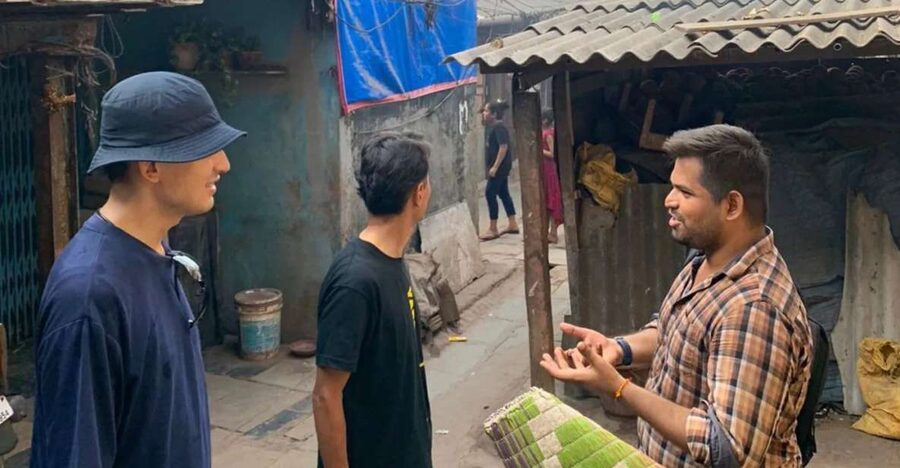
Dharavi is not only factories and workshops. The walk includes everyday places that make it feel like a neighborhood instead of a set.
You’ll likely pass by or see references to market areas, plus schools, hospitals, and houses as you go through narrow alleyways. These are the stops that help you understand scale. When you see institutions like schools and hospitals inside a place this crowded, it reframes the whole conversation.
Also pay attention to the pace. The tour is structured to keep moving while still allowing questions. If your guide is one of the frequently praised ones, you’ll find they explain clearly and answer back-and-forth questions without rushing you. People specifically highlight how guides keep things respectful and careful not to disturb residents.
Recycling in Action: Plastic, Oil Cans, and the Genius of Reuse
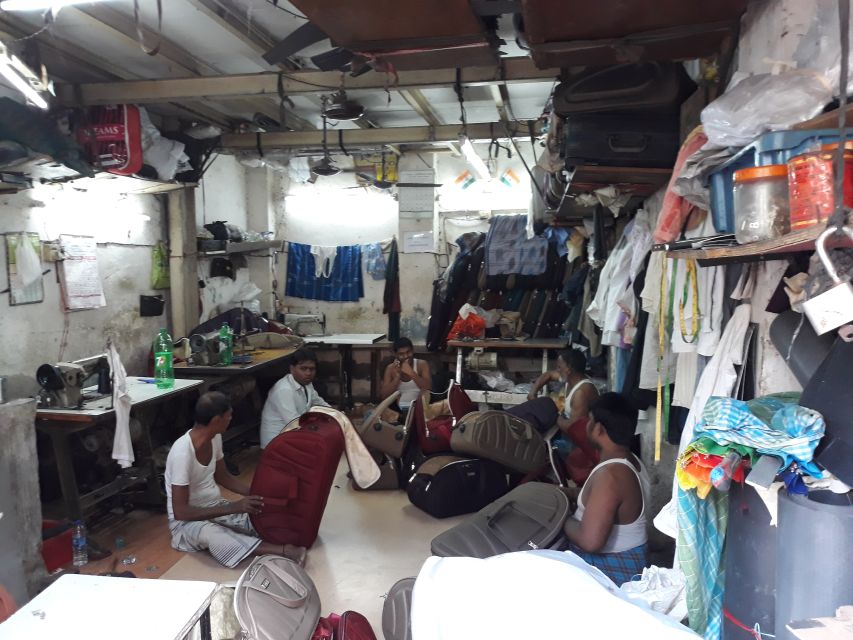
If you want the most eye-opening part of Dharavi, this is it. The tour places heavy emphasis on the importance of recycling, especially plastic recycling, because it’s a core engine of work in the area.
You’ll learn about recycling in a practical way, not as an abstract “green” message. The walk includes examples of how vegetable oil cans are recycled in innovative ways. It’s the kind of detail that makes you understand why the neighborhood functions the way it does: materials flow through, get sorted, reworked, and turned back into value.
One of the strongest takeaways I think you can walk away with is this: recycling here is not an eco-hobby. It’s a system of jobs and supply chains that support families. When guides explain this clearly, you come away seeing logic and ingenuity, not just hardship.
Other Dharavi walks:
- Dharavi slum tour in Mumbai by Female tour guides of the slum
★ 5.0 · 1,976 reviews - Mumbai: Dharavi Slum, DhobiGhat, and Dabbawallas Tour
★ 4.9 · 689 reviews - Dharavi Slum Tour
★ 5.0 · 625 reviews - Dharavi Slum tour in Mumbai by local resident
★ 5.0 · 572 reviews
Community Moments That Show Shared Space
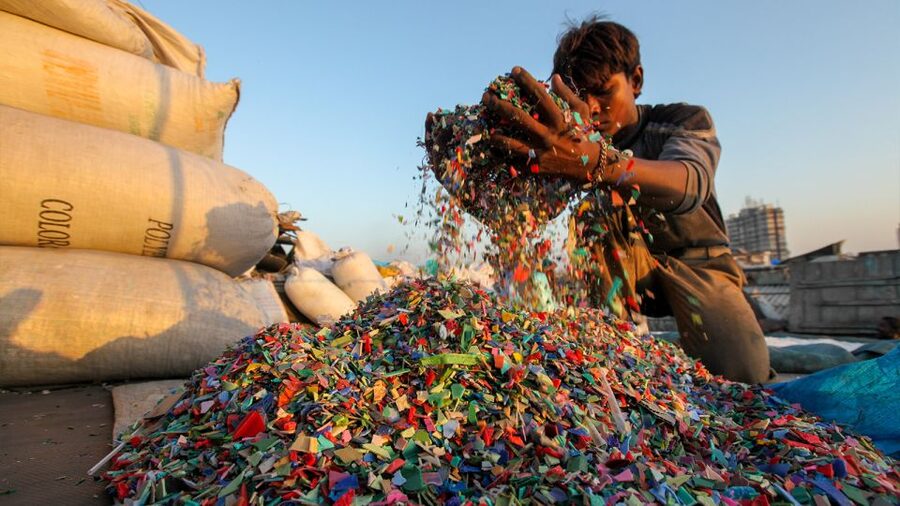
Dharavi’s community life comes through in small, concrete moments. One detail included in the tour is watching Muslims making a shrine for Hindus. That sort of cross-community cooperation hits you because it breaks the usual storytelling pattern of “this versus that.”
It also helps you understand how neighborhoods like this survive. When people share space and rely on each other’s routines, you see community spirit not as a slogan, but as day-to-day collaboration.
This is also where a great guide earns their keep. The best guides know when to slow down, when to keep you moving, and how to translate what you’re seeing without turning it into a spectacle.
Leather Workshops, Soap, and Dyes: Why Craft Matters Here

Craft work is a big part of the tour’s emotional impact, especially if you’ve come in with assumptions based on stereotypes.
In the included industry stops, you may see leather workshops and related production processes, plus makers working with soap and colored dyes. Even if you don’t understand every chemical step, you can still see the logic of the production chain: materials, preparation, handling, and output.
I like these sections because they make “informal economy” feel real. It’s not just a statistic. It’s people with repeatable skills and practical systems.
And the more you listen, the more you realize how much creativity and problem-solving lives in small steps. A few of the guides are praised specifically for giving deep perspectives and for being proud of where they came from. That pride can change how you interpret what you see.
Optional Pottery Workshop: Try the Wheel and Make Something
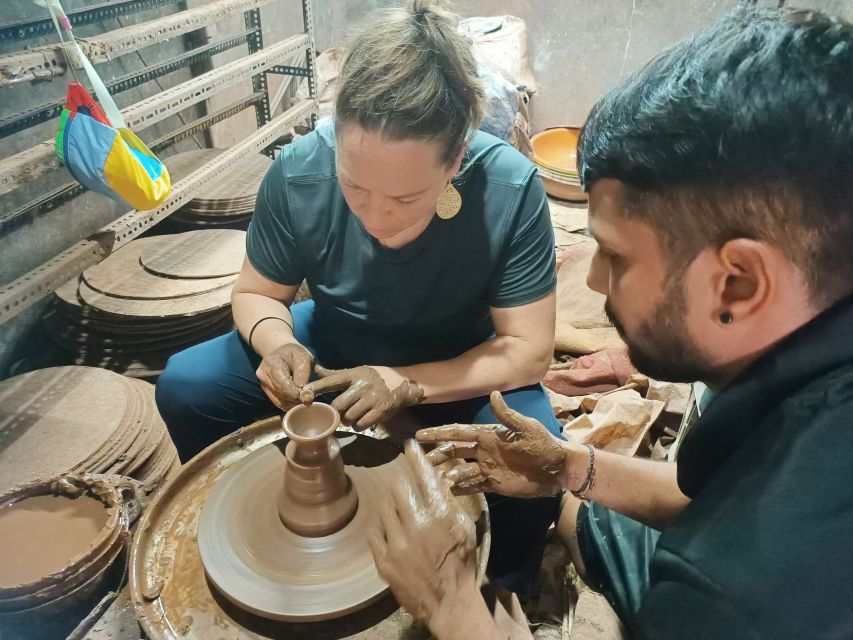
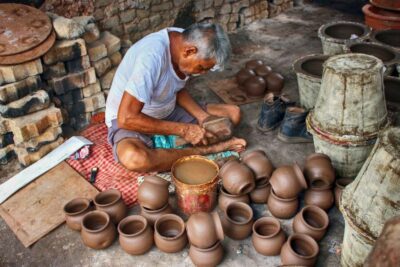
Not every version of this tour includes the workshop, but an optional stop is pottery making at a local potter’s workshop.
Here’s what you should expect if you choose this option:
- you’ll get a general overview of pottery making
- you’ll have a go at throwing on a wheel
- you’ll create a piece of Kumbharwade art
That last part matters because you’re not just making a random souvenir. You’re working in a style tied to local practice, guided by someone who does this for a living.
One practical note: your shoes matter, and you’ll likely want to keep your scarf clean. Pottery can get dusty, and you’re working in a real workspace, not a studio with white floors.
If you love crafts, this is the best “do something with your hands” add-on in the area. It also tends to shift the day from observation to understanding, because you feel the effort in your own muscles.
Optional Vegetarian Lunch with a Local Family (and Why It’s Worth It)
Another optional add-on is a vegetarian lunch with a local family. If you pick this, you should expect to eat in like a local, sitting on the floor and eating with your hands.
Food is always personal, and this one comes with a side of trust. You’re not just buying a meal. You’re sharing a normal part of someone’s day. That can be moving in a way that’s hard to fake.
Also, meals like this often change the tone of the whole visit. It turns the neighborhood from a place you watched into a place you briefly belonged to, even if only for an hour or so.
Just remember the tour notes you should bring a scarf and closed-toe shoes, which suggests you’ll be in and around homes and workshops. Dress and behave accordingly.
Guides Like Abhishek, Bharti, and Hardik Tank: What Makes the Best Tours Work
The tour lives or dies by the guide. The most praised guides are described as friendly, warm, and careful to make you feel safe and welcome. People also talk about guides being respectful and polite, and about not disrupting residents while still helping you see and understand.
Some guides go further than the standard route. For example, one highlight from the data is that Abhishek was praised for being personable, answering lots of questions, and even showing visitors where he grew up and his family. Another set of praise focuses on Hardik Tank, described as only 18, for deep insights, and for answering questions in a way that makes you feel like you’re having a real conversation rather than listening to a script.
Even if your guide does not do every extra, the core pattern is consistent: the best guides act like hosts. They explain what you’re seeing and they manage the pace so you don’t feel pushed.
Price and Value: Why $14 Can Be a Fair Deal
At about $14 per person, this tour is priced low for what you get: a guided walk, water, and access to industry and community stops that would be hard to arrange on your own.
What makes the value stand out is not just logistics. It’s the human part. When a local guide can explain recycling systems, workshop work, and daily life, you’re paying for translation between your assumptions and the neighborhood’s reality.
You can also choose add-ons without blowing your budget. If you skip lunch and pottery, you still get the main walking experience. If you add them, you get lunch with a family and a chance to make pottery, which is usually a bigger “experience upgrade” than most paid extras in the city.
Practical Tips: How to Have a Respectful, Smooth Walk
To keep things comfortable and respectful, follow the basics the tour asks for:
- bring a scarf
- wear closed-toe shoes
- drink the water provided, because you’ll be walking and it can be warm
Beyond that, I recommend you travel with a quiet, observant energy. In narrow alleys, you can crowd a space without meaning to. Let your guide position you, and follow cues about where to stand and when to keep your camera down.
If you want to ask questions, do it. Many guides are specifically praised for welcoming questions and clarifying misconceptions. But keep it conversational, and avoid turning sensitive topics into performances.
Finally, if you’re sensitive to the look of crowded conditions, give yourself permission to slow down emotionally. This isn’t a “clean and polished” tourist stop. It’s a real neighborhood.
Who Should Book This Dharavi Tour
This tour is a great fit if you want:
- a hands-on understanding of recycling and local industry
- to see leather workshops, soap, and dye work up close
- a guide-led walk that explains daily life beyond stereotypes
- the option to add pottery and a family lunch
You might consider skipping or choosing a different format if you dislike close quarters or prefer a more comfortable, less hands-on approach to learning about places. Also, if your expectation is a quick photo safari, this is not that. The point is conversation and seeing how systems work.
Should You Book? My Straight Answer
I’d book this Dharavi experience if you want the most direct version of Dharavi you can find, led by someone local and focused on explanation. The price is solid, the inclusion of water helps, and the optional pottery and lunch turn the day from viewing into participation.
Pick the lunch option if you can, even though it’s the extra time and commitment. Eating with a local family is one of those moments that stays with you because it’s simple and real.
Pick the pottery option if you want a skill-based memory. Throwing on a wheel gives you a grounded sense of effort and craft, and it’s an honest way to leave with something you made.
If you’re going, plan to show respect, ask good questions, and keep an open mind. Dharavi has more going on than the headlines.
FAQ
Where does the tour start and end?
The tour starts at Third Wave Coffee and ends back at the meeting point.
How much does it cost?
The price listed is $14 per person.
What’s included in the tour?
Included items are the slum tour, a guide, and water. A vegetarian lunch and a pottery workshop are included only depending on the option you choose.
Is lunch included?
Lunch is included only if you choose the option that offers vegetarian lunch with a local family.
Is a pottery workshop included?
Pottery making is included only if you choose the option with the pottery workshop.
What language is the tour offered in?
The tour is offered in English.
What should I bring?
You should bring a scarf and closed-toe shoes.
What will I see during the tour?
You can expect to see areas such as the leather workshops, market areas, soap manufacturers, colored dye makers, and also places like schools, hospitals, and houses. The tour also includes a stop at the Slumdog Millionaire shooting location.
Is food included if I do not choose the lunch option?
Food is not included if you do not choose the vegetarian lunch option.
Latest reviews in from Mumbai
- Mumbai Spice Markets and Bazaars Tour with Guide and Transport★ 5.0 · 42 reviews
- Mumbai Dharavi Slum, Dhobi Ghat & Dabbawala Lunchbox Tour★ 5.0 · 43 reviews
- Private Dharavi Slum Tour with Mumbai Sightseeing★ 5.0 · 43 reviews
- Private Guided Tour in Kanheri Cave with Transfers★ 5.0 · 44 reviews
- Private Guided Walking Tour in Dharavi Slums★ 5.0 · 44 reviews
- Bollywood Tour with Original founder★ 4.5 · 44 reviews
- Mumbai Private Cultural Tour with Lunch and Transport★ 5.0 · 44 reviews
- Unveiling Bollywood: Grand Tour of Iconic Real Sets & Their Story★ 4.5 · 44 reviews
Dharavi Tours, compared.
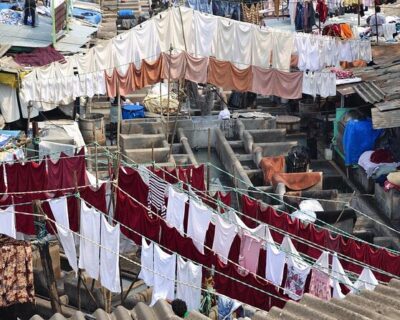
Dharavi slum tour in Mumbai by Female tour guides of the slum
Read our review →
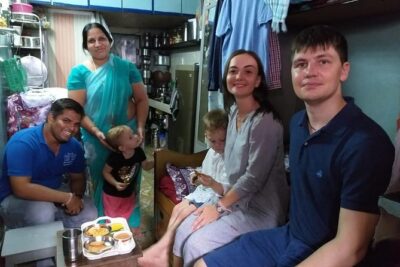
Dharavi Slum Slumdog Millionaire Tour with a Local
Read our review →
Dhobi Ghat Laundry and Dharavi Slum Tour with Local
Read our review →
Browse the lists this tour appears in