
Reviewed · DHARAVI TOURS
Dharavi Slum tour in Mumbai by local resident
Dharavi can feel like one of those Mumbai places you are supposed to just pass by. This walking tour makes it practical to understand what people do for work and how daily life runs, with a local English-speaking guide leading the way. I like that you get access to both work and residential areas, and I especially like the focus on how industries actually function inside the neighborhood.
One thing to keep in mind: this is not a polished “attractions-only” stop. You are walking through real, close-up daily life in a dense area, so it helps to come with a respectful mindset and be ready for an intense, human experience.
Key highlights
- Local English-speaking guide who helps you make sense of the place in plain language
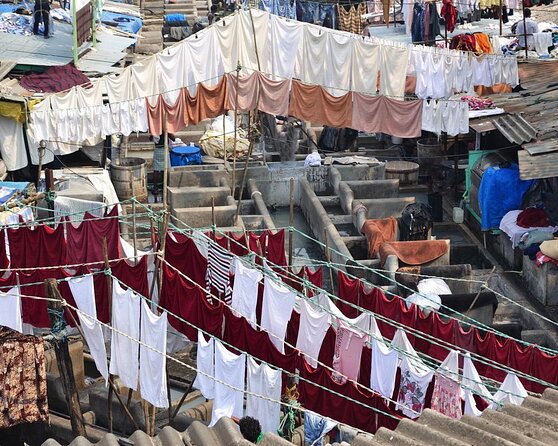
- Factories and work zones on foot, including recycling and small-scale production
- Both commercial and residential areas, not just one side of Dharavi
- A practical route that’s usually organized around key industries and lanes
- A shop stop that avoids pressure to buy, so you can look without feeling pushed
- Pickup offered (when arranged) plus a mobile ticket for easier check-in
Why this Dharavi walking tour is a smart way to understand Mumbai

If you only do the classic Mumbai highlights, you can miss the city’s real engine: everyday work, informal industry, and community life. Dharavi is often reduced to a headline. This tour does the opposite. You walk, you see, and you leave with a clearer mental map of how a whole neighborhood can run on skill, materials, and hustle.
What I like is the mix of “what you see” and “what you understand.” You are not just looking at buildings. You are being shown the logic behind the industries that operate there and how they connect to people’s lives.
At the same time, I think it is fair to warn you: this is a serious reality check. If your idea of a vacation is mostly sun, views, and tidy photo stops, this might feel heavy. If you want to see how Mumbai works beyond the postcard, it’s a strong choice.
Other Dharavi walks:
- Dharavi slum tour in Mumbai by Female tour guides of the slum
★ 5.0 · 1,976 reviews - Mumbai: Dharavi Slum, DhobiGhat, and Dabbawallas Tour
★ 4.9 · 689 reviews - Dharavi Slum Tour
★ 5.0 · 625 reviews
Getting to the meeting point near Mahim, and how the tour flows
The tour meets at Third Wave Coffee on Tip Road, Unit no.58, Ground, Ram Mahal, Senapati Bapat Marg, Marinagar Colony, Station, Mahim, Mumbai, Maharashtra 400016, India. The activity ends back at the same meeting point, so you are not left figuring out a complicated return.
Pickup is offered, which can be helpful if you are not staying near Mahim. The tour is also described as near public transportation, so even if you skip pickup, you likely have options to reach the start.
Timing is simple and flexible. The experience runs about 2 to 3 hours, and one of the stops is listed as around 2 hours. In practice, you should think of it as a focused walk, with time built in to move through areas and listen to your guide.
One more practical note: the group cap is 99 people. That number sounds big, but it also means the operator is planning capacity. What matters for you is that the core experience is presented as a guided walking tour with an English-speaking local guide, not a lecture from far away.
Dharavi in 2 to 3 hours: what you’ll cover on the walk
This experience is centered on one main area: Dharavi itself. The value is how your guide organizes the walk so you get both context and concrete details.
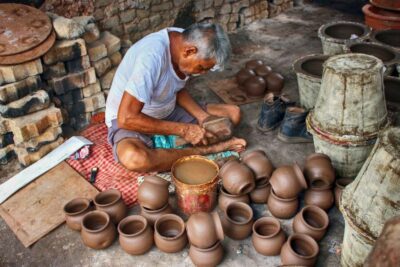
You are shown commercial and residential areas, with an emphasis on the “factories of Dharavi.” That matters because it turns Dharavi from an abstract place into a set of connected spaces where materials, tools, and labor interact.
On your route, you should expect to move through a few recognizable themes. One common sequence includes:
- a zone focused on recycling materials
- a walk through some tighter lanes and alleyways
- production areas for items like soap and plastic bags
- a zone associated with leather drying
- a small shop area where products are sold, without pressure to buy
That structure is useful. Instead of random wandering, the walk builds understanding step by step, tied to jobs people do every day.
Work zones you can actually picture: plastic recycling, soap, and bag making
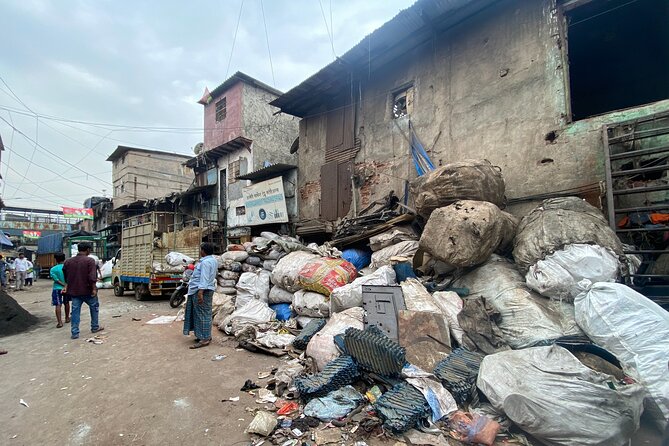
Dharavi’s best explanations usually start with materials. In this tour, you get an up-close look at how recycling links to finished products.
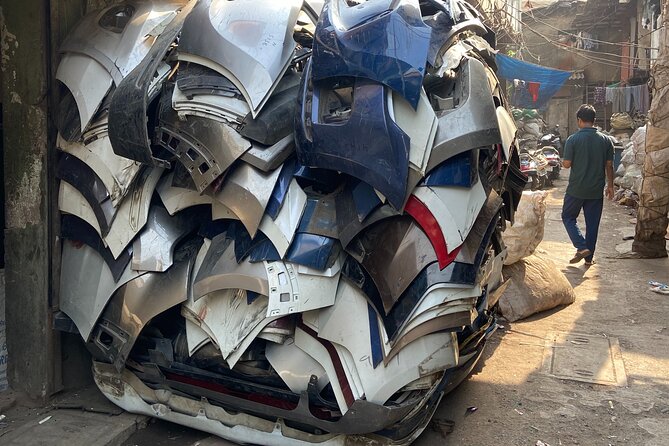
A big part of what you’ll likely see is the plastic recycling area. This is where you start learning how waste becomes input. The practical payoff is that you begin to understand why so many trades can exist close together, because one process feeds another.
From there, you typically move into production spaces connected to plastic goods. One of the industries mentioned is the production of soap and plastic bags. Seeing these areas in sequence helps you connect the steps in the chain, not just the final product you might notice from outside.
Then there’s the leather side. The walk can include a zone tied to leather drying. Even if you know nothing about the process going in, your guide can help you connect the idea of specialized work with the everyday flow of the neighborhood.
A thought on comfort: these are working environments. You are not walking through a museum exhibit behind glass. If you’re the type who wants clean, controlled spaces, you might find this more challenging. But if you want reality, this is where the tour earns its keep.
Line these Mumbai options up side by side
- Mumbai: Full-Day Sightseeing Tour of Mumbai
★ 4.9 · 1,822 reviews - Private Mumbai Sightseeing Tour (Traveller’s Choice Award Winner)
★ 5.0 · 1,565 reviews - Elephanta Caves & Island Guided Private Tour
★ 5.0 · 1,327 reviews - Group Guided Walking Tour in Fort and Colaba
★ 5.0 · 1,073 reviews
Lanes, alleys, and the human pace of the neighborhood
The route often includes going through narrow passages. You may pass through some smaller lanes as you go from one work zone to another.
I like this part because it changes how you interpret Dharavi. From the outside, it can look like one block. On foot, you learn it is many small routes and small rooms, arranged for movement and work. The guide’s explanations help you understand why these paths exist and how daily life fits next to production.
This is also where you should slow down mentally. Your instinct might be to speed through for photos or quick impressions. Try to do the opposite. Listening matters more than capturing images. Even when you don’t fully catch every detail, the overall sense of how people navigate and work will land fast.
Where the residential side fits, and the shop stop with no pressure
A major reason this tour can feel more meaningful than a “show me Dharavi” snapshot is that it includes the residential area side alongside commercial zones.
That combination helps you see how work and home share space. Instead of treating industry as something separate, you understand it as part of the neighborhood rhythm. Your guide is there to explain what you’re seeing in context, so you are not just making assumptions.
Near the end, you may also visit a store that sells products made in Dharavi. The key point here is the approach. The shop stop is described as happening without pressure to buy. That means you can treat it like a chance to see finished goods and ask questions, without feeling trapped into purchases.
If you are worried about ethical concerns or feeling like the tour is pushing sales, this specific note is reassuring. You can still look around and learn, and you can decide later whether you want anything.
Guide-led learning and the vibe: why the 5-star rating matters
The tour is rated 5 with 572 reviews, and the recommendation rate is 100%. That’s a big signal, and it lines up with what you want from a local-led tour here: clarity, friendliness, and competence.
One review described the walk as interesting and noted that the guide was sympathetic, kind, and knowledgeable. While I’m not going to claim any specific personal interaction, I can tell you what that usually translates to on the ground. You get someone who can explain the logic of the spaces you’re walking through, not just point at them.
For you, that means fewer awkward moments. When you do a place like Dharavi, you want your guide to set the tone and help you interpret what you see in human terms. The strongest tours do that by keeping the conversation grounded in daily life and real work.
Price and value: why $4.46 can be a bargain if you show up ready
At $4.46 per person, this is priced extremely low for a guided, English-speaking experience that runs 2 to 3 hours and covers work and residential areas. That can feel surprising at first, so here’s how I’d think about value.
You are paying for:
- a local English-speaking guide
- a guided walking structure that takes you through multiple work themes
- access to areas you likely would not find or understand safely on your own
If you treat it like a quick photo walk, you may not feel the value. If you treat it like a guided learning experience where you listen and ask questions, the price starts to make sense.
The main trade-off with any low-cost tour is that you might not get the kind of deep, personal pacing you’d get on a higher-priced private tour. But this experience is positioned as a walking tour with a group setting, and the group size cap is up to 99. That suggests a practical model, not a tiny group boutique trip.
So my advice is simple: come prepared to be present. Bring curiosity, bring patience, and let the guide do the heavy lifting.
Who this tour fits best (and who should think twice)
This Dharavi slum tour makes sense if you want:
- a real neighborhood perspective, not just a view
- a guided explanation of how industries connect to daily life
- a low-cost way to get local context in Mumbai
It also works well if you are comfortable walking for about 2 to 3 hours and you like tours with a clear theme, recycling and production, plus residential context.
I’d think twice if you know you dislike reality-based experiences that can feel intense or emotionally challenging. This is a working neighborhood, and that closeness is the point. If you prefer controlled, scripted tourist environments, this may not match your style.
Booking it with Beautiful Bombay Tours: what you should expect on the ground
The operator listed is Beautiful Bombay Tours. Your booking is confirmed at the time of booking, and you get a mobile ticket. That combination is convenient because it reduces the friction of check-in.
Pickup is offered, and the tour is near public transportation, which usually means it’s easier to build into a Mumbai itinerary. The service animals rule is also stated, meaning service animals are allowed.
On group size, the maximum is 99 travelers (the cap). In practice, that means the tour is scalable. Still, if you are sensitive to crowded spaces, you might prefer booking at a quieter time of day if your schedule allows it, simply to keep the walking experience more comfortable.
Should you book this Dharavi slum tour?
Yes, I’d book it if your goal is understanding Mumbai at street level. This is one of those experiences that gives you context you cannot easily copy on your own, especially with a local English-speaking guide guiding you through both work and residential areas.
Skip it only if you know you do not want to be close to everyday life in a densely populated neighborhood. Also, if you are hoping for a “comfortable and tidy” sightseeing vibe, you may feel mismatch.
If you book, go in with respect and a learning mindset. Ask questions if your guide invites it, and treat the shop stop as a look, not a transaction. For $4.46 and a few hours of guided walking, the value is hard to beat.
FAQ
How long is the Dharavi slum tour?
The tour is listed as about 2 to 3 hours.
What stop is included?
The experience includes Dharavi itself as the main stop, with an approximate 2-hour visit.
Is admission included?
Yes, an admission ticket is included.
Is pickup available?
Yes, pickup is offered.
Where is the meeting point?
The meeting point is Third Wave Coffee, Tip Road, Unit no.58, Ground, Ram Mahal, Senapati Bapat Marg, Marinagar Colony, Station, Mahim, Mumbai, Maharashtra 400016, India.
Do I get a mobile ticket?
Yes, the tour uses a mobile ticket.
What is the maximum group size?
The tour/activity has a maximum of 99 people.
Is free cancellation available?
Yes, you can cancel for free up to 24 hours in advance for a full refund.
Latest reviews in from Mumbai
- Mumbai Spice Markets and Bazaars Tour with Guide and Transport★ 5.0 · 42 reviews
- Mumbai Dharavi Slum, Dhobi Ghat & Dabbawala Lunchbox Tour★ 5.0 · 43 reviews
- Private Dharavi Slum Tour with Mumbai Sightseeing★ 5.0 · 43 reviews
- Private Guided Tour in Kanheri Cave with Transfers★ 5.0 · 44 reviews
- Private Guided Walking Tour in Dharavi Slums★ 5.0 · 44 reviews
- Bollywood Tour with Original founder★ 4.5 · 44 reviews
- Mumbai Private Cultural Tour with Lunch and Transport★ 5.0 · 44 reviews
- Unveiling Bollywood: Grand Tour of Iconic Real Sets & Their Story★ 4.5 · 44 reviews
Dharavi Tours, compared.

Dharavi slum tour in Mumbai by Female tour guides of the slum
Read our review →

Dharavi Slum Slumdog Millionaire Tour with a Local
Read our review →
Dhobi Ghat Laundry and Dharavi Slum Tour with Local
Read our review →

Private Full-Day Mumbai Sightseeing Tour with Dharavi Slums
Read our review →Browse the lists this tour appears in