

Reviewed · DHARAVI TOURS
Mumbai: Dharavi Slum and Dhobi Ghat Laundry Tour
This experience is interesting because you’re seeing Mumbai’s machine up close, not just watching it from a distance. I especially love the Dhobi Ghat laundry process and the local train ride, which turns a normal tour into a real commuting moment. The main drawback to plan for is the heat and crowding, since Dhobi Ghat and Dharavi have narrow lanes and can feel packed.
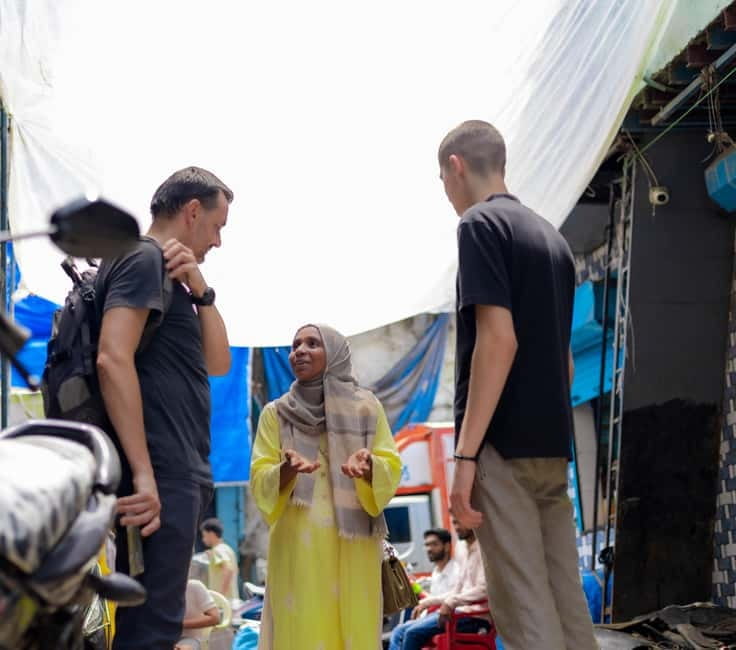
I like that you get a local, English-speaking guide, and names like Anesh, Priti, Subhan, and Ruba pop up for a reason: clear explanations, patience with questions, and a respectful pace. You’ll also notice the tour is built around real trades, from plastic recycling to pottery at Kumbhar Wada and a leather factory, so it can be intense, not postcard-soft.
If you’re the type who prefers quiet, controlled sightseeing, you might find this pushes you out of your comfort zone. It’s still manageable if you wear comfortable shoes, bring water and sunscreen, and follow the guide’s rules around photography and privacy.
Key things that make this tour worth your time
- Dhobi Ghat’s scale: over 100,000 clothes washed daily using time-honored methods
- Local train, not a staged ride: a short 15 minute window into Mumbai’s commute rhythm
- Dharavi’s real industries: leather, plastic recycling, and pottery production
- Kumbhar Wada pottery community: craft-focused streets tied to generations of work
- English-speaking guidance: you’ll understand what you’re seeing, not just where you are
- Budget friendly format: $5 for 3 hours of structured access to working neighborhoods
Why Dhobi Ghat and Dharavi belong on your Mumbai short list
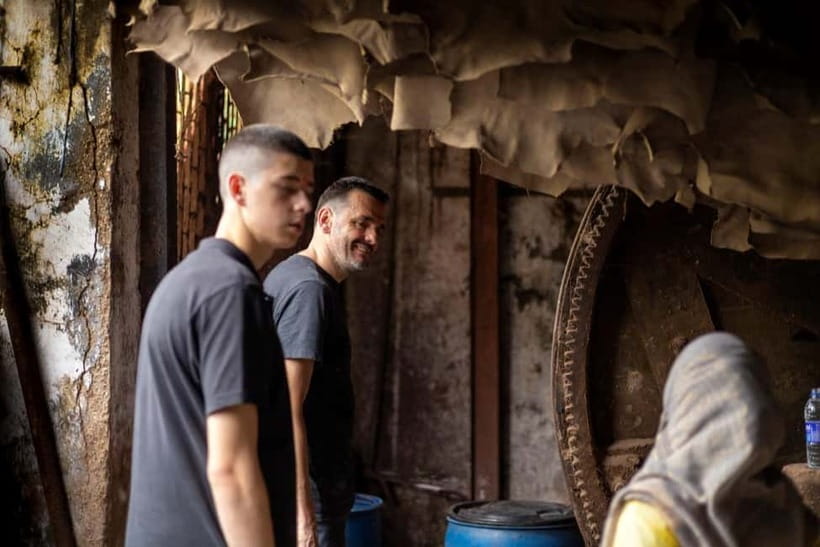
Mumbai has a lot of famous sights. This tour focuses on something rarer: how people work, earn, repair, and survive side-by-side, in full view. The “wow” factor here is practical. You’ll walk through active spaces where laundry, recycling, and crafts are part of everyday life, not a performance for visitors.
I love how the tour connects three pieces that usually stay separate in travel planning. Dharavi’s small-scale industries explain the economic engine. Dhobi Ghat shows a labor-heavy service that keeps households running. Then the local train stitches it together with a slice of daily movement across the city.
There’s also a simple reason this works for first-time visitors: you don’t need special background knowledge to enjoy it. Your guide does the explaining in plain terms. You just need to show up ready to walk, look, and be respectful.
Other Dharavi walks:
- Dharavi slum tour in Mumbai by Female tour guides of the slum
★ 5.0 · 1,976 reviews - Mumbai: Dharavi Slum, DhobiGhat, and Dabbawallas Tour
★ 4.9 · 689 reviews - Dharavi Slum Tour
★ 5.0 · 625 reviews
The 3-hour timing, where the time goes, and how to not feel rushed
The total duration is 3 hours. You start from one of the listed options at Third Wave Coffee, and the meeting point can vary depending on the option you book. Your visit includes a short guided portion in Dharavi, then a 15 minute train ride, and finally about 40 minutes at Dhobi Ghat.
Here’s the practical way to think about it. The train segment is short on purpose. It gives you the texture of Mumbai commuting without turning your whole day into public transport. The Dhobi Ghat time is long enough to see how the washing system works, but you should still expect a “see it clearly, not linger forever” pace.
If you’re a photographer who wants extremely close views of specific details, you might feel the Dhobi Ghat stop is time-limited. My advice is straightforward: treat Dhobi Ghat as your main learning stop on this tour, then plan your own return later if you fall in love with one particular angle.
Dharavi street walk: leather, Kumbhar Wada pottery, and plastic recycling
Dharavi gets famous in a way that can make it sound like a single story. On this tour, you see it as an ecosystem of trades. You’ll explore parts of the community tied to plastic recycling, pottery making at Kumbhar Wada, and an industrial leather operation described as Asia’s largest leather factory in Dharavi.
The key value here is context. Without a guide, it’s easy to stare at the scale and miss the logic. With an English-speaking guide, you can understand the workflow behind what you’re seeing, and how many small steps add up to a working supply chain.
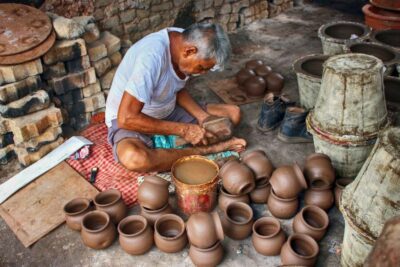
At Kumbhar Wada, watch for the craft angle. Pottery isn’t just a product, it’s a skill carried through time. The tour frames it as a centuries-old pottery community, so you’re not only seeing objects, you’re seeing how a neighborhood organizes around making things by hand.
For plastic recycling, focus on the reality of it. This is not “someone’s hobby.” It’s a sorting and processing system tied to livelihoods. You’ll get explanations for what the industry does and why it matters in a city where waste and reuse connect directly to jobs.
And with the leather factory, the tour doesn’t treat it like a static landmark. It’s presented as part of Dharavi’s work life, including the sheer scale of production mentioned in the tour description. I think that scale hits hardest when you remember these are people working in the same tight geography as everyone else.
The 15-minute local train ride: a small slice of Mumbai’s pace
The tour includes a 15 minute ride on Mumbai’s iconic local train. This is one of the best “high value, low time” parts of the whole experience because it adds motion, noise, and pace. You see the city how residents experience it, not how buses show it to you.
You’ll be with your guide, so you’re not left guessing what platform to use or how to handle the flow. That matters in Mumbai because timing and crowd movement can be intense. Also, the tour includes a line-skipping element, which signals that the operator is thinking about minimizing your stress in transit.
What I like about adding the train is that it gives you a comparison point. Dharavi and Dhobi Ghat are slower, work-focused, and close to the ground. The train is faster, compressed, and shared by thousands of people at once. That contrast helps the whole tour feel coherent, not like three separate stops stuck together.
One more practical note: the train ride is only 15 minutes, but you’ll still want to keep your phone secure and your body ready for shoulder-to-shoulder movement. Comfortable shoes help here too, even though you’re not walking for long.
More of Dhobi Ghat:
- Mumbai: Dhobi Ghat Laundry and Dharavi Slum Tour with Local
★ 5.0 · 469 reviews - Mumbai: Dharavi Slum & Dhobi Ghat Laundry Tour
★ 5.0 · 352 reviews - Private Combo Tours Sightseeing + Dharavi Slum + Dhobi Ghat & Dabbawalas
★ 5.0 · 245 reviews - Dabbawala, Dhobi Ghat & Dharavi slum Tour with Local Train Ride
★ 5.0 · 102 reviews
Dhobi Ghat laundry: what you’ll actually see, and what to look for

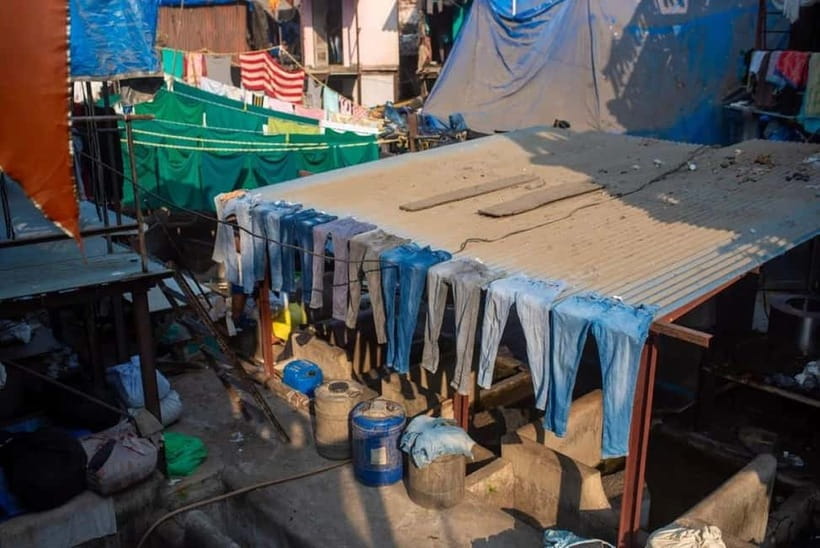
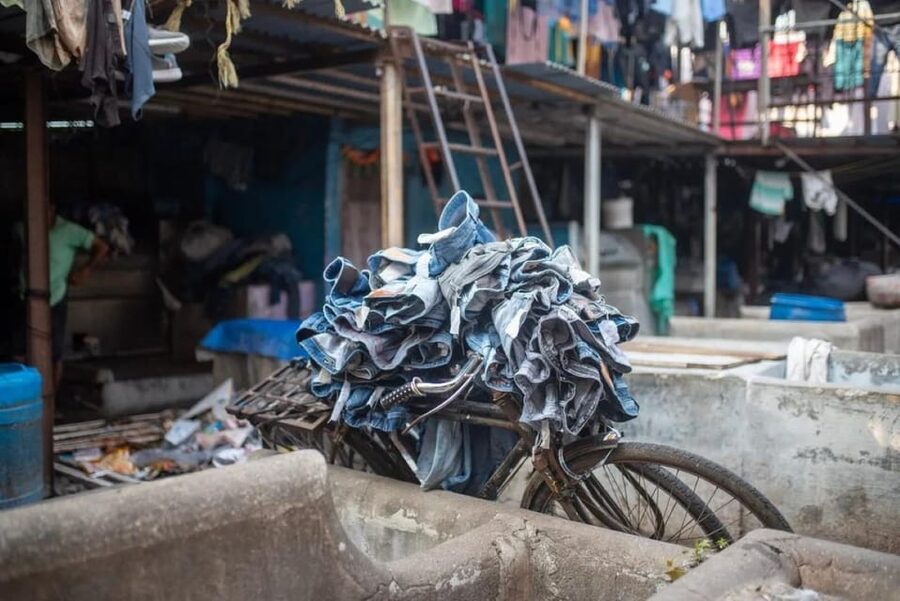
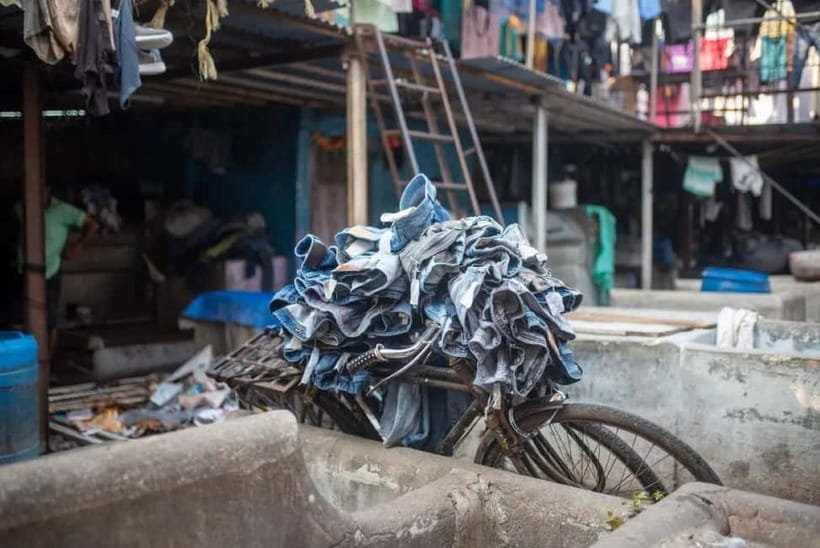
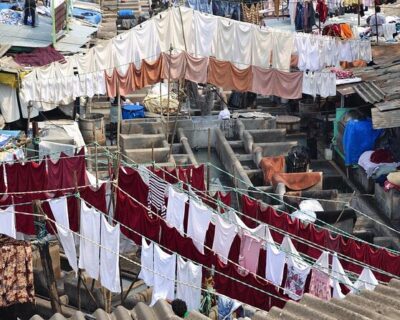
Dhobi Ghat is described as the world’s largest open-air laundry, and the numbers given are big: over 100,000 clothes washed daily using time-honored methods. The tour includes a Dhobi Ghat visit of about 40 minutes, guided, so you’re not just standing and hoping you understand what’s happening.
The first thing to notice is the system mindset. Laundry here isn’t one machine doing one job. It’s a workflow with human labor at each step. Even if you don’t catch every detail, you’ll feel the rhythm of the work, and your guide can translate what you’re seeing into clear explanations.
Next, pay attention to surfaces and staging. In a place like this, organization is everything. Clothes need space, water needs channeling, and workers need predictable routines. Watching for how the area is structured helps you understand why this has stayed functional for generations.
Also, check what your camera policy is once you arrive. The tour info says photography may be restricted in certain areas, and the right move is to follow the guide’s instructions immediately. If you want photos, ask early how to approach it respectfully and safely.
Finally, be ready for sensory intensity. Dhobi Ghat is open-air, and it’s working. If you come expecting a clean, curated viewpoint, you’ll get something more real. If you come expecting the inside of a city service, you’ll enjoy it.
How to be a respectful visitor in Dharavi and Dhobi Ghat
This tour asks you to behave like you’re visiting someone’s workplace and neighborhood. That means dressing modestly, following rules, and not intruding on residents’ privacy. It also means keeping your attention on your guide instructions, especially around photography.
There’s also a movement reality. Dharavi is crowded, with narrow lanes. Your job is to stay aware, not to push closer for a better shot. If you keep your shoulders in and your pace steady, you’ll feel safer and you won’t block anyone working.
The tour info also lists no smoking, and it’s wise to treat that as a hard rule rather than a suggestion. If you’re with a group, remind yourself not to stray from your guide when you stop to look.
If you want a simple checklist, bring:
- Comfortable shoes for lots of walking
- Water because you’ll be in the sun
- Sunscreen to avoid day-ruining burns
- A camera, if photography is allowed in the areas you visit
Price and value: why $5 can work here, and what you get for it

At $5 per person for a 3 hour tour, the value is the structure. You’re paying for an English-speaking local guide, a guided visit through Dharavi and Dhobi Ghat, and a organized train ride segment. You’re also getting an option that includes “skip the ticket line,” which helps reduce time spent on logistics.
The value also shows in how focused the stops are. This isn’t a long drive-thru tour of far-away attractions. You’re spending your time where the tour is supposed to matter, in working areas with real activity and visible trades.
What’s not included is important for budgeting your day. The tour does not include food and drinks, and it doesn’t include hotel pickup and drop-off. So you’ll want to plan for a water bottle and decide where you’ll eat before or after.
If your goal is to see Mumbai beyond the usual highlights on foot, this price point is hard to beat. If your goal is comfort and minimal walking, you may feel the value isn’t as good because the experience is physically active.
Who should book this tour, and who might want to pick another option
This tour can be a great fit if you:
- Want an honest look at how Mumbai works at street level
- Prefer walking with a guide who explains what you’re seeing
- Like practical experiences, not only monuments and viewpoints
- Are curious about industries such as leather, pottery, recycling, and laundry
It may be less suitable if you fall into the listed limits: the tour is not suitable for children under 5, pregnant women, or wheelchair users. That makes sense given the walking, crowding, and narrow lanes.
If you’re nervous about public transport, the train ride is short and guided. Still, it’s a real ride with real crowds, so you should be comfortable enough to handle a packed carriage without panicking.
The guide makes the difference: what to look for on the day

One theme shows up again and again in how people talk about this tour: guides who handle both facts and people well. Names like Subhan, Priti, Ruba, Anesh, Krishna, Jawwad, and Sharon are repeatedly associated with clear explanations and a respectful tone.
Here’s what you can do to get more out of your guide on the day:
- Ask questions during natural pauses, not while people are moving
- If you’re unsure about photography rules, ask before you start shooting
- Tell your guide what you’re most interested in, leather, pottery, recycling, or laundry
If you get a guide who’s patient, the tour feels easier. You stop worrying about interpreting what you see, and you start focusing on understanding how it all connects.
Should you book this Dharavi and Dhobi Ghat tour?
If you want Mumbai beyond the standard sightseeing loop, I think this tour is a strong booking choice. The combination of Dharavi industries, Dhobi Ghat laundry, and a 15 minute local train ride gives you three angles on the city in one half day. For the listed price, the value is excellent, especially because a local English-speaking guide handles the translation and on-the-ground navigation.
Book it if you can handle crowded lanes, wear comfortable shoes, and respect privacy and photography limits. Don’t book it if you need a low-walking, low-crowd day, or if you fall into the tour’s stated unsuitability categories.
If you’re on the fence, use this rule of thumb. If the idea of seeing laundry operations and street-level industries as part of real life excites you, you’ll enjoy this. If you want only polished attractions and wide-open views, pick a different kind of Mumbai day.
FAQ
What does the tour include?
The tour includes a guided tour of Dharavi Slum, a visit to Dhobi Ghat Laundry, insights into local industries and community life, and the opportunity to see Mumbai’s traditional laundry process.
How long is the tour?
The duration is 3 hours.
How much is the tour?
The price is listed as $5 per person.
Where does the tour start and where do you get dropped off?
The meeting point may vary depending on the option booked. Starting location options include Third Wave Coffee, and drop-off locations include Third Wave Coffee and Mahalaxmi Station.
What are the main stops during the experience?
You’ll spend time in Dharavi, take a 15-minute local train ride, and then visit Dhobi Ghat Laundry for about 40 minutes.
Is food or drinks included?
No. Food and drinks are not included.
What should I bring?
Bring comfortable shoes, a camera, sunscreen, and water.
Is there anything I’m not allowed to do?
Smoking is listed as not allowed.
Who is this tour not suitable for?
It is not suitable for children under 5 years, pregnant women, or wheelchair users.
What language is the tour guide?
The tour guide language is English.
Latest reviews in from Mumbai
- Mumbai Spice Markets and Bazaars Tour with Guide and Transport★ 5.0 · 42 reviews
- Mumbai Dharavi Slum, Dhobi Ghat & Dabbawala Lunchbox Tour★ 5.0 · 43 reviews
- Private Dharavi Slum Tour with Mumbai Sightseeing★ 5.0 · 43 reviews
- Private Guided Tour in Kanheri Cave with Transfers★ 5.0 · 44 reviews
- Private Guided Walking Tour in Dharavi Slums★ 5.0 · 44 reviews
- Mumbai Private Cultural Tour with Lunch and Transport★ 5.0 · 44 reviews
- Unveiling Bollywood: Grand Tour of Iconic Real Sets & Their Story★ 4.5 · 44 reviews
- Bollywood Tour with Original founder★ 4.5 · 44 reviews
Dharavi Tours, compared.
Dharavi slum tour in Mumbai by Female tour guides of the slum
Read our review →

Dharavi Slum Slumdog Millionaire Tour with a Local
Read our review →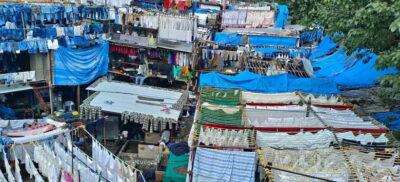
Dhobi Ghat Laundry and Dharavi Slum Tour with Local
Read our review →
Browse the lists this tour appears in