
Reviewed · DHARAVI TOURS
Dabbawala, Dhobi Ghat & Dharavi slum Tour with Local Train Ride
This tour is interesting because it mixes street-level life with two working industries you can actually watch in motion: the everyday work of Dharavi and the citywide lunch delivery system of the dabbawalas. You’ll move through Mumbai using a local train and then step into places most visitors only hear about from stories and headlines.
I like that you get a resident guide who can explain what you’re seeing while keeping the visit sensitive and practical. I also like that the schedule is tight, about 4 hours, so you see Dharavi, Mahalaxmi Dhobi Ghat, and a dabbawala stop without turning your day into an all-day slog.
One drawback to consider is that the topic is real life, not sightseeing. If you prefer polished, low-contrast tourist stops, this might feel emotionally intense, and you’ll want to come prepared for street conditions and weather.
Key things to know before you go
- Dharavi on foot for about 2 hours, covering local work areas like leather, pottery, soap making, bakery, and recycling
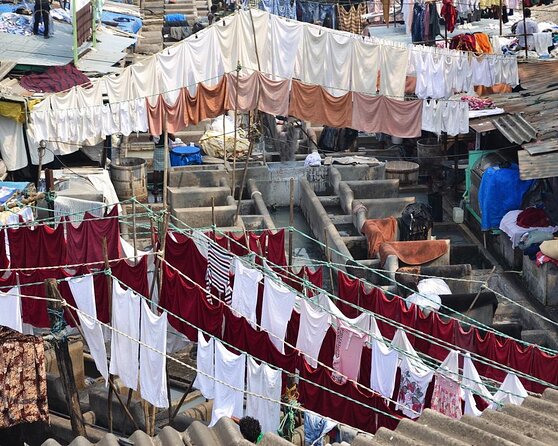
- Mahalaxmi Dhobi Ghat as an open-air laundromat where dhobis wash hotel laundry outside
- Local train ride included as transport, a fast way to understand how the city connects
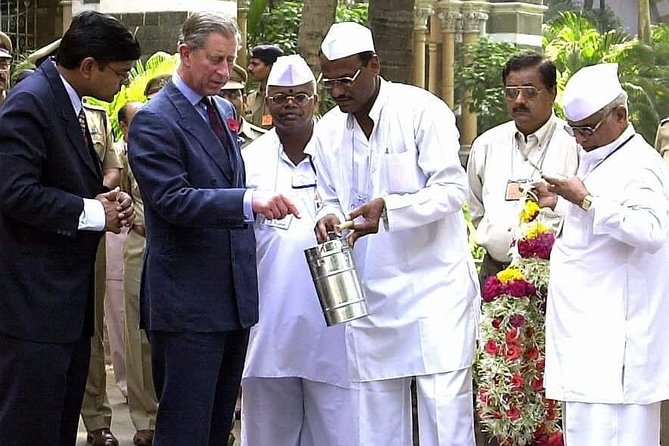
- Dabbawalas focus through a tribute statue stop tied to the lunch delivery culture
- Small groups capped at 15, which usually means more time for questions
- Mobile ticket use, so you’re not chasing paper tickets on the day
Why this half-day tour gives you the real Mumbai feel

Mumbai is famous for glitz, but it’s also famous for systems. This tour shows you two of them. First, there are the working neighborhoods in Dharavi where daily industries keep people moving. Second, there’s the lunchtime logistics built by the dabbawalas, who deliver packed meals across the city with impressive consistency.
What makes this visit click is the blend of walking and rail travel. Walking helps you read the neighborhood at human scale. The local train ride gives you a sense of pace, movement, and how everyday Mumbai gets from place to place.
Most of all, you’re not treated like a spectator. You’re guided through what’s happening, and you’ll see practical details that don’t fit neatly into travel photos. That’s the point. You’ll likely come away with a smarter understanding of how people build income, community, and routine in a dense city.
Other Dharavi walks:
- Dharavi slum tour in Mumbai by Female tour guides of the slum
★ 5.0 · 1,976 reviews - Mumbai: Dharavi Slum, DhobiGhat, and Dabbawallas Tour
★ 4.9 · 689 reviews - Dharavi Slum Tour
★ 5.0 · 625 reviews
Entering Dharavi: work, services, and everyday streets
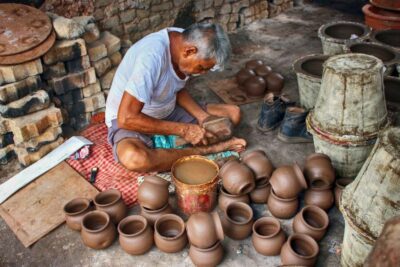
Your first stop is Dharavi, with about 2 hours for a guided walk through lanes and community spaces. The tour is framed around industries and daily life, not just the idea of a slum. You can expect to learn about several local activities, including leather industries, pottery, soap making, bakery work, color dye, plastic recycling, and musli related work mentioned in the tour outline.
You’ll also hear about the neighborhood’s shared services and gathering points. The itinerary includes schools and hospitals, and you’ll pass by houses in the slum area. It’s not laid out like an open-air museum. It’s street life, with the everyday sounds and foot traffic you’d expect in a working district.
There’s also a pop-culture layer. Dharavi is listed as a filming location connected to Slumdog Millionaire, so you may hear how the area became part of global movie history. The key is that the guide keeps the focus on current realities and resident industries, not just the film reference.
What I think is great here
The best part is that you’re learning through specific categories of work and production. Leather, pottery, soap, bakery, dye, recycling. Each one gives you a different angle on how money and skills move through the neighborhood.
A second strong point is that you can ask questions and get direct explanations while you’re there. A small group helps. When you can hear and speak easily, you leave with more than a collection of impressions.
The one thing to prepare for
This is a sensitive setting. Even with a respectful guide, you may feel uncomfortable at times if you’re used to controlled tourist environments. You’re there to observe and understand, so come with patience. Also, do yourself a favor and wear comfortable shoes. You’ll be on your feet in tight spaces.
More of Dhobi Ghat:
- Mumbai: Dhobi Ghat Laundry and Dharavi Slum Tour with Local
★ 5.0 · 469 reviews - Mumbai: Dharavi Slum & Dhobi Ghat Laundry Tour
★ 5.0 · 352 reviews - Mumbai: Dharavi Slum and Dhobi Ghat Laundry Tour
★ 5.0 · 317 reviews - Private Combo Tours Sightseeing + Dharavi Slum + Dhobi Ghat & Dabbawalas
★ 5.0 · 245 reviews
Mahalaxmi Dhobi Ghat: watching laundry happen in open air
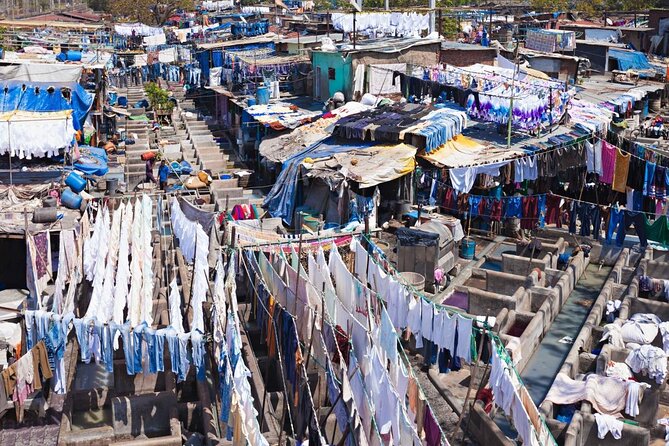
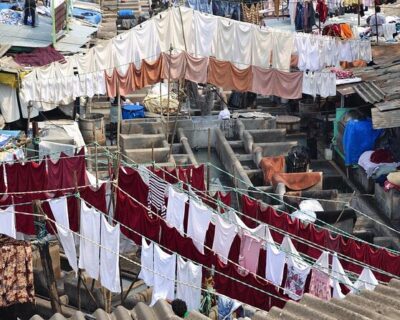
After Dharavi, you move to Mahalaxmi Dhobi Ghat for about an hour. This is one of Mumbai’s most striking working scenes: an open-air laundry operation where dhobis wash clothes outside. The tour describes the dhobis working to wash clothes from hotels around the city, which means this isn’t just local laundry. It’s city-scale work with steady demand.
You’ll see the operation as an active workflow. Instead of thinking of laundry as a background chore, you’ll start recognizing it as a whole system of labor, scheduling, and tools. Dhobi Ghat works because it’s built into the neighborhood’s daily rhythm.
Why this stop is worth it
Dhobi Ghat is the kind of place where you learn through observation. You don’t need special equipment to understand what’s happening. The work is visible. You also get a contrast from Dharavi. Same city, different function, both showing how Mumbai runs on people doing jobs that keep other parts of the city working.
It also helps that the tour keeps ticketing simple here. The stop lists admission tickets as free, which means you spend your money on the guide and time, not entry fees.
The dabbawala element: the lunch delivery culture in a single stop
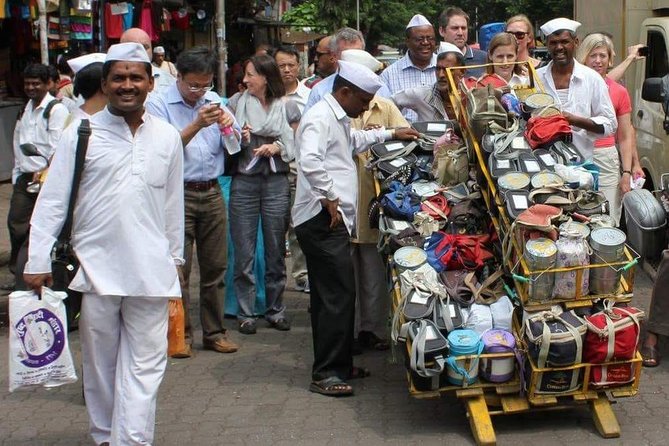
The final stop is a dabbawala tribute statue, where you meet the dabbawalas in a focused way. Dabbawalas are a special class of Mumbai workers, and the tour frames them as a citywide institution. The idea is simple: deliver packed lunches reliably around the city, and do it every day.
Because the stop is centered around a tribute location, the emphasis is less on a factory-style demonstration and more on the cultural significance of the system. You’re learning why the job matters and how people recognize the dabbawala presence in everyday Mumbai.
What you’ll likely take away
This stop can flip your perspective. In many cities, food delivery feels like apps and tracked drivers. Here, the emphasis is on a human-run delivery culture that relies on process and organization. Even if you already know the dabbawala story, seeing the tribute focus helps you connect it to how people experience Mumbai day to day.
Local train ride: the practical transport that adds context
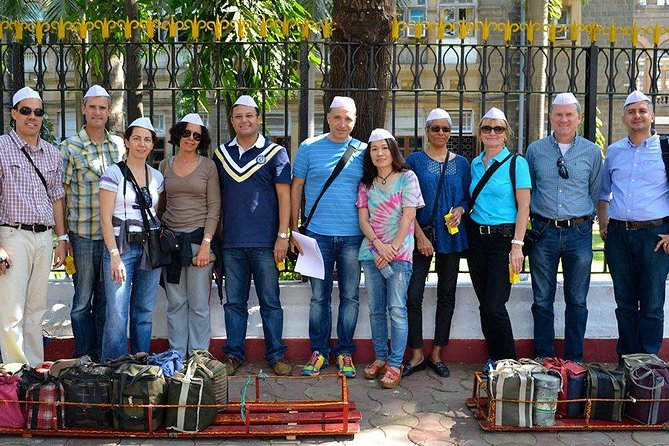
Transport is included by local train, and that matters more than you might think. When you ride along, you get a feel for scale and flow that you simply cannot get from a car. You also avoid losing time to traffic.
The tour has a start point in Churchgate, Maharshi Karve Rd, and ends in Dharavi near Sai Multispeciality Hospital and Research Centre, on 90 Feet Rd, behind Sion Hospital. Because the meeting points are near public transport, the day fits reasonably well into a Mumbai itinerary.
Also, the tour’s mobile ticket format helps. You’re less likely to wrestle with printed tickets and more likely to have a straightforward start.
Price and value: why $35.79 can work out well
At about $35.79 per person for roughly 4 hours, this tour is priced like a budget-friendly half-day. The reason it can feel like good value is the combination:
- a resident guide
- a local train transport component
- multiple working stops that are listed as admission ticket free
Your money is mainly paying for interpretation and access to a working neighborhood and industries. You are not buying a packaged attraction with entrance fees. Food is not included, so you’ll want to plan your meal separately, but the tour itself is lean and focused.
Small groups capped at 15 also help with value. In a bigger group, you might spend half the time waiting for the next photo moment. Here, it’s easier to ask questions and stay engaged.
The guides are a big part of the experience

One theme stands out in the feedback patterns around this tour: the guide quality. Several names come up again and again, including Rakesh, Abhishek, Dinesh, Sagar, and Hardik. That gives you a strong hint about what to expect day-to-day: English-speaking guides, a friendly tone, and a strong focus on explaining how things work.
What you want in a guide for a visit like this is not just language skills. You want context. You want the ability to steer conversations away from sensationalism and toward lived reality. Guides connected to the area also seem to bring energy and comfort, which helps the whole group feel at ease.
If you’re the type who asks questions, you’ll probably enjoy it more than you expect. The tour format is built for real explanations, not just walking past sites.
What to bring, what to wear, and how to pace yourself
This isn’t a museum day where you can take slow steps and then sit for a long time. It’s a half-day with walking and working environments.
Here’s what I’d plan for based on the practical tips you’ll be wise to follow:
- Comfy shoes with grip. Dharavi streets and Dhobi Ghat footpaths can be uneven.
- Extra water. There’s a clear suggestion to bring it, and Mumbai conditions can turn fast.
- Weather readiness. One of the guide stories specifically calls out horrendous weather, and you’ll want a small plan for rain or heat.
- Keep your expectations respectful and realistic. You’re seeing work, not staging.
Also, since food and drink are not included, think about when you’ll eat. If you eat right before, you might feel okay during the walk. If you’re hungry afterward, you’ll have to find food quickly, so plan a nearby meal option.
Who this tour suits best, and who may want a different day
This tour is a great match if you:
- like learning through daily systems and real work
- want a guide to explain industries in plain language
- enjoy rail travel and don’t mind street conditions
- are okay with a more emotional, less glossy side of travel
It may be less ideal if you:
- want only low-emotion sightseeing
- hate walking in tight alleys or uneven surfaces
- need lots of downtime during an outing
The duration, about 4 hours, is also an important fit factor. It’s long enough to make an impact, but short enough that you’re not stuck all day if the mood doesn’t click.
Should you book Dabbawala, Dhobi Ghat and Dharavi with local train ride?
If you want one strong, value-heavy slice of Mumbai that shows how people organize work, this is an easy yes. The reason is simple: it pairs three high-meaning stops with a local train ride and a resident guide, and it’s priced for a half-day experience rather than a high-end private sightseeing day.
I’d book it if you’re willing to be respectful, you can handle street-level conditions, and you’ll enjoy learning from a local perspective rather than chasing landmarks.
Skip it if you only want entertainment-style sights, because this tour is about understanding how life works. Come with the right mindset, bring water and comfortable shoes, and you’ll likely leave feeling like you got an honest read on Mumbai, not a postcard version.
FAQ
How long is the tour?
The tour duration is about 4 hours.
What’s included in the tour price?
The tour includes a professional guide and transport by local train. Food and drink are not included.
Is food provided?
No. Food and drink are not included in the tour.
How big is the group?
The tour has a maximum of 15 travelers.
What are the main stops?
The stops are Dharavi, Dhobi Ghat (Mahalaxmi Dhobi Ghat), and a dabbawala tribute statue.
Are there admission tickets to pay for the stops?
The information provided lists admission tickets as free for each stop.
What is the cancellation policy?
Free cancellation is available if you cancel up to 24 hours in advance for a full refund. Changes made less than 24 hours before the start time are not accepted.
Latest reviews in from Mumbai
- Mumbai Spice Markets and Bazaars Tour with Guide and Transport★ 5.0 · 42 reviews
- Mumbai Dharavi Slum, Dhobi Ghat & Dabbawala Lunchbox Tour★ 5.0 · 43 reviews
- Private Dharavi Slum Tour with Mumbai Sightseeing★ 5.0 · 43 reviews
- Private Guided Tour in Kanheri Cave with Transfers★ 5.0 · 44 reviews
- Private Guided Walking Tour in Dharavi Slums★ 5.0 · 44 reviews
- Mumbai Private Cultural Tour with Lunch and Transport★ 5.0 · 44 reviews
- Unveiling Bollywood: Grand Tour of Iconic Real Sets & Their Story★ 4.5 · 44 reviews
- Bollywood Tour with Original founder★ 4.5 · 44 reviews
Dharavi Tours, compared.
Dharavi slum tour in Mumbai by Female tour guides of the slum
Read our review →

Dharavi Slum Slumdog Millionaire Tour with a Local
Read our review →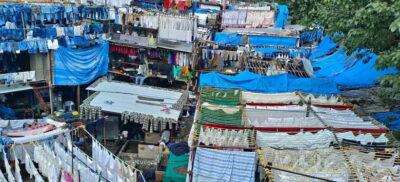
Dhobi Ghat Laundry and Dharavi Slum Tour with Local
Read our review →
Browse the lists this tour appears in