
Reviewed · VARANASI TOURS
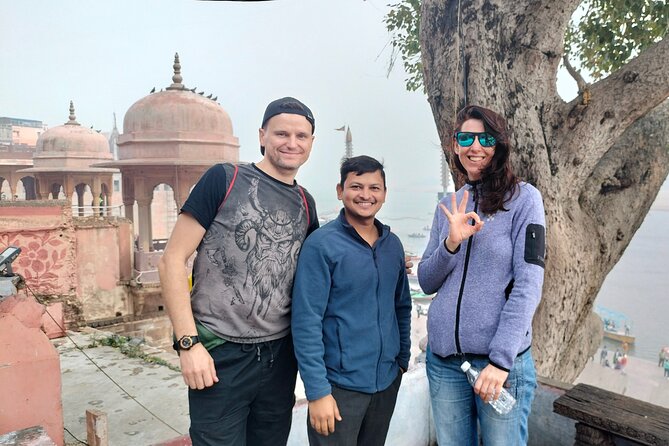
Guide francophone à varanasi – Rakesh
Varanasi can feel like sensory overload, which is exactly why a good guide matters. This private French-language outing threads the Ganga’s major ghats and a handful of temples that most people miss, giving you context fast, without turning it into a lecture.
Two things I especially like: Rakesh is born and raised in Varanasi, so you get local explanations in plain language, and the route is built around religious spaces you can’t really understand from a map. The one thing to consider is that the walk includes Manikarnika Ghat, a cremation ground, so it can be emotionally intense if you are sensitive.
Key Points at a Glance
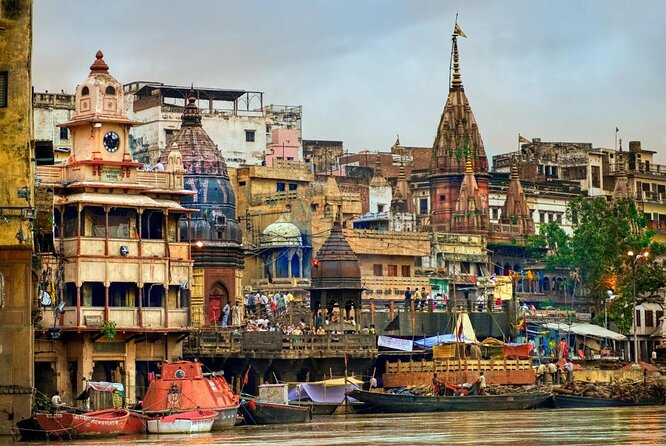
- Local francophone guide, Rakesh, with deep family ties to Varanasi
- Private, just your group for a calmer pace in crowded lanes
- 3 hours on foot, designed for learning without rushing
- Ganga ghats plus multiple temples, including Mir Ghat and Manikarnika Ghat
- Admissions handled on most stops, with tickets included for several temples
- Mobile ticket for easy entry and less hassle at the start
Meeting Rakesh at Dashashwamedh Ghat Rd, Godowlia
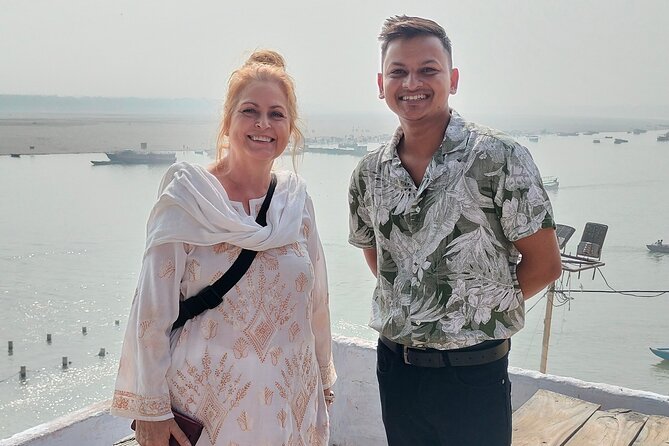
The tour starts where Varanasi is already doing its thing, at Dashashwamedh Ghat Rd, Godowlia. Even before you reach the first major stop, you can feel the city’s rhythm, the river’s pull, and the constant flow of pilgrims and visitors.
Because this is a private walk, you are not stuck waiting for a large group to regroup at every bottleneck. That matters here. The ghats are narrow, the crowds change minute to minute, and a guide who can pick a practical path helps you keep your sanity.
Rakesh’s strength is how he explains what you are seeing. He talks like a person who has lived here for generations, not like someone reading bullet points. In past conversations shared by visitors, his friendliness and quick answers come up again and again, and that combination makes it easier to ask questions without feeling awkward.
Line these Varanasi options up side by side
- Varanasi : Full Day City Highlights Day Tour & Ganges Cruise
★ 4.8 · 520 reviews - Hidden Secrets of Varanasi: lively Tradition (Guided Tour)
★ 5.0 · 429 reviews - Varanasi: Sunrise Boat Tour with Arti Ceremony
★ 5.0 · 375 reviews
Dasaswamedh Ghat: where the river meets daily ritual
The first stop is Dashashwamedh Ghat, one of Varanasi’s main ghats on the Ganga River, and it sits close to the Vishwanath Temple area. This is a powerful starting point because it sets the “why” behind the visit. You are looking at a place where religion is not a separate activity. It is the schedule.
Expect a front-row view of riverfront life: people arriving, small movements that repeat across hours, and the sense that the ghat is both a public space and a sacred stage. From a value standpoint, this matters because you start with the biggest visual reference in the city. You’ll understand later stops faster, since you have a baseline for how the ghats function.
Practical note: this area can be busy, especially during major religious events. When you come with a guide who knows how to move through crowds, you spend less time stuck and more time looking and learning.
Admission here is listed as free, so you start without extra ticket fuss.
Mir Ghat and Vishalakshi Temple: a calmer sacred pause
Next you head to the Vishalakshi Temple, also known as the Vishalakshi Gauri Temple. It’s dedicated to the goddess Vishalakshi, and it’s located at Mir Ghat on the Ganges.
What makes this stop useful is the variety it adds. If your first impressions of Varanasi are mostly about the river, this temple brings in another layer: devotional focus. You are not just watching the riverfront. You are learning how specific forms of worship shape the meaning of a place.
This is also one of the reasons I like this specific route. It balances big, loud locations with sites that feel more like a focused pause. Even if you only spend about 25 minutes here, it gives your brain a chance to process what you have seen so far.
Admission for this stop is included, which is good news for planning. It keeps you from having to chase tickets while you are already trying to read the environment around you.
The Nepali (Kathwala) Temple, also called Mini Khajuraho
Then comes one of the most interesting “contrast” stops: the Nepali Temple, also known as the Kathwala Temple. It is dedicated to Shri Samrajeswar Pashupatinath Mahadev, and it’s sometimes referred to as the Nepali Mandir, Kanthwala Mandir, and Mini Khajuraho.
Why does that matter to you as a visitor? Because it reminds you that Varanasi is not only an Indian story. Religious art and architecture travel, and local spaces can carry outside influence too. The name Mini Khajuraho hints at that, and the detail that Kanthwala relates to wood helps explain the temple’s character.
It’s also a good mental reset. You go from riverfront intensity to a temple space where you can slow down, look at details, and ask about the symbolism. If you enjoy architecture or you like seeing how different regions express spirituality, this stop is a strong payoff in a short time.
Admission is included here as well, so you can focus on the experience rather than the logistics.
A different shape of Varanasi day:
- Banaras Wala Tours
★ 5.0 · 329 reviews - The Ultimate 1 Day in Varanasi – How to Spend 13 Hours – Private Guided Tour
★ 5.0 · 295 reviews - A Journey of A lifetime
★ 5.0 · 272 reviews - Varanasi: Hidden Secrets of lively Tradition (Guided Tour)
★ 4.9 · 176 reviews
Manikarnika Ghat and Ratneshwar Mahadev: spirituality that feels real
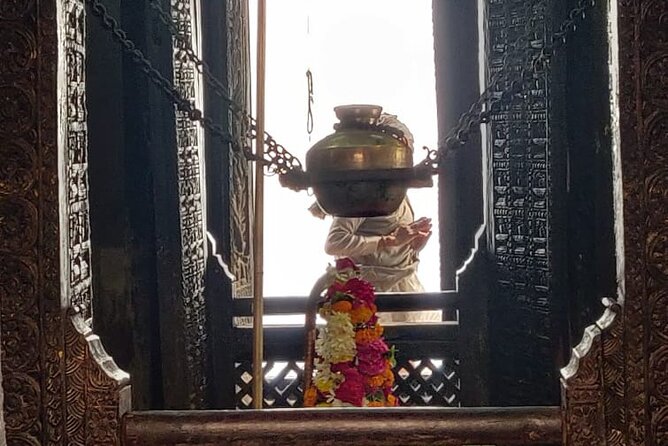
After the temple, you head to Manikarnika Ghat, known as one of the holiest cremation grounds along the Ganga in Varanasi. This is the stop that can hit hardest, because you are stepping into a place connected to death rituals.
I will be direct: this is not a sightseeing moment in the casual sense. It is a working sacred area. If you are the kind of traveler who needs emotional distance, you may want to approach slowly, take breaks, and let the guide know if you want a different pace.
That said, a guided walk helps. A good guide can explain the religious logic without sensationalizing what you see. And because you are not alone, you can ask questions and get context on what you are witnessing.
Next is Ratneshwar Mahadev Temple, one of the most photographed temples in Varanasi. The temple appears well preserved, but the details you hear along the way include that it leans significantly toward the back. That kind of physical quirk makes the place memorable, and it also gives you a concrete detail to connect the story to.
This pairing works well: cremation ghats provide the stark reality of Varanasi’s spiritual world, and the nearby temple brings you back to devotion and enduring structures.
Admission is included for both of these stops in the tour details. Another small value point: you’re paying for a route where major points are handled, rather than leaving you to piece together tickets on the fly.
Pita Maheshwar Mahadev and the shwayambhu Shiva idea
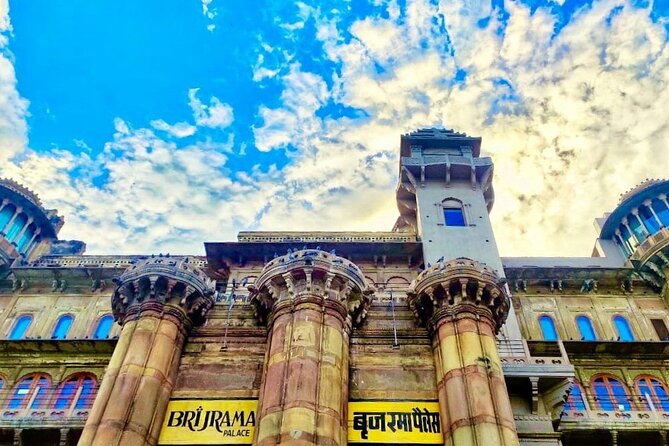
The last temple stop is Pita Maheshwar Mahadev Temple, also referenced as Kashi Khand. Here you are meeting a different kind of sacred claim, tied to the idea of a self-manifested Shiva form.
The information shared about this location is that the Pita Maheshwar Shivling is believed to be shwayambhu, meaning a self-manifested form of the Shiva lingam. The tradition also ties the mention of this shivling to the Skand Puran, one of the 18 important Hindu scriptures.
This is where the tour’s style really matters. You are not just taking photos. You are hearing how people interpret sacred geography and sacred objects. For me, that is what transforms a set of stops into understanding.
Even with a shorter visit (about 20 minutes), this stop helps you connect earlier concepts. You’ve seen ghats where river life and ritual overlap. Now you see how scripture and belief anchor certain places in lasting meaning.
Admission is included for this stop too.
Why the 3-hour private format makes sense in Varanasi
Varanasi is not a place that rewards rushing. The streets are tight, the crowd level can change fast, and the city can overwhelm you if you try to decode it by yourself.
A 3-hour private walk is long enough to take in multiple ghats and temples, but short enough to avoid the fatigue that hits after hours of heat and standing around. It’s also realistic: you get focused learning without spending your whole day in a queue or a detour.
Because it is private, your pace is adaptable. If you want more time to look at carvings or ask about a ritual idea, you can. If you start to feel overloaded, you can slow down. That flexibility is a big part of why this sort of tour scores so high.
It helps that Rakesh tends to be described as patient and on time, and that he answers questions quickly. That turns the walk into something interactive instead of just a march with a stop list.
Price and what you really get for $27.96 per person
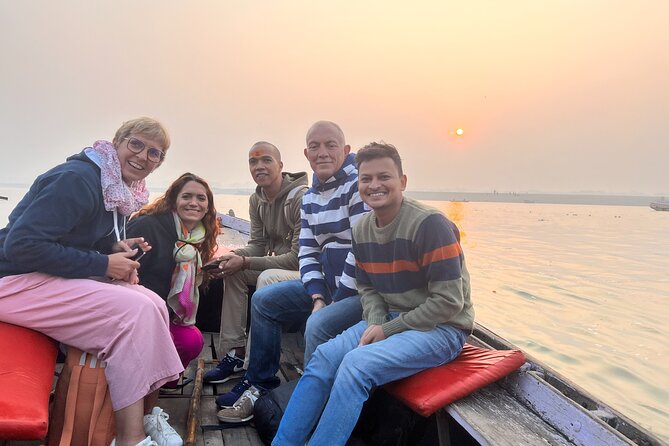
At about $27.96 per person for a tour that runs about 3 hours, the value is mainly in two areas: guide time and reduced friction.
You get a local French-language guide who can explain the religious and historical context as you walk. You also get access to several major points where admission is handled for you (tickets are listed as included for stops 2 through 6). Stop 1 is free, and the rest are included, so you are not constantly pulling out your wallet to cover separate entry costs.
On top of that, you get a mobile ticket, and the activity starts and ends at the same meeting point, which reduces the chance of last-minute confusion.
One more angle on value: this is booked with reasonable lead time, averaging around 7 days. That usually signals steady demand. In practice, it also means you should plan ahead if you are traveling at a peak moment.
Weather, crowds, and what to wear so the day stays enjoyable
This experience requires good weather. That is not a small detail in Varanasi. Walking along ghats means you can end up on uneven surfaces and near water, and the conditions can affect comfort quickly.
Crowds are another reality. Even outside festival peaks, the ghats can be packed. During very busy religious periods, the city’s density can spike. The benefit of a guide like Rakesh, based on how visitors describe his help, is practical navigation through narrow lanes and heavy foot traffic.
So pack for comfort, not for looks only. Wear breathable clothing, comfortable walking shoes, and bring a small water bottle if you typically use one (the tour details do not mention water, so I treat it as something you should plan to have). For temple visits, modest clothing is a safe default.
And if you are sensitive to intense scenes, give yourself permission to go slowly at Manikarnika Ghat. A calmer pace is often the difference between a meaningful experience and a stressful one.
Who should book, and who might want a different plan
This tour is a great match if:
- You want a French-speaking guide who can explain what you’re seeing in plain language
- You like ghats and temples, and you want context, not just a photo walk
- You prefer a private format where you can ask questions and move at your own pace
- You are okay with intense sacred spaces, especially around cremation rituals
You might consider a different approach if:
- You strongly dislike environments connected to death rituals
- You want only bright, lighthearted sightseeing and zero emotional weight
- You are traveling with limited ability to walk in crowded, uneven areas (this tour says most travelers can participate, but it still involves walking)
Final Take: should you book Rakesh’s Varanasi ghats and temples walk?
If you want to understand Varanasi without drowning in noise, I think this is a smart booking. You get a local guide named Rakesh, the route concentrates on major and meaningful stops, and admissions are handled for most temples. The private format is also a real quality-of-life upgrade in a city where crowds can turn into a game of constant rerouting.
Based on the strength of its track record, with 97 reviews and a 5-star rating plus 100% recommendation, this tour clearly lands well for people who want more than check-the-box sightseeing.
FAQ
Where does the tour start?
It starts at Dashashwamedh Ghat Rd, Ghats of Varanasi, Godowlia, Varanasi, Uttar Pradesh 221001, India.
How long is the walk?
It is listed at about 3 hours.
Is this tour private?
Yes. It is a private tour/activity, so only your group participates.
What kind of ticket do I get?
You receive a mobile ticket.
Are temple admission tickets included?
Admission is free for Dasaswamedh Ghat, and admission tickets are included for Vishalakshi Temple, Nepali Temple (Kathwala), Manikarnika Ghat, Ratneshwar Mahadev Temple, and Pita Maheshwar Mahadev Temple.
What stops will I see?
You will visit Dasaswamedh Ghat, Vishalakshi Temple, Nepali Temple (Kathwala Temple), Manikarnika Ghat, Ratneshwar Mahadev Temple, and Pita Maheshwar Mahadev Temple (Kashi Khand).
What should I expect at Manikarnika Ghat?
Manikarnika Ghat is one of the holiest cremation grounds along the Ganges in Varanasi, and it is a sacred riverfront area.
What happens if the weather is poor?
The experience requires good weather. If it is canceled due to poor weather, you will be offered a different date or a full refund.
Can I cancel for a full refund?
Yes. You can cancel up to 24 hours in advance for a full refund. If you cancel less than 24 hours before the start time, the amount paid will not be refunded.
Latest reviews in from Varanasi
- Private Day Tour in Varanasi★ 5.0 · 44 reviews
- Group Yoga Class with Siddharth from Beginner to Advance★ 5.0 · 45 reviews
- Pilgrimage Varanasi★ 5.0 · 50 reviews
- Experience Varanasi Tour: 3 Days Private Guided Tour★ 5.0 · 51 reviews
- Complete tour of varanasi with official guide★ 5.0 · 51 reviews
- Varanasi Street Food Crawl (2 Hours Guided Food Tasting Tour)★ 4.5 · 69 reviews
- 3 Days Admirable Tour in Varanasi with private tour guided★ 5.0 · 72 reviews
- Photo Tour In Holy Varanasi★ 5.0 · 73 reviews
Varanasi Tours, compared.
Full Day City Highlights Day Tour & Ganges Cruise
Read our review →
Hidden Secrets of Varanasi: lively Tradition (Guided Tour)
Read our review →
The Ultimate 1 Day in Varanasi – How to Spend 13 Hours – Private Guided Tour
Read our review →
Hidden Secrets of lively Tradition (Guided Tour)
Read our review →
Private Heritage and Spiritual Walk Tour – Varanasi Kashi
Read our review →Browse the lists this tour appears in