
Reviewed · WALKING TOURS
Shimla Private Guided Walk Tour exploring the colonial trails
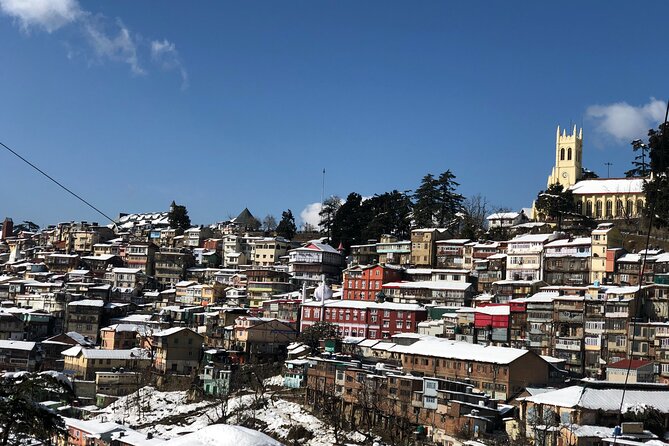
Shimla’s colonial-trail walk works because it’s not about hopping on and off rides. It’s a 2-hour on-foot route that links landmarks on and around the Ridge, so you get the hill-station vibe and the story behind it in the same breath.
I especially like that you’re guided by a local who can explain places in English, Hindi, and Pahari, and you’ll hear the kind of practical, everyday context you miss when you only read plaques. The itinerary also mixes big-name architecture with smaller-looking stops that still matter, from telegraph-era buildings to castle leftovers.
One thing to consider: most sights are viewed from the outside, since admission tickets are not included, so if you’re hoping to go inside multiple buildings, you’ll need to be flexible about what you can see.
Key highlights worth planning for
- Private guide with local-language support (English, Hindi, and Pahari)
- One-way walk from Christ Church to IIAS with a clear end point
- Colonial-era architecture focus, including the red-brick telegraph building and the Railway Board landmark
- Plenty of quick picture stops on the Ridge and Mall-area streets
- Stops include castles and a temple, so it’s not only British-era buildings
- Mobile ticket for smoother check-in
Why this colonial walk in Shimla feels more real than a checklist
Shimla can be busy, and it can also feel like a series of lookouts and markets. This walk is different. You move at a human pace along the Ridge corridor, then down and through side streets and civic spaces, finishing at a research institute that quietly marks the end of the colonial-era “story arc.”
I like that the tour is structured enough to help you connect dots, but still light enough that you can pause for photos and take in the views. It also helps that the tour comes with local talk and small historical anecdotes, the kind that make the city feel less like a brochure and more like a place where people still live.
If you enjoy city-walk tours where the guide explains how buildings got their roles and reputations, you’ll get a lot more out of Shimla than you would by doing it on your own, even if you’re comfortable navigating.
More Walking Tours in Shimla:
- Shimla: Guided Walk Tour-Heritage, Culture & Colonial Trail
★ 4.7 · 28 reviews
Starting outside Christ Church on the Ridge: your orientation moment
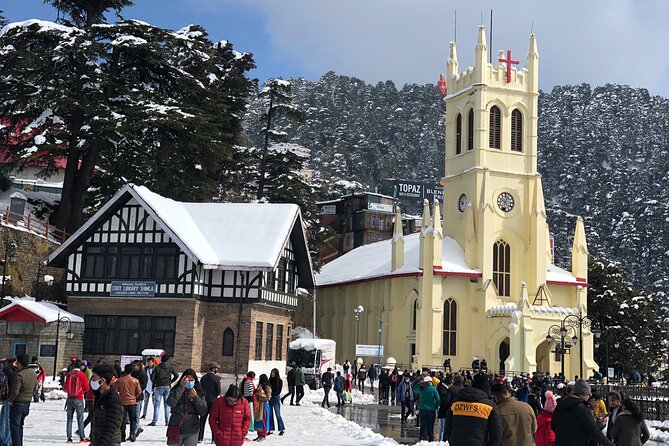
The tour begins outside Christ Church (on the Ridge). This isn’t just a pretty starting point. It gives you an immediate anchor for the walk because the Ridge area is where Shimla’s “public life” became visible in layers, from colonial administration to religious and civic spaces.
Christ Church is described as the second oldest church in North India after St John’s Church in Meerut, and worship is conducted in Hindi and English. Even if you’re not visiting inside, standing there sets the tone for the rest of the walk: you’re moving through a city shaped by institutions, not just scenic scenery.
Practical tip: wear shoes with good grip. Shimla’s streets can be uneven, and you’ll want stable footing for a two-hour downhill or side-hill route.
The Ridge and Scandal Point: the open space where routes meet
Right after Christ Church, you hit the Ridge, Shimla’s large open space in the center. It’s one of those places where you can feel how the city organizes itself. The Ridge is the kind of landmark that makes the rest of your walk make sense, because it’s where movements converge.
Then you reach Scandal Point, located where the Mall Road joins the Ridge Road on the west side. This stop matters because it’s a traffic node and a social node. You’re not just looking at buildings, you’re seeing how Shimla’s layout guided daily life.
Quick, useful way to enjoy this segment: look up and around. Along this corridor you’ll notice the mix of colonial-era styling with later additions. That contrast is exactly why a guided walk helps. A local can point out what’s from which era and why those choices were made.
The red-brick telegraph legacy at the BSNL Office
Next comes the BSNL Office Shimla, a red-brick Telegraph Office designed by Scottish architect Scott Begg in 1922. The building is a pleasant sight on the Mall Road, and the date gives you a direct timeline you can remember.
This is a good stop for people who like infrastructure history. Telegraph offices were not just practical, they were symbolic. Communication networks helped make Shimla function as an administrative hub in the colonial period, and buildings like this show how power traveled through wires as much as through roads.
If you’re the kind of person who takes the “why” as seriously as the “what,” you’ll appreciate this part more than you might expect.
Bantony Castle and Kali Bari Temple: power and spirituality on the same slope
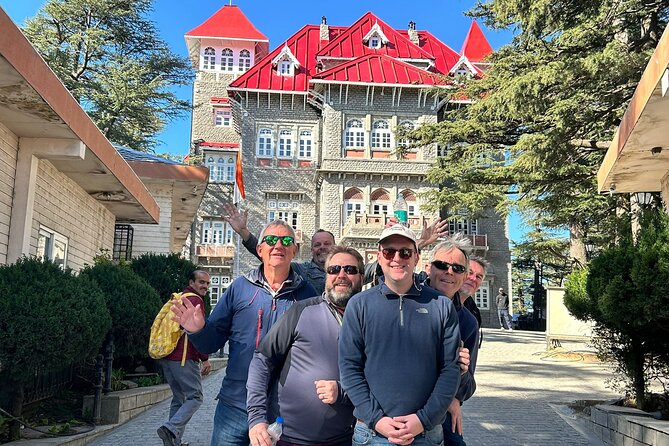
Then you shift to Bantony Castle, on the Kalibari road, close to Scandal Point. It was the summer palace of the Maharaja of Sirmaur, built in the 19th century. This stop adds local princely-state context that keeps the walk from feeling one-note.
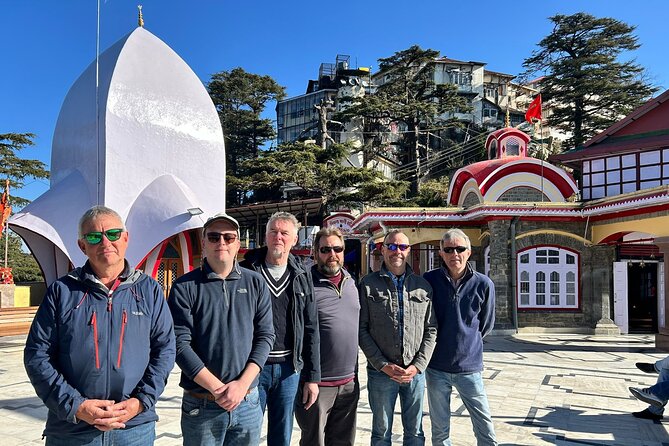
From there, you visit Kali Bari Temple on Bantony Hill. The temple is dedicated to Shyamala, described as the fearsome reincarnation of Goddess Kali, and Shimla is said to be named after this. That connection is the kind of cultural thread that makes the entire walk more satisfying, because you’re not only learning colonial details. You’re also seeing the older religious logic that predates the British footprint.
Consideration: temples and heritage buildings can have active areas and local rhythms. Dress respectfully, keep your pace gentle, and follow any guidance from staff if you’re near worship areas.
Railway Board Building and cast-iron engineering: when government met metal
One of the most compelling stops is the Railway Board Building, constructed in 1896. It’s noted as the first of its kind in India, built mostly from cast iron and steel, and designed to be resistant to fire. Materials were imported from Glasgow, which instantly turns this into more than a local detail.
Why I like this stop for first-timers: it shows the mechanics behind the city’s status. Rail and administration made Shimla more than a hill retreat. They helped institutionalize it. The building becomes a physical reminder that colonial influence was often industrial and organizational, not only architectural.
You also get a rare kind of contrast: a place built for durability and systems, not just style. If you care about engineering history or about how empires actually operated, this is the highlight.
Gorton Castle and CPWD Office: the quieter stops that add depth
After the Railway Board Building, you pass Gorton Castle. It’s described as a heritage monument with a blending of innovative minds and intelligent craftsmanship. Even when you only have a minute here, the point is that the walk keeps sampling different types of structures, not only the most famous facades.
Then you reach CPWD Office, tied to the early hill-state administration period. In 1819, Lieutenant Ross, the Assistant Political Agent in the Hill States, set up a wood cottage in Shimla. Three years later, Charles Pratt Kennedy, a Scottish civil servant, built the first pucca house (a more permanent structure).
This is the segment where you start to feel the timeline tighten. You’re seeing how early governance setups evolved from temporary structures to sturdier civic buildings. That helps you make sense of why later colonial architecture exists in the places it does.
If you’re someone who likes a walking tour that gives you context you can carry around for the rest of your trip, this is exactly that.
Vidhan Sabha Chowk and The Oberoi Cecil: modern governance at a historical junction
Next is Vidhan Sabha Chowk, the area associated with the Himachal Pradesh Legislative Assembly, the state’s unicameral legislature. This stop matters because it shows continuity. Colonial-era administrative layouts don’t just vanish. They often get repurposed, renamed, or reframed within a new political system.
From there, you pass The Oberoi Cecil, a historic luxury hotel. You may not go inside, but the exterior stop is still useful. Hotels like this often sit in the spaces where earlier travelers, officials, and elites shaped the city’s early reputation. Even if you’re not staying there, you’ll understand why it’s part of Shimla’s identity.
Practical note: if your trip includes other activities, this is a good location to decide where you want to spend time next, because you’re still close to the hotel and main-corridor energy.
All India Radio Centre and the finish at IIAS
The walk also references the All India Radio Centre, set up in Shimla in 1955. That’s a helpful bridge between eras, showing how Shimla stayed important after the colonial period, at least in certain communication and institutional roles.
The tour ends at the Indian Institute of Advanced Study (IIAS). It’s described as a research institute set up by the Ministry of Education, Government of India in 1964, and it started functioning on 20 October 1965. The guide drops you outside the main entrance.
Ending here is surprisingly satisfying, because it shifts the story from administration and architecture into scholarship and research. You finish with the feeling that Shimla kept evolving, not just freezing in time.
The guide experience: local language, local pacing, and names you’ll recognize
The tour is led by a local expert who speaks local English, Hindi and Pahari. That multilingual approach matters, because it lets the guide explain cultural and architectural points with nuance, not only translated facts.
From past experiences with guides like Pawan and Preeti, the standout pattern is clear: strong communication plus a habit of telling stories that connect buildings to daily life. People also describe the guide as patient when schedules slip, including waiting if someone arrived late and pausing while stops for coffee happened.
What I’d advise you: bring one simple question to ask your guide. Something like, What’s the most misunderstood stop on this route? You’ll usually get a thoughtful answer, because these guides know the city through repetition.
Price value: how $16.67 makes sense for a private 2-hour walk
At $16.67 per person, you’re paying for a private guided walking experience with a local expert, not for museum tickets. The price feels fair mainly because:
- The tour is private, so you get focused attention instead of blending into a crowd.
- It’s 2 hours, long enough to cover meaningful distance and multiple architectural eras.
- It includes guided context, local storytelling, and language support.
A key value point: admission tickets are not included, and you generally won’t enter the attractions where entry is required. So the cost is really for interpretation and navigation. If you’re looking for paid-entry experiences, you’ll want to budget extra. If you want a guided “see and understand” walk, this price works.
Also, it’s booked about 30 days in advance on average, so if you’re traveling in busier seasons, plan ahead.
Who should book this Shimla walk, and who might skip it
This is a great fit if you:
- Want a first-timer’s orientation to Shimla’s colonial-era layout
- Like architecture and institutional history
- Prefer slow-paced walking with time for views and photos
- Value a guide who can explain in English and also support in Hindi or Pahari
You might think twice if you:
- Expect to go inside many attractions, because admission is not included
- Have limited mobility or struggle with uphill, uneven walking, since it’s an on-foot route
- Want a strictly tourist-only “must see inside” program
Should you book this Shimla colonial trails private walk?
If you want Shimla to feel understandable fast, book it. This route is built for that goal. The colonial focus is real, but it doesn’t ignore local culture, especially once the walk brings you to the temple and the princely-era palace.
The best decision point is simple: if you’re happy to learn from what you see outside and let the guide explain the layers, you’ll get your money’s worth. If you need lots of paid entrances, pair this with separate ticketed stops later in your day.
FAQ
How long is the Shimla Private Guided Walk Tour?
It’s about 2 hours.
Where does the tour start and end?
It starts at Christ Church, Shimla (outside, at the Ridge area). It ends at the Indian Institute of Advanced Study (IIAS), and the guide drops you outside the main entrance.
Is this a private tour?
Yes. It’s a private tour/activity, so only your group participates.
What is included in the tour price?
Included are a local English, Hindi and Pahari speaking guide, the walking tour, a one-way walk from Christ Church to IIAS, plus local storytelling and “local gossips.”
Are attraction admission tickets included?
No. Admission tickets are not included, and the tour states you won’t enter attractions where admission is not included.
What is the cancellation policy?
You can cancel for a full refund up to 24 hours in advance of the experience start time. If you cancel within 24 hours of the start time, the amount paid is not refunded.
Latest reviews in from Shimla
- Shimla: Guided Walk Tour-Heritage, Culture & Colonial Trail★ 4.7 · 28 reviews
Walking Tours, compared.


The Great Indian Food Tour: Old Delhi Food and Heritage Walk
Read our review →

Old Delhi Food, Heritage&Cultural Walk with Rickshaw ride to Masterji Kee Haveli
Read our review →
Fontainhas Heritage Walk At Latin Quarters of Goa
Read our review →Browse the lists this tour appears in