

Reviewed · DHARAVI TOURS
Walking Tour of Dharavi Slum in Mumbai
Dharavi is one of those places that makes you rethink everything you thought you knew about city life in India. What I like most is how this walking tour uses a local guide to swap fear and labels for on-the-ground reality, in just 1.5 to 2 hours.
Two things really land here: you get a close look at small industries working in tight spaces, and you see how daily life runs on community ties, not TV-style stereotypes. The only real catch is that photography is not allowed at certain locations, so you need to be okay with experiencing the moment without filming it.
Key highlights before you go
- Local perspective from a guide who knows how the neighborhood works
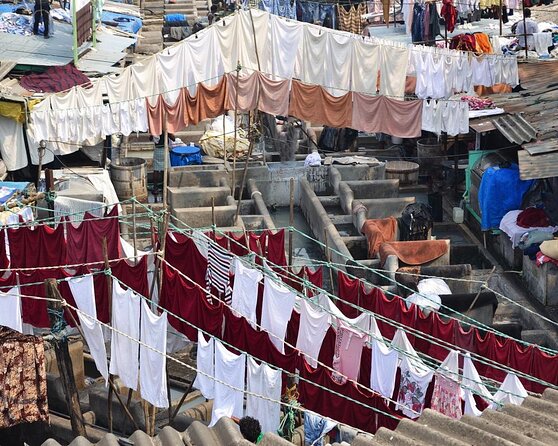
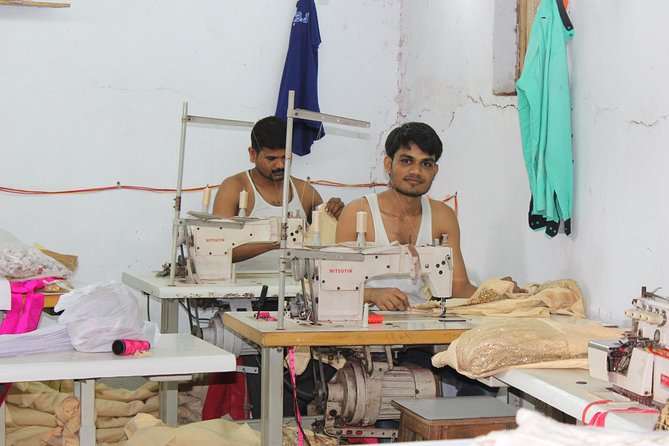
- Small-scale industries in action, from recycling and pottery to embroidery and soap-making
- Leather as a major stop, where work is highly focused and practical
- Religion and community side-by-side, with temples, mosques, and churches in view
- Small-group format capped at 15, which helps you ask questions
- Photography restrictions in some spots, for privacy
Why Dharavi is more than a label
The big theme of this tour is simple: Dharavi is huge, and it is not a single story. It has a population of almost one million people, and that scale changes the vibe. Instead of thinking of it as a “place to look at,” you start to see it as a neighborhood where people work, trade, worship, raise families, and solve daily problems the way any city does.
I also like that the tour doesn’t ask you to feel sorry from a distance. You’re encouraged to challenge negative stereotypes around the word slum. That shift matters because it changes how you walk, how you look, and what you notice, like the skills being used in compact workshops or the practical way neighbors share space.
Finally, there’s a human note you won’t get from photos. People come from all over India, and that diversity becomes obvious as you pass places of worship. In the same walking route, you may see different faith communities side-by-side, and it gives you a clearer picture of what “community” actually looks like here.
More Walking Tours in Mumbai
- Group Guided Walking Tour in Fort and Colaba
★ 5.0 · 1,073 reviews - Private Guided Walking Tour in Fort & Colaba
★ 5.0 · 895 reviews - Private Guided Walking Tour in Bandra Queen of Suburbs
★ 5.0 · 383 reviews
Meeting at Mahim Station and getting oriented fast
The tour meets in the morning near Mahim Station (West), outside a Cafe Coffee Day, with the exact meeting point tied to the guide’s instructions. You’ll walk as a group, with your local guide leading the way and setting the expectations up front.
This is a practical start for most people in Mumbai. Mahim is connected, and the listing notes the tour is near public transportation. Since you’re on foot for about 1.5 to 2 hours, getting to the meeting point smoothly makes the whole experience easier.
The group size is limited, with a maximum of 15 people. That’s important in Dharavi. Smaller groups move more safely through crowded streets, and your guide can pace things so you don’t just steamroll from one stop to the next. Based on guide feedback you’ll likely hear similar themes like safety and clarity. Guides such as Ganesh, Alam, and Dawood are mentioned often for being careful, friendly, and able to explain things clearly.
What you actually see: work, craft, and reuse in tight spaces
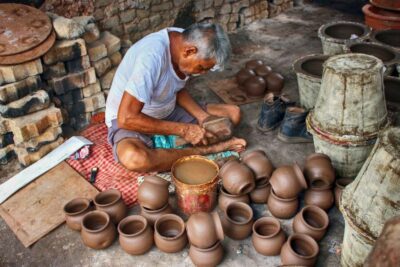
Dharavi’s most eye-opening feature is how much industry happens in confined areas. The tour takes you past a wide range of small-scale work, including recycling, pottery-making, embroidery, soap-making, and leather tanning. The point is not “look at the mess.” The point is “look at the methods.”
Many of these activities use innovative techniques in very limited space. That means you can watch processes that would be impossible in a giant factory layout, but are carried out here through smart workflow, shared know-how, and constant problem-solving. Even if you’re not a craft person, you’ll likely find your brain switching from sightseeing mode to “how do they do this here?” mode.
You’ll also notice the economy is built on networks, not big corporate brands. People make, sort, package, and sell. That’s why the tour’s focus on small industries feels more real than a purely “cultural” stop. You can learn a lot just by seeing who does what, and how materials move from one step to the next.
Stop 1: Dharavi walking streets and the community story
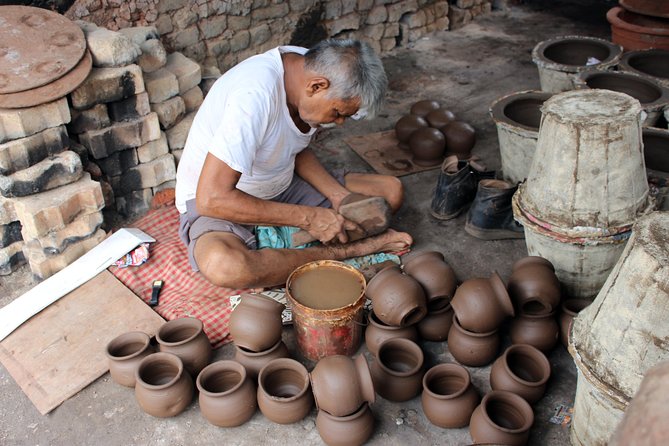
The tour starts in Dharavi itself and moves through the neighborhood with commentary from your guide. This first stretch is where you get your bearings and your context. You’ll learn how to think about Dharavi beyond the stereotypes, and you’ll see daily life taking place around you as you walk.
One of the most meaningful parts of this stop is the way it connects people and places. Your guide points out the sense of community as you move. You may also notice religious spaces, since the area has temples, mosques, and churches side-by-side. That kind of visual makes “diversity” more than a word. It becomes something you can literally track on foot.
A useful thing to remember: this is a living neighborhood. That means the pace can feel more active than a museum tour. Stay alert, keep close to your group, and let your guide set the speed. If you try to drift ahead for photos, you’ll break the flow and make it harder for everyone.
Other Dharavi walks:
- Dharavi slum tour in Mumbai by Female tour guides of the slum
★ 5.0 · 1,976 reviews - Mumbai: Dharavi Slum, DhobiGhat, and Dabbawallas Tour
★ 4.9 · 689 reviews - Dharavi Slum Tour
★ 5.0 · 625 reviews - Dharavi Slum tour in Mumbai by local resident
★ 5.0 · 572 reviews
Stop 2: Dharavi Leather and why the industry dominates
Leather is the most dominant industry stop during the walk. In a compact neighborhood like Dharavi, leather work is not just one small craft. It is a major economic pillar, which means you’ll likely see more concentration and more process visibility than at a smaller workshop.
The tour includes a short dedicated stop for Dharavi Leather, roughly 10 minutes. That short timing matters because it keeps the focus on what your guide wants you to understand: how work is organized, how materials are handled, and why leather production has such a strong presence here.
What you should keep in mind is that leather work can be intense in sensory terms. Your guide will be steering you through what is appropriate to see and how to behave. Go in with an open mind and a respectful attitude. This is not a stage show. It’s work that supports many families.
If you’re expecting a “factory tour” with huge machines and long explanations, you may find the format different. You’re getting a working snapshot, guided by local knowledge, in real conditions.
Stop 3: Pottery-making and the craft behind the sales
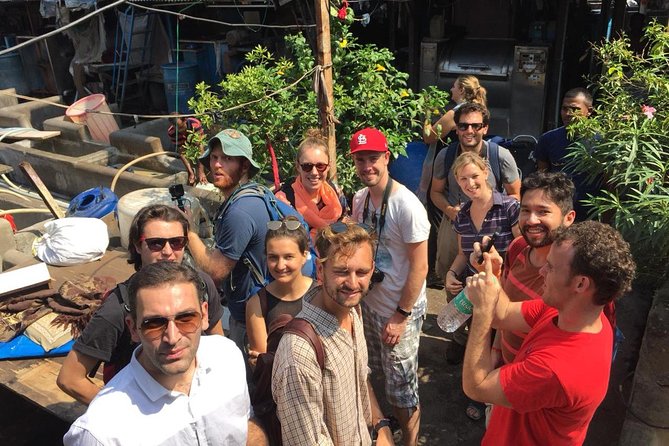
Pottery is another significant industry highlighted on the tour. There is a short stop dedicated to pottery-making and selling, again around 10 minutes.
This stop helps you see a different kind of process than leather. Instead of a dominant industrial transformation, you get closer to craft steps and material handling. And the fact that selling is part of the narrative is important. In Dharavi, making and marketing often sit close together, so the economy feels “in motion” rather than separated into labor versus retail.
Pottery also gives you a useful contrast to the recycling and recycling-adjacent industries. You can start to compare how different materials are processed, how tools get reused, and how skills pass from one person to another. Even if your interests are only photography, fashion, or design, pottery work can become a surprising entry point into understanding how the neighborhood sustains itself.
Respect rules: no photos in some places, and why that matters
A key detail that can make or break your experience is the photography rule. Photography is not allowed on this tour at certain locations. Your guide may ask you not to take pictures for privacy of occupants, and this is not negotiable in those spots.
So plan to treat your phone like a notebook, not a camera. Notice things instead of recording everything. In the long run, you’ll remember the explanation better, and you’ll also avoid creating tension in workshops where people are working.
Dress matters too. The tour notes you should dress appropriately and avoid very short clothes. This isn’t about fashion. It’s about moving comfortably through a working neighborhood and showing respect.
Pacing, walking comfort, and what to bring
The tour duration is listed as about 1 hour 30 minutes to 2 hours. That’s a sweet spot for a first visit. Long enough to learn something real, short enough that you can still plan other Mumbai stops the same day.
You should have a moderate physical fitness level since it’s a walking tour in an active neighborhood. That doesn’t automatically mean hard hiking. It means you should be ready for uneven footpaths, crowding, and steady walking without frequent long breaks.
Also, bring practical items even though the tour doesn’t include food or drinks. One guide stopped for bottled water during a tour in feedback, which is a sign that hydration matters. If you think you’ll get thirsty, plan for it. Water may be available during a stop, but the tour itself does not include it.
Price and value: how $12 buys real access
The tour price is listed at $12.00 per person, with average booking about 33 days in advance. That low price is part of the value story, but the better question is what you get for it.
You get a local guide, which is the main product here. The tour is small-group, and it focuses on working industries and community life. You’re not paying for fancy transportation or museum ticket bundles. You’re paying for guided access to understand how Dharavi functions as a neighborhood, not just as a spectacle.
The pricing also lines up with the tour length. For 1.5 to 2 hours, $12 is a very workable add-on when you’re building a Mumbai itinerary. If you’re on a tighter budget, this is one of those experiences that can still feel meaningful because your time is spent watching how people live and work, and your guide explains what you’re seeing.
You should also notice the format includes a mobile ticket and group discounts. That can make it simpler to organize if you’re traveling with friends.
Who this tour is best for (and who should think twice)
This is a good fit if you want more than skyline photos and shopping streets. You’ll like it if you care about real urban life, local industry, and the way communities organize themselves. If you’re the kind of traveler who asks questions and likes explanations, you’re set.
It’s also a strong option if you want to see leather and pottery as part of a bigger story. Those two stops give you clear anchors for what Dharavi produces and how skills translate into work.
It may be less ideal if you need lots of space, long quiet stops, or a strictly “hands-off” viewing experience. This is a working area, and your experience depends on respect, attention, and following your guide. If you’re uncomfortable with restricted photography rules, or you expect a typical museum pace, adjust your expectations before you go.
Kids are allowed, but the minimum age is 5, and children must be accompanied by an adult. If you’re bringing a child, plan for shorter attention spans and keep an extra-close grip on the group dynamic.
The safety and trust factor that guides keep emphasizing
In feedback, a recurring theme is safety and trust. Guides are described as careful, kind, and attentive to the group. Names like Ganesh, Alam, and Dawood come up again and again in that context, with English being called out as strong in some cases.
Even with a careful guide, your role is still yours. Stay with the group, don’t wander for photos, and be patient when the walk compresses near busy areas. If you treat the tour like a conversation on foot rather than a sprint for images, you’ll feel more grounded and you’ll get more from the explanations.
Should you book this Dharavi walking tour?
Yes, if you want a meaningful, low-cost neighborhood introduction and you’re willing to follow rules. The local guide part is the core, and the best parts of the experience are how it changes your perspective through real-world work like leather and pottery. The small-group cap helps you stay close to the guide, ask questions, and move safely.
Skip it if you strongly prefer photography over interaction, because photos are restricted at certain locations. Also skip it if you’re expecting a comfortable, laid-back sightseeing route with minimal walking. This tour asks you to pay attention and behave respectfully in a living workplace.
If you’re planning a first-time Mumbai trip and you’re looking for one experience that feels educational and genuinely human, this is a solid pick. Book it early if you can, but don’t overthink it. Morning walking with a good local guide is one of the most practical ways to understand Dharavi beyond the headlines.
FAQ
How long is the Dharavi walking tour?
The tour lasts about 1 hour 30 minutes to 2 hours.
Where do I meet the guide?
You meet your guide in the morning near Mahim Station (West), outside the Cafe Coffee Day restaurant.
Where does the tour end?
The tour ends opposite Sai Multispeciality Hospital & Research Centre.
What is included in the price?
A local guide is included. Food and drinks are not included.
Is photography allowed?
Photography is not allowed on this tour at certain locations.
What is the minimum age for the tour?
The minimum age is 5 years, and children must be accompanied by an adult.
Can I cancel for a full refund?
Yes. You can cancel up to 24 hours in advance for a full refund. If you cancel less than 24 hours before the start time, you will not receive a refund.
Latest reviews in from Mumbai
- Mumbai Spice Markets and Bazaars Tour with Guide and Transport★ 5.0 · 42 reviews
- Mumbai Dharavi Slum, Dhobi Ghat & Dabbawala Lunchbox Tour★ 5.0 · 43 reviews
- Private Dharavi Slum Tour with Mumbai Sightseeing★ 5.0 · 43 reviews
- Private Guided Tour in Kanheri Cave with Transfers★ 5.0 · 44 reviews
- Private Guided Walking Tour in Dharavi Slums★ 5.0 · 44 reviews
- Mumbai Private Cultural Tour with Lunch and Transport★ 5.0 · 44 reviews
- Unveiling Bollywood: Grand Tour of Iconic Real Sets & Their Story★ 4.5 · 44 reviews
- Bollywood Tour with Original founder★ 4.5 · 44 reviews
Dharavi Tours, compared.
Dharavi slum tour in Mumbai by Female tour guides of the slum
Read our review →
Dharavi Slum Slumdog Millionaire Tour with a Local
Read our review →
Dhobi Ghat Laundry and Dharavi Slum Tour with Local
Read our review →
Browse the lists this tour appears in