
Reviewed · GOLDEN TRIANGLE TOURS
4-Nights 5-Days India’s Golden Triangle – Jaipur Agra Delhi Tour
This is interesting because you get the classic Golden Triangle route, but in a private, air-conditioned vehicle with guides in multiple cities, not self-guided chaos. You can start the day with hotel pickup, and you are moving between cities without having to figure out transport on your own.
I especially like that you get professional guides for Delhi, Agra, and Jaipur, and not just one generic driver-stops-at-everything setup. And I like the way the day plan mixes big-name monuments with “how did they build that?” sites like step wells and the planned Mughal capital at Fatehpur Sikri.
One possible drawback: entrance fees are generally not included, so you’ll want to budget extra for tickets at many stops, plus any photo fees, and tips for the guide and driver.
The staff vibe that keeps the trip feeling smooth
The feedback I saw keeps coming back to drivers who handle timing, safety, and comfort well. Names like Zaheer, Rakesh, Nadeem, Lalan, Jaheer Khan, and Shakir bhai show up in the service notes, and I also saw guide names like Nikhil and Manu credited for making explanations land in a useful way.
For a route like Delhi, Agra, and Jaipur, that matters. These roads and crowds can be intense, and having a driver who stays calm and responsive helps you keep your energy for the monuments.
Practical notes that matter before you pack

Plan for a moderate amount of walking, and wear comfortable shoes. Dress smart casual, and skip short shorts or sleeveless tops at temples. Also, Taj Mahal is closed every Friday, so your dates can affect which “big moment” day works best.
More Golden Triangle circuits:
- Golden Triangle Tour – Delhi-Agra-Jaipur
★ 5.0 · 73 reviews - 3-Days Golden Triangle’s Private Tour
★ 5.0 · 69 reviews - Private 6-Day Golden Triangle Tour: Delhi, Agra, Jaipur by Car
★ 5.0 · 60 reviews
Key things that make this tour worth your attention
- Private A/C chauffeur-driven car, so you control pacing and stay comfortable between stops
- Hotel, airport, or railway station pickup and drop, which cuts down on day-one stress
- Guides for Delhi, Agra, and Jaipur, including explanations at major monuments
- Golden Triangle hits in 5 days, with early-morning planning for the Taj Mahal experience
- Some stops list free admission, like Abhaneri and Fatehpur Sikri, which helps your ticket budget
- Bottled water included, a small thing that becomes a big help in the heat
Price and value: what $340 per person really buys
At $340 per person for about 5 days and 4 nights, the value mostly comes from the combination: pickup and drop, private chauffeur car, and professional guiding across three cities. If you’ve ever tried to piece together a Golden Triangle with separate day drivers, tickets, and guide time, you know how quickly costs and logistics stack up.
That said, this price is not the full trip budget. Accommodation is not included, meals are not included, and monument entrance fees are not included (with a couple exceptions noted as free in the plan). Tips for driver and guide are also not included.
So here’s the smart way to look at it: this tour is strong if you want a guided, all-in-one movement plan from city to city, without the headache of coordinating transport daily. It can be less strong if you already have lodging and a driver lined up, and you only want tickets and basic transport.
How the route works: Jaipur first, then Agra, then Delhi
The flow follows the Golden Triangle pattern: start with Jaipur’s Rajput landmarks, then move to Agra for the Mughal masterpieces, and finish in Delhi with a mix of forts, tombs, mosques, and the famous Qutb complex.
What you get from this order is emotional pacing. Jaipur feels colorful and architectural in a “how everything is designed” way, Agra hits you with scale and symmetry, and Delhi gives you more layers of empire and city history in separate sites rather than one single mega-moment.
Between cities, travel time depends on traffic, and the plan notes transfers are approximate. That’s where the private car helps. You’re not waiting on group shuttles, and you’re not constantly negotiating.
Line these Jaipur options up side by side
- Jaipur: Private Full Day Sightseeing Tour By Car with Guide
★ 4.9 · 1,839 reviews - 3-Hour Morning Bike Tour of Jaipur
★ 5.0 · 1,253 reviews - Jaipur: Private Full-Day Sightseeing Tour by Tuk-Tuk
★ 4.8 · 573 reviews - Jaipur: Full-Day City Tour with Car, Guide & Skip-the-Line
★ 4.8 · 512 reviews
Jaipur stops you’ll actually remember: Hawa Mahal, City Palace, Jantar Mantar, Jal Mahal
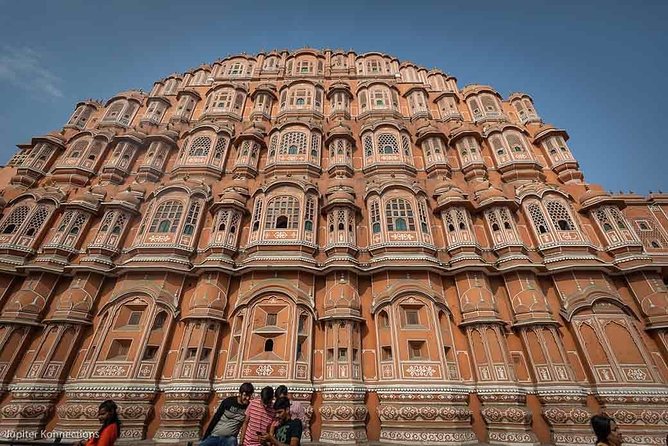
Hawa Mahal (Palace of Wind) is usually the first “wow” in Jaipur. It’s known for the pink facade and towering latticework arches. The palace was planned by Sawai Pratap Singh so the royal household could observe life from behind screens, while citizens could also use the structure. When you’re in front of it, it’s easier to understand Jaipur as an architectural city, not just a backdrop.
Next is City Palace, with separated gardens and courtyards spread across a wide area. Even without going deep into every room, the layout alone helps you see how royal life worked: zones, courtyards, and open-air spaces that keep the palace from feeling like one big hall.
Then comes Jantar Mantar, a UNESCO World Heritage site and home to the largest stone sundial in the world. Built by Rajput king Sawai Jai Singh, it is not only old science display. The plan notes it’s still used as an astronomical observatory, which makes it feel more grounded and less like a museum set.
Finally, Jal Mahal is the surprise calm moment. It’s the water palace sitting in Man Sagar Lake, and it’s a five-storied red sandstone structure. You don’t need to spend forever here. The value is in the view and the contrast, palace by water while the city hums around it.
Abhaneri step wells and the Harshat Mata Temple detour
Abhaneri adds a different kind of Jaipur-area wonder. The highlight is Chand Baori, the step well complex people come to see for its scale and geometry. The plan also mentions the Harshat Mata Temple nearby.
Step wells are one of those India details that feel instantly practical. People used them as cool reservoirs in dry seasons, and the ritual practice included washing hands and feet before visiting temple spaces. If you like being able to picture daily life, this stops you from thinking only in terms of monuments.
The itinerary lists admission as free for Abhaneri. That can help keep ticket costs under control on a day that already has multiple stops. The time block here is also tight but workable, especially if you keep moving with purpose.
Fatehpur Sikri: a planned Mughal capital outside the usual big three
Fatehpur Sikri is a 40 km west of Agra stop that most people don’t realize will feel so dramatic. The plan describes it as the short-lived capital of the Mughal Empire during Emperor Akbar’s reign, a first planned Mughal city, and an amalgamation of Indian, Persian, and Islamic architecture.
Declared UNESCO World Heritage in 1986, it’s the kind of place where you can see how empire, design, and religion get mixed into a single complex. You can wander at your own speed, looking for the planned logic in buildings and courtyards rather than chasing only one signature photo spot.
Admission is noted as free in the plan. That’s a nice win. The time block of about 2 hours also means you can fit it without feeling like you’re constantly rushing.
Agra at the right light: Mehtab Bagh, Itimad-ud-Daulah, Agra Fort, Taj Mahal
Agra is where the trip often becomes emotional. The plan aims for early morning Taj Mahal viewing, when the marble can look soft and pale in mist and morning glow. The colors shift as the light changes, from grey and yellow tones toward pearly cream and bright white. Even if you’ve seen photos before, being there in real time is a different thing.
Before Taj, you visit Mehtab Bagh (Moonlight Garden), described as the best place for viewing Taj Mahal at sunset thanks to alignment across the Yamuna River. The plan notes gardens were constructed by Babur and the view is part of a series of gardens along the east bank. This is a good “reset” stop. You get distance, perspective, and a chance to appreciate the Taj’s placement, not just its facade.
Then you move to Tomb of I’timād-ud-Daulah, often called the Baby Taj. It’s a Mughal mausoleum in Agra and is described as jewel box-like, and in many ways it works as a warm-up for Taj Mahal’s style. It’s also a strong option if you love detailed decorative work, because it’s easier to slow down and focus than at the main complex.
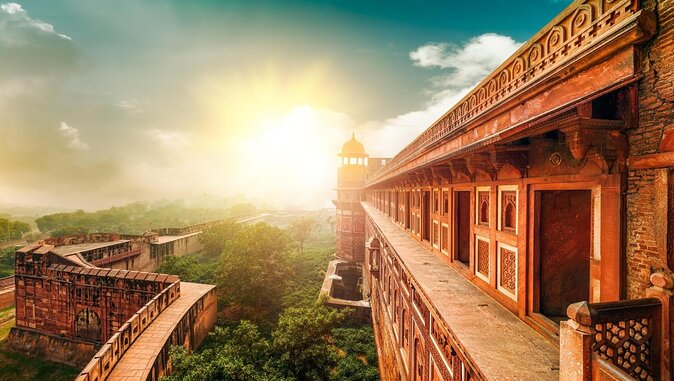
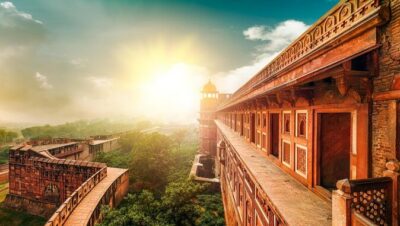
Agra Fort adds power and scale. Made of red sandstone and credited to Akbar’s era, it includes places like Diwan E Aam, Khas Mahal, Pearl Mosque, and Musamman Burj. The plan also references the political drama of Shah Jahan’s imprisonment by Aurangzeb, which gives the fort a sharper context while you’re walking its walls.
And then, the headline: Taj Mahal. It took 22 years to complete and was built by Shah Jahan in the 17th century for his wife, as the story goes. The value of the early morning timing is the calmer atmosphere, plus the way light plays across the marble.
Important date note: Taj Mahal is closed every Friday. If your travel dates land on a Friday, you’ll want to confirm how the operator handles that change.
Delhi’s Mughal icons: Qutub Minar, Red Fort, Humayun’s Tomb, Jama Masjid
After Agra, Delhi can feel like a complete contrast. It’s not smaller, it’s just different energy, and the plan helps by covering major monuments in a sequence.
Start with Qutub Minar in the Qutb complex, a UNESCO World Heritage site. The minaret is 73 meters high and made of bricks, and the plan describes it as the second tallest minaret in the world. It’s tied to Qutb-ud-din Aibak’s early victory period, so it has that “new power” feeling.
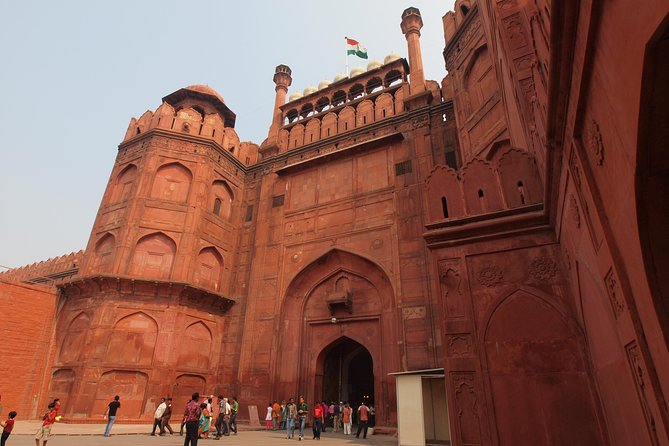
Then you visit Red Fort in Old Delhi, built by Shah Jahan in the mid-17th century and also UNESCO-listed. This fort is a reminder that Mughal rule wasn’t only palaces and tombs. It was infrastructure and administration, and it’s impressive even when you’re just reading the spaces as you move through.
Humayun’s Tomb is a highlight for architecture lovers. The plan says it is the resting tomb of Mughal emperor Humayun, initiated by his first wife in the 16th century. It’s also noted as the first garden tomb in Asia and is considered a heritage site. The design is credited to Persian architects Mirak Mirza Ghiyas and Sayyid Muhammad, with commissioning by Empress Bega Begum. Even if you don’t time every angle, the garden tomb idea translates clearly on site.
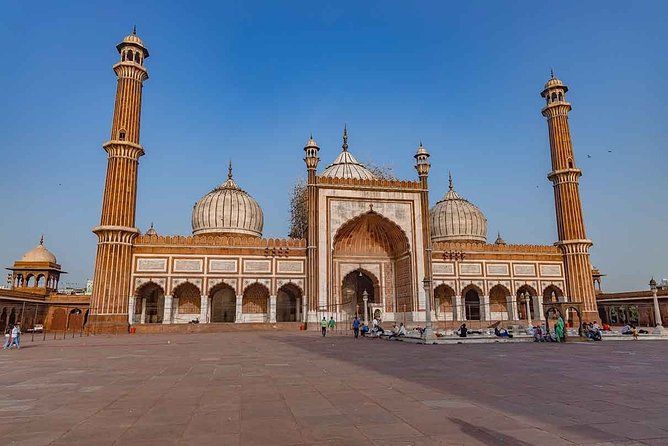
Finally, Jama Masjid rounds out the Mughal picture. The plan says it’s one of the largest mosques in India, constructed by Shah Jahan, and now the second largest mosque on the subcontinent. It’s big in scale and simple in message: place, worship, and community built into one massive setting.
One practical point: Delhi sites can mean longer walks once you’re inside complexes. Comfortable shoes are not optional.
What’s included, what’s not, and how to budget like a pro
Included:
- Hotel, airport, or railway station pickup and drop
- Chauffeur driven A/C private vehicle for sightseeing
- Professional informative tour guide for Delhi, Agra, and Jaipur monuments
- Bottled water
Not included:
- Accommodation
- Personal meals and other activity expenses
- Monument entrance fees and camera fees
- Tips for driver and guide
The tour also notes group discounts and mobile tickets. That helps with logistics, but it won’t change the fact that you should plan for tickets at major stops like City Palace, Hawa Mahal, Jantar Mantar, Agra Fort, Taj Mahal, Qutub Minar, Red Fort, Humayun’s Tomb, and Jama Masjid, since the plan marks many of these as not included.
On the plus side, the plan lists free admission for Abhaneri and Fatehpur Sikri. That’s helpful.
My advice: before you go, make a simple budget line called “tickets and photos.” If you’re traveling with family or a group, this tour can be a good deal when everyone splits the private-vehicle cost. If you’re traveling solo, private guiding can still be worth it, but you’ll feel ticket and hotel costs more.
Tips to make the days easier: dress, walking, and Taj Mahal timing
1) Dress for temples even if the rest of the day is casual. The plan says smart casual is fine, and short shorts or sleeveless tops are not recommended in temple areas. If you want to keep packing simple, bring one light layer you can pull over your shoulders if needed.
2) Wear comfortable shoes. The tour notes moderate walking. Complex entrances, stone steps, and long courtyards add up faster than you think.
3) Plan around the Friday Taj Mahal closure. The tour explicitly says Taj Mahal closes every Friday. If you want Taj Mahal as a top priority, pick dates carefully.
4) Use the guide for context, not just directions. With sites like Jantar Mantar still used for astronomical observation, or Humayun’s Tomb with named Persian architects, good explanations make the difference between seeing and understanding.
Who should book this private Golden Triangle tour
You should book if you want:
- A private setup with an A/C chauffeur car and pickup included
- Guides in each city, so you get real explanations rather than only photo stops
- A structured loop that hits Jaipur, Agra, and Delhi in one trip window
This fits especially well for first-time India visitors, travelers who dislike the stress of booking separate transport daily, and people who want to move efficiently while still spending time at key monuments like Taj Mahal.
It may be less ideal if you love wandering completely on your own schedule, or if you’re already set on hiring your own driver and guide and just need ticket help.
Should you book it?
Yes, if you want a guided Golden Triangle with smooth city-to-city movement and you’re willing to budget for entrance fees and accommodation. The strongest reasons to choose it are the private vehicle, the pickup and drop convenience, and the pattern of care and flexibility credited to drivers and guides like Zaheer, Rakesh, Nadeem, Lalan, Jaheer Khan, Shakir bhai, and guides such as Nikhil and Manu.
Book it with confidence for the big sights, but do your homework on dates for Taj Mahal (Friday closure) and plan extra money for tickets where they are not included. If you do that, you’ll get a trip that feels organized, not rushed, and full of the kind of details that make these cities more than just a postcard checklist.
FAQ
What is included in the tour price?
The tour includes hotel, airport, or railway station pickup and drop, a chauffeur driven A/C private vehicle for sightseeing, professional informative tour guides for Delhi, Agra, and Jaipur monuments, and bottled water.
Are monument entrance fees included?
No. Monument entrance fees and camera fees are not included. The plan notes free admission for Abhaneri and Fatehpur Sikri, while many other stops list admission not included.
Do you get pickup if you arrive at the airport or train station?
Yes. Pickup is included from your hotel, the airport, or the railway station.
Is Taj Mahal closed on certain days?
Yes. Taj Mahal is closed every Friday.
Is the walking level manageable?
The tour involves a moderate amount of walking, and the recommendation is to wear comfortable shoes.
How does cancellation work?
Free cancellation is offered if you cancel up to 24 hours in advance for a full refund. If you cancel less than 24 hours before the experience starts, the amount paid is not refunded.
Latest reviews in from Jaipur
- Private Rajasthan Heritage Triangle Tour – Jaipur Jodhpur Udaipur★ 5.0 · 16 reviews
- Jaipur to Agra Day Tour Including Taj Mahal and Fatehpur Sikri★ 5.0 · 16 reviews
- Jaipur to Jhalana Leopard reserve Private Day Trip All Inclusive★ 5.0 · 16 reviews
- Day Trip to The Taj Mahal and Agra from Jaipur★ 4.5 · 16 reviews
- Yoga in Jaipur with Amit (Yogi on Travel)★ 5.0 · 17 reviews
- Namaste Bollywood | Dance Like a Bollywood Star★ 5.0 · 17 reviews
- Kitchen is Yours Cooking class in Jaipur with Pickup & Drop★ 5.0 · 17 reviews
- Jaipur Private Sightseeing Tour with Car and Guide★ 5.0 · 17 reviews
Golden Triangle Tours, compared.
3-Days Private Golden Triangle Tour: Delhi, Agra & Jaipur by Car
Read our review →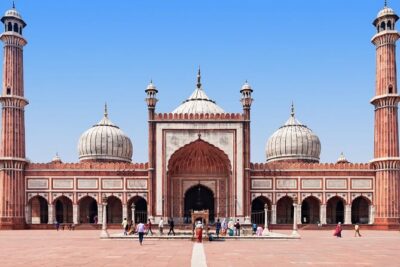
3-Day Delhi, Agra and Jaipur Private Tour – India Golden Triangle
Read our review →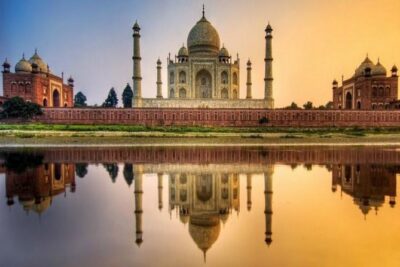
Four-Day Private Luxury Golden Triangle Tour to Agra and Jaipur From New Delhi
Read our review →
5 Nights 6 Days Private Golden Triangle Tour – Delhi Agra Jaipur
Read our review →

Private Car and Drive for Golden Triangle (4N/5D)
Read our review →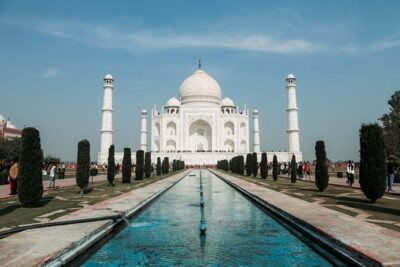
Private Golden Triangle Tour Delhi Agra Jaipur ( Top Rated )
Read our review →
3-Day Private Luxury Golden Triangle Tour to Agra and Jaipur From New Delhi
Read our review →Browse the lists this tour appears in