
Reviewed · MUMBAI TOURS
Private Tour in Mumbai Slum with Sightseeing
This is interesting because you see Mumbai in two modes on the same day: everyday life in Dharavi and Mumbai’s best-known monuments, from the Gateway of India to Chhatrapati Shivaji Terminus. The route is designed to show how the city works, not just what it looks like on a postcard.
I especially like two things. First, the Dharavi part is guided by people who can explain daily routines and small industries in plain terms, with guides such as Abhi, Sajid, Bala, and Suraj getting repeated praise for how they talk and pace the walk. Second, I like that you get a private A/C vehicle with pickup and a full set of major stops after Dharavi, so the day feels efficient instead of chaotic.
One thing to consider: it is an 8-hour schedule with walking and multiple stops, so it can feel packed. Also, some guides build in time at markets or shops, which can be great if you like browsing, but you should tell your guide up front if you want fewer store stops and more landmark time.
Key highlights worth planning around
- Dharavi Slum walk with real-life context for 3 hours, including neighborhoods and the way work and community ties together
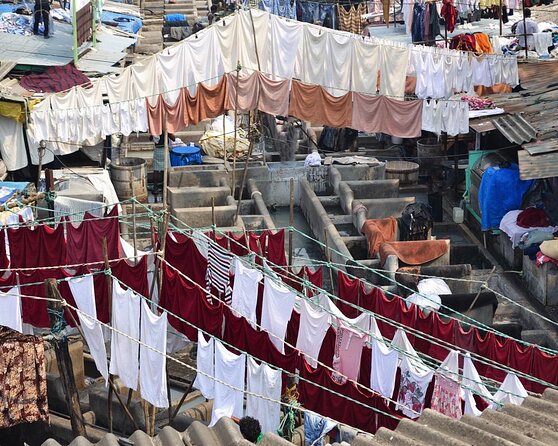
- Dhobi Ghat outdoor laundromat for about 1 hour, with color-coded wash areas and a long-running family business feel
- A clean contrast route that shifts from Dharavi to high-profile Mumbai sights like Antilia
- Gandhi and transit landmarks in one sweep, including Mani Bhavan and Chhatrapati Shivaji Terminus
- Time at viewpoints and iconic waterfront areas, plus Kamala Nehru Park for city views
- Private, air-conditioned transport with water included, plus mobile tickets and group discounts
Why this Mumbai route feels different from the usual sightseeing
Most Mumbai days are either monuments-only or neighborhoods-only. This one tries to do both, and the pairing makes sense. After spending time in Dharavi and Dhobi Ghat, Mumbai’s grand public spaces and historic buildings start to read differently.
You’re also not just dropped at famous sites. The day is guided with time built in for explanation, including the meanings behind places like Banganga and the philosophy angle on the Jain Temple. That helps you connect the dots instead of just snapping photos and moving on.
And yes, you’ll still see the big checklist items, but you’ll see them with context first. That order matters.
Line these Mumbai options up side by side
- Dharavi slum tour in Mumbai by Female tour guides of the slum
★ 5.0 · 1,976 reviews - Mumbai: Full-Day Sightseeing Tour of Mumbai
★ 4.9 · 1,822 reviews - Private Mumbai Sightseeing Tour (Traveller’s Choice Award Winner)
★ 5.0 · 1,565 reviews
Private A/C pickup, timing, and the value of $61.37
At about $61.37 per person for an 8-hour private tour, the value comes from what is actually included. You get an air-conditioned vehicle, pickup, and a water bottle, and you also get tickets covered for the Dharavi and Dhobi Ghat stops.
Many other stops on the day are free, so you’re not constantly paying small entrance fees as you bounce around the city. That makes budgeting easier, especially in Mumbai where prices and ticket rules can vary by site.
The tour is private, meaning only your group rides along. That matters because it keeps the day more flexible. Guides can slow down for questions, and you can ask for pacing changes without worrying about holding up a larger group.
Two practical notes for your planning:
- It’s weather sensitive. If conditions are bad, the experience may be rescheduled or refunded.
- You’ll want moderate physical fitness, because Dharavi involves walking on uneven local terrain.
Dharavi Slum for 3 hours: learning without turning it into a circus
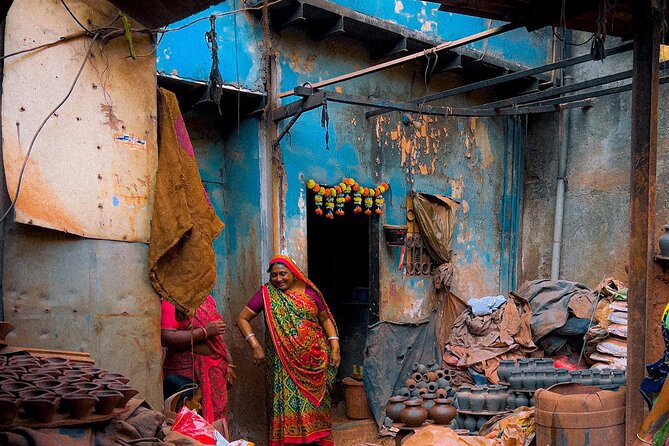
Dharavi is the largest slum in India, and this portion of the day is built for an educational, human-scale visit. You’ll move through different neighborhoods, hear about everyday life, and talk through local social issues with your guide.
What makes this section highly praised is not just where you go, but how you’re guided. People often mention guides like Abhi, Sajid, Bala, and Suraj for their respectful tone and clear English, and for explaining local industries and daily routines in a way that feels grounded.
You should expect to see small-scale work and community life rather than a “sightseeing set.” One guide-style highlight that pops up again and again is the focus on how people organize their days, how families support each other, and how learning and work show up side-by-side, including references to school life and industries such as leather making.
A realistic drawback: it can be emotional and intense
This is not a casual stroll. Even when the guide is kind and careful, Dharavi is hard to process. If you’re the type who gets overwhelmed by poverty imagery, you may want to prepare yourself emotionally before the start time.
The best way to make it easier is simple: go slowly, keep your questions respectful, and avoid treating the visit like a photo shoot. A good guide will steer you away from anything exploitative, and you’ll get more meaning from conversation than from snapshots.
A different shape of Mumbai day:
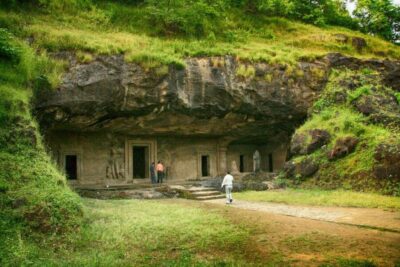
- Elephanta Caves & Island Guided Private Tour
★ 5.0 · 1,327 reviews - Group Guided Walking Tour in Fort and Colaba
★ 5.0 · 1,073 reviews - Mumbai: Elephanta Caves Half-Day Guided Tour with Expert
★ 4.8 · 1,032 reviews - Highlights of Mumbai Sightseeing Tour: TRAVELLERS CHOICE AWARDED
★ 5.0 · 915 reviews
Dhobi Ghat for 1 hour: the world’s outdoor laundry system
Dhobi Ghat is one of the world’s largest outdoor laundry facilities, and it works like a real-time production line. You’ll see wash areas passed down through generations, described as color-coded wash pens, with a family business feel.
This stop is also popular because it feels cinematic without trying too hard. The place has a long association with Bollywood film shoots, and you can see why: it’s visually striking, and there’s constant movement and work happening all around you.
Expect your guide to explain how the system operates, including why the wash pens are organized the way they are and what the everyday rhythm looks like for workers. In an area like this, a guide’s role is key. Otherwise it’s easy to just stare at the scene and miss how the process fits together.
Antilia, Banganga, and the Jain Temple: three stops that explain Mumbai’s contrasts
After Dharavi and Dhobi Ghat, the day pivots toward Mumbai’s sharper contrast. You’ll pause at Antilia, described as a modern architectural marvel and one of the world’s most expensive private residences.
This stop is short, about 30 minutes, so it’s not meant to feel like a deep architectural lecture. It’s more like a reality check. Coming from Dharavi, it’s hard to ignore the gap, and your guide’s commentary helps you understand the symbolism behind the stop.
Then you head to Banganga. The legend says Lord Rama stopped here, shooting an arrow into the ground and creating a tank. The name is explained as coming from Ban (arrow) and Ganga (river). Even if you’re not the myth-history type, I like this kind of stop because it teaches you how places earn names in India. It’s not just geography, it’s story.
Next is the Jain Temple stop, also about 30 minutes. Jainism is a minority religion, but it has a strong impact on Indian culture and philosophy, with a focus on non-violence and spiritual liberation. One of the most praised moments from the day is how a guide can explain Jain beliefs in clear, practical language, so you understand what you’re looking at instead of just passing through.
Watch for one common scheduling issue
These are short, timed stops. If your group has a strong preference for one theme, like religion versus history versus pure architecture, tell your guide early. Some guides can adapt, and a small change in priority can make the day feel more satisfying.
Mani Bhavan Gandhi Museum and the market-and-station stretch
Mani Bhavan Gandhi Museum is a 30-minute stop that connects you to a quieter, more reflective side of the city. You’ll learn about Mahatma Gandhi’s legacy and his efforts toward independence through non-violence and civil disobedience.
This is one of those stops where the guide helps a lot. Even with a museum visit, context is what makes the time worth it. The best guides explain what happened there and why it mattered, in terms that connect to modern life rather than staying locked in textbooks.
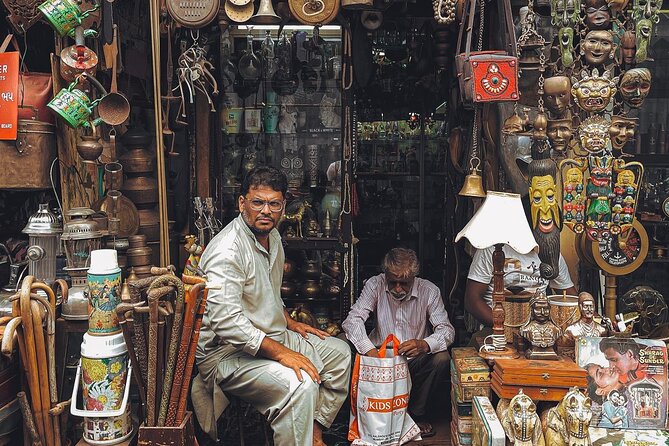
Then you’ll head to Crawford Market, another 30-minute stop. Crawford Market is not only for shopping, it’s also a historical landmark tied to Mumbai’s commercial and cultural mix. If you like browsing, it can be a fun stop.
If you do not like browsing, you still get something from it. Markets teach you what a city sells and how people move through daily life, and that fits the overall style of this tour.
The station stops: where architecture becomes more than photos
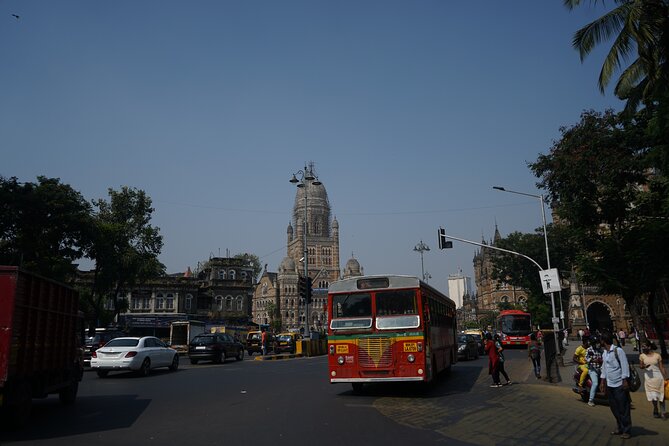
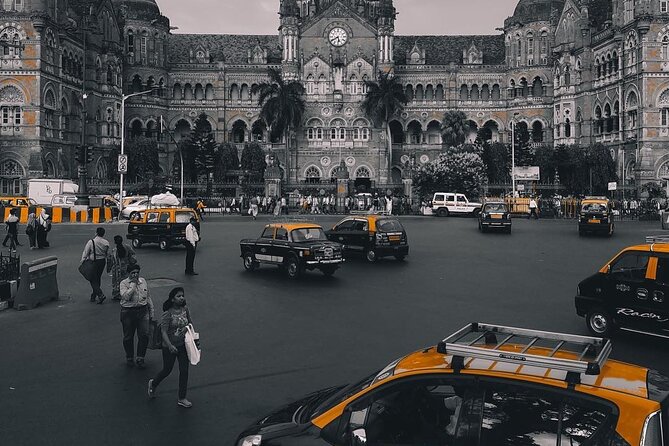
Next up is Chhatrapati Shivaji Terminus. It’s a working transportation hub, but it is also an architectural gem with colonial-era roots. You spend about 30 minutes, enough time for your guide to explain what makes the building special without turning it into a long lecture.
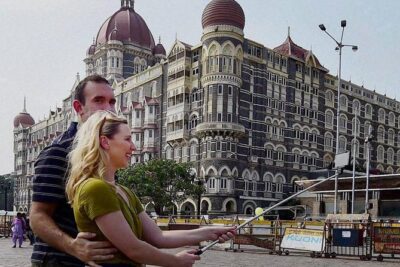
After that, you’ll visit the Gateway of India for about 30 minutes. It’s described as a symbol of Mumbai’s history and independence, and it’s the kind of place where you can feel the city’s energy even if you’re only standing there for a short time.
Kamala Nehru Park and the Marine Drive viewpoint payoff
The last major sightseeing portion includes Kamala Nehru Park, about 30 minutes. The park is famous for its shoe-like layout, said to represent Mother Earth. From the top of the shoe, you can get panoramic city views, including Marine Drive.
I like this stop because it gives your day a visual reset. After learning about life and systems in Dharavi and Dhobi Ghat, then seeing palaces and stations, you end with a viewpoint that helps you understand the city as a whole.
You might not remember every detail your guide says by this point, and that is normal. The view helps the mental map click into place, and you finish the day with something you can point to later when you tell friends what Mumbai feels like.
How to get the most from your guide and keep the day comfortable
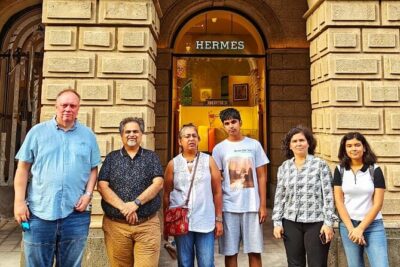
Your experience lives or dies on the guide. In this case, the names that come up with strong praise include Abhi, Sajid, Bala, Suraj, and others, and the common theme is clear communication and respectful framing.
A few practical tips to help you get more:
- Ask your guide before you start if you want fewer shop stops and more direct landmark time. One recurring theme in the day is that some time can be spent in market areas, so your preference matters.
- Bring comfortable shoes. Dharavi walking and outdoor laundromat viewing are not made for stiff, fashion-only footwear.
- Expect a full schedule. You’ll be doing short stops back-to-back, so don’t plan a heavy dinner right after. Give yourself a breather.
Also, there’s a built-in value in how the tour is structured. Dharavi and Dhobi Ghat are paid attention to in longer blocks, with explanations and time to understand the systems. The landmark tour comes after, when your brain is already in “city context” mode.
One more point I like: the tour description says a large portion of profits is reinvested in Dharavi Travel. That doesn’t erase the complexity of visiting a low-income area, but it does mean your money is not only going toward a vehicle and tickets. It’s connected to local efforts.
Who should book this Mumbai private tour, and who might not love it
This is a strong fit if you want:
- A private day with pickup and A/C, not a crowded bus day
- A meaningful neighborhood component paired with major Mumbai landmarks
- Guides who explain what you see, including religion and story-based place meanings
It may not be the best fit if you:
- Hate any shopping or market time and want pure monuments only
- Get overwhelmed by heavy real-world poverty content
- Need a more relaxed, half-day pace
If you are the type who enjoys big contrasts, you’ll like the structure. The day moves from everyday survival and work to famous architecture and viewpoints, and the change keeps the schedule from feeling monotonous.
Should you book this private Mumbai slum and sightseeing tour?
I’d book it if you want one day that teaches you how Mumbai works on the ground and in the headlines. The combination of Dharavi (3 hours) and Dhobi Ghat (1 hour) plus a landmark sweep like Mani Bhavan, Chhatrapati Shivaji Terminus, and the Gateway of India is a practical way to see the city’s extremes without doing three separate tours.
I’d hesitate only if you strongly prefer long, unbroken landmark time with zero market browsing, or if the emotional weight of Dharavi would be too much for you today. If that’s you, message your guide preference early and plan your expectations.
If you’re flexible, this tour has one big advantage: it doesn’t just show Mumbai, it explains it.
Latest reviews in from Mumbai
- Mumbai Spice Markets and Bazaars Tour with Guide and Transport★ 5.0 · 42 reviews
- Mumbai Dharavi Slum, Dhobi Ghat & Dabbawala Lunchbox Tour★ 5.0 · 43 reviews
- Private Dharavi Slum Tour with Mumbai Sightseeing★ 5.0 · 43 reviews
- Private Guided Tour in Kanheri Cave with Transfers★ 5.0 · 44 reviews
- Private Guided Walking Tour in Dharavi Slums★ 5.0 · 44 reviews
- Mumbai Private Cultural Tour with Lunch and Transport★ 5.0 · 44 reviews
- Unveiling Bollywood: Grand Tour of Iconic Real Sets & Their Story★ 4.5 · 44 reviews
- Bollywood Tour with Original founder★ 4.5 · 44 reviews
Mumbai Tours, compared.

Dharavi slum tour in Mumbai by Female tour guides of the slum
Read our review →
Private Mumbai Sightseeing Tour (Traveller’s Choice Award Winner)
Read our review →
Elephanta Caves Half-Day Guided Tour with Expert
Read our review →
Highlights of Mumbai Sightseeing Tour: TRAVELLERS CHOICE AWARDED
Read our review →
Browse the lists this tour appears in