
Reviewed · MUMBAI TOURS
Private Mumbai 25 sights in one tour as recommended by Gigi Hadid
This kind of Mumbai tour is interesting because it tries to do something rare in India: pack serious landmarks into a short window without making you feel rushed. You get a private vehicle, hotel pickup and drop-off, and a guide who can explain what you are actually looking at, not just point and move on. The route mixes famous colonial-era sights with street-level city life, so you see the public monuments and the working rhythms of Mumbai.
What I like most is the tight focus on getting your bearings fast, with stops that tell a story across architecture, power, and everyday culture. Two highlights for me are the Chhatrapati Shivaji Maharaj and Victoria Terminus (CST) combo for big, legible history, and the way the tour includes real city scenes like Dhobi Ghat and the lunch-delivery world around Churchgate. One consideration: it is weather dependent, and you will walk a bit between viewpoints and quick photo stops, so plan for comfortable shoes and a calm pace.
Key highlights at a glance
- 25 top sights in 3 to 4 hours, built for first-timers and tight schedules
- Hotel pickup and drop-off with comfortable private transport
- Pro guide storytelling, including clear, on-the-ground explanations that come up in feedback for guides like Krupesh
- Real Mumbai work life, with stops tied to lunch delivery and open-air laundry
- Gandhi Museum included as a ticketed highlight, with other major stops free to enter
A half-day plan that actually works: 25 sights without chaos
Mumbai is enormous, and most first-timer itineraries fall into two traps: too much hopping on buses, or not enough time in the places that matter. This tour hits a sweet spot. It runs about 3 to 4 hours, starting at 9:30 am, and it is built around a single route that you move through in a private car.
Even though it is described as hop-on hop-off style, think of it as structured, guide-led sightseeing. Your guide manages short walks, photo pauses, and quick transitions by vehicle, so you do not lose time trying to figure out the next stop on your own. That matters in Mumbai traffic, where “just one more stop” can eat half your day.
Also, you are not doing this in a huge group. It is a private tour/activity, meaning only your group participates. That gives you two practical benefits. First, you can ask questions without waiting. Second, you can adjust your pace a little when a spot has a line, a crowd, or just a good view.
Line these Mumbai options up side by side
- Dharavi slum tour in Mumbai by Female tour guides of the slum
★ 5.0 · 1,976 reviews - Mumbai: Full-Day Sightseeing Tour of Mumbai
★ 4.9 · 1,822 reviews - Private Mumbai Sightseeing Tour (Traveller’s Choice Award Winner)
★ 5.0 · 1,565 reviews
Price and value: what you are really paying for
At $83.25 per person, the price is not a bargain in the “rock bottom” sense, but it is also not priced like luxury. The value comes from the mix of costs they handle for you:
- Hotel pickup and drop-off are included
- Professional guide is included
- Transport by private vehicle is included
- All fees and taxes are included
Then there is the included ticket for Mani Bhavan Gandhi Museum, which helps justify the ticketed stop inside the tour window.
One practical detail to keep in mind: pickup from suburban Mumbai hotels may carry an additional transport cost. If you are staying in the city center, you are likely to feel the value more strongly, because the base price already covers the most time-consuming part of Mumbai sightseeing.
Your starting lineup: Gateway of India and the Shivaji Statue

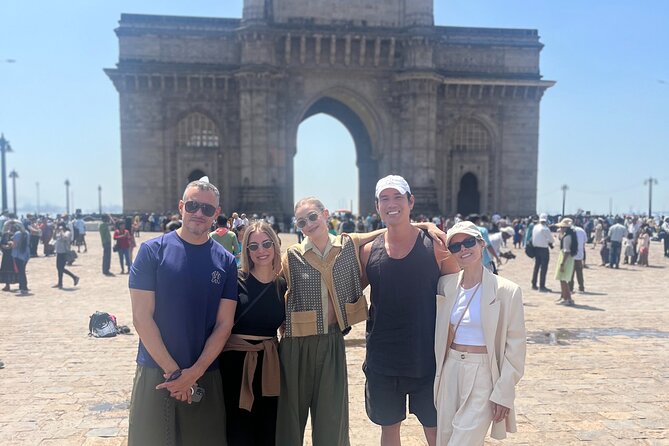
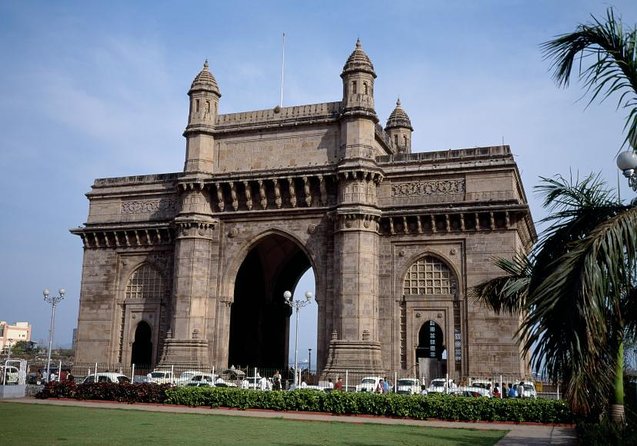
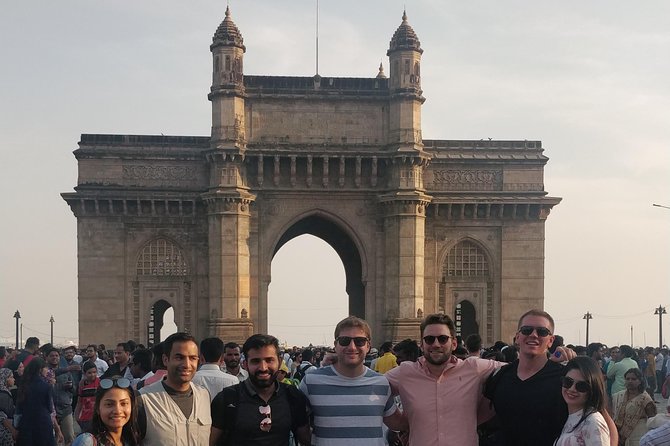
The tour begins at the Gateway of India, a must-do landmark because it anchors so much of Mumbai’s modern identity. It is known for the big arch view and the feeling that you are at the edge of the old port city. Even when you only spend about 5 minutes, it is the right opening stop because it sets context for everything that comes next.
Next is the Statue of Chhatrapati Shivaji Maharaj. This stop is useful because it shifts the story from empire and arrivals to local leadership and resistance. It is also a quick stop, so you are not stuck standing around. You get a solid visual reference and then move on.
As a pattern, the tour keeps several stops short, usually around 5 to 15 minutes. That sounds fast, but it helps you see more of Mumbai’s “headline list” without burning daylight. You can always slow down on your own later if one place really grabs you.
Passing celebrity history and old institutions by car
Some of the most interesting “in-between” moments on a route like this happen from the window. You drive past a landmark hotel that has hosted figures like Barack Obama and the Beatles. You also get a look at Royal Mumbai Yacht Club, including a neat heritage detail tied to its origins, with a mention of builders John Adams and Charles Stevens.
You might not spend time inside these places, but the purpose here is orientation and quick cultural cues. Mumbai has layers, and vehicle passes can still teach you a lot. You start to notice where wealth sits, what streets feel formal, and which areas keep showing up in your later exploring.
If you like architecture and city geography, this “drive-by context” is a real time-saver.
A different shape of Mumbai day:
- Elephanta Caves & Island Guided Private Tour
★ 5.0 · 1,327 reviews - Group Guided Walking Tour in Fort and Colaba
★ 5.0 · 1,073 reviews - Mumbai: Elephanta Caves Half-Day Guided Tour with Expert
★ 4.8 · 1,032 reviews - Highlights of Mumbai Sightseeing Tour: TRAVELLERS CHOICE AWARDED
★ 5.0 · 915 reviews
Colonial civic power: police HQ, Wellington Fountain, and the High Court
After the early monument stops, you shift into the civic heart. The Maharashtra Police Headquarters area is tied to earlier uses (including a reference to Mendham’s Point) and even includes a detail that a writer connected to the British era is associated with work here. You will not read an entire textbook in 10 minutes, but you will leave with a clearer sense that Mumbai’s institutions have older roots than they first appear to.
Then comes Wellington Fountain, connected to Duke of Wellington and the Waterloo battle. This is another short stop that works well if you are the type of person who enjoys small symbols. Even a fountain can be political: who gets commemorated, whose names appear in public space, and how colonial references stay visible long after the era changes.
Later, you reach the Bombay High Court, Principal Bench, described as having a German castle style. That description matters because it explains why the building can feel strange compared to typical Indian civic architecture. The tour also notes a key legal historical point tied to the jury system. Again, you are not spending hours, but you are getting the thread that connects the look of the building to the role it played.
Art and learning on foot: Kala Ghoda, David Sassoon Library, and the University arc
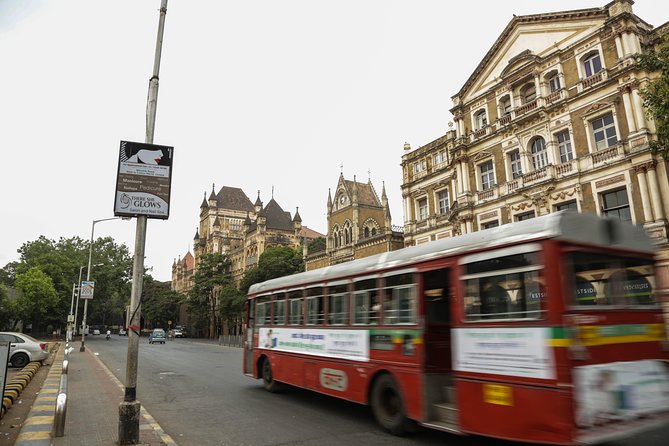
One of the most rewarding parts of this tour is the arts-and-education cluster. The route takes you to Kala Ghoda Art Precinct, where you can connect Jewish and Sassoon-related stories with the broader art district feel. You also get a specific architecture mention: the Watson Hotel is noted as the first iron-cast building in the city and linked to Mark Twain. Even if you do not memorize the dates, you will remember the idea that “old Mumbai” was not just stone and masonry, it was also industrial materials and new building tech.
Then you go to David Sassoon Library and Reading Room, where the stop is described as an erstwhile mechanical institute now converted into a library overlooking Kalaghoda. This is the kind of place where 10 minutes can actually feel meaningful because you look at a building and realize it changed roles. That role-change theme repeats in Mumbai over and over.
The tour also includes the University of Mumbai Library and Rajabai Clock Tower, often described as the Big Ben of Mumbai. Rajabai’s scheduled chimes add a fun hook: you might not catch them exactly on your timing, but you can see why it is such a known landmark. Nearby, the University and its arches give you a visual break from pure monuments and shift the tone toward learning and public space.
A practical note: these stops work best if you enjoy looking up. Mumbai’s details show themselves in arches, facades, and street-level texture. If you only stare forward at the road, you will miss some of the payoff.
Stations as architecture and workflow: Oval Maidan, Churchgate, and CST
Mumbai rail stations are more than transport. They are landmarks, meeting places, and daily engines. The tour uses that idea by sandwiching station life between other city frames.
You walk through Oval Maidan, a ground where aspiring cricketers practice. It is a simple stop, but it reminds you that this city runs on routines. A big open space like this acts as both a recreation field and a social stage.
Then you reach Churchgate Railway Station, where the tour shifts from architecture to logistics. You get a chance to meet the delivery system known as dabbawalas. The details are vivid: they deliver lunches across the city, with a figure of about 5,00,000 boxes daily, and the service is often described in terms of precision and quality control that has been studied by consultants and business schools. The tour also notes that dabbawalas are shut on weekends, so timing matters.
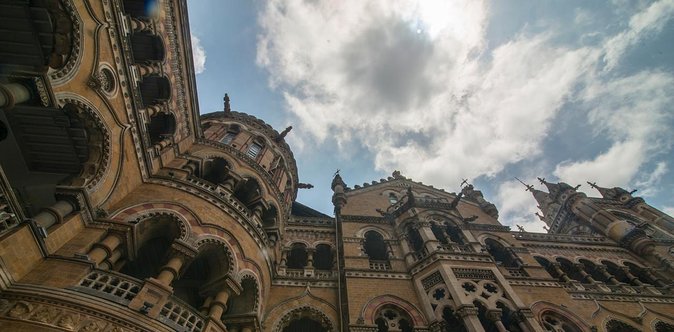
A few steps later you land at Chhatrapati Shivaji Terminus, formerly known as Victoria Terminus (CST). This stop is one of the headline moments for many visitors because the building feels dramatic and engineered, not just functional. The tour also notes foot traffic volume, which helps you understand why this station stays so alive.
If you want one big takeaway from Mumbai rail architecture, make it this: the city did not only build for travel. It built for pride and identity.
Sea air and sea views: Marine Drive
No Mumbai route feels complete without at least one sea-side view, and Marine Drive delivers that quick “ah, this is Mumbai” moment. The stop duration is short, around 10 minutes, which is enough for a viewpoint reset.
Even if you have been looking at monuments all morning, Marine Drive breaks the visual rhythm. It also works well at 9:30 am because lighting is often clearer, and you get a better look at the coastline than in harsh late-afternoon glare.
Bring a quick photo habit here. Marine Drive looks different depending on where you stand and what time you catch it.
Gandhi’s life through Mani Bhavan
Midway through the tour, you step indoors at Mani Bhavan Gandhi Museum, with ticket included and a suggested 20 minutes. This is not just a generic museum stop. It is a focused introduction to Gandhi’s life, presented through collections and archives.
In a route full of architecture, this museum is a useful emotional shift. You stop thinking only about buildings and start thinking about the people who shaped national identity. If you only remember one political figure from Mumbai, this stop helps connect the city to the larger story of India’s independence.
Dhobi Ghat: open-air laundry as living city theater
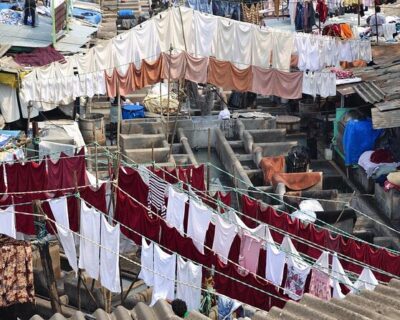
The final big “human” stop is Dhobi Ghat, an open-air laundry where you can see the daily workflow of laundrymen, sometimes called the human washing machines of Mumbai. The tour gives it about 5 minutes, but the visual impact can be instant.
This is where Mumbai stops feeling like a list of famous monuments and starts feeling real. You watch work that does not pose for you. You see how the city uses space. You see movement and routine.
One important consideration: because this is a working area, it is worth being respectful with photos. Keep it quick. Avoid blocking the flow. If you treat it like a living workplace, you will get more out of it.
How the tour feels in practice: pacing, comfort, and guide impact
The standout theme from feedback is that the experience feels organized and friendly. One guide name that comes up clearly in the feedback is Krupesh, described as telling interesting stories and keeping things smooth. You also hear a practical note that the car is comfortable and clean, which is not a minor detail in Mumbai. Comfort means you can stay alert and enjoy short stops instead of counting minutes until you are seated again.
The itinerary order can also change based on traffic, and start and end timing can shift. That is not a flaw; it is reality. A tour that adapts is usually better than one that stubbornly follows a rigid plan.
And yes, the pace is tour-paced. You are moving in and out of viewpoints quickly. If you hate that style, you might not love this format. If you want the “best of” highlights with a guide and zero stress, it is a solid match.
Who should book this tour (and who might skip it)
This is a great fit if you:
- are visiting Mumbai for the first time and want big landmarks plus local life
- only have half a day and want a guided route with minimal planning
- like architecture, civic history, and quick storytelling stops
- want to see dabbawalas and Dhobi Ghat without coordinating the logistics yourself
You might want to skip or pair it differently if you:
- hate walking at all and prefer slower, longer museum time
- want a deep dive into one neighborhood, with long stays and no “next stop” pressure
- come with a tight schedule where a traffic-based timing shift would cause stress
Quick FAQ
FAQ
What does the tour cover?
It is a half-day introductory tour of many of Mumbai’s top attractions, totaling 25 sights, with hotel pickup and drop-off, a professional guide, and transport by private vehicle.
How long is the tour?
The duration is about 3 to 4 hours.
What time does the tour start?
The start time is 9:30 am.
Is the tour private?
Yes. It is a private tour/activity, and only your group will participate.
Are admission tickets included for all stops?
Most stops are listed as free, and Mani Bhavan Gandhi Museum is listed as included. Other admissions are noted as free where specified.
Is hotel pickup included?
Yes, hotel pickup and drop-off are included. There may be additional cost for pickup from suburban Mumbai hotels.
What about language support?
The tour is described as including English, and there is an additional cost if you want a language guide besides English.
Is the tour suitable for kids?
Children below 10 years can do the tour for free of charge.
What if weather is bad?
The experience requires good weather. If canceled due to poor weather, you are offered a different date or a full refund.
Should you book this tour?
If your goal is to get oriented in Mumbai fast and cover the big architectural and cultural markers in a single morning, this is an easy yes. The value comes from the private vehicle, pickup and drop-off, and the fact that you also see working-city scenes like lunch delivery and open-air laundry, not just monuments.
If you have more time and want slow, deep neighborhood wandering, consider using this as your kickoff tour, then return later to the places that grabbed you most. Either way, this is the kind of itinerary that saves you energy, gives you clear context, and helps you plan the rest of your days in Mumbai.
Latest reviews in from Mumbai
- Mumbai Spice Markets and Bazaars Tour with Guide and Transport★ 5.0 · 42 reviews
- Mumbai Dharavi Slum, Dhobi Ghat & Dabbawala Lunchbox Tour★ 5.0 · 43 reviews
- Private Dharavi Slum Tour with Mumbai Sightseeing★ 5.0 · 43 reviews
- Private Guided Tour in Kanheri Cave with Transfers★ 5.0 · 44 reviews
- Private Guided Walking Tour in Dharavi Slums★ 5.0 · 44 reviews
- Mumbai Private Cultural Tour with Lunch and Transport★ 5.0 · 44 reviews
- Unveiling Bollywood: Grand Tour of Iconic Real Sets & Their Story★ 4.5 · 44 reviews
- Bollywood Tour with Original founder★ 4.5 · 44 reviews
Mumbai Tours, compared.
Dharavi slum tour in Mumbai by Female tour guides of the slum
Read our review →
Private Mumbai Sightseeing Tour (Traveller’s Choice Award Winner)
Read our review →
Elephanta Caves Half-Day Guided Tour with Expert
Read our review →
Highlights of Mumbai Sightseeing Tour: TRAVELLERS CHOICE AWARDED
Read our review →
Browse the lists this tour appears in