
Reviewed · 4-DAY EXPERIENCES
Private Golden Triangle Tour 3 Night/4 Days – All Inclusive
The Golden Triangle circuit is interesting because it hits three different cultural eras in a tight loop: British, Mughal, and Rajputana. You’re not just seeing famous monuments, you’re moving through the way India grew, ruled, and re-styled its power across centuries.
Two things I like a lot are the private car door-to-door comfort and the way the sightseeing is packaged so you spend your time at the places, not in planning mode. One thing to consider is that this is a “greatest hits” style route, so the days can feel full, and you’ll want good energy (plus comfortable shoes).
A key bonus: in the trips I’ve seen praised most, guides like Vikram in Agra and Raj in Jaipur get called out for giving the right amount of information without turning it into a history lecture, and for helping with lots of photos.
Key things that make this tour worth your attention
- Private group only, so the pace and photo stops can match your style
- Air-conditioned car plus WiFi and bottled water, so the long drives feel less painful
- Major sights across Delhi, Agra, and Jaipur, covering the Mughal and Rajput eras you came for
- Admissions are handled for most stops, with a couple listed as free
- Guides named Vikram (Agra) and Raj (Jaipur) are singled out for clear, friendly explanations and photo help
Golden Triangle in a tight 4 days: why this route works
If you’re short on time, the Golden Triangle is the fastest way to get the “India highlights” feel without hopping between trains and taxis all day. In about 4 days, you link New Delhi, Agra, and Jaipur into one loop that makes geographic sense and keeps travel stress manageable.
What makes it more than a checklist is the sequence of themes. Delhi brings you Mughal-era power and massive religious architecture, Agra is the Mughal showpiece and surrounding fortifications, and Jaipur shifts the mood toward Rajput design and court culture. That triangle shape also means you’re not crisscrossing the whole country, so your days stay focused.
The pacing is still intense. You’ll see big sights back-to-back, and you may do more walking than you expect, especially at places like stepwells with lots of stairs. If you’re the type who likes lingering for hours, consider building in quiet time on your side when you can.
More Golden Triangle circuits:
- 3-Days Private Golden Triangle Tour: Delhi, Agra & Jaipur by Car
★ 5.0 · 1,107 reviews - 3-Days Private Golden Triangle Tour: Delhi, Agra & Jaipur by Car
★ 5.0 · 1,098 reviews - 3-Day Delhi, Agra and Jaipur Private Tour – India Golden Triangle
★ 5.0 · 812 reviews
Private car comfort, WiFi, and bottled water: what the “all inclusive” label really means
This tour isn’t “all inclusive” in the hotel-and-food package sense, because accommodation is not included. But it is strong on what usually causes friction: transport comfort, basic onboard needs, and the cost of many key site entries.
Here’s what you can count on:
- A safe, comfortable air-conditioned car for the drives and city visits
- WiFi on board
- Bottled mineral water available during rides
- All fees and taxes included
- Pickup offered, plus the tour ends with a drop-off back in Delhi
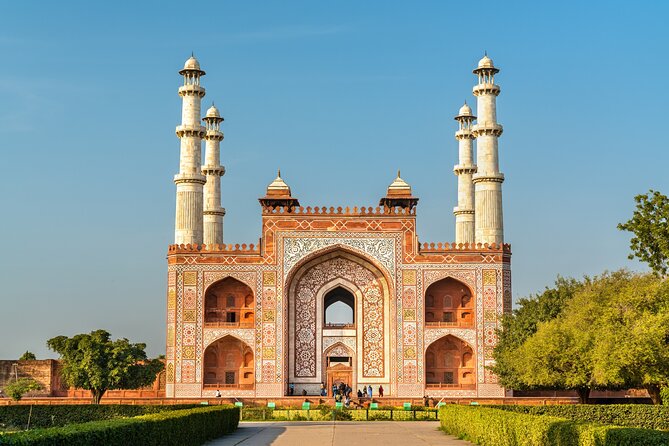
On top of that, the schedule shows many stops with admission ticket included. Some entries are explicitly listed as free (like Fatehpur Sikri), so you’re not paying extra for every single place the way you might on a loose DIY plan.
The practical upside for you is that you’ll spend less time negotiating, figuring out ticketing, and coordinating transport across cities. The downside is also practical: you’re trusting the provided plan more than you would on your own. If you fall in love with one stop and want to stay longer, you’ll want to ask your driver or guide where they can flex.
Day 1 in Delhi: Jama Masjid, Chandni Chowk rickshaw time, and Akshardham
Delhi’s first-day goal is to give you both scale and atmosphere fast, and it does it in three very different settings.
Jama Masjid: Mughal power in stone and height
You start at Jama Masjid, built by Mughal Emperor Shah Jahan between 1650 and 1656. It’s described as the largest mosque in India and it sits on a hill near the Red Fort area, so the setting alone helps you understand why it was designed to dominate the skyline.
This is a good anchor stop because it frames Delhi as an imperial capital, not just a modern city. Plan for respectful quiet inside the mosque area, and expect that it’s visually massive. If you’re the photo type, bring patience for angles, light changes, and crowd movement.
Line these New Delhi options up side by side
- Old & New Delhi City Tour – Half or Full Day Options Available
★ 5.0 · 4,811 reviews - Half Day Private Delhi City Tour
★ 5.0 · 4,474 reviews - Same Day Taj Mahal, Agra Fort & Baby Taj Tour from Delhi by Car
★ 5.0 · 4,304 reviews - Taj Mahal Day Tour from Delhi by Superfast Train – TOP RATED TOUR
★ 5.0 · 4,166 reviews
Chandni Chowk by rickshaw: how you get the Old Delhi feel
Next comes Chandni Chowk via a ride or walk through Old Delhi, using special rickshaws with a fold-able soft top that can carry two people. The time here is short, about 30 minutes, but that’s usually enough to understand the “lived-in” texture of the lanes.
This part works because it’s not just sightseeing, it’s sensory orientation. You feel how narrow roads and market energy shape movement. For photos, you’ll want to keep your phone secure and be ready for quick turns.
Swaminarayan Akshardham: a spiritual campus outside the old core
Then you head to Swaminarayan Akshardham, a Hindu temple and spiritual-cultural campus near the border with Noida. It’s a different kind of Delhi than Old Delhi, and that contrast is useful. You’re seeing both the deep older Mughal imprint and a modern spiritual landmark.
It also gives you a break from the tight-market vibe. The visit is listed at 50 minutes, so it’s not just a quick drive-by. You can slow down, absorb the atmosphere, and reset before Agra.
Quick reality check: Mehtab Bagh on Day 1?
One more stop appears in the provided flow: Mehtab Bagh (listed at 40 minutes) is a char bagh garden complex north of the Taj Mahal, across the Yamuna River’s side. Even though it sits in Agra context, it’s included in the first-day sequence in your plan as written.
If you’re trying to line up photos of the Taj area from the opposite bank, this is the kind of stop that can matter. If you’re sensitive to long days, just know you’re stacking major sights across cities with driving time, so energy management helps.
Agra on Day 2: Taj Mahal timing, Agra Fort, Fatehpur Sikri, and Chand Baori
Agra is where the tour really turns the volume up. You’ll do a famous monument first, then build context with forts and surrounding Mughal-era sites.
Taj Mahal: the 2-hour stop that actually gives you time to look
The Taj Mahal is scheduled for about 2 hours, and that matters. It’s not just a fast photo sprint. You’ll have time to observe details and shifting light, especially if your guide keeps the group moving at a comfortable rhythm.
It’s described as an ivory-white marble mausoleum on the Yamuna’s right bank, commissioned in 1632 by Shah Jahan for the tomb of his wife. Knowing that timeline helps your brain connect the building to the era that produced it.
A practical tip: treat the first part like orientation. After that, focus on one or two areas you truly want to see, rather than trying to capture everything at once.
Agra Fort: where Mughal and Rajput threads mix
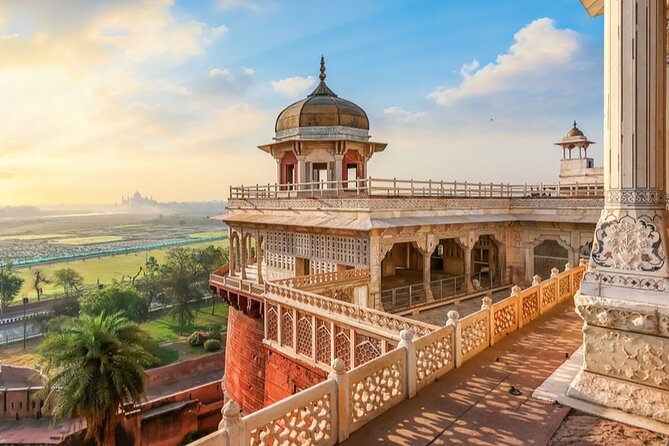
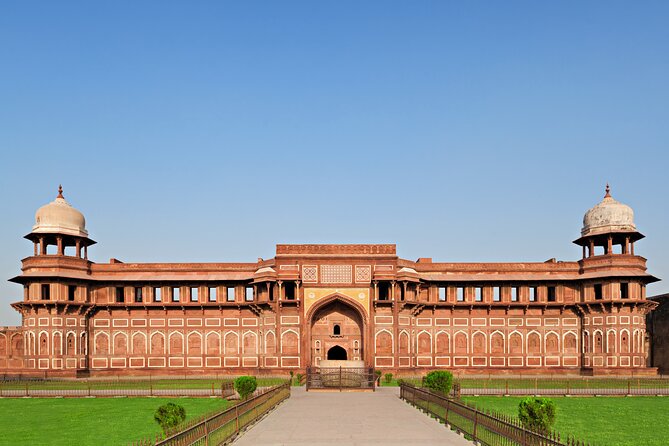
Next is Agra Fort, built 1565 to 1573 for Mughal Emperor Akbar. The description notes it was the main residence of Sikarwar clan Rajputs until the Mughals occupied it and Mughal rulers took over.
That detail helps the fort feel less like a wall and more like a changing power base. It’s a strong follow-up to the Taj, because you’re seeing not just a monument, but the fortified world around it.
The stop is about 40 minutes. It’s enough to feel the scale and see key sections, but it’s not a deep slow-study. If you like forts, you’ll probably want to take extra time here, so ask your guide where you can get your best views without losing the group.
Fatehpur Sikri: a free, compact dose of Mughal city planning
Then you go to Fatehpur Sikri, listed at about 1 hour, and it’s marked as free in the provided information. It’s described as a small city west of Agra, founded in the 16th century by a Mughal emperor, with red sandstone buildings clustered at the center.
The highlight detail given is the Buland Darwaza gate, described as the entrance to Jama Masjid. Even if you only have an hour, those focal points help you build a mental map quickly.
Chand Baori: the stepwell that’s basically a stair workout
Finally, you visit Chand Baori, a massive ornate stepwell reached by 3,500 steps, with about 30 minutes allocated. This is a great stop for structure lovers and anyone who likes architecture that feels engineered for people.
One word of caution: 3,500 steps is not a casual stroll. The stop time suggests you’ll go at a pace that works for the group, so wear grippy shoes, pace yourself, and don’t force it if your legs feel already tired from the day.
Jaipur on Day 3: Amber Palace, Jal Mahal, City Palace, Jantar Mantar, and Hawa Mahal
Jaipur is the day of courtly geometry. You go from grand forts to palaces designed for specific social functions, and then into royal science.
Amber Palace: fort life 11 km from the city
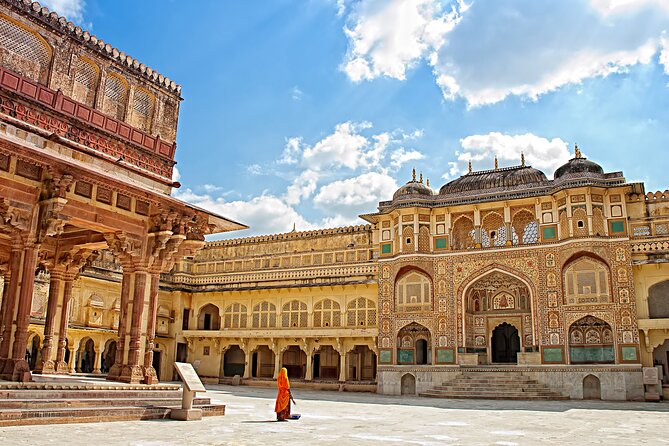
You start with Amber Palace (Amer Fort), located in Amer, about 11 km from Jaipur. The visit is about 2 hours, and that duration helps because Amber is not a single photo spot, it’s an entire fort-palace environment.
The advantage here is that you can see how power looked and lived. The fort layout, vantage points, and decorative style all help you understand why Jaipur’s rulers invested in both defense and display.
If you’re short on stamina, consider telling your guide before you arrive so they can route you through the areas that fit your pace.
Jal Mahal: palace-on-a-lake for a quick mood change
Next is Jal Mahal, the palace in the middle of Man Sagar Lake. It’s described as originally constructed in 1699, with later renovations.
The stop is only 15 minutes, so treat it like a palate cleanser. It’s a chance to get photos and reset your eyes before you move into palace and instrument sites that require more attention.
City Palace: the royal complex with a living timeline
Then you go to City Palace, described as established when Jaipur was established, with Maharaja Sawai Jai Singh II moving his court from Amber to Jaipur in 1727. The visit is about 1 hour.
This is one of those places where context helps. If you understand that the court moved and the city was organized around that power shift, the palace stops feeling like just beautiful buildings and starts feeling like a working political center.
Jantar Mantar: Rajput astronomical instruments, 1734 completed
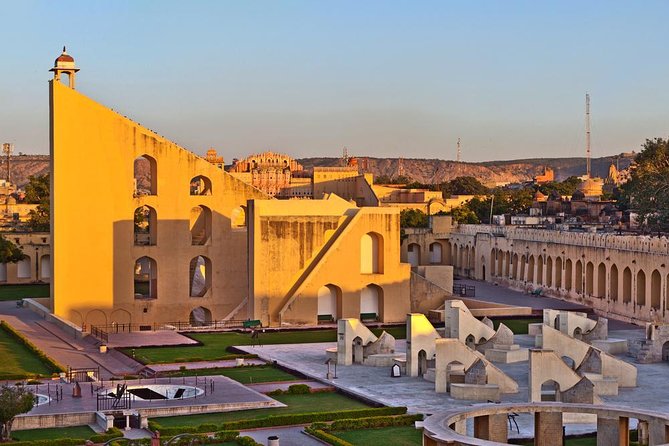
Next is Jantar Mantar, the collection of 19 astronomical instruments built by Sawai Jai Singh II, completed in 1734. This stop is about 1 hour.
This is a smart addition because it shows you that Rajputana didn’t only do forts and palaces. They also built tools to study the sky in their own system.
Hawa Mahal: the “palace of breeze” and Zenana design
Finally, you finish with Hawa Mahal, built from red and pink sandstone and positioned at the edge of City Palace, extending to the Zenana, or women’s chambers. The stop is about 15 minutes, so it’s a photo and visual design moment more than a long museum-style visit.
Even in a short time, you can understand the concept: the façade is designed for viewing, airflow, and presence. If you’re photographing, aim for a spot where you can see both the façade rhythm and the relation to City Palace behind it.
What I’d watch for: how packed days can affect your comfort
This tour is designed to hit key sights, so you should plan for a “moving schedule.” In other words, you’ll likely spend more time in transit and on timed visits than you would on a slower trip.
Here are the practical things that can make or break your comfort:
- Step-heavy stop at Chand Baori with 3,500 steps
- Short stops at some photo locations like Jal Mahal and Hawa Mahal
- Weather matters, because the experience requires good weather
- Not included: tips, laundry, telephone bills, beverages, medical and baggage insurance, and accommodation
If you’re traveling with older family members or anyone with knee issues, I’d take the pace seriously and communicate early with your guide and driver so they can manage what’s comfortable.
Price and value at $175 per person: when this makes sense
At $175 per person for roughly 4 days, the value comes from what you don’t have to organize yourself. You get an air-conditioned car, bottled water, WiFi, and a plan that threads together major sights across three cities with many admission tickets handled.
The cost also makes more sense if you’re traveling privately (only your group). Group discounts are mentioned, but even without that, you’re paying for convenience and time. You’re essentially buying the reduction of planning overhead: tickets, route decisions, and city-to-city transport.
The main value question is simple: do you want to be hands-on with logistics, or do you want to spend those hours watching history instead of figuring out transport? If you prefer guided clarity and door-to-door comfort, this price can feel reasonable fast.
Who this tour fits best
This works especially well if:
- You’re on a first visit to Delhi, Agra, and Jaipur and want the central monuments and palace sites
- You want private pacing with only your group
- You appreciate guides who explain without turning it into a lecture, and help with photos, with guides like Vikram in Agra and Raj in Jaipur repeatedly praised in the strongest experiences
- You’d rather ride in an air-conditioned vehicle than fight with multiple modes of transport
It might feel too packed if you love slow travel, or if you want deep museum time instead of big exterior sites plus a quick science or palace stop. If you’re that type, you might do better by adding extra nights on your own in just one city.
Day 4 transfer back to New Delhi: protect your last day
Day 4 is built around the drive back and drop-off in Delhi, with about 5 hours listed for the transfer. Admission is marked as free for this final leg.
This is a good day to keep your evening open. If you’re trying to catch a late flight, make sure you plan buffer time, because driving schedules and city traffic can always add unpredictability.
Should you book this private Golden Triangle tour?
Yes, if you want the Golden Triangle experience to feel organized, comfortable, and guided, with key sights from Delhi to Agra to Jaipur stitched into a tight loop. The best part is the balance of major monuments plus context stops like forts, stepwells, and Rajput instruments, all supported by an air-conditioned car and onboard basics like WiFi and water.
Book it if you’re the type who wants your day handled, including admissions for most stops, and you’d rather not juggle transport between cities. Skip it or adjust your expectations if you need slow pace, deep museum time, or if you’re not comfortable with the step-heavy nature of sites like Chand Baori.
FAQ
How long is the private Golden Triangle tour?
It runs for about 4 days.
Is this tour private or shared?
It’s private. Only your group participates.
Is pickup included?
Pickup is offered.
What’s included in the price?
The tour includes WiFi on board, mineral water in the car, an air-conditioned car for drives and city excursions, and all fees and taxes.
Are entrance tickets included?
Many stops list admission tickets as included, and some are free. The specific inclusion depends on the stop.
Is accommodation included?
No, accommodation is not included.
Can I cancel for a full refund?
Yes. You can cancel up to 24 hours in advance for a full refund.
What happens if weather is poor?
This experience requires good weather. If it’s canceled due to poor weather, you’ll be offered a different date or a full refund.
Latest reviews in from New Delhi
- Taj Mahal Day Tour By Superfast Train From Delhi: TOP BOOKED TOUR★ 5.0 · 42 reviews
- Same Day Tour of Taj Mahal with Our Real Historical Experience★ 5.0 · 42 reviews
- Manali Tour Package★ 4.5 · 43 reviews
- Taj Mahal Tour with Agra Fort – All-Inclusive Day Trip from Delhi★ 5.0 · 43 reviews
- Taj Mahal Same Day Tour by India’s Fastest Train★ 5.0 · 43 reviews
- Private Day Trip to Haridwar and Rishikesh from Delhi by Car★ 5.0 · 43 reviews
- Royal Taj Mahal Day Experienc From New Delhi By First Class Train★ 5.0 · 43 reviews
- 5-Day Private Delhi, Agra and Jaipur with Ranthambhore Tiger Tour From Delhi★ 5.0 · 44 reviews
4-Day Experiences, compared.


Private Luxury Delhi – Agra – Jaipur Golden Triangle Tour – 3 Nights 4 Days
Read our review →Golden Triangle & Ranthambore: 4-Day Private Tour from Delhi
Read our review →
4 Days Best of Kerala Tour with Private Houseboat, Sightseeing & Car
Read our review →
4 Days Private Golden Triangle Tour to Agra and Jaipur from Delhi
Read our review →
4 Day Golden Triangle with Ranthambore Tiger Safari Tour from Delhi
Read our review →
4-Day Private Delhi, Agra & Jaipur with Ranthambore Tiger Safari
Read our review →
Browse the lists this tour appears in