
Reviewed · 3-DAY EXPERIENCES
Private 3 Day Delhi ,Agra ,Jaipur Golden Triangle Tour
A smart, first-time way to see India’s Golden Triangle
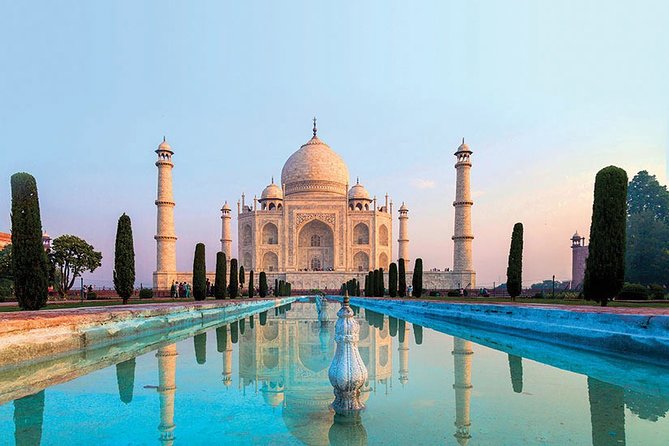
This is interesting because you get the big-name sights of Delhi, Agra, and Jaipur in just 3 days, with the hard parts handled for you: pickup, driving, and private guides in each city. I like that the plan includes key monuments with timed, practical stops, not just a hit-and-run checklist. I love the idea of an early Taj Mahal visit so you start the day while the crowds and heat are lower.
A real drawback to consider is the pace. You’ll be on the road for long stretches (including the Delhi to Agra drive and Agra to Jaipur), and lunch and dinner are on your own, so you’ll want to plan your food timing around the schedule.
Key things to know before you go
- Private guide in each city so language and ticket chaos are less of an issue
- Sunrise Taj Mahal timing gives you better light and a calmer start
- Entrance tickets included for the main sites, with skip-the-line for Taj
- Hotel pickup and drop-off daily, which matters in a traffic-heavy area
- Old Delhi market stops (Chandni Chowk and Jama Masjid) with a rickshaw option that is extra
More Golden Triangle circuits:
- 3-Days Private Golden Triangle Tour: Delhi, Agra & Jaipur by Car
★ 5.0 · 1,107 reviews - 3-Days Private Golden Triangle Tour: Delhi, Agra & Jaipur by Car
★ 5.0 · 1,098 reviews - 3-Day Delhi, Agra and Jaipur Private Tour – India Golden Triangle
★ 5.0 · 812 reviews
Golden Triangle in 3 days: who this pace is for
If you’re new to India and want the core experiences without day-to-day planning, this kind of private 3-day circuit makes sense. You’ll see the Mughal monuments in Delhi and Agra, then shift to Jaipur’s forts and palaces. It’s the classic route, but the value here is how the logistics are bundled.
This tour also fits well if you like having someone explain what you’re looking at while you’re standing in front of it. A private guide can turn a quick photo stop into an actual understanding of architecture, power, and ritual. When you’re crisscrossing three cities, that context saves you from feeling lost.
That said, this is not the best choice if you want slow mornings, long café breaks, or lots of flexible detours. The schedule is built to move you forward, and you’ll feel it on Day 1 and Day 2.
Pickup, private car time, and why comfort matters here
You’ll travel in a private car based on your group size, with pickup from your hotel in New Delhi or New Delhi airport at a set time. The route times are approximate and traffic can shift things, but the big picture is consistent: you’re transferring city to city with minimal friction.
Car type is listed as:
- Sedan for 1 to 2 people
- 7-seater SUV for 3 to 5 people
- Mini bus (12 seater) for 6 to 10 people
You also get bottled water during the tour, which sounds small, but in India it matters. Add in morning early starts and long drives, and that little detail becomes part of why this feels manageable.
One more practical note: the tour runs in all weather conditions, so pack accordingly. Smart casual dress is requested, and you’ll be walking through monument areas, temples, and forts where comfort beats style.
Day 1 in Delhi and Agra: Mughal power, old markets, then sleep
Day 1 is packed, and it’s designed to give you both “official” Delhi and real street-level energy before you even reach Agra.
Line these New Delhi options up side by side
- Old & New Delhi City Tour – Half or Full Day Options Available
★ 5.0 · 4,811 reviews - Half Day Private Delhi City Tour
★ 5.0 · 4,474 reviews - Same Day Taj Mahal, Agra Fort & Baby Taj Tour from Delhi by Car
★ 5.0 · 4,304 reviews - Taj Mahal Day Tour from Delhi by Superfast Train – TOP RATED TOUR
★ 5.0 · 4,166 reviews
Humayun’s Tomb: the Mughal warm-up
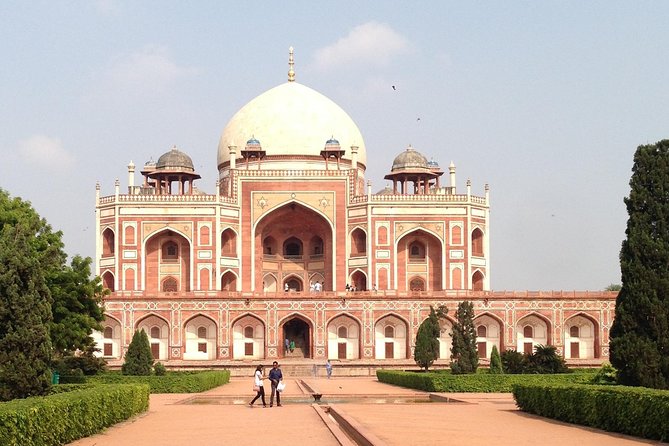
You start at Humayun’s Tomb, billed as the first Mughal tomb. This is a strong opener because it teaches you the grammar of Mughal design: symmetry, garden layout, and the way rulers used architecture to signal authority. Admission is included, and you get about an hour.
If you love photo angles, go in with a calm pace. Take your time on the surrounding views, not just the main structure. Early in the day, your eyes still adjust easily to the scale.
Lotus Temple: modern calm between monuments
Next is the Lotus Temple, a Baha’i House of worship with the famous flower-like form. It’s closed on Monday, so if you’re traveling on a Monday, your schedule may swap depending on how the operator handles closures.
This stop is short, but it helps break the Mughal tone with something clean and modern. It’s also a nice reset if you’re feeling overwhelmed by traffic and crowds.
India Gate and the government photo moment
Then comes India Gate, a war memorial for Indian soldiers who died in the First World War period. It’s a quick visit, about 30 minutes, and it works well as a “big national marker” before you dive into older neighborhoods.
You’ll also see a government building area where you can take photos from outside, plus a stop near the President House designed by British architect Edward Lutyens in 1912. You’re not going in here, but it gives you that skyline context.
Old Delhi in two hits: Chandni Chowk and Jama Masjid
After lunch at a local restaurant, you shift to Agra later in the day, but you first get Old Delhi.
- Chandni Chowk is one of the oldest markets in Old Delhi, with a short stop and free admission listed.
- Jama Masjid is a major mosque that can accommodate over 25,000 people.
At Jama Masjid you also have an option for a rickshaw ride through narrow streets via cycle-rickshaw style. However, the rickshaw ride is not included in the package. If you want it, budget extra and keep in mind it’s mostly a short, street-level view rather than an in-depth ride.
Red Fort and then the Agra drive
You’ll stop at Red Fort for about 15 minutes and then drive to Agra. The itinerary mentions a washroom stop at a highway hotel en route via Yamuna Expressway, then an overnight stay.
This is a long day, so I’d treat the arrival in Agra as a recovery moment. The tour does not linger. You check in and rest.
Sunrise at the Taj Mahal: why the 6:00 am start is the point
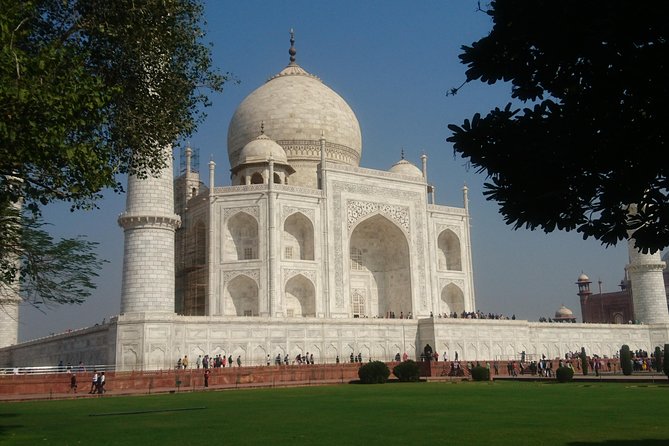
Day 2 begins with the big one: Taj Mahal at around 0600 hours for sunrise viewing. Tickets are included, and the tour includes skip-the-line entry. For many people, that alone is worth paying for because Taj logistics can be the thing that ruins a trip.
When the sun hits the marble, it changes fast. You’re not chasing a static postcard. The light shifts across the surface, and you feel the scale more when you’re there early. You get around two hours, which is enough to see the main structure and take a careful look at details.
Agra Fort after breakfast: where the royal life moved
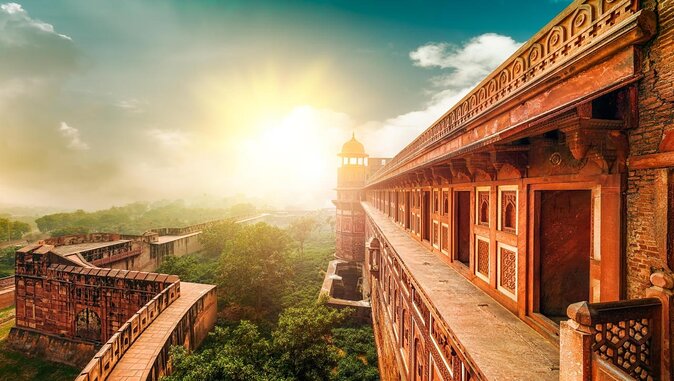
After the Taj, you return for breakfast, then check out and head to Agra Fort. The royal family used to live there, and that fact matters because you’re not just viewing a monument. You’re seeing a fortified city.
This stop is about an hour. It’s a good pace, since forts involve walking and uneven levels.
Fatehpur Sikri: a former capital in red stone
Next is Fatehpur Sikri, the former capital of the great Mughals. You drive there from Agra and get about two hours for palaces built in red stone.
This is one of those places where a guide helps a lot, because “what you’re seeing” is tied to who ruled and how power was organized. Even if you don’t catch every detail, you’ll feel the intentional planning in the layouts.
Jaipur transfer: a long ride with less time to wander
Then it’s on to Jaipur. The transfer is listed at around four hours, and you’ll be taken to your hotel for overnight.
If you’re someone who likes evening strolls, keep expectations realistic. You’ll likely be tired. Use the evening to eat well, hydrate, and sleep.
Jaipur essentials: forts, royal windows, and the science side
Day 3 is a full Jaipur day with multiple included admissions. You’ll start near the top of the city experience, then work through palaces and open-air attractions.
Amber Fort: the hilltop climb with payoff
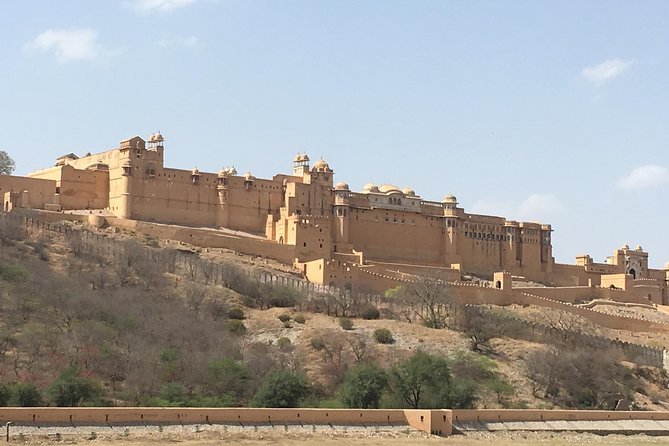
You head to Amber Fort first, described as hill top and known for artistic style and ramparts. Admission is included and you get about an hour. Even with limited time, Amber is worth prioritizing first because daylight helps with texture and views.
Jal Mahal: photo stop, not a long linger
Then comes Jal Mahal (Water Palace). The tour notes it as a former hunting house for the royal family, and the idea is mainly photos from outside. You get about 15 minutes.
I’d treat it like a quick pause, because the value is the setting in the water, not a long interior visit.
Hawa Mahal: those famous windows
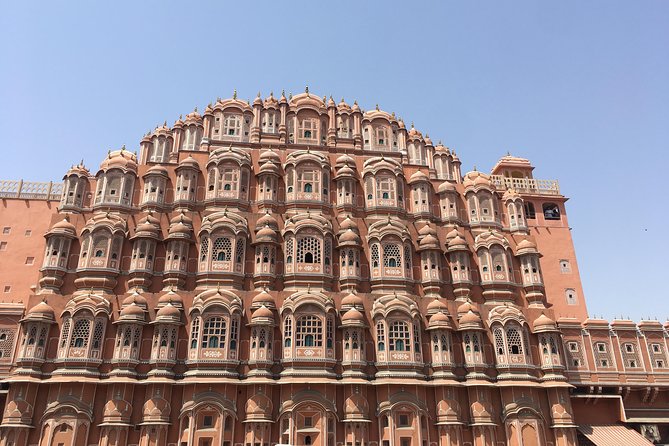
Next is Hawa Mahal, the Palace of Wind, built in 1799 with red and pink sandstone and famous for 953 small windows. You’re scheduled for about 15 minutes, and that’s about right if your main goal is to see the façade and understand the concept.
The point of the windows is social and practical, letting palace ladies observe street life without being seen. A guide can make that click quickly.
City Palace: ceremonial heart turned museum
Then you visit City Palace of Jaipur, about an hour. It used to be the administrative and ceremonial seat of the Maharaja and now functions as a museum. You’ll see courtyards and buildings used for different purposes.
This is one of the better stops for understanding how royal rule worked day to day, not just how forts looked from outside.
Jantar Mantar: old instruments and the big sun dial
After that, it’s Jantar Mantar, an open-air collection of old astrological instruments. It’s a World Heritage site and includes the largest sun dial in the world, built in 1734. Admission is included and you get about an hour.
If you think Jaipur is only about forts and palaces, this adds a different angle. You’re looking at built science, where observing the sky mattered for timekeeping and navigation.
Step wells and cremation chhatriyan: the lesser stops with meaning
Then you’ll see:
- Panna Meena ka Kund, a step well near Amber Fort used for collecting water, with mention that women came here as well
- Gaitore Ki Chhatriyan, crematorium grounds connected to the Kachwaha Rajput dynasty and the founder of Jaipur, Maharaja Jai Singh II
These are short stops, around 15 minutes each, but they add depth. They’re not the headline postcard, yet they connect the city to daily life and ritual.
Back to Delhi: lunch then drop-off
After Jaipur, you stop for lunch at a local restaurant and drive back to New Delhi, with drop-off at your hotel or the airport. The transfer is listed around five hours.
This is also where you’ll feel the “3 days” limit. You can’t squeeze in a last-minute extra attraction unless you’re willing to cut something else.
Hotels, meals, and what is actually included
This tour includes 2 nights accommodation in three-star category hotels on a twin-sharing basis, with all inclusive tour coverage. Breakfast is included for two days. That’s a meaningful inclusion because it takes care of the first meal right when you’re likely to be moving early.
Lunch and dinner are not included. In practice, that means you’ll be choosing from local restaurants based on what the day allows. The itinerary does specify lunch stops at local restaurants, but the cost is still on you since lunch/dinner are not part of the package.
One more lodging detail matters if you’re traveling as a small group: rooms are typically twin-sharing, and if you book with three people, the default is triple-sharing unless you pay extra if you want two separate rooms.
If you’re sensitive to hotel standards, this is where you should set expectations. Three-star can be perfectly comfortable, but it varies by area and property. The upside of using a set hotel category is you reduce the guesswork.
Price and value: what you’re paying for at about $119 per person
At $119.15 per person, the price is mainly covering three things: private transportation over long distances, private guides in each city, and entrance fees for the key sites. It also includes bottled water, breakfast, and skip-the-line entry for the Taj Mahal.
For a first-time visit, I think that’s a strong value package because it reduces the common pain points:
- Figuring out tickets and timings
- Hiring separate guides for each city
- Paying for city-to-city transfers on your own
- Dealing with time lost to navigating language and public transit
You do pay extra for certain add-ons. The biggest one mentioned is the rickshaw ride in Delhi, which is not included. Christmas and New Year also add a potential extra cost for gala dinners paid directly to the hotel.
So the smart way to judge value is not just the headline number. It’s the total hassle you avoid when you’re moving fast across Delhi, Agra, and Jaipur.
Guides and drivers: the human factor that makes or breaks it
The strongest theme in the feedback is consistent praise for service, especially drivers who keep the trip comfortable and guides who explain what you’re seeing.
You might meet guides such as B.L. Kumavat in Jaipur, and you may also encounter drivers named Raza or Prem. People also mention Deepak Kumar as helpful. I can’t promise any one person, but the pattern is clear: English ability and good coordination matter a lot on this itinerary, and this operator has been delivering that.
Here’s what to look for on your end. Ask your guide to point out one or two details that most tourists miss, like why a monument’s layout matters or what a city building was used for. On a tight 3-day schedule, that small guidance can turn a “checkmark visit” into an actual experience.
Small but important considerations before you book
A few details are worth putting on your radar early:
- Lotus Temple is closed on Monday, so your Day 1 plan might shift if your start day falls on a Monday.
- The schedule is active and includes early sunrise Taj Mahal timing, so don’t plan late nights.
- The itinerary is private, so only your group participates, but you’re still sharing the city with real traffic and real crowd patterns.
- Christmas and New Year may require extra payment for hotel gala dinners.
- The tour includes entrances during the tour window, but lunch and dinner are not included, so your budget should cover that.
Also, dress code is smart casual. Keep shoulders and legs reasonable for temple and mosque visits. Bring something light for hot days and a layer for mornings, especially around sunrise.
Should you book this private Golden Triangle tour?
Book it if you want a structured, low-stress route across Delhi, Agra, and Jaipur, and you value having private guides to explain what you’re looking at. It’s especially good for first-time visitors who don’t want to spend hours planning transport, tickets, and timing.
Consider a different option if you hate early starts, dislike long car rides, or want lots of unscheduled free time. This tour is built for momentum, not wandering.
If your goal is the classic Golden Triangle highlights with minimal friction, this private 3-day format is one of the more sensible ways to do it. Start early for the Taj, trust the guide for context, and use the included mornings and entrances to get the most out of your short window in India.
FAQ
What does the tour include for meals?
Breakfast is included for two days. Lunch and dinner are not included, and you’ll stop for lunch at local restaurants during the schedule.
Is hotel pickup and drop-off included?
Yes. You get hotel pickup and drop-off each day, including pickup from your hotel or the New Delhi airport at the start.
Are monument entrance tickets included?
Yes, entrances during the tour are included for monuments across Delhi, Agra, and Jaipur. Skip-the-line is included for the Taj Mahal and other mentioned monuments.
Is the rickshaw ride included in Delhi?
No. The rickshaw ride in Delhi is listed as an option, and the included section states the rickshaw ride is not included.
What time is the Taj Mahal visit?
The Taj Mahal visit is scheduled around 0600 hours for sunrise.
What happens if the Lotus Temple is closed?
Lotus Temple remains closed on Monday. Your tour timing may need to account for this closure.
What kind of car will I use?
The car depends on group size: sedan for 1 to 2 people, 7-seater SUV for 3 to 5, and a mini bus for 6 to 10.
What hotel standard should I expect?
You get 2 nights in a three-star category hotel on a twin-sharing basis.
How are rooms handled for three people?
Rooms are generally twin-sharing. If you book 3 guests, triple-sharing is the default, unless you pay extra to have two rooms.
What extra costs could apply at certain holidays?
Christmas and New Year Eve gala dinner charges are not included and must be paid directly to the hotels concerned.
How does cancellation work?
Free cancellation is available if you cancel at least 24 hours before the experience start time for a full refund.
Latest reviews in from New Delhi
- Private Day Trip to Taj Mahal by Car from Delhi★ 5.0 · 16 reviews
- New Delhi to Agra Airport/Hotel – One-Way Cab Private Transfers★ 4.5 · 16 reviews
- “Overnight Taj Mahal Tour from Delhi by Private AC Car”★ 5.0 · 16 reviews
- 10 Day Private Luxury Golden Triangle with Khajuraho and Varanasi★ 5.0 · 16 reviews
- Private One Day Tour of Taj Mahal, Agra Fort & Fatehpur Sikri from New Delhi★ 5.0 · 16 reviews
- All Inclusive : 5 Days Golden Triangle Tour : Delhi, Agra, Jaipur★ 5.0 · 16 reviews
- Delhi & Taj Mahal Private Day Tour with Lunch and Tickets★ 5.0 · 16 reviews
- From Delhi: Taj Mahal Sunrise Tour with Elephant Conservation★ 5.0 · 16 reviews
3-Day Experiences, compared.
3-Day Delhi, Agra and Jaipur Private Tour – India Golden Triangle
Read our review →
3-Day Private Luxury Golden Triangle Tour to Agra and Jaipur From New Delhi
Read our review →
3-Day Luxury Golden Triangle Tour: New Delhi, Agra & Jaipur
Read our review →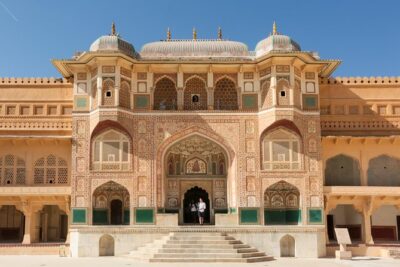
Award-Winning 3-Day Private Golden Triangle Tour of India
Read our review →3 Days 2 Night Golden Triangle Tour – Private Luxury Experience
Read our review →
The Ultimate 3 Days in Varanasi – How to Spend 39 Hours – For First Timers
Read our review →
3-Day Private Golden Triangle Tour to Agra &Jaipur from New Delhi
Read our review →Browse the lists this tour appears in