
Reviewed · HERITAGE WALKS
Old Goa: Saga Of Saints, Spices & Sovereigns | Heritage Walk
Old Goa has a way of stacking stories on top of stone. This heritage walk links saints and sacred art with the real mechanics of empire, trade, and mission, from the Portuguese era to Old Goa’s later abandonment. In 2 hours, you’ll move through churches and convent spaces while a local storyteller stitches the scenes together.
I like how the guide helps you read what you’re seeing. You don’t just admire the churches and convents, you learn what Indo-Portuguese craftsmanship and religious imagery are trying to say. I also like the mix of themes, saints and sovereignty, spices and ships, religion and politics, all explained in plain language.
One consideration: it’s still a walking tour through sacred spaces and outdoor ruins, with a strict dress code. If you show up in the wrong clothes or without sun protection, you’ll feel it fast, so plan for that.
Key things that make this walk worth your time
- Expert local storytelling in English, with guides like Amreen or Gaurish using a clear, engaging style
- Church and convent interiors plus ruins, including Augustinian remains
- Sacred art decoding, so architectural details and religious scenes make sense
- Spices, ships, and missionary expeditions, explained as part of Goa’s colonial history
- Hidden monastic sites and less obvious corners, not just the main-photo spots
- A refreshing local drink to close the tour
Old Goa in One Straight Line: What You’ll Experience in 2 Hours
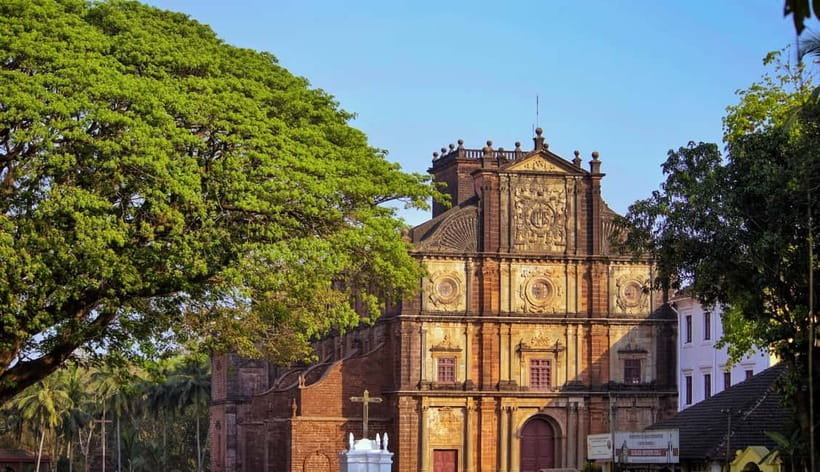
This is the kind of tour that works because it keeps a tight time window. Two hours sounds short until you realize you’re not doing random sightseeing. You’re walking a route that uses major religious landmarks as anchors, then fills in the gaps with smaller monastic stories and colonial context.
You should expect a mix of walking and stopping. You’ll enter church spaces that are part of the walk, pause for interpretation, and move on before the whole area turns into one blur. The guide’s job is to keep your eyes busy, so you know where to look and why it matters.
This walk also has a “story-first” rhythm. One guide described the approach as holding back the bigger plot until the setting is clear, and you can feel that in how the explanations build. You end up with a sequence in your head: Portuguese beginnings, religious life, colonial trade drivers, and then the shift away from Old Goa.
Best fit: if you like history that connects directly to buildings, and you prefer a human guide over a headset of facts. This also suits couples and small groups who want an answer to the classic question, what am I looking at and what did it mean?
More Heritage Walks in Goa
- Fontainhas Heritage Walk by Make It Happen
★ 5.0 · 2,834 reviews - Old Goa Heritage Walk by Make It Happen
★ 5.0 · 797 reviews - Fontainhas Heritage Walk At Latin Quarters of Goa
★ 5.0 · 531 reviews
Starting at Santa Monica Convent: Where the Walk Begins and How It Flows
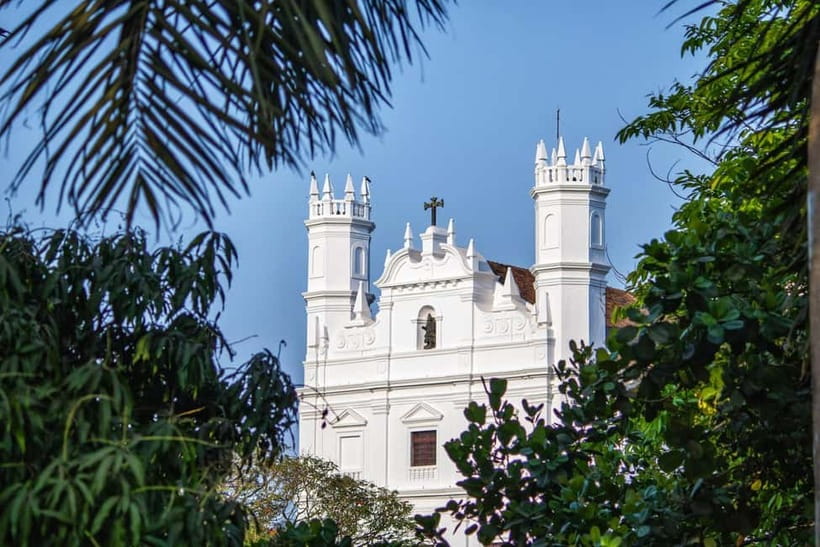
The meeting point is simple. Meet at the entrance or parking area in front of the main entrance to Santa Monica Convent at Old Goa.
From there, the walk is designed to help you orient quickly. You’ll hear the timeline and themes as you move, and the guide uses medieval maps as part of the storytelling. That matters because it changes how you interpret the streets, even when the buildings are weathered or partially ruined. Instead of guessing, you get a visual reference for how the place used to work.
Pace is another practical point. Guides have been careful about picking shady spots where you can sit and listen without frying. That’s a real quality-of-life detail in Goa, especially if you’re visiting outside peak winter weather.
If you’re the type who hates stopping for explanations, this may not feel relaxing. But if you’re happy to slow down, two hours becomes a compact crash course that sticks.
Portuguese-Era Beginnings: Saints, Salvation, and What the Churches Were Built to Do
A key part of the experience is the Portuguese chapter in early 16th-century Goa. The walk frames the rise of Christianity there as more than a church-building story. It’s also about missionary efforts, trade connections, and the push to establish authority through faith and institutions.
As you approach the church sites on the route, the guide focuses on the “why” behind what you’re seeing. You’ll hear how the earliest Portuguese Christian presence shaped religious architecture and sacred practice in Old Goa. The idea isn’t just that people worshipped here. It’s that the buildings were tools for survival, influence, and community formation.
One of the most praised elements is the way sacred art is explained. That includes how to look at style and symbolism, not just admire craftsmanship. You’ll get a sense of how religious beliefs were visually communicated, so the details stop feeling random.
Drawback to consider here: church spaces can be visually busy, and if you try to rush photos, you’ll miss the explanations. Give yourself permission to watch, listen, and then take a picture after.
Rosary Church and the Power of Small Details
You’ll visit the Rosary Church, and it’s one of those stops where the guide turns “a church facade” into a story about belief and daily devotion.
The benefit of this stop is interpretation. The guide helps you notice features that you might otherwise ignore, and connects those details to the religious thinking of the period. Instead of treating the church like a static monument, you understand it as a place designed for meaning, ritual, and community memory.
This is also where the tour’s storytelling style becomes clear. Some guides are careful about pacing, building context first so the later facts land better. If you tend to get lost in timelines, this structure can actually help you follow the bigger narrative.
If you’re expecting a silent museum vibe, you won’t get it. The tour is human-led and story-driven, and that’s part of the point.
More Historical Tours in Goa
- Panaji: Heritage Walk through Goa’s Latin Quarter
★ 4.8 · 291 reviews - Heritage Houses of Goa-Chandor by Soul Travelling
★ 5.0 · 199 reviews - Private Aguada Jail Heritage Walk Tour
★ 5.0 · 102 reviews - Old Goa: Walking Tour of Heritage Churches
★ 4.9 · 81 reviews
The Augustinian Ruins: Monastic Life After the Buildings Fade
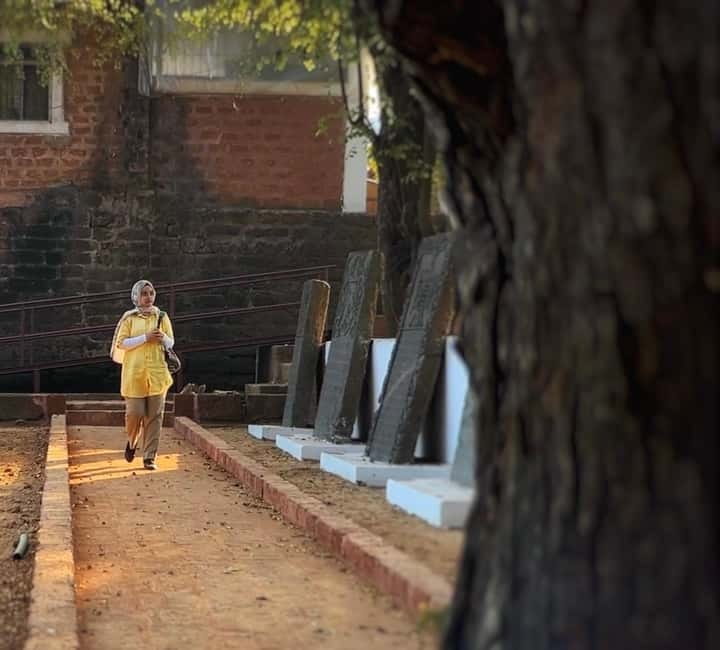
The walk includes the ruins of the Augustinian monastery, and this is where Old Goa’s emotion shows up. Crumbling stone can feel like tragedy if you don’t have context. With context, it becomes a record of changing priorities, shifting power, and a religious world that adapted over time.
This stop is especially valuable if you like architecture but also want the human story behind it. The guide introduces forgotten hidden monastic sites and stories that go beyond the tourist lens. You’re not just walking among ruins. You’re tracing where monastic life once operated, and how those spaces fit into the broader colonial and religious landscape.
One practical note: ruins can be uneven and you’ll likely spend time looking closely at structures. Wear shoes you trust. If you’re someone who normally gets away with sandals, this is not the day to test that theory.
Oldest Nunnery of Asia: How Women’s Religious Spaces Fit Into the Bigger Plot
Another standout theme is the oldest nunnery of Asia, discussed as part of the walk’s focus on sacred institutions in Old Goa. The guide uses it to explain religious life, not in a distant way, but as part of the social system that grew around these European-linked churches and convents.
This matters because it counters a common travel habit. It’s easy to assume the colonial story is only about rulers and priests. Here you get a different angle, how women’s religious communities were an essential part of the built heritage and the daily meaning of the place.
You’ll also see how the tour ties architecture to lived religion. That “read the building” approach is exactly what many people say they enjoyed most.
Indo-Portuguese Craftsmanship: What to Look For Beyond the Obvious
Goa’s heritage here is often a blend of influences, and the walk makes sure you understand the craftsmanship instead of just snapping a photo and moving on.
You’ll learn about Indo-Portuguese craftsmanship and how sacred art reflects those cross-cultural styles. The guide also helps you decode architectural styles, so details like shape, ornament, and layout become clues to the time period and the religious mission behind the structures.
This is one of the reasons the tour gets strong marks. People walk out feeling like they can identify what they saw. Not in a quiz way, but in a “now I know what I’m looking at” way.
To get the most out of this section, don’t just stand at the front gate of each church. Pause where the guide indicates. Sacred art tends to reward careful viewing, and you’ll miss the explanation if you keep moving.
Spices, Ships, and Sovereigns: Connecting Trade Routes to Mission Expeditions
The tour’s theme of spices, ships, and salvation is not treated like a separate history lecture. It’s woven into the walk’s explanation of Goa’s colonial history.
You’ll hear how trade routes supported the Portuguese presence, and how missionary expeditions fit into the same larger system. In other words, religion wasn’t floating above economics. It was part of the machinery.
This is also where the tour becomes more than church tourism. You’ll hear stories tied to sovereignty and power, not only faith. Guides often explain the links clearly, in a way that doesn’t require you to already know Portuguese-era Goa.
I like that this angle helps you understand why certain buildings exist in the first place. They weren’t just built for worship. They were built for continuity, community, and influence.
If you want strictly religious symbolism with no political context, you may find the colonial history chapter a bit heavy. But it’s clearly part of the intended message, and it helps explain the architecture as well.
The Storytelling That Gets Praised: English Guides, Shady Stops, and Real Passion
What people consistently highlight is the guide quality. In recent experiences, guides like Amreen have been described as local history scholars with excellent English, and as careful storytellers who keep the group engaged across a lot of information.
You’ll also notice the small management details that make a tour work. One guide was praised for choosing shady spots and including places to sit, which makes it easier to listen without feeling rushed or uncomfortable.
Another thing that comes up is respectful presentation. The walk has a clear mission message about sharing Goan heritage in an authentic and respectful way. That can matter to you as a traveler, because it shifts the experience from extraction to education. You leave with more appreciation for preservation work, not just photos.
Price and Value: Is $9 for a 2-Hour Heritage Walk Fair?
At $9 per person for a 2-hour walk, the biggest value isn’t only the duration. It’s what you get included.
Your ticket covers entry to churches that are part of the walk, plus an expert local storyteller, lesser-known historical facts, sacred art and architectural decoding, and a refreshing local drink at the end. That’s a lot of “guide labor” packed into a small price tag.
If you tried to do this on your own, you’d likely spend more time figuring out what to look for and why. You might pay separate entry fees to religious sites, and you would still need interpretation for sacred art and the Indo-Portuguese mix.
The best value angle: you’re paying for meaning, not just access. For $9, that’s strong, as long as you show up ready to walk, listen, and respect the religious setting.
Practicalities You’ll Actually Feel: Dress Code, What to Bring, and Walking Comfort
This is a place where appearance and comfort matter. The tour has clear rules:
Not allowed: shorts, short skirts, sleeveless shirts, ripped clothing, see-through clothing.
What to bring:
- Comfortable shoes
- Hat
- Sunscreen
- Water
You might think you can wing it with a hat you already own. Still, bring one. The guide may stop in shade, but you’ll be outside at times, and Goa sun is not polite.
Also, check your own health needs. The experience is listed as not suitable for people with heart problems, even though it is described as wheelchair accessible. If mobility or health is a concern, I’d treat that as a sign to ask before you commit.
Who Should Book This Heritage Walk, and Who Might Skip It
Book it if:
- You want a story-led walk through Old Goa’s major churches and convent spaces
- You like historical context that links faith with trade routes and missionary expeditions
- You care about understanding sacred art and Indo-Portuguese craftsmanship
- You enjoy local guides who explain in clear English and manage pace well
Consider skipping it if:
- You want a quick photo loop with no listening
- You have difficulty with walking through church interiors and outdoor ruins
- Your health needs make moderate walking a problem
- You’re uncomfortable with a strict religious-site dress code
This is also a good choice for first-time visitors to Old Goa who feel overwhelmed by the number of churches. A guided route keeps you from wandering randomly.
Should You Book Old Goa: Saga of Saints, Spices and Sovereigns?
Yes, if you want Old Goa to make sense. The standout value is the guide-led interpretation: sacred art decoding, Indo-Portuguese style explained, and the way the walk connects saints and churches to spices, ships, and colonial history.
You should book if you like tours where you leave with an understanding, not just a list of buildings. And at $9 for 2 hours with entry and a drink included, it’s easy to justify the cost as long as you can handle a walking route and you’ll dress appropriately.
FAQ
How long is the Old Goa heritage walk?
The experience lasts 2 hours.
What is included in the $9 per person price?
Entry to churches that are part of the walk, immersive storytelling by an expert local guide, lesser-known historical facts, local lores and beliefs, decoding of sacred art and architectural styles, and a refreshment drink to conclude the walk.
Where is the meeting point?
Meet at the entrance or parking area in front of the main entrance to Santa Monica Convent at Old Goa.
Is the tour guide English-speaking?
Yes, the live tour guide is listed as English.
What should I bring with me?
Bring comfortable shoes, a hat, sunscreen, and water.
What clothing is not allowed?
Shorts, short skirts, sleeveless shirts, ripped clothing, and see-through clothing are not allowed.
Is the tour wheelchair accessible?
The activity is listed as wheelchair accessible.
Is it suitable for people with mobility impairments?
It is not suitable for people with mobility impairments, even though it is listed as wheelchair accessible. If mobility is a concern, check with the operator before booking.
Is the tour suitable for people with heart problems?
No, it is listed as not suitable for people with heart problems.
Can I cancel and get a refund?
Yes. There is free cancellation up to 24 hours in advance for a full refund.
Is a private group available?
Yes, a private group is available.
More Walking Tours in Goa
- Food And Drink Walking Tour In Panjim
★ 5.0 · 286 reviews - Panaji: Heritage Walking Tour in Fontainhas Latin Quarter
★ 4.9 · 31 reviews - Panjim: Guided Walk Tour of Portuguese-Influenced Goa
★ 4.6 · 26 reviews - Candolim: Heritage Walk of Fort Aguada Port and Jail Complex
★ 4.9 · 25 reviews
Latest reviews in from Goa
- North Goa Sightseeing Full Day Tour ( 09 am – 05 pm )★ 3.5 · 44 reviews
- Old Goa Heritage & Culture E-Bike Tour★ 4.5 · 46 reviews
- Latin Quarter Food Trail by Make It Happen★ 5.0 · 47 reviews
- CULTURAL & HISTORIC DAY TOUR ATTRACTIONS – Churches, Temples & Spice Plantation★ 4.5 · 53 reviews
- Glimpses Of Goa: Churches,Temple and Spice Plantation★ 5.0 · 65 reviews
- Saligao Village Saunter by Make It Happen★ 5.0 · 74 reviews
- Private Beach Photoshoot in North Goa by Professional Photographer★ 4.5 · 78 reviews
- Chandor Heritage Trail by Make It Happen★ 5.0 · 79 reviews
Heritage Walks, compared.


The Great Indian Food Tour: Old Delhi Food and Heritage Walk
Read our review →

Fontainhas Heritage Walk At Latin Quarters of Goa
Read our review →
Private Heritage Walking Tour in Jaisalmer Fort and Old Bazaar
Read our review →

Browse the lists this tour appears in