
Reviewed · GOLDEN TRIANGLE TOURS
Adventurous & Classical India Curated Journey: South & Golden Triangle
This is interesting because you get South India and the Golden Triangle in one trip, with UNESCO sites stacked back-to-back. The route is built for motion, yet it still slows down at the monuments that deserve your full attention.
I particularly like the way Hampi shows you Vijayanagara-era power in stone, and how Ajanta and Ellora give you rock-cut artistry that feels unreal in person. It is also the kind of itinerary that works if you love temples, forts, and history, but also want some street-level India.
One possible drawback is the pace. You are covering a lot of ground with domestic flights plus private car transfers, so if you want daily downtime, you may need to be intentional about rest and hydration.
Key Things I’d Write On A Sticky Note Before You Go
- Private transport and domestic flights connect major cities so you spend less time figuring things out
- UNESCO-heavy days: Elephanta, Hampi, Ajanta, Ellora, and the Qutb Minar complex
- Mumbai beyond the postcard includes Dhobi Ghat and Dharavi (with free entry listed)
- Jaipur is spread across royal sites and observatories (City Palace, Amber, Hawa Mahal, Jantar Mantar, forts)
- Agra gets the Taj Mahal at sunset plus Agra Fort and Itimad-ud-Daulah
- Delhi closes with big variety from Qutb Minar and Humayun’s Tomb to Red Fort, Jama Masjid, and Akshardham
A Route That Spans Two Indias in 15 Days
This trip is set up as a “from here to wow” journey. You start in Mumbai, then move south for Hampi, swing through Maharashtra for Ajanta and Ellora, come back north for Jaipur and Agra, and finish in Delhi. That pattern matters because India can feel totally different from one region to the next. Here, you get both feels without changing tours.
The other thing I like is that it is private. Only your group participates, and the logistics are handled, which cuts down on decision fatigue. For a first trip to India, that is huge. You can focus on seeing, not managing.
More Golden Triangle circuits:
- 3-Days Private Golden Triangle Tour: Delhi, Agra & Jaipur by Car
★ 5.0 · 1,107 reviews - 3-Days Private Golden Triangle Tour: Delhi, Agra & Jaipur by Car
★ 5.0 · 1,098 reviews - 3-Day Delhi, Agra and Jaipur Private Tour – India Golden Triangle
★ 5.0 · 812 reviews
Mumbai Kickoff: Elephanta Caves, Dhobi Ghat, Colaba Causeway
Mumbai is your warm-up before the deeper classics. On day one, you hit Elephanta Caves, a UNESCO World Heritage Site with cave temples mostly dedicated to Shiva. The listed stop time is about two hours, and admission is included. This is one of those early anchors that helps you understand the broader religious art you will see later in Hampi and beyond.
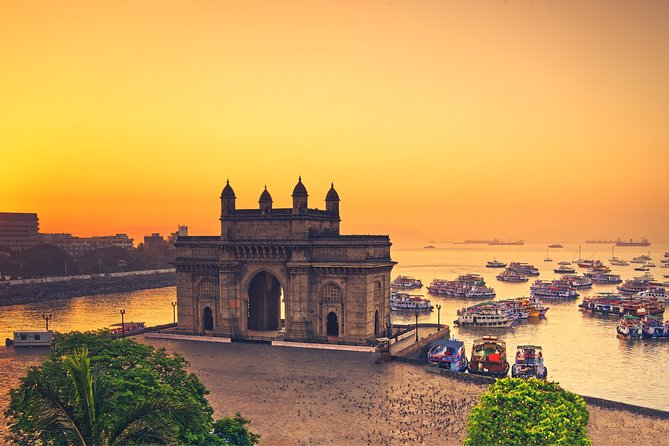
Then you get the Gateway of India, a landmark built in the early 20th century to commemorate King-Emperor George V and Queen-Empress Mary’s 1911 visit. Admission is free here, and the stop is about one hour. It is short, but it gives you a quick “okay, I’m in Mumbai” moment.
Day two pushes Mumbai past the glossy version. You visit Dharavi with free entry listed, and then Dhobi Ghat, the open-air laundromat where dhobis work in the open to clean linens for hotels and hospitals. Both stops are listed around one to two hours total. Colaba Market follows, with about three hours for browsing the Colaba Causeway area, where the pace is the point and you can pick up everyday items.
Practical note: this part of the trip is more about people watching and street rhythm than museum-style pacing. Wear comfortable shoes and keep your camera ready, because Mumbai can throw interesting scenes at you every few minutes.
Hampi’s Vijayanagara Power: Mahanavami Dibba, Lotus Mahal, Virupaksha Temple
Hampi is the emotional center of the South-to-North idea. This itinerary gives you multiple stops inside the Hampi World Heritage zone, and it helps you see different types of structures instead of one “big temple” and done.
You start with Mahaanavami Dibba, also called Dasara Dibba, a stone platform in the Royal Enclosure built during the Vijayanagara period. Admission is included, and the stop is about one hour. This matters because platforms like this were part of state ceremony and political theatre, not just worship.
Next is Lotus Mahal, described as an ancient stone palace structure with gardens and detailed carvings. Admission is included, with about two hours here. If you are the type who loves architecture details, this is a good palate cleanser after the earlier cave-and-city vibe.
Then you roll into the heavy hitter: Virupaksha Temple. It is dedicated to Lord Virupaksha (a form of Shiva), part of the Group of Monuments at Hampi, and admission is included with a long stop listed around six hours. That time investment is a clue that this temple and its surroundings are worth slow walking.
After that, you get general Hampi time, where admission is listed as free and the stop is about six hours. Hampi is famous for ruins tied to the medieval Hindu kingdom of Vijaynagar and for monolithic sculptures and monuments. In plain terms, you will spend a lot of time looking upward and sideways, because the scale is the point.
How to make it work for you: Hampi rewards curiosity. If you keep asking yourself what a structure was for, you’ll get more out of every stop. Also, expect uneven ground and long walks, so plan for energy management.
Ajanta and Ellora: Rock-Cut Caves With Buddhist, Hindu, and Jain Art
Maharashtra gives you two of the most famous cave complexes in India, and this itinerary respects that by allotting serious time.
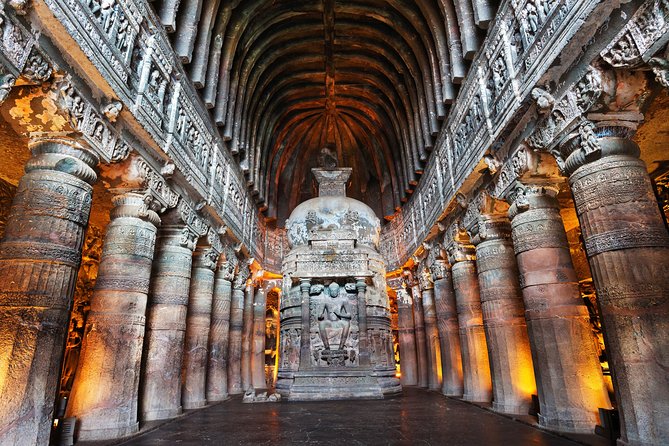
You start with Ajanta Caves (rock-cut Buddhist cave monuments) with admission included. The listed stop is about five hours. Ajanta is special because it is not just a hallway of caves. It is a whole timeline of art and devotion across centuries, and spending real time helps you notice the details.
Then you move to Ellora Caves, another UNESCO World Heritage Site and one of the largest rock-cut complexes, featuring Hindu, Buddhist, and Jain monuments. Admission is included, and the stop is about six hours. Ellora tends to feel more varied because the religious mix changes the visual language as you go.
Day eight adds more context through Bibi-Ka-Maqbara, described as the Lady’s Tomb, a burial mausoleum of Aurangzeb’s wife Rabia, often compared to the Taj of the Deccan. Admission is listed as free for that day’s stop, and the time is about six hours total. The itinerary also points you toward Mughal-influenced dishes like pulao and biriyani, which is a nice food cue for the next region you’ll visit (Agra and its Mughal legacy).
Tip for your own comfort: these caves involve long indoor viewing time, plus the travel between them. If you get motion-sick easily, eat light before leaving and keep water handy.
Line these New Delhi options up side by side
- Old & New Delhi City Tour – Half or Full Day Options Available
★ 5.0 · 4,811 reviews - Half Day Private Delhi City Tour
★ 5.0 · 4,474 reviews - Same Day Taj Mahal, Agra Fort & Baby Taj Tour from Delhi by Car
★ 5.0 · 4,304 reviews - Taj Mahal Day Tour from Delhi by Superfast Train – TOP RATED TOUR
★ 5.0 · 4,166 reviews
Jaipur’s Royal Scene: City Palace, Amber, Hawa Mahal, Fort Rings, and Jantar Mantar
Jaipur is where the trip becomes visually loud in the best way. You have palace architecture, fort views, and even a scientific observatory side.
Day nine hits the core collection. City Palace gets about one hour, with admission included. Then you visit Amber Palace for about two hours with admission included. Amber is the big “palace as power” stop, and you will likely want extra time if you like details, but the schedule is clearly planned around seeing multiple sites in one go.
You also get Hawa Mahal, the Palace of Wind, listed for about two hours with admission included. This is the iconic façade stop. It is brief but memorable, and it helps you connect Jaipur’s style with its historic way of living.
Later day nine includes Vaishnava Temple for morning worship at Govind Dev Ji, with about one hour and admission included. It is a softer, more spiritual moment in the middle of forts and palaces.
Day ten expands the arc. Jantar Mantar is your next stop, an observatory built by Maharaja Jai Singh in 1724. Admission is included and time is about two hours. Even if you do not geek out on astronomy, it is worth it because it shows how rulers used science for mapping time and the sky.
Then you go to Jaigarh Fort (about one hour, admission included). It is positioned on the Cheel ka Teela promontory and overlooks Amer Fort and Maota Lake. Next is Albert Hall Museum (about two hours, admission included), plus Birla Mandir Temple (about one hour, admission included).
You end the day ten fort ring with Nahargarh Fort (about two hours, admission included) and Royal Gaitor Tumbas (about two hours, admission included). That is a lot of forts in one day, so Jaipur here is not “wander and snack.” It is structured sightseeing.
Agra’s Taj Mahal Window: Sunset Views, Agra Fort, and the “Bachcha Taj”
Agra is built around the Taj Mahal, and this itinerary does a good job of separating the Taj moment into two experiences.
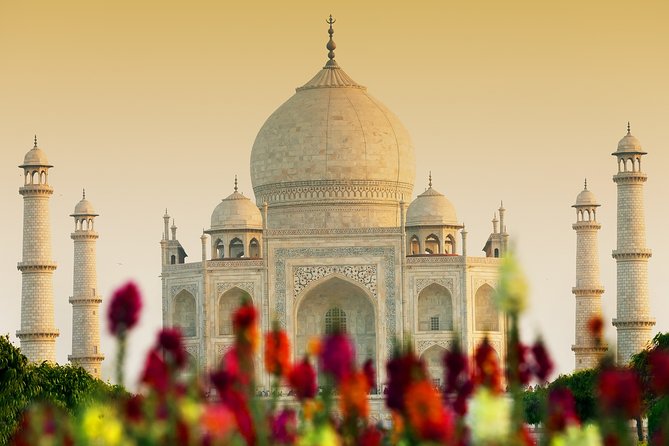
On day eleven, you get sunset at the Taj Mahal with about two hours listed and admission included. Even if you have seen photos, sunset changes the way the marble reads in real light. It is a great timing choice because it makes the visit feel special even for people who are Taj-saturated in their own lives.
Day twelve returns you to the Taj again for a deeper visit, about three hours listed and admission included. Built between 1632 and 1647 by Shah Jahan, it was dedicated to Mumtaz Mahal. The itinerary also mentions the mausoleum as India’s most famous monument and frames it as a shrine to eternal love. It is also a chance to notice what you might miss at sunset.
After the Taj, you shift to Mughal power and city history with Agra Fort (about two hours, admission included). Then you visit Tomb of Itimad-ud-Daulah, often described as the jewel box and sometimes called the Bachcha Taj, for about two hours with admission included. This is a smart pairing because it gives you the Taj style in a smaller, more intimate form.
Practical advice: if you want photos, plan where you stand. If you want quiet, plan when you step away and give your eyes time to adjust.
Delhi’s Big Three: Qutb Minar, Humayun’s Tomb, Red Fort, plus Jama Masjid
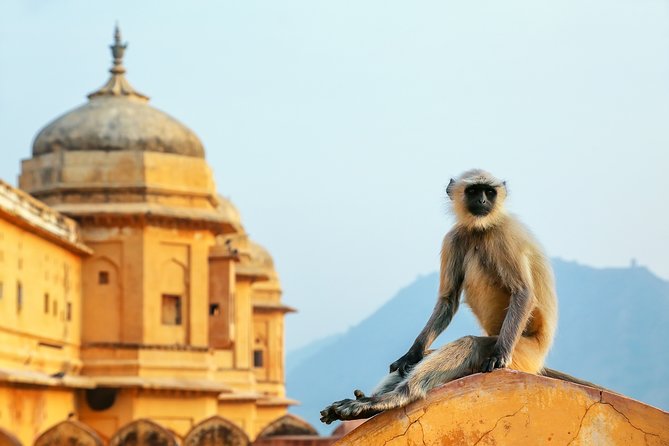
Delhi closes the circle by showing multiple layers of rule and faith.
Day thirteen begins with Qutub Minar, part of the Qutb complex, a UNESCO World Heritage Site. Admission is included and the stop is about one hour. Next is Humayun’s Tomb (about two hours, admission included). It is framed as the tomb of Mughal Emperor Humayun, commissioned in 1569-70 and designed by Persian architects.
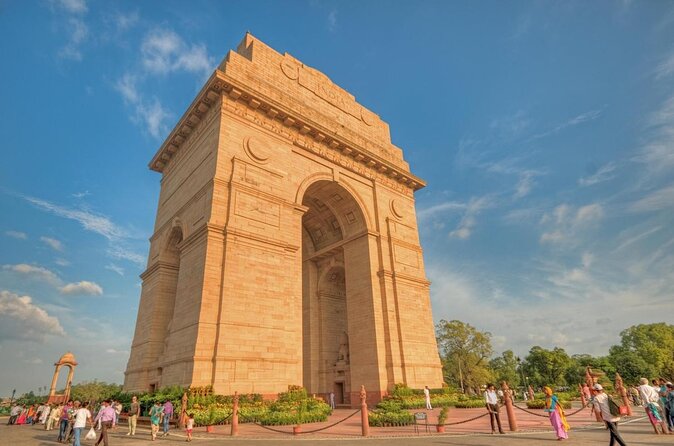
You then get India Gate with free admission, about 40 minutes. It is a war memorial for soldiers of the British Indian Army who died between 1914 and 1921. It is short, but it adds a modern layer to a trip that can otherwise stay locked in medieval monuments.
Finally, you end day thirteen at Red Fort (about two hours, admission included). It served as the main residence of Mughal emperors. If you like the idea of walls as political statements, this one delivers.
Day fourteen widens the lens again. You visit Swaminarayan Akshardham, described as a spiritual and cultural campus and Hindu worship complex. Admission is included with about one hour listed. Next is Gurudwara Bangla Sahib, about two hours, admission included. It is known for the Sarovar, the holy water inside the complex.
Then you add Gandhi Memorial Hall (one hour, free admission), Jama Masjid (one hour, admission included), and you finish the tour on day fifteen with airport transfer in New Delhi depending on your flight schedule.
Private Guides, Named Drivers, and Why Logistics Matter
One thing I keep seeing in feedback for this operator is praise tied to drivers and guides by name. The names that show up strongly include Bhanwar Singh and Mudaram, praised for safe driving, calm presence, and professionalism in busy cities. Another name that comes up is Ashok, also called out for driving skill on difficult roads. On the guide side, Sandeep is mentioned for years of experience and solid historical knowledge, including guiding in Spanish for one group.
You do not need every comfort feature to enjoy India, but you do need reliable movement. When your transport is handled and your driver is familiar with city timing, you lose less time to confusion, and you can actually enjoy the sights instead of wrestling with directions.
Also, this is a private tour, so you are not sharing your day with strangers. That matters on days with long attraction windows, like Virupaksha Temple or Ellora. Your group can keep its rhythm without constantly negotiating meeting points.
Price Check: Is $1,920 Good Value for 15 Days?
At $1,920 per person for roughly 15 days, what you are buying is not just admissions. You are buying a structure: domestic flights between major stops, private car travel, accommodation, daily breakfasts, and admission tickets for many of the big attractions on the schedule.
Look at what is included in the itinerary:
- Domestic flights and private car travel between major cities
- Accommodation and daily breakfasts
- Admission tickets listed as included for key sites like Elephanta Caves, Ajanta, Ellora, City Palace, Amber Palace, Hawa Mahal, Jantar Mantar, Jaigarh Fort, Albert Hall Museum, the Taj Mahal, Agra Fort, Itimad-ud-Daulah, Qutb Minar, Humayun’s Tomb, Red Fort, Akshardham, and others
- Mobile ticket and pickup offered
Some places are explicitly listed as free, including Gateway of India, Dharavi, Dhobi Ghat, Colaba Market, Hampi, India Gate, and Gandhi Memorial Hall. That mix is normal. It means your budget is aimed at the major paid monuments and major transit between regions.
Where you should stay alert is the stuff the itinerary does not explicitly list. Meals beyond breakfast, shopping, tips, and personal expenses are usually where costs pop up in any India trip. Since that is not spelled out here, you should assume you will have some on-the-ground spending.
If you are the kind of traveler who would otherwise book multiple separate tickets, drivers, and guides country by country, this package can feel like sanity purchased in bulk.
Who This Tour Fits Best
This is a strong fit if you:
- Want first-time friendly structure across North and South India
- Like UNESCO sites and want them handled with guided time blocks
- Prefer private transport so the day feels smooth
- Are okay with a packed schedule and long sightseeing windows
It may feel like too much if you:
- Want a slow vacation with minimal transfers
- Get tired quickly from constant new places each day
Should You Book This South-to-Golden-Triangle Journey?
I would book it if your priority is to see the headline monuments and major regional highlights without doing the logistical juggling. The itinerary hits the core “India classics” you expect, then adds depth by including sites like Dhobi Ghat and Dharavi, plus multiple Hampi stops that go beyond a single photo spot.
I’d think twice only if you know you need lots of downtime, because this route is built for movement. If you like a day that starts early and stays full, you will probably love it.
If you do book, do two simple things: pack comfortable shoes for uneven walking days, and plan your energy. This tour rewards the traveler who treats each stop as a real visit, not just a checklist mark.
FAQ
Is pickup included?
Pickup is offered, and the meeting point listed is Indira Gandhi Intl Airport, New Delhi.
How long is the tour?
It is approximately 15 days.
Is this a private tour?
Yes. It is a private tour/activity, so only your group participates.
Does the tour include domestic flights and car travel?
Yes. It includes domestic flights and private car travel between major cities.
Are daily breakfasts included?
Yes. Accommodation and daily breakfasts are included.
Are admission tickets included?
Some admission tickets are included and some are listed as free. For example, admission is included for Elephanta Caves, Ajanta, Ellora, and the Taj Mahal, while sites like Gateway of India and India Gate are listed as free.
Where does the itinerary begin and end?
The itinerary begins with Mumbai sights (Day 1 includes Elephanta Caves and Gateway of India) and ends in New Delhi (Day 15 includes a relaxed end with airport drop-off based on your flight schedule).
Will I receive tickets on my phone?
You’ll receive a mobile ticket.
What happens if I cancel?
This experience is non-refundable and cannot be changed for any reason.
What if the minimum number of travelers is not met?
If the minimum is not met and the experience is canceled, you will be offered a different date or a full refund.
Latest reviews in from New Delhi
- Private Day Trip to Taj Mahal by Car from Delhi★ 5.0 · 16 reviews
- New Delhi to Agra Airport/Hotel – One-Way Cab Private Transfers★ 4.5 · 16 reviews
- “Overnight Taj Mahal Tour from Delhi by Private AC Car”★ 5.0 · 16 reviews
- 10 Day Private Luxury Golden Triangle with Khajuraho and Varanasi★ 5.0 · 16 reviews
- Private One Day Tour of Taj Mahal, Agra Fort & Fatehpur Sikri from New Delhi★ 5.0 · 16 reviews
- All Inclusive : 5 Days Golden Triangle Tour : Delhi, Agra, Jaipur★ 5.0 · 16 reviews
- Delhi & Taj Mahal Private Day Tour with Lunch and Tickets★ 5.0 · 16 reviews
- From Delhi: Taj Mahal Sunrise Tour with Elephant Conservation★ 5.0 · 16 reviews
Golden Triangle Tours, compared.
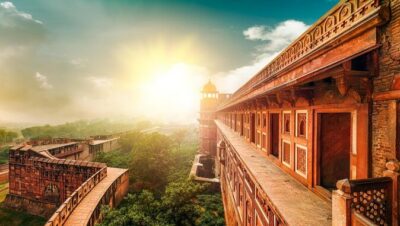
3-Days Private Golden Triangle Tour: Delhi, Agra & Jaipur by Car
Read our review →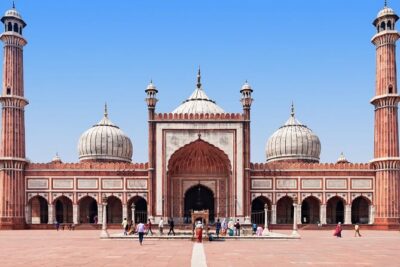
3-Day Delhi, Agra and Jaipur Private Tour – India Golden Triangle
Read our review →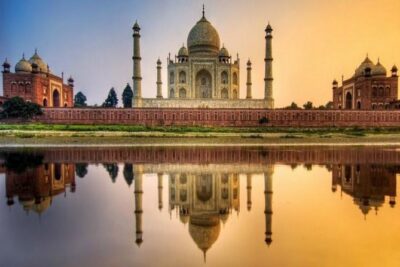
Four-Day Private Luxury Golden Triangle Tour to Agra and Jaipur From New Delhi
Read our review →
5 Nights 6 Days Private Golden Triangle Tour – Delhi Agra Jaipur
Read our review →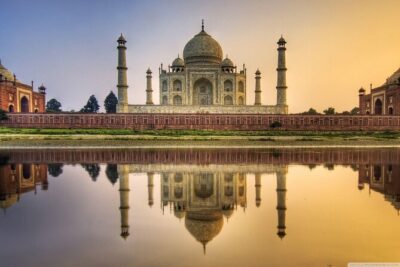

Private Car and Drive for Golden Triangle (4N/5D)
Read our review →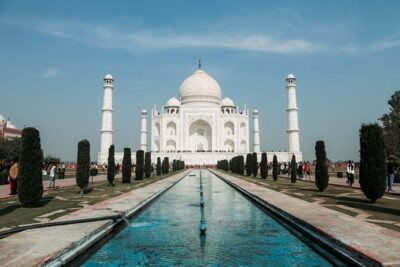
Private Golden Triangle Tour Delhi Agra Jaipur ( Top Rated )
Read our review →
3-Day Private Luxury Golden Triangle Tour to Agra and Jaipur From New Delhi
Read our review →Browse the lists this tour appears in