
A tight 3-day circuit through Delhi, Agra, Jaipur is a smart way to hit the headline monuments without turning your vacation into a logistics project. You move city to city in comfort, with planned stops that cover UNESCO icons and major Mughal-era landmarks.
I like the air-conditioned private car and the simple, stress-free rhythm of being picked up and driven door to door. I also really like the sunrise Taj Mahal start in Agra, plus the human touch of an English-speaking driver like Sangam, who was praised for being friendly, considerate, and genuinely helpful.
One thing to consider is pace. This itinerary fits a lot into each day, and several major sites list admission tickets as not included, so you should budget time and money for entry costs.
Key highlights
- Private, door-to-door pickup from Delhi Airport or within Delhi, Noida, and Gurugram
- AC vehicle with an English-speaking driver (fuel, tolls, parking, and taxes included)
- Early Taj Mahal sunrise visit plus Agra Fort and Itmad-ud-Daula
- Delhi mix of monuments and Old Delhi shopping areas like Chandni Chowk and Jama Masjid
- Jaipur essentials including Hawa Mahal, Jantar Mantar (UNESCO), and the Amer area
- 2 nights of hotel stays and breakfast available if you choose the hotel option
Private Golden Triangle: what makes it work in just 3 days
The Golden Triangle is famous for a reason. In a short span, you get Delhi’s big landmarks, Agra’s Mughal masterpieces, and Jaipur’s royal architecture. The trick is not just seeing sights, it is moving efficiently enough that you still enjoy the time between stops instead of constantly fighting with directions and timing.
This tour’s private setup matters. You are not sharing your day with a random crowd. You get a personal chauffeur and an AC vehicle, which makes long travel days feel way more manageable. And you also get an English-speaking driver, so you are not stuck guessing what to do next.
I also like how the plan is built around major “anchor” sights first, then fills in smart supporting stops. That includes things like Qutub Minar in Delhi, sunrise at the Taj Mahal in Agra, and classic Jaipur photo stops like Hawa Mahal. You end up with a trip that feels complete rather than like a frantic checklist.
The only real downside is that you are packing in a lot. If you like wandering slowly for hours, you might find some days feel structured. Still, if your goal is to see the key highlights with less stress, this is a solid way to do it.
More Golden Triangle circuits:
- 3-Days Private Golden Triangle Tour: Delhi, Agra & Jaipur by Car
★ 5.0 · 1,107 reviews - 3-Days Private Golden Triangle Tour: Delhi, Agra & Jaipur by Car
★ 5.0 · 1,098 reviews - 3-Day Delhi, Agra and Jaipur Private Tour – India Golden Triangle
★ 5.0 · 812 reviews
Day 1 in Delhi: from Qutub Minar to Old Delhi lanes
Day 1 is your Delhi “greatest hits” day, and it moves through very different neighborhoods. You start with a UNESCO icon, then shift into modern Delhi monuments, and finally end in Old Delhi where the streets and markets change the whole mood.
Qutub Minar, the UNESCO start with serious age
You begin at Qutub Minar, a UNESCO World Heritage Site built in 1193 by Qutub-ud-din Aibak. This is one of those monuments where the scale hits you fast. The tower’s height and the surrounding complex are a strong intro to how long Delhi has been a crossroads of empires.
A practical note: the stop lists admission tickets as not included. So this is one of the places where you should plan for extra entry cost if your package option does not cover it.
Lotus Temple, modern design and calm interior time
Next you visit the Lotus Temple, known for its flower-like shape and constructed in 1986. The vibe here is different from the older Mughal and Sultanate sites. It is designed to feel peaceful, and it is also easy to enjoy even if you just have a short window.
This one is listed as admission free in the plan, and it is scheduled for about 30 minutes.
Line these New Delhi options up side by side
- Old & New Delhi City Tour – Half or Full Day Options Available
★ 5.0 · 4,811 reviews - Half Day Private Delhi City Tour
★ 5.0 · 4,474 reviews - Same Day Taj Mahal, Agra Fort & Baby Taj Tour from Delhi by Car
★ 5.0 · 4,304 reviews - Taj Mahal Day Tour from Delhi by Superfast Train – TOP RATED TOUR
★ 5.0 · 4,166 reviews
India Gate, a quick stop with symbolism
India Gate is near Rajpath and works well as a quick reset between stops. It is a war memorial for British India soldiers who lost their lives in wars, and it is also a good place to orient yourself with Delhi’s major government and ceremonial axis.
This stop is marked as free and about 30 minutes.
Parliament House and Rashtrapati Bhavan views
You then pass Parliament House (Sansad Bhavan), inspired by the Ashoka Chakra motif, and Rashtrapati Bhavan, the President of India’s residence. The plan keeps these visits relatively brief.
Both stops are listed as free and short, which makes them realistic within a packed day. Just know they are more about seeing the exterior and getting your bearings than spending a long time inside.
Agrasen Ki Baoli, Delhi’s quieter stepwell moment
Then you get Agrasen Ki Baoli, a stepwell protected as an Ancient Monument. The plan notes the structure’s length as about 60 meters. This is the kind of stop that feels like a pause from the big famous names.
It is listed as admission free and scheduled for about 30 minutes.
Humayun’s Tomb, Mughal grandeur
You head to Humayun’s Tomb, a Mughal mausoleum commissioned in 1558 by Empress Bega Begum. This site is often appreciated for how it blends into its surroundings and for the elegant Mughal influence.
The stop lists admission tickets as not included in the plan, but you get about an hour here, which usually is enough time to actually look instead of just walking past.
Chandni Chowk and Jama Masjid, where Delhi gets real
After the grand monuments, the tour shifts to Old Delhi.
Chandni Chowk is a famous shopping area with spices, dried fruits, silver jewelry, and saris. This is the moment when Delhi feels less like a museum circuit and more like a living city. It is scheduled for about an hour.
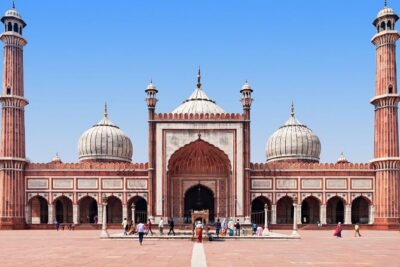
Then you visit Jama Masjid, one of India’s largest mosques, commissioned in 1650 and completed in 1656. The plan shows it as admission free, with a long window listed. That longer time matters because these kinds of religious sites can take time, especially if you want to get your bearings before heading deeper into the area.
Red Fort and a long drive onward
You finish Delhi with Red Fort, once the main residence for Mughal emperors until 1856. Today it is a major symbol of culture and power, and it is a fitting end to a day shaped by monuments and empire.
The stop lists admission tickets as not included, and it is about an hour.
After that, you get lunch at a local restaurant and then drive on the Yamuna Express Way toward Agra. The plan estimates about three hours of travel time, and that is a realistic amount for this route. You arrive in Agra, check into your hotel, and the rest of the day stays free.
Day 2 Agra: sunrise Taj Mahal plus Mughal sites that feel linked
Agra is where the Golden Triangle starts to feel like a movie set, mostly because the Taj Mahal dominates your imagination. The plan wisely starts early, because sunrise gives you better light and less crowd crush than mid-day timing.
Taj Mahal sunrise, guided focus inside
You begin with the Taj Mahal at sunrise, with a guided visit and time inside. The plan notes it is a UNESCO World Heritage Site and also one of the New 7 Wonders. That early timing matters. It is when the marble shows the most subtle changes in color as the sky shifts.
Admission tickets are listed as not included, so again, this is a place to budget. The scheduled time is about three hours, which is enough to cover the main areas and still feel oriented.
Agra Fort, power you can walk through
Next is Agra Fort, also UNESCO-listed and described as one of Agra’s most iconic forts. The plan frames it as the Mughal emperors’ main residence. This stop works well as a counterpoint to the Taj Mahal. The Taj is about love and beauty, while the fort reminds you of the military and administrative muscle behind the art.
Admission is listed as not included, and the visit time is about one hour.
Itmad-ud-Daula, the so-called Baby Taj
Then you visit Itmad-ud-Daula, often nicknamed the Baby Taj. The plan calls it a Mughal mausoleum with a main building surrounded by gardens and outbuildings, built between 1622 and 1628.
This one is listed as admission free and about 30 minutes. If you are a detail person, this is one of the better stops because it tends to feel less overwhelming than the Taj.
Fatehpur Sikri, a fortified city stop
You then move to Fatehpur Sikri, a fortified city founded by Emperor Akbar in 1569. The plan describes it as a major Mughal architecture highlight.
This stop is listed as admission free and about one hour. One hour is a short window for a site this size, so approach it like a guided overview. You will get the main structures and the overall layout, then decide what you would want to study more if you came back.
Chand Baori, a stepwell with thousands of steps
After that, you go to Chand Baori, an ancient stepwell built in the 8th and 9th centuries. The plan notes more than 3,500 steps, which is the kind of detail that makes this stop memorable even if you only have half an hour.
Admission is listed as not included here. The visit time is about 30 minutes, which is usually enough to take in the symmetry and get a few viewpoints before moving on.
Transfer to Jaipur, hotel check-in and downtime
You reach Jaipur and check into your hotel for an overnight stay. The plan does not list many activities in the evening, so the day feels like a full-on monument marathon and then a calmer landing in Jaipur.
Day 3 Jaipur: Hawa Mahal to Jantar Mantar, then Amer area
Jaipur is where the Golden Triangle gets color and ornament. The plan keeps you focused on the classics, but it also includes a couple of different styles: astronomy, palace-city space, and then the Amer area outside the city.
Hawa Mahal, the Palace of Breeze photo moment
You start with Hawa Mahal, the Palace of Breeze. The plan notes it was built in 1799 by Sawai Pratap Singh and designed as a five-storey facade. This is one of the best exterior stops for photos because the building looks like a honeycomb from certain angles.
Admission is listed as not included, and the visit time is about 45 minutes.
Jantar Mantar, UNESCO timekeeping science
Next is Jantar Mantar, a UNESCO World Heritage Site built in 1734. The plan says it includes nineteen architectural astronomical instruments commissioned by Sawai Jai Singh II.
Admission is listed as not included, and you get about 45 minutes. This is a great stop because it turns architecture into “how did they measure the sky” curiosity. You do not need a science degree to enjoy it, but a guide helps you connect the shapes to what they were designed to calculate.
City Palace, the royal core
Then you visit the City Palace, built in 1721 and historically the administrative and ceremonial hub for the Maharaja of Jaipur. The plan notes that today it houses part of the palace collection and remains an important center for Jaipur’s heritage.
Admission is listed as not included, and time is about two hours. Two hours is a fair amount here because palace complexes reward slower walking, even if you are on a schedule.
Royal Gaitor Tumbas, royal cremation grounds
After that is Royal Gaitor Tumbas, described as the cremation site for Maharajas of Rajasthan. The plan says it is about 15 km from Jaipur, at the base of Nahargarh Fort.
Admission is listed as not included, and time is about 30 minutes. This stop is meaningful because it is not one of the loudest photo icons, so you get something more reflective and less consumer-touristry than some Jaipur “must sees.”
Jal Mahal, palace on the water
Then you have Jal Mahal by Man Sagar Lake. The plan describes it as a palace expanded and refurbished during the 18th century by Maharaja Jai Singh II.
This stop is listed as admission free and short, about 15 minutes. You mostly treat it as a viewpoint and photo stop. Still, it is a nice contrast after the dense palace and fort energy.
Amer area, the final historic push
Finally, you head to Amer, described as a historic town on the outskirts of Jaipur. The plan gives about one hour.
This stop is listed as admission free in the plan. Since the plan does not specify a specific museum or fort ticket inside Amer, use the time to soak up the setting and enjoy the change from city streets to hillside viewpoints.
Back to Delhi, about five hours
After the Jaipur portion, you travel back to Delhi, with about five hours estimated. You can drop off at Jaipur airport or continue on in the city. This is where the AC car really earns its keep.
Comfort, timing, and driver quality you will feel every day
The tour’s comfort level is not a small detail. When you are moving from Delhi to Agra to Jaipur, “time in the car” is part of the experience. An AC private vehicle turns what could be exhausting into something you can actually tolerate.
It also helps that you have an English-speaking driver. That language bridge matters in India because it makes day-to-day decisions easier, like where to pause, what to see first, and how to keep things on track. One of the most praised parts of this tour was the driver experience, including Sangam’s friendliness and considerate approach. That kind of personality makes the day feel smoother, especially on longer driving legs.
You also get a car type matched to your group size: Maruti Dzire or Toyota Etios for 1 to 3 passengers, Maruti XL6 or Toyota Crysta SUV for 4 to 5 passengers, and a minivan or Tempo Traveler for 6 to 10 passengers. That suggests the operator thinks about comfort rather than forcing everyone into the same vehicle.
Finally, the tour is designed as a private activity, meaning it is only your group. If you want control over your pace, this matters.
Price and value: how to budget beyond the headline cost
The listed price is $134.20 per person for a 3-day private Golden Triangle tour. On its face, that is not expensive for three major cities, private transport, and multiple guided stops. But the real value depends on what option you choose.
Here is what you can count on from the tour information:
- Pickup is available from Delhi Airport, railway station, hotel, or any location in Delhi, Noida, and Gurugram.
- You get a private AC vehicle with an English-speaking driver, with fuel, toll, parking, and taxes included.
- Breakfast is included two times.
- Hotel accommodation for two nights is included if you book the option that includes hotels.
- Tour guides and monument entry fees are included only if you select the option that covers them.
- Meals are not included, and personal expenses like shopping are on you.
That last point is the big budgeting factor. Several monuments are explicitly marked as admission ticket not included in the stop details, including major hits like Qutub Minar, Humayun’s Tomb, Red Fort, Taj Mahal, and Agra Fort, plus multiple Jaipur sights like Hawa Mahal and Jantar Mantar.
So the practical way to think about value is:
- If your package option includes guides and entry fees, the $134.20 can feel like a real bargain for a tight schedule.
- If entry fees are not covered, you will still get great value in transportation and planning, but you should expect to pay for ticketed monuments on top.
Who this Golden Triangle tour suits best
This tour fits best if you want a structured, low-stress route through Delhi, Agra, and Jaipur and you care about major sights done well. It is also a good fit if you dislike negotiating transport on your own.
I think it is especially ideal for:
- First-time visitors who want a proven route with fewer unknowns.
- Couples or small groups who value a private car and not sharing time with strangers.
- People who like early starts for standout experiences, given the sunrise Taj Mahal focus.
If you are the type who wants days of free time and slow wandering with minimal driving, this may feel too packed. But if your goal is to see the big monuments efficiently, it hits the right balance.
Should you book this 3-day private Golden Triangle tour?
Yes, I would consider booking it if you want the Golden Triangle highlights with private AC transport, airport or city pickup, and a driver who keeps things moving. The sunrise Taj Mahal timing and the mix of Delhi monuments, Old Delhi atmosphere, Agra power sights, and Jaipur icons makes this feel like a complete first trip.
I would hesitate only if you hate structured days or if you do not want to handle ticket costs at multiple monuments. If you go in with that mindset, you will likely feel like you got real value for your time.
FAQ
How long is the Golden Triangle 3-day tour?
The tour is listed as 3 days (approx.).
Where can I be picked up for this tour?
Pickup is available from the airport, railway station, hotel, or any location in Delhi, Noida, and Gurugram.
Is this a private tour?
Yes. It is a private tour/activity, and only your group will participate.
Does the price include hotel accommodation?
It includes 2 nights of accommodation if you book the option that includes hotels.
Are breakfasts included?
Yes. Breakfast (2) is included.
Are entrance tickets included for the monuments?
Tour guides and monument entry fees are included only if you select the option that covers them. Some stops are listed with admission tickets not included.
What car do I get for small and large groups?
For 1 to 3 passengers, it is Maruti Dzire or Toyota Etios Sedan. For 4 to 5 passengers, it is Maruti XL6 or Toyota Crysta SUV. For 6 to 10 passengers, it is a minivan or Tempo Traveler.
Is a mobile ticket provided?
Yes. Mobile ticket is included.
Is free cancellation available?
Yes. You can cancel for a full refund up to 24 hours in advance of the experience start time.
Latest reviews in from New Delhi
- Taj Mahal Day Tour By Superfast Train From Delhi: TOP BOOKED TOUR★ 5.0 · 42 reviews
- Same Day Tour of Taj Mahal with Our Real Historical Experience★ 5.0 · 42 reviews
- Manali Tour Package★ 4.5 · 43 reviews
- Taj Mahal Tour with Agra Fort – All-Inclusive Day Trip from Delhi★ 5.0 · 43 reviews
- Taj Mahal Same Day Tour by India’s Fastest Train★ 5.0 · 43 reviews
- Private Day Trip to Haridwar and Rishikesh from Delhi by Car★ 5.0 · 43 reviews
- Royal Taj Mahal Day Experienc From New Delhi By First Class Train★ 5.0 · 43 reviews
- 5-Day Private Delhi, Agra and Jaipur with Ranthambhore Tiger Tour From Delhi★ 5.0 · 44 reviews
3-Day Experiences, compared.
3-Day Delhi, Agra and Jaipur Private Tour – India Golden Triangle
Read our review →
3-Day Private Luxury Golden Triangle Tour to Agra and Jaipur From New Delhi
Read our review →
3-Day Luxury Golden Triangle Tour: New Delhi, Agra & Jaipur
Read our review →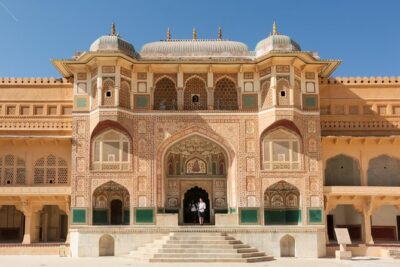
Award-Winning 3-Day Private Golden Triangle Tour of India
Read our review →3 Days 2 Night Golden Triangle Tour – Private Luxury Experience
Read our review →
The Ultimate 3 Days in Varanasi – How to Spend 39 Hours – For First Timers
Read our review →
3-Day Private Golden Triangle Tour to Agra &Jaipur from New Delhi
Read our review →Browse the lists this tour appears in