
Reviewed · WILDLIFE
Golden Triangle with Wildlife and Royal Castle Stay
A Golden Triangle trip usually means fast-moving highlights. This one adds a real wildlife day and swaps one normal hotel night for Talabgaon Castle. The result feels like two trips in one: iconic monuments plus a shot at big cats in Ranthambore.
I especially like the door-to-door air-conditioned vehicle transfers and the fact that your wildlife time is guided with a nature focus. One drawback to plan for: monument entrance fees and camera fees are not included, and several stops are timed tight, so you will want to prioritize what matters most to you.
Because this is run as a private tour, you are not stuck doing the same group shuffle. If you travel solo, it can still operate, and drivers like Prem and Kapil have been praised for making solo days feel less lonely and more organized. Still, intercity driving is part of the deal, so bring patience and water, because the itinerary keeps moving.
Key things I’d circle before you go
- A Ranthambore safari with a nature guide in a shared gypsy, with tiger spotting as the big goal
- One night at Talabgaon Castle, a 200-year-old fort turned heritage resort, plus a village safari there
- Golden Triangle classics in set order, from Humayun’s Tomb and Qutub Minar to the Taj Mahal and Amber Fort
- Jeep ride at Amber Fort plus a guided look at Jaipur’s top sights, not just a quick photo stop
- All interstate taxes and permits included, which helps the trip feel smooth on the road
- Monument tickets and camera fees extra, so budget for that upfront
Golden Triangle, but with teeth: Ranthambore plus Talabgaon Castle
The headline here is simple: you get the Golden Triangle highlights, but you also get a serious nature day and a heritage-style overnight. Delhi, Agra, and Jaipur are the big-name circuit for a reason, yet this tour gives you a break from the crowds through the Ranthambore wilderness.
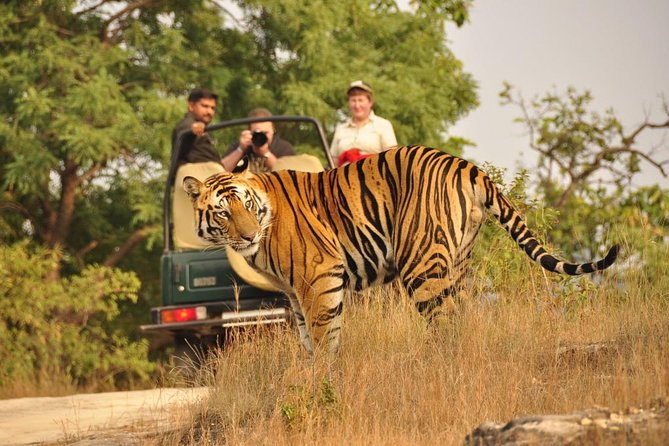
The Ranthambore stop is not just “you will be there.” You go on a morning jungle safari in a shared gypsy with a nature guide, and the aim is to spot animals like hyenas, chittas, jungle cats, panthers, and of course an Indian tiger if you are lucky. That “if” is real, but it is also why you book a wildlife day in the first place.
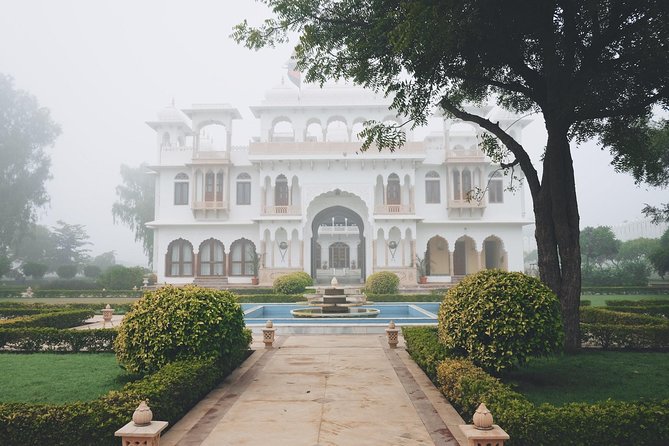
Then there is Talabgaon Castle, described as a 200-year-old Indian fort and family home now operating as a heritage resort. You also get a village safari as part of the stay. For me, that combination matters because it adds local texture around the wildlife day, not just another city night.
More Golden Triangle circuits:
- 3-Days Private Golden Triangle Tour: Delhi, Agra & Jaipur by Car
★ 5.0 · 1,107 reviews - 3-Days Private Golden Triangle Tour: Delhi, Agra & Jaipur by Car
★ 5.0 · 1,098 reviews - 3-Day Delhi, Agra and Jaipur Private Tour – India Golden Triangle
★ 5.0 · 812 reviews
Delhi morning to evening: Humayun’s Tomb, Gandhi at Raj Ghat, and Delhi’s monuments
Day one starts with Mughal-era power and then moves into modern national memory. You begin with Humayun’s Tomb, built in the 16th century by Haji Begum, and considered an architectural predecessor of the Taj Mahal. It is the kind of place where the details are the point, not just the skyline.
Next you head to Raj Ghat on the Yamuna River, Gandhi’s memorial where he was cremated after his assassination in January 1948. It is landscaped and calm in a way that contrasts with the high-energy monuments that come after.
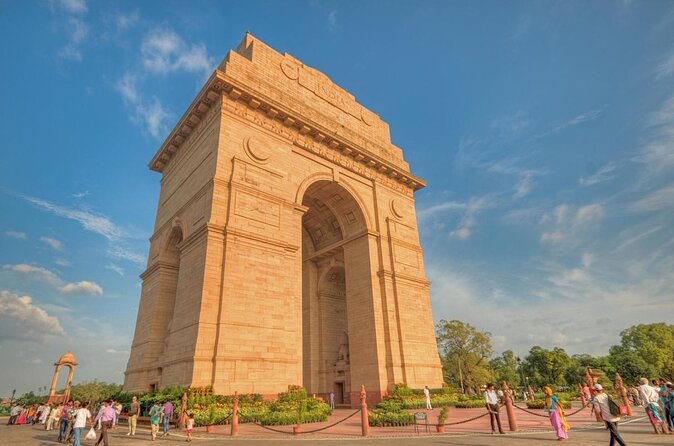
Then you check the big fortress names: Red Fort, a 17th-century red sandstone stronghold with palaces and gardens inside, plus the massive boundary wall mentioned as 108 feet. After that comes Qutub Minar, the 237-foot landmark of Delhi, and then India Gate, built to commemorate 70,000 Indian soldiers who died in World War I.
One practical note: many of these stops are timed around 30 minutes. That can work fine if you go in knowing what you want to see and you keep your camera ready. If you prefer slow wandering, you may feel the pinch. The good news is that transport is organized and you are not driving yourself through Delhi chaos.
The Taj Mahal day in Agra: guided time, then Yamuna viewpoints
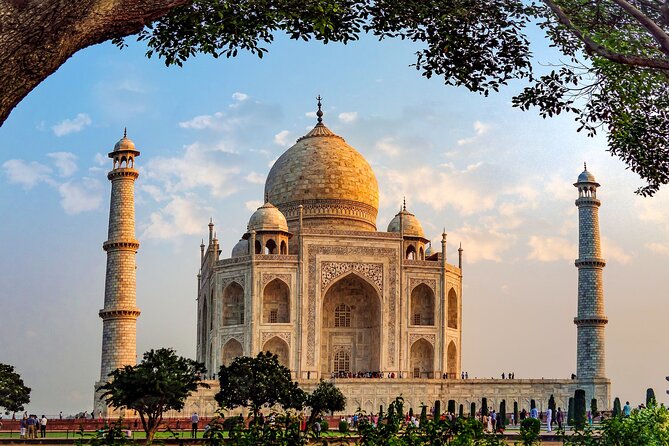
Agra is all about the Taj Mahal. Your guide meets you at the monument and takes you through it, which is the difference between staring at it and actually understanding what you are seeing. The Taj Mahal is the main event, and your time is set at about an hour, which usually gives enough room for key views and a first real impression.
After the Taj, you go to Agra Fort, described as one of the finest Mughal forts, built by Akbar in 1565. It sits on the Yamuna’s bank, and having a guide here helps because fortress walls can look similar unless someone points out what changes over time.
Next comes Itmad-ud-Daula, a tomb you can think of as a mausoleum that overlooks the Yamuna River. The stop is about an hour, and it tends to reward patience. You will often appreciate it more on a second look, so use your time wisely.
Finally, you see Mehtab Bagh, a series of 11 parks on the Yamuna’s east bank. This part is less about one building and more about the setting. It gives you a different angle on the river experience that wraps around the Taj area.
A balanced expectation: monuments on this route are famous for a reason, but the day can still feel intense. Plan for warm weather if you travel in hot months, and keep water and sun protection handy since entrance fees and camera fees are extra and you do not want to lose time to discomfort.
Ranthambore safari: your morning wildlife round with a nature guide
This is the day that changes the mood of the whole trip. The safari runs in the morning, roughly a three-hour window, using a shared gypsy with a nature guide.
In terms of what you might see, the tour lists animals including hyenas, chittas, jungle cats, panthers, and Indian tiger if you are lucky. That “if” matters, but it also means the safari is designed around wildlife spotting rather than just a scenic drive. Having a nature guide is useful because it often improves how you read tracks, movement, and the timing of sightings.
Also, remember that Ranthambore is not a zoo. You are out in the wild, which means you could get dramatic sightings or just good animal signs. Either way, you are trading guaranteed monuments for genuine uncertainty, and that is where the wildlife value comes from.
After the safari, you return and have breakfast. Then you drive onward to Castle Talabgaon for check-in. So you are not just leaving Ranthambore behind, you are rolling straight into a heritage stay that fits the nature theme.
Line these New Delhi options up side by side
- Taj Mahal Tour with Optional Wildlife Rescue Center Visit
★ 4.9 · 12 reviews - Ranthambore Wildlife Safari with Tickets & Transfer Options
★ 5.0 · 58 reviews - From Agra Private Transfers to Wildlife SOS Elephant Conservation
★ 5.0 · 49 reviews - From Agra: Visit to Wildlife SOS Elephant Conservation Trip
★ 4.8 · 47 reviews
Talabgaon Castle night and village safari: fort to heritage resort
Talabgaon Castle is the kind of stay that makes the “royal” part feel real. It is described as a 200-year-old fort and family home, now operating as a heritage resort with a more luxurious, boutique style. You are sleeping in a different setting than the three-star hotels used for the other nights, so this is the one accommodation upgrade built into the package.
You also get a village safari included. Even without exact timing in your plan, the point is clear: it adds local life around the wildlife day, which can help you shift from “spot animals” mode to “understand the area” mode.
What I like about structuring the Talabgaon night here is that it prevents the wildlife day from feeling disconnected. You finish a safari, eat breakfast, and then move into a heritage environment that keeps your attention on the region instead of jumping right back into another big-city schedule.
If you are someone who hates early mornings, this part can still work because the safari is in the morning, then your evening is less structured. If you love history and countryside settings, this is one of the best reasons to book.
Jaipur in two passes: Birla Mandir and Albert Hall, then Amber Fort by jeep
Jaipur gets split across two days, which helps because Jaipur is spread out and you do not want everything mushed into one rushed afternoon.
On the first Jaipur day, you visit Birla Mandir, a Hindu temple in Jaipur. It is located on elevated ground at the base of Moti Dungri, and the time allocated is about an hour. Then you move to Albert Hall Museum, described as the oldest museum of Rajasthan, with another about one hour.
These stops give you a contrast to the fort-focused vibe later. If your instinct is to think “Jaipur equals forts,” this day reminds you that the city also has temples and museums worth slowing down for.
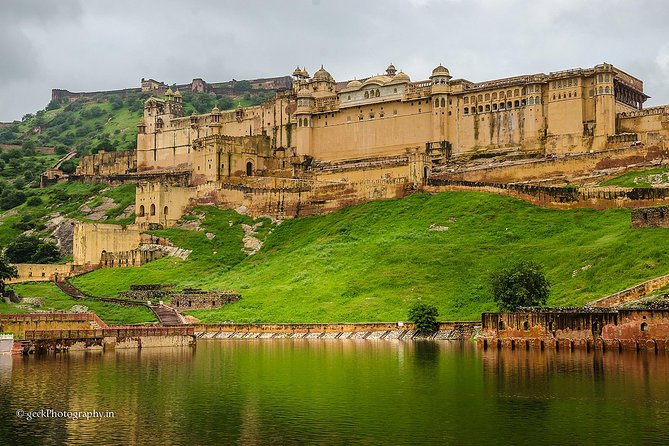
On the next Jaipur day, the big hit is Amber Palace. You get a jeep ride to and from the top of the hill where Amber Fort sits, which is a major practical win because it reduces fatigue. A guide explains the history as you go, which helps you connect the structure to the people and the era.
Amber Fort and Amber Palace are where Jaipur can feel like theater. The walls, courtyards, and views make you understand why so many movies and photos choose this angle. The time allocated is about two hours, which is usually enough to cover the key sections without turning it into a sprint.
One more practical note: since monument and camera fees are not included, bring cash or plan for card payments at the sites. Your time is fixed, so if you run into payment delays, you lose minutes you cannot get back.
City Palace, Hawa Mahal, and Jantar Mantar: the classic trio in Jaipur
After Amber, you head to City Palace in the heart of Jaipur. It is known for blending Rajasthani and Mughal architecture, and you can see collections of textiles, costumes, and armor. That mix of design and everyday artifacts helps City Palace feel more than just a view point. Time here is about one hour.
Then comes Hawa Mahal, the Palace of Wind. It was constructed for royal ladies to watch royal processions without being seen. Expect your interest to depend on whether you like architecture stories, because it is a “meaningful design” stop as much as a “look at the building” stop. Time is set at about 30 minutes.
Finally, you get Jantar Mantar, a stargazing observatory built by Maharaja Jai Singh. Your time allocated is about one hour. This stop is surprisingly accessible because it is science as public art, and the shapes make more sense the longer you look.
As a day planning tip: do the interior-style stop first if you care about artifacts, then use the exterior time for photos and quick rests. This itinerary does exactly that, with City Palace before Hawa Mahal and Jantar Mantar.
Transport and timing: how the day plans affect your energy
This is a route built for efficiency, not lingering. You start at 9:00 am, and day one and day five have a lot of separate stops. Many of those stops are around 30 minutes, so you are moving with purpose.
The big help is the transportation setup. You have an air-conditioned vehicle with an experienced chauffeur as per the itinerary. Door-to-door transfers are included, which means you avoid the fun but exhausting task of figuring out transit between cities while you are jet-lagged.
Also included are jeep rides and safari vehicles. That matters because it reduces the “logistics tax” on your trip. You pay for a guided flow, not just a list of destinations.
The other timing reality: intercity travel takes time, so pack for comfort. You will not have the option to ditch the car for a spontaneous detour unless the schedule allows it. The itinerary does say you have flexibility to explore more, but the safe way to use that flexibility is to add short, low-stress extras near your planned stops.
Price and value at $415: what you get, what you still pay
At $415 per person for an approximately six-day trip, the value equation depends on two things: guided sightseeing flow and the wildlife stay components.
On the “you get a lot” side, you have:
- Three-star accommodation for multiple nights, plus one night at Talabgaon Castle
- Dinner included and breakfast for five mornings
- Ranthambore safari in a shared gypsy with a nature guide
- Jeep ride at Amber Fort
- A village safari at Talabgaon
- Air-conditioned chauffeur service between destinations
- Interstate taxes, permits, parking, tolls, and fuel charges
On the “budget extra” side, monument entrance and camera fees are not included. That is important because major sites can stack up quickly. Your best move is to treat the trip price as the backbone, then add a separate entertainment budget for site tickets once you know which monuments you want to spend longer on.
So does it feel fair? For a route that combines the Golden Triangle with real wildlife time and a heritage resort night, yes. But only if you plan for extra site fees. If you dislike surprise costs, you will want to estimate entrances for the major stops and carry enough cash.
Solo-friendly feel: private tour, driver support, and how to use it
Even though this is private, it can still operate with one traveler, which is a big deal if you are doing India for the first time and want structure without group pressure. The tour is “private” in the sense that only your group participates, and it also supports pickup and door-to-door transfers.
Driver support is often the difference between a trip that feels effortless and one that feels chaotic. You may see names like Prem, Kapil, Mayur, and Narendra Singh (called Verstappen) associated with strong service experiences. Even if your driver is different, the point is that this type of tour leans on someone who keeps you moving and helps with practical timing.
How should you use that advantage? Ask questions on the car rides. If you want the most out of short stops, you will get more from a driver or guide who can tell you where to stand for the best view or which side matters for photos.
Also, remember this: if you have specific expectations about what is included at each site, confirm on the ground. Some past experiences can fall flat when expectations and reality do not match, especially around “extra” fees and timing.
Who should book this Golden Triangle with wildlife and a royal stay
This trip is a strong match if you want:
- The Golden Triangle big names without self-driving stress
- A genuine wildlife safari day at Ranthambore with guided spotting
- A heritage resort night at Talabgaon Castle, not just another hotel bed
- Guided structure with enough time to see, plus a little flexibility to add stops
It may be less ideal if you:
- Hate packed days and timed entry windows
- Want a totally unhurried museum or monument pace every day
- Do not want to pay extra for entrances and camera fees on top of the tour price
Your best traveler type is someone who likes balance. You enjoy famous monuments, but you also want one day that feels different and wild.
Should you book it?
I think this is worth booking if you want a single, clean package that ties together the Golden Triangle and Ranthambore in a way that does not feel like an afterthought. The Ranthambore safari with a nature guide and the Talabgaon Castle night make it more than a standard monument run.
My main caution is budget planning for entrance and camera fees, plus mental planning for a schedule with many short stops. If you go in with that expectation, you should leave with a trip that covers Delhi, Agra, and Jaipur and still gives you stories from the jungle.
FAQ
Are monument entrance tickets included?
No. Monument entrance and camera fees are not included, so you should expect to pay separately at the sites you visit.
What meals are included?
Dinner is included, and breakfast is included for five mornings.
Do I get air-conditioned transport between cities?
Yes. The tour includes surface transportation by air-conditioned vehicle with an experienced chauffeur as per the itinerary, along with door-to-door transfers.
How does the Ranthambore safari work?
You do a morning jungle safari using a shared gypsy with a nature guide, and it is listed as one round.
Is there an accommodation upgrade besides regular hotels?
Yes. You stay in three-star accommodation for the other nights, plus one night at Castle Talabgaon.
What’s included at Amber Fort?
You get a jeep ride to and from the top of the hill for Amber Fort, and a guide will explain the history there.
Is this tour private?
Yes. It is a private tour, and only your group will participate.
What is the start time and where do you end?
The tour starts at 9:00 am. On the last day, you are driven back to Delhi and dropped at either the airport or your hotel in Delhi.
What is the cancellation policy?
You can cancel for free up to 24 hours in advance for a full refund. If you cancel less than 24 hours before the experience start time, the amount paid is not refunded.
Latest reviews in from New Delhi
- Taj Mahal Day Tour By Superfast Train From Delhi: TOP BOOKED TOUR★ 5.0 · 42 reviews
- Same Day Tour of Taj Mahal with Our Real Historical Experience★ 5.0 · 42 reviews
- Manali Tour Package★ 4.5 · 43 reviews
- Taj Mahal Tour with Agra Fort – All-Inclusive Day Trip from Delhi★ 5.0 · 43 reviews
- Private Day Trip to Haridwar and Rishikesh from Delhi by Car★ 5.0 · 43 reviews
- Taj Mahal Same Day Tour by India’s Fastest Train★ 5.0 · 43 reviews
- Royal Taj Mahal Day Experienc From New Delhi By First Class Train★ 5.0 · 43 reviews
- 5-Day Private Delhi, Agra and Jaipur with Ranthambhore Tiger Tour From Delhi★ 5.0 · 44 reviews
Wildlife, compared.

Ranthambore Wildlife Safari with Tickets & Transfer Options
Read our review →From Agra Private Transfers to Wildlife SOS Elephant Conservation
Read our review →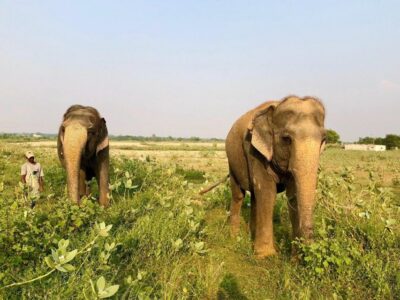
Visit to Wildlife SOS Elephant Conservation Trip
Read our review →
5 Days Golden Triangle With Ranthambore Wildlife
Read our review →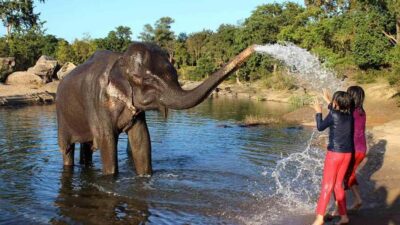
Taj Mahal Tour with Optional Wildlife Rescue Center Visit
Read our review →Browse the lists this tour appears in