
This is interesting because it stitches together India’s big-name Mughal highlights with a real wildlife outing in just 4 days. You get the easy Golden Triangle hits, then you swap palace doors for park gates and go looking for Bengal tigers.
I especially like that you start with a guided, sunrise Taj Mahal visit in Agra. I also love the human touch of having different guides in Delhi, Agra, and Jaipur, like Vimal Mathur in Delhi and Maahi or Arham in Agra, each helping the stops make sense instead of turning into a checklist.
One consideration: entrance tickets and lunch are not included, and a few monuments you’ll want to see cost extra. Also, with lots of driving days, plan for long car time, especially between cities.
Key highlights and what they mean for you
- Private door-to-door pickup and drop-off in Delhi NCR keeps your mornings simple and avoids transit stress.
- Guided Taj Mahal sunrise is the best way to beat the crowds and see the mausoleum at its most photogenic.
- Ranthambore safari with a trained naturalist gives you the highest odds by focusing on the right routes and tiger behavior.
- Multiple city guides means better explanations in Delhi, Agra, and Jaipur, not one tired guide trying to cover everything.
- Shared jeep or canter for the safari keeps the wildlife outing efficient and cost controlled, even on a private tour.
Why this Golden Triangle plus Ranthambore mix is a smart 4-day plan
The Golden Triangle is the classic first timer circuit, but it can also feel like nonstop buses and cut-rate explanations. This version uses private, air-conditioned transport for the city days, then switches gears to a morning safari in Ranthambore where your guide focuses on spotting wildlife.
The rhythm works. Delhi and Agra hit the grand architecture and history moments, then you get a palate reset with breakfast, forest air, and a tiger search that feels totally different from monuments.
The value is not just that you see more places. It’s that you’re not wasting time figuring out logistics, where to stand, when to enter, or which side of the fort makes the best photos. Your guides handle those practical choices.
More Golden Triangle circuits:
- 3-Days Private Golden Triangle Tour: Delhi, Agra & Jaipur by Car
★ 5.0 · 1,107 reviews - 3-Days Private Golden Triangle Tour: Delhi, Agra & Jaipur by Car
★ 5.0 · 1,098 reviews - 3-Day Delhi, Agra and Jaipur Private Tour – India Golden Triangle
★ 5.0 · 812 reviews
Price and what you truly get for about $313 per person
At $313.32 per person for 4 days, the price lands in the “good value if you use the included services” category. You’re getting accommodation with breakfast, private transport for sightseeing, guides in Delhi, Agra, and Jaipur, and a naturalist for Ranthambore.
Included costs that add up fast on your own: parking, tolls, fuel, taxes, and the safari vehicle is included as a shared jeep or canter. Entrance tickets are not included, and lunch is also not included, so you should budget for those separately.
If you’re the type who usually buys tickets at every stop, pays for separate transfers, and hires guides only in one city, this package usually makes more sense. If you hate any extra structure and want total freedom, you might prefer a DIY route. For most people though, this is a smooth way to “do it right” without burning days on planning.
Delhi day: from Qutub Minar UNESCO towers to Chandni Chowk rickshaw rides
Delhi is a big day, but it’s built around variety, which I like. You start with landmark-scale architecture, then move into modern India, then into Old Delhi’s market chaos, all with a private driver keeping the pace realistic.
Qutub Minar is a UNESCO World Heritage site tied to the Delhi Sultanate era. It’s a strong opener because the tower form sets the tone for how monumental this whole trip will feel. The tour notes that admission tickets are not included here, so plan for that extra cost.
Then you head to the Lotus Temple, a striking flower-like structure built in 1986. Entry is free, and it’s the kind of place where you can pause without having to “perform sightseeing.” Do note: the Lotus Temple remains closed every Monday, so your schedule on that day may shift.
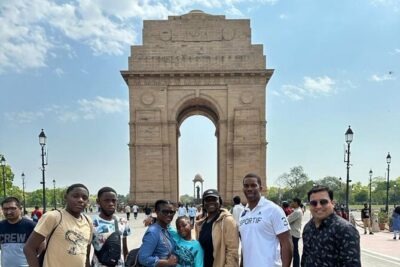
Next comes India Gate, a war memorial near Rajpath. Even if you don’t read every name, the structure gives you a clear visual anchor for modern Delhi history. After that, you’ll see Parliament House and Rashtrapati Bhavan from the outside.
A nice mid-program stop is Agrasen Ki Baoli, a protected stepwell. It’s not always on every fast tour, but it’s memorable because it’s quieter and different from the big-sight glare. From there, you visit Humayun’s Tomb, another UNESCO-style Mughal moment, with admission tickets not included.
Lunch happens at Connaught Place, with time built in for a multicuisine meal. If you want to use this day for shopping too, Connaught Place can work well, though your later stop in Old Delhi is usually the bigger draw.
Old Delhi is where the trip gets fun. You’ll go to Chandni Chowk for about an hour and take a traditional rickshaw ride. This is where you’ll spot spices, dried fruits, silver jewelry, and saris in the same walk, and it feels like you’re seeing how people live, not just monuments.
Your Old Delhi capstone is Jama Masjid, built in 1656. The tour includes a visit, but admission tickets are not included, so add that to your budget. If you like photos with scale, you’ll likely enjoy the mosque courtyard views.
By the end of Day 1, you drive to Agra via the expressway (around 3 hours). It’s a long travel block, but you avoid the stress of figuring out the night shift logistics, and you wake up closer to the Taj Mahal.
Agra day: sunrise Taj Mahal, Agra Fort, and the Baby Taj in one clean arc
Agra is a highlight-heavy day, and the timing matters. The Taj Mahal visit is planned as a sunrise tour, with a guided visit inside the UNESCO site. This is the best slot if you care about soft light, cooler temperatures, and fewer tour-group bottlenecks.
The tour description makes it clear you’ll see the Taj Mahal as a New 7 Wonders icon, built by Shah Jahan in memory of Mumtaz. But what’s more useful for your trip is how the guide experience often shapes what you notice, like the way Arham shared the meaning of details for one group, or how Maahi explained key history points while keeping the pace comfortable.
After the Taj visit, you return to your hotel for breakfast. That little “reset” is underrated, because the Taj can be exhausting if you jump straight into another stop without food.
Then you check out and go to Agra Fort, a UNESCO-listed fort that once served as Mughal imperial residence. The visit is about history and architecture, and the guide helps you connect the fort layout to how rulers lived. Admission tickets are not included here.
Next is Itmad-ud-Daula, often called the Baby Taj. This stop is shorter, but it can be a favorite because it’s detailed in a different way than the main Taj Mahal. The tour notes it as a Mughal mausoleum built between 1622 and 1628, showing a transition in Mughal architecture, so it’s a good place to slow down and look closely.
You then travel onward to Sawai Madhopur for Ranthambore (about 4 hours). This is the switch from marble and forts to trees and wildlife. Your hotel check-in is part of the plan, and you’re set up for an early safari the next day.
More Ranthambore trips:
- 4 Day Golden Triangle with Ranthambore Tiger Safari Tour from Delhi
★ 5.0 · 110 reviews - 4-Day Private Delhi, Agra & Jaipur with Ranthambore Tiger Safari
★ 5.0 · 71 reviews - 7-Day Golden Triangle Tour with Ranthambore Tiger Safari
★ 5.0 · 53 reviews - 8 Day Golden Triangle Tour with Ranthambore {Taj , Tigers & More}
★ 5.0 · 50 reviews
Ranthambore National Park safari: how the morning hunt works
If you came for one “wild India” moment, it’s here. The safari is timed for sunrise-style energy, and you’ll be in the park for about 2 to 3 hours.
You go in a shared jeep or canter, and you’ll travel with a trained naturalist who is specifically listed as English speaking. This matters because spotting tigers in Ranthambore is not about staring harder, it’s about knowing what to look for, which routes tend to work, and how animal movement changes across the day.
Ranthambore is described as a Project Tiger reserve since 1973 and a national park since 1980. It’s also tied to the 10th-century Ranthambore Fort, which surrounds the park. The point for you is that this isn’t some random forest stop. It’s managed, structured, and designed around tiger conservation and observation.
One realistic expectation: tigers can be in different zones, and each zone offers a chance. That means tiger sighting is always part luck, part timing. I like that the tour is upfront about that, because it keeps your brain from building a disappointment story.
After the safari, you get breakfast back at your hotel, then you head to Jaipur (the itinerary includes arrival and check-in). This works well because you’re fed and rested before you switch back to city sightseeing.
Jaipur day: stepwell history, Jaigarh fort views, Jal Mahal photos, and Hawa Mahal
Jaipur is where your eyes get candy-colored again, with a full day of classic sights. The good news is the stops are spaced with practical visit times, so you’re not sprinting through everything just to keep the tour moving.
You start at Panna Meena ka Kund, a stepwell near Amber Fort. The focus here is water management, not just architecture. It’s also a reminder that Jaipur was engineered for real life, not only for royal display.
Then you visit Jaigarh Fort, built by Sawai Jai Singh II to protect Amer Fort. The tour highlights the Jaivana canon as the largest canon in the world, and that alone is enough reason to go. Admission tickets are not included, so budget for it.
Next is Jal Mahal, the palace sitting in the middle of Man Sagar Lake. This is a photo stop, but it’s also fun because it shows how the city used water features for aesthetics and function. The stop is around 30 minutes.
You then move to City Palace, established in 1721. It now houses the Maharaja Sawai Man Singh II Museum. Admission tickets are not included, so if museums are your thing, check if you want to spend extra time once inside.
Your science-nerd friend will love Jantar Mantar, a UNESCO site built in 1734. It’s an astronomical observatory, built for naked-eye observations. Even if you don’t remember the math, you’ll likely enjoy how the instruments work in a physical, hands-on way.
Finish with Hawa Mahal, the Palace of Wind, built in 1799 with five stories of red and pink sandstone latticework. It’s not a long visit, but it’s iconic and it gives you that final Jaipur “wow” frame.
Lunch is built in at Jaipur at a multicuisine restaurant. After lunch, you return toward Delhi or you can choose to be dropped in Jaipur, depending on what you want at the end.
Guides make or break this kind of whirlwind tour
In tours like this, the schedule is the schedule. What changes your experience is the guide, how they manage time, and whether they keep you comfortable.
This tour is set up with a private live guide in Delhi, Agra, and Jaipur, and a naturalist for Ranthambore. The names you may see include Vimal Mathur in Delhi, Sadiq Hussain in Agra, Brajesh Sain in Jaipur, and also guides like Maahi, Arham, Nasir, and Maria highlighted in past experiences. Your exact guide depends on your dates, but the consistent pattern is clear: strong communication and patient, practical support.
One small but important example from real experiences: when someone felt sick from heat, the guide adjusted so the rest of the tour could be viewed from the car, and the person still got plenty of photos. That tells you something useful for your planning. If the sun hits hard, ask to slow down, rest, and stay hydrated. Your guide can work with your energy level.
Also, don’t underestimate photo help. Several of the highlighted guides are praised for taking good pictures. If you care about photos, tell the guide your preferences early, wide shots, close details, or quick stops for skyline views.
Drives, timing, and what changes on certain start days
The biggest “how will this feel?” question is the driving. You’ll do substantial car time between cities: Delhi to Agra is around 3 hours, Agra to Sawai Madhopur is about 4 hours, and Jaipur back to Delhi is listed as about 4 hours. The car is air-conditioned for sightseeing, which helps a lot with fatigue.
The itinerary timing also includes an early start for the sunrise Taj Mahal. Sunrise trips can be great, but only if you’re ready for an early wake-up. Pack a hat, sunglasses, and a reusable water bottle.
Your day-to-day plan can shift depending on the day you start. If your tour starts on a Thursday, the pattern is adjusted so Day 1 ends with an overnight in Jaipur, Day 2 overnight in Ranthambore, Day 3 overnight in Agra, and Day 4 ends with a drop-off in Delhi after Agra sightseeing.
If your tour starts on a Monday during July, August, or September, the tour pattern changes again: Day 1 ends with an overnight in Agra, Day 2 overnight in Jaipur, Day 3 overnight in Ranthambore, and Day 4 includes a Ranthambore morning safari before the drop-off in Delhi.
If your travel dates are flexible, choose based on what you most want. If tiger safari timing is your priority, those start-day changes are worth noting.
Should you book this private Golden Triangle and Ranthambore tour?
Book it if you want a guided, low-stress way to see the Golden Triangle classics and still get a meaningful safari day in Ranthambore, without juggling tickets and transfers by yourself. The included guides, hotel with breakfast, and the naturalist-led safari are the backbone of the value.
Don’t book it if you have a very low tolerance for driving days and early starts. This trip is structured. Even with private transport, you are moving between cities on set schedules.
If you do book it, go in with the right expectations. Tiger sightings can never be guaranteed, so keep your mindset on the experience and the odds. Then enjoy what you can control: arriving rested for the Taj Mahal sunrise, bringing basic sun protection, and using your guide time to ask questions and request photo stops.
If you want one compact route that mixes Mughal monuments with a genuine wildlife search, this is a solid choice.
FAQ
Is pickup included, and where can you be picked up?
Pickup is included from anywhere in Delhi NCR, and you also get a drop-off to anywhere in Delhi NCR at the end.
What is included in the tour price?
The tour includes private air-conditioned transport for sightseeing, private live tour guides in Delhi, Agra, and Jaipur, accommodation with breakfast, a Ranthambore naturalist guide, and a shared jeep or canter safari vehicle. Parking, tolls, fuel, and taxes are also included.
Are monument entrance tickets included?
No. Monument entrance tickets are not included. The guides help you purchase entrance tickets so you do not have to wait in queues to buy them.
Does the Taj Mahal visit include sunrise, and is it guided?
Yes. Day 2 includes a sunrise tour of the Taj Mahal with a guided visit inside.
What happens on the Ranthambore safari?
You go for about 2 to 3 hours in Ranthambore National Park with a trained naturalist. The safari uses a shared jeep or canter, and tiger sightings depend on chance and which areas animals are in.
Is the Ranthambore naturalist guide English speaking?
Yes. The naturalist guide in Ranthambore is listed as English speaking.
Are meals included besides breakfast?
Lunch is not included. Breakfast is included for 3 mornings as part of the accommodation package.
Are rooms twin-sharing, and what if you have three people?
Rooms are generally provided on a twin-sharing basis. For a booking of 3 people, rooms are provided on a triple-sharing basis by default. If 3 guests prefer 2 rooms, there is an additional charge for the second room.
Does the Lotus Temple run every day?
The Lotus Temple in Delhi remains closed every Monday.
Latest reviews in from New Delhi
- Taj Mahal Day Tour By Superfast Train From Delhi: TOP BOOKED TOUR★ 5.0 · 42 reviews
- Same Day Tour of Taj Mahal with Our Real Historical Experience★ 5.0 · 42 reviews
- Manali Tour Package★ 4.5 · 43 reviews
- Taj Mahal Tour with Agra Fort – All-Inclusive Day Trip from Delhi★ 5.0 · 43 reviews
- Private Day Trip to Haridwar and Rishikesh from Delhi by Car★ 5.0 · 43 reviews
- Taj Mahal Same Day Tour by India’s Fastest Train★ 5.0 · 43 reviews
- Royal Taj Mahal Day Experienc From New Delhi By First Class Train★ 5.0 · 43 reviews
- 5-Day Private Delhi, Agra and Jaipur with Ranthambhore Tiger Tour From Delhi★ 5.0 · 44 reviews
4-Day Experiences, compared.

Private Luxury Delhi – Agra – Jaipur Golden Triangle Tour – 3 Nights 4 Days
Read our review →
Private Golden Triangle Tour 3 Night/4 Days – All Inclusive
Read our review →
4 Days Best of Kerala Tour with Private Houseboat, Sightseeing & Car
Read our review →
4 Days Private Golden Triangle Tour to Agra and Jaipur from Delhi
Read our review →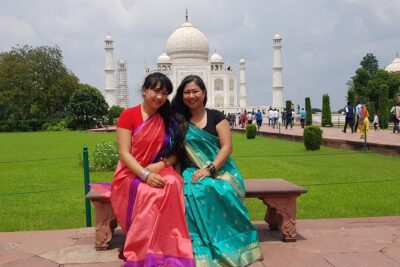
4 Day Golden Triangle with Ranthambore Tiger Safari Tour from Delhi
Read our review →
4-Day Private Delhi, Agra & Jaipur with Ranthambore Tiger Safari
Read our review →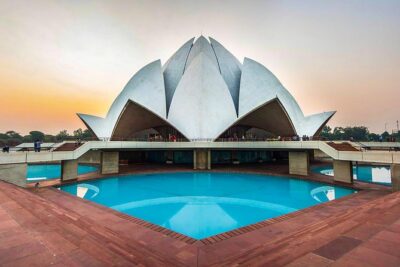
Browse the lists this tour appears in