
Reviewed · 3-DAY EXPERIENCES
Golden Triangle Tour 3 Days
This Golden Triangle tour is interesting because it strings together the big three cities in 3 days, without making you feel like you’re sightseeing on pure panic. I especially love the sunrise Taj Mahal timing on Day 2, and the way Day 1 blends Old Delhi landmarks with a real local-market feel. One possible drawback: monument admission and hotel with breakfast are only included if you pick the right package option.
The experience also has a strong “real person” feel thanks to city guides. In the feedback I read, Kaushal Pandey stood out for being patient and answering questions, and the wider team included guides such as Indu, Kalim, and Nameera, with Vishal noted as part of the operation.
Key things I’d plan around
- Sunrise Taj Mahal so you see the marble when crowds and heat are still manageable
- Old Delhi routing that mixes major monuments with Chandni Chowk shopping streets
- Hands-on city guiding with named guides like Kaushal Pandey and others supporting each city
- Hotel + breakfast options depending on the package you choose (2 breakfasts are listed)
- Air-conditioned transport and bottled water to keep long drives from draining you
Day 1 in Delhi: mosques, markets, memorials, and the long drive to Agra
Day 1 is a full-on Delhi sampler, then you move on to Agra for the overnight stay. The pace makes sense for a 3-day tour, because you get key sights clustered in the morning and early afternoon, rather than trying to do Delhi on your own for a week.
More Golden Triangle circuits:
- 3-Days Private Golden Triangle Tour: Delhi, Agra & Jaipur by Car
★ 5.0 · 1,107 reviews - 3-Days Private Golden Triangle Tour: Delhi, Agra & Jaipur by Car
★ 5.0 · 1,098 reviews - 3-Day Delhi, Agra and Jaipur Private Tour – India Golden Triangle
★ 5.0 · 812 reviews
Jama Masjid: big scale, Mughal craftsmanship, and prime orientation
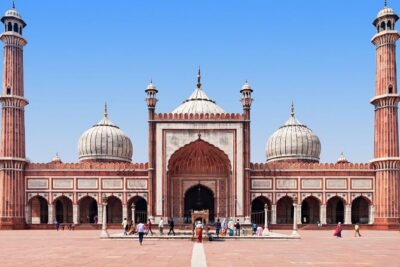
You start at Jama Masjid, built by Mughal emperor Shah Jahan between 1644 and 1656. It is one of the largest mosques in India, and walking through it helps you get your bearings fast for Old Delhi. The admission ticket is included on this stop, so you can spend your energy looking instead of negotiating.
Practical note: dress codes matter at mosques. Bring something easy for covering shoulders and follow any on-site guidance from staff. Also plan for crowds, especially if your group hits during a busy time window.
Chandni Chowk: spices, jewelry, saris, and side streets worth slowing down for
Next comes Chandni Chowk, the shopping heart of Old Delhi. This stop is free, and it is all about texture: spices, dried fruit, silver jewelry, and vivid saris, plus narrower side lanes where tiny shops sell essential oils.
I like this part of the tour because it is not just “look at a building.” You get to watch daily life in motion. If shopping is your thing, you can browse at a relaxed pace, but you should still expect vendors and traffic to move quickly.
Rickshaw Tours: Old Delhi heritage in a compact time slice
Then you get a Rickshaw Tours segment, geared toward Old City heritage and culture. It’s listed with admission included, and the timing is about 1.5 hours, which is a good length for seeing more streets without burning the whole day on transport.
This is where a guide really pays off. With someone local pointing out what you’re actually seeing, a rickshaw ride becomes orientation, not just a novelty.
Line these New Delhi options up side by side
- Old & New Delhi City Tour – Half or Full Day Options Available
★ 5.0 · 4,811 reviews - Half Day Private Delhi City Tour
★ 5.0 · 4,474 reviews - Same Day Taj Mahal, Agra Fort & Baby Taj Tour from Delhi by Car
★ 5.0 · 4,304 reviews - Taj Mahal Day Tour from Delhi by Superfast Train – TOP RATED TOUR
★ 5.0 · 4,166 reviews
Raj Ghat: a quiet reset after the crowds
After the shopping and lanes, Raj Ghat offers a calmer mood. It is the memorial dedicated to Mahatma Gandhi, marked by a black marble platform and an eternal flame at one end. Admission is included, and the stop is short.
I think this stop balances the day. After the noise of markets, you get a moment to reflect and then re-center before the more scenic drives and tomb visits.
India Gate and Humayun’s Tomb: memorial formality, then Mughal garden logic
You drive past India Gate, a war memorial built to remember soldiers who died in the First World War. It’s a quick stop, but the sightline helps you understand how Delhi lays out big civic space.
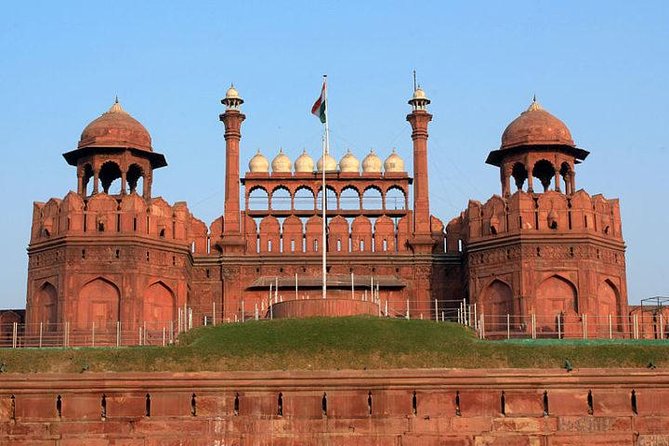
Then you move to Humayun’s Tomb for a longer visit. It’s a landmark in Mughal architecture and is noted as an early surviving example of the Mughal garden tomb idea, with causeways and channels. Admission is included, and the stop runs about 1.5 hours.
Gurudwara Bangla Sahib and Lotus Temple: faith spaces in the same day
In the afternoon you visit Gurudwara Bangla Sahib, one of the prominent Sikh gurdwaras. It is associated with the eighth Sikh Guru, Guru Har Krishan, and the concept of langar is part of the experience. Admission is included.
After that, Rashtrapati Bhavan is a short, free stop from the outside, followed by the Lotus Temple, a Bahá’í House of Worship dedicated in December 1986. This temple is known for its lotus-like shape, and the stop is about 30 minutes with free admission.
Drive to Agra and sleep with Taj dreams
By the end of Day 1, you drive to Agra and overnight there. The drive time is listed as about 3 hours, and this matters because sunrise Taj day is early. Getting to Agra the night before is one of those small decisions that makes the whole trip feel smoother.
Day 2: sunrise Taj Mahal plus Agra Fort and Fatehpur Sikri en route to Jaipur
Day 2 is the “you really came for this” day. You start with the Taj Mahal at sunrise, which is the kind of plan that improves your photos and your experience, even if you’re not chasing perfect Instagram shots.
Taj Mahal at sunrise: marble that changes with the sky
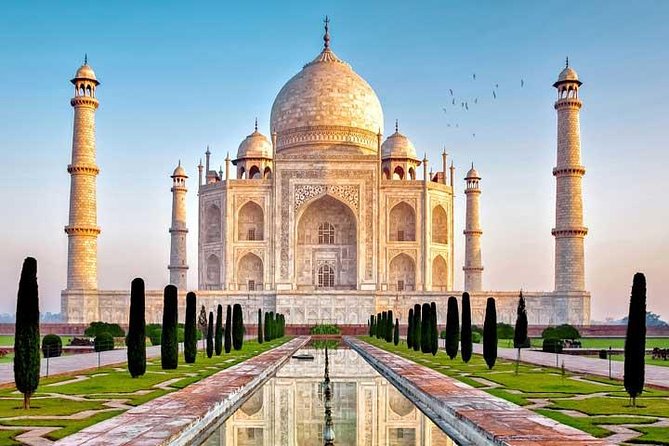
The tour schedules the Taj Mahal for early morning sunrise time. It’s an ivory-white marble mausoleum on the south bank of the Yamuna River, commissioned in 1632 by the Mughal emperor. Admission is included, and the visit is about 3 hours.
The payoff here is simple: when you arrive early, the place feels more spacious and the light helps the marble look less flat. It also gives you time to slow down for details like arches and symmetry, instead of just rushing to the center viewpoint.
Tip: sunrise means you will likely feel cold early, even if the rest of the day is warm. Bring a light layer you can handle easily.
Agra Fort: power, defense, and palace-strong views
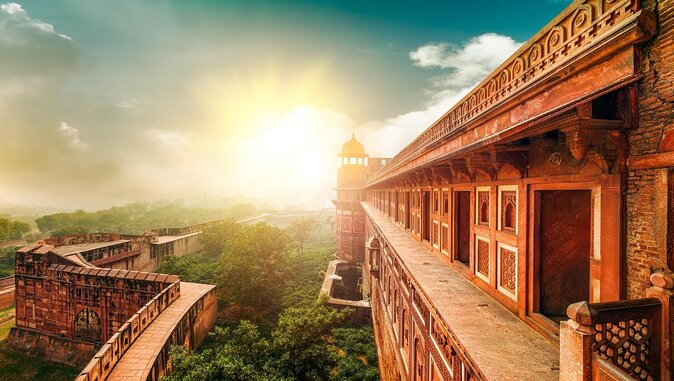
After Taj, you go to Agra Fort, a former Mughal imperial residence and a UNESCO World Heritage site. Admission is included, with about 2 hours here.
I like Agra Fort because it explains the “how” behind the wealth and control. Instead of focusing only on one monument, you see the broader imperial setting, including fortifications and palace-like spaces within the complex.
Fatehpur Sikri: a quick but meaningful stop on the way
While driving from Agra to Jaipur, there is a stop at Fatehpur Sikri. The city was founded in 1569 by Akbar and served as the capital from 1571 to 1585. Admission is listed as free, and the visit is about 1 hour.
This is a practical mid-route break. One hour is not enough to master everything, but it gives you a taste of Akbar-era Mughal city planning. If you love history, you will likely want more time here on a separate trip, but on a 3-day plan, it keeps the route efficient.
Jaipur overnight: when your itinerary shifts from monuments to palaces
Once you complete the sight stops, you drive to Jaipur and spend the night there. The time listed is about 4 hours, which fits the rhythm of the tour: mornings full of monuments, afternoons full of movement, and evenings where you recover.
Day 3 in Jaipur: City Palace, Hawa Mahal, Amber Fort, then Jantar Mantar and Jal Mahal
Day 3 is where Jaipur turns into architecture, color, and fort views. The stops are grouped well: palace complex, then signature facade, then the big hillside fort, then shorter photo-and-views moments.
City Palace complex: Chandra Mahal and Mubarak Mahal focus
You start at City Palace, a palace complex that includes the Chandra Mahal and Mubarak Mahal palaces and other buildings. Admission is included, and the visit is about 2 hours.
This stop works because it gives variety inside one location. A palace complex like this can feel like a mini city, and the guide support helps you connect the different buildings into a single story rather than treating them as separate photo backdrops.
Hawa Mahal in 15 minutes: the famous facade that still earns your attention
Next is Hawa Mahal, or Palace of Wind, with about 15 minutes and admission included. It is famous for the high screen wall design that allowed women of the royal household to observe street festivals while remaining unseen from the outside.
Even in a short stop, the design idea lands. It’s also a reminder that Jaipur’s most iconic sights are often about function, not just looks.
Amber Palace: gold, mirrors, and mixed architecture on a hilltop
Then comes Amber Palace, also known as Amber Fort, located at the top of the Aravali Hills. The stop is about 2 hours with admission included, and it is described for its mix of Indo-Islamic architecture, gold-plated painting, mirror work, and European architectural elements.
This is the kind of place where a guide can help you spot what you’re looking at. Mirror work especially can feel like just sparkle unless someone tells you what to notice and where.
Practical note: fort visits usually mean uneven paths and stairs. Wear supportive shoes, and if you’re heat sensitive, plan your photo breaks with care.
Jantar Mantar: measuring the heavens with stone instruments
Next is Jantar Mantar with admission included, listed at about 1 minute. The name translates roughly to instruments for measuring the harmony of the heavens, and the site is said to consist of 13 architectural astronomy instruments.
Because the scheduled time is short, your best move is to focus on the biggest instrument and let your guide explain how it works. Even a quick stop can be rewarding if you’re pointed toward what to observe first.
Jal Mahal photo stop: the water palace on Man Sagar Lake
You wrap up with Jal Mahal, a water palace in the middle of Man Sagar Lake in Jaipur. It’s a short stop, about 10 minutes, focused on photos.
This part is quick by design. It gives you an easy finale image before you shift back to the drive to Delhi for drop-off at your preferred location.
Price and what $20 per person really means for value
The price listed is $20 per person for this 3-day tour, which sounds like a steal, but the value depends on what package you select. The inclusions show that accommodation with breakfast and monument fees are conditional, based on the option you choose.
Here is how I would judge value before booking:
- Guide services are included, and the experience is set up as a private tour for your group, which usually means more attention and less time wasted.
- Air-conditioned vehicle and bottled water are included, and those two things matter a lot when you’re covering three cities.
- If you pick the option that includes monument admission, you avoid paying on the spot for major sites like the Taj Mahal and Agra Fort.
- If you pick the option that includes hotel accommodation with breakfast, you get two breakfasts listed, which helps you keep mornings smooth for sunrise timings and early starts.
One realistic consideration: if you choose a package without monument admission or without hotel, your “final cost” can rise once you add those items yourself. So I’d treat the $20 as the entry price, then confirm exactly what’s covered in your selected option.
Guides, private groups, and how to get the best out of the route
A tour like this lives or dies by the guide. You will be walking through major landmarks in tight time blocks, so you need someone who can connect the facts to what you’re actually seeing.
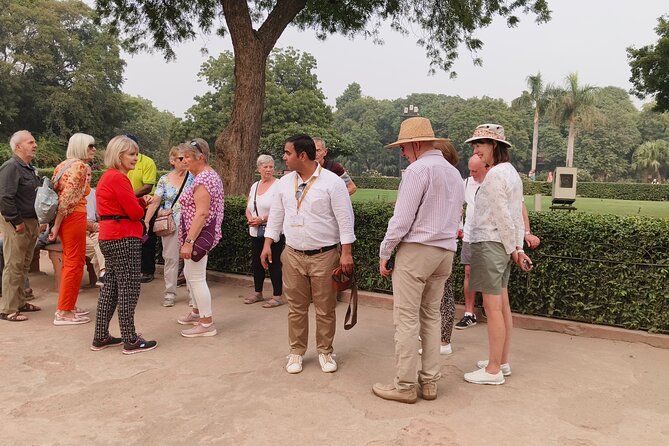
In the feedback connected to this tour, Kaushal Pandey was called out for being extremely knowledgeable and very patient, and I think that type of guiding fits this itinerary perfectly. Old Delhi has dense streets. Forts and palaces can blur together unless someone helps you separate the important details. Even the sacred sites benefit from explanations about architecture and purpose.
The operation also appears to use city-specific support, including guides such as Indu, Kalim, and Nameera in addition to Vishal being part of the team. You should expect the guiding style to change by city, but the structure stays consistent: you get commentary as you move from stop to stop.
Here’s how to make it feel more personal, even as a scheduled tour:
- Ask questions early. Guides can adjust how much they emphasize once they know what you care about.
- Choose one theme per day. Day 1 can be “Mughal Delhi and spiritual spaces,” Day 2 can be “Mughal power and imperial geography,” and Day 3 can be “Jaipur architecture and design.”
- Use the short stops as photo targets, not as extra time for wandering. With only 10 to 30 minutes at some locations, rushing is easy unless you decide what you want from each stop.
What to watch for: ticket options, early mornings, and the pace of city driving
This tour is built for efficiency. That’s not a downside, but it’s the difference between relaxing sightseeing and nonstop motion.
Monument admission is option-based
Some stops list admission ticket included, others list free admission, and monument fees are included only if your package selects that option. Before you go, I’d verify which of your key sites are covered under your chosen package so you’re not scrambling at the gates.
Sunrise Taj means an early start
Sunrise Taj Mahal is a highlight, but it will also be the day that tests your energy. If you hate early mornings, this is still worth it, just plan your sleep and water intake carefully the night before.
The itinerary is full, and travel times stack up
Day 1 ends with a drive to Agra. Day 2 includes a drive to Jaipur with Fatehpur Sikri in the middle. Day 3 ends with returning to Delhi. You’re not spending days in one city, so you need to accept that travel is part of the experience.
If you’re prone to motion sickness, you might want to bring what helps you on car rides. The tour includes an air-conditioned vehicle, which should help comfort, but it doesn’t eliminate the reality of long drives.
Should you book this 3-day Golden Triangle tour?
I’d book it if you want three famous cities with a guide, reasonable pacing, and a route that gets you to the Taj Mahal at sunrise. The combination of major monuments, market time in Old Delhi, and guided explanation is exactly what makes first-time Golden Triangle trips click.
I’d hesitate if you plan to spend lots of independent time shopping, wandering, or revisiting places slowly. The schedule has short stops like Rashtrapati Bhavan and Jal Mahal, and quick time windows can feel limiting if you like to drift.
If you do book, choose your package carefully so monument admission and hotel options match what you expect. Then go in with one simple goal: let the guide connect the dots, and treat each stop as one chapter of the same story across Delhi, Agra, and Jaipur.
FAQ
What cities does the 3-day Golden Triangle Tour include?
It covers New Delhi, Agra, and Jaipur over three days, with major sightseeing stops in each city and overnight stays in Agra and Jaipur.
Is pickup offered?
Yes, pickup is offered, and the tour also includes drop-off at your preferred location after the Jaipur sightseeing.
Does the tour price include hotel accommodation and breakfast?
Hotel accommodation with breakfast is included only if you select that option. The inclusions list breakfast for 2 days, and hotel quality is listed as 3, 4, or 5 star depending on the option.
Are monument entrance fees included?
Monument fee coverage depends on the package option you choose. Some individual stops list admission ticket included or free, and monument fee is included only if your selected option includes it.
How long is the tour and is it private?
The duration is about 3 days. It is a private tour/activity, so only your group participates.
What comfort items are included during the tour?
An air-conditioned vehicle is included, along with an unlimited water bottle.
What is the cancellation policy?
You can cancel up to 24 hours in advance for a full refund. If you cancel less than 24 hours before the experience starts, the amount paid is not refunded.
Latest reviews in from New Delhi
- Taj Mahal Day Tour By Superfast Train From Delhi: TOP BOOKED TOUR★ 5.0 · 42 reviews
- Same Day Tour of Taj Mahal with Our Real Historical Experience★ 5.0 · 42 reviews
- Manali Tour Package★ 4.5 · 43 reviews
- Taj Mahal Tour with Agra Fort – All-Inclusive Day Trip from Delhi★ 5.0 · 43 reviews
- Taj Mahal Same Day Tour by India’s Fastest Train★ 5.0 · 43 reviews
- Private Day Trip to Haridwar and Rishikesh from Delhi by Car★ 5.0 · 43 reviews
- Royal Taj Mahal Day Experienc From New Delhi By First Class Train★ 5.0 · 43 reviews
- 5-Day Private Delhi, Agra and Jaipur with Ranthambhore Tiger Tour From Delhi★ 5.0 · 44 reviews
3-Day Experiences, compared.
3-Day Delhi, Agra and Jaipur Private Tour – India Golden Triangle
Read our review →
3-Day Private Luxury Golden Triangle Tour to Agra and Jaipur From New Delhi
Read our review →
3-Day Luxury Golden Triangle Tour: New Delhi, Agra & Jaipur
Read our review →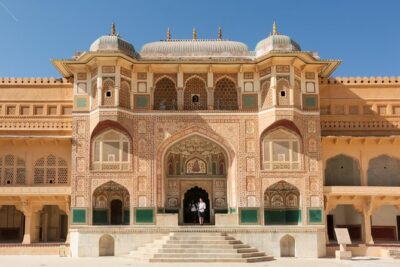
Award-Winning 3-Day Private Golden Triangle Tour of India
Read our review →3 Days 2 Night Golden Triangle Tour – Private Luxury Experience
Read our review →
The Ultimate 3 Days in Varanasi – How to Spend 39 Hours – For First Timers
Read our review →
3-Day Private Golden Triangle Tour to Agra &Jaipur from New Delhi
Read our review →Browse the lists this tour appears in