
Reviewed · VIP
10 Day Private Luxury Golden Triangle with Khajuraho and Varanasi
This tour is interesting because it strings together two different sides of North India in one smooth circuit. You get Mughal Delhi, Jaipur’s forts and palaces, Agra’s big moment, then you switch to Khajuraho’s stone temple carvings and end in Varanasi at the Ganges.
I like the private local guides in each city, because you actually understand what you are looking at instead of just taking photos. I also like the included sunrise Taj Mahal plan with a guided interior visit, since it helps you beat the worst crowds and heat.
One thing to consider: entrance tickets for monuments are not included, and tips plus most meals are on you. So you will want a little extra cash set aside beyond the tour price.
Key highlights worth your attention
- Private guides every day so Delhi, Jaipur, Agra, Khajuraho, and Varanasi each get real context
- Sunrise Taj Mahal timing plus a battery bus included for the walk from the parking area
- Mix of UNESCO sites and working religious spaces (yes, both are on the list)
- Long but planned transfers, including the Khajuraho to Varanasi drive (about 400 km, around 7 hours)
- Old Delhi time with local markets, especially around Chandni Chowk
- Driver stays with your group through the route, and past bookings often praised drivers for safety and care
Price and value: what $623.07 buys you, and what you must budget
At about $623.07 per person for a 10-day private route, the value comes from three big things: transport, guides, and the included “morning logistics” that can be annoying on your own.
You get private, air-conditioned vehicle transport with a driver, hotel or airport pickup and drop-off, and all sightseeing with private local guides. If you choose the option that includes hotels, you also get 9 nights of accommodation and daily hotel breakfast. Mineral water is included during journeys, which sounds small until you are doing long temple days.
Where the extra cost shows up:
- Monument entrance tickets (not included)
- Driver and guide tips (not included)
- Most meals (not included)
So think of the price as covering the backbone of the trip. You cover the add-ons and entrances. If you are someone who hates spending time figuring out ticket lines and transport logistics, this is the part that helps.
More Golden Triangle circuits:
- 3-Days Private Golden Triangle Tour: Delhi, Agra & Jaipur by Car
★ 5.0 · 1,107 reviews - 3-Days Private Golden Triangle Tour: Delhi, Agra & Jaipur by Car
★ 5.0 · 1,098 reviews - 3-Day Delhi, Agra and Jaipur Private Tour – India Golden Triangle
★ 5.0 · 812 reviews
The route in plain terms: Golden Triangle energy plus Khajuraho and Varanasi

This is a classic Golden Triangle style spine, with Delhi, Agra, and Jaipur, then two “story chapters” added: Khajuraho and Varanasi.
That matters because North India is not just one vibe. Delhi is layered empire to empire, Jaipur is royalty and geometry, Agra is Mughal scale, Khajuraho is carved stone and calm, and Varanasi is ritual and river life. A private tour is a practical way to stitch it together without losing hours to transit decisions.
Also, the itinerary is structured to keep you moving, but it is not wall-to-wall every minute. You have a mix of guided sightseeing windows and free time blocks, like the day you arrive in Agra and the day you check in to Jaipur.
Delhi in private-driver mode: Bangla Sahib, Qutub Minar, Lotus Temple, and Old Delhi markets
Delhi is two cities in one. The first is grand monuments and government-era landmarks. The second is Old Delhi lanes, where shopping and everyday life run alongside heritage.
Day 1: Sikh heritage and the Mughal-medieval core
You start at Gurudwara Bangla Sahib, a Sikh gurdwara with a tank linked to the story of healing during an epidemic in the 1600s. It is free to enter, and the atmosphere is one of the most grounding things in Delhi. If you want a calm beginning before the crowds, this is it.
From there, Delhi keeps its spiritual and historical blend. Places like Jama Masjid are Mughal-era giants, built under Shah Jahan in the 1650s. It is one of those sites where you can feel the scale instantly, even before you read any signage.
You also stop at Humayun’s Tomb, commissioned in 1558. It is not just a pretty stop. It helps you connect ideas across the Mughal world, because it sits in the family tree of later mausoleum design.
A short but meaningful stop is Agrasen Ki Baoli, a stepwell. Stepwells can feel like a quick photo stop, but this one gives you a window into how people managed water and architecture at street level.
Then you finish with Chandni Chowk, where the sensory stuff hits hard in a good way. Expect spices, dried fruit, silver jewelry, saris, and small side shops selling essentials like oils. Even if you do not shop, the rhythm of the area teaches you how Old Delhi actually functions.
Line these New Delhi options up side by side
- Old & New Delhi City Tour – Half or Full Day Options Available
★ 5.0 · 4,811 reviews - Half Day Private Delhi City Tour
★ 5.0 · 4,474 reviews - Same Day Taj Mahal, Agra Fort & Baby Taj Tour from Delhi by Car
★ 5.0 · 4,304 reviews - Taj Mahal Day Tour from Delhi by Superfast Train – TOP RATED TOUR
★ 5.0 · 4,166 reviews
Day 2: Qutub Minar, modern faith, war memorials, and a skyline of history
Day 2 leans into landmarks.
You visit Qutub Minar, the UNESCO site and a 73-meter-tall tower with five storeys, credited to the Delhi Sultanate founder Qutub-ud-din Aibak in 1193. It is easy to underestimate until you look up and realize how tall it really is.
Then comes Lotus Temple, famous for its flower-like shape and built in 1986. It is open to everyone regardless of religion. If you want a break from fortress masonry, this gives you a quieter, more modern spiritual space.
You also pass India Gate, a war memorial for British India soldiers who died in wars, and it functions like a local picnic spot. Nearby, you stop at Parliament House, known as Sansad Bhavan, with a design based on the Ashoka Chakra (circular).
If you like seeing Delhi as an actual living capital, this pacing helps. If you hate traffic and long days, you will still need patience. Delhi is simply not a quick city.
Jaipur with real context: Monkey Temple, Birla Mandir, Amer, Jal Mahal, Jantar Mantar, City Palace, Hawa Mahal
Jaipur is where the trip’s “color and geometry” turns on.
Day 3: arrival day with temples that feel local
You start with Galtaji, the Monkey Temple. It is known for its complex structure and pools, and yes, the monkeys are part of the experience. If you visit with kids, it tends to be a hit, but keep your belongings secure.
Next is Birla Mandir, the white marble temple with intricate latticework and a dedication to Vishnu. It works well as an early afternoon stop because it feels like a crafted interior space, not just an exterior facade.
Then you arrive, check in, and have the evening to orient yourself in Jaipur. That free time matters because Jaipur evenings can be a great time to grab a meal and see the city lights at street level.
Day 4: Amer Palace, Man Sagar Lake views, and the science of Sawai Jai Singh II
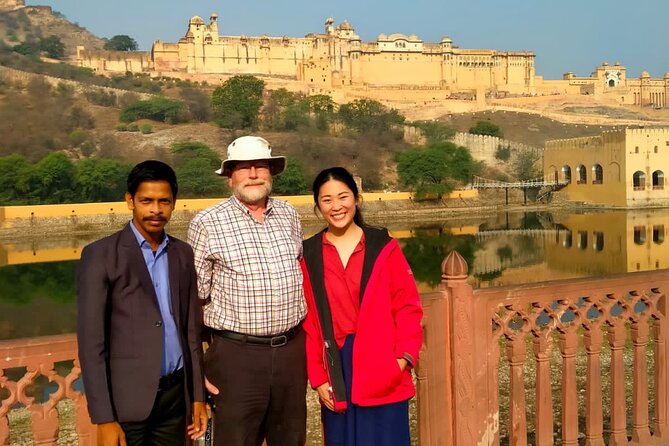
Amer is your first big “wow” day. You travel to Amer, tour the palace area for about two hours, and learn it was built by Raja Man Singh I. Amer is best when you slow down, look for decorative details, and take in the layout, because it is both palace and fort logic.
Then comes Jal Mahal, the water palace in Man Sagar Lake. You usually see it from viewpoints more than as an inside visit. Still, it is a strong contrast to the surrounding fort landscape.
You also visit Jantar Mantar, UNESCO, built in 1734 by Sawai Jai Singh II. The site has nineteen astronomical instruments. This is one of those places where a guide really earns their keep. With context, you stop thinking of it as “cool shapes” and start seeing it as a working observational toolkit.
From there:
- City Palace, built starting in 1721, with ceremonial and administrative importance
- Hawa Mahal, the Palace of Breeze, a five-storey pyramidal facade made with red and pink sandstone
- Albert Hall Museum, the oldest museum of Rajasthan, a quick stop that gives you a breather from the fort-palace cycle
One practical note: this day stacks a lot of iconic stops. I like it, but it is not a laid-back pace. Wear comfortable shoes and keep water handy. The tour includes mineral water during journeys, but you will still want to drink often during walking-heavy segments.
Optional add-on mindset: Jaipur safari plans
Some past bookings tied in an extra activity in Jaipur, specifically a Jhalana Leopard Safari that people hoped would lead to a leopard sighting. That kind of add-on can be worth it if you want one day that breaks from temple and palace intensity. Just remember it is an extra, not part of the fixed core sights.
Agra: Taj Mahal sunrise, Agra Fort, and Baby Taj without losing the plot
Agra is one moment, then three supporting acts.
Day 6: sunrise Taj Mahal timing and a guided interior visit
You start with a sunrise Taj Mahal plan. Watching the light change on the marble is a real experience, and sunrise also helps with crowds and heat. The tour includes a guided visit inside for about two hours, so you are not stuck staring at the main facade only.
You learn the tomb story: it was built by Mughal Emperor Shahjahan around 1630 as a mausoleum. With a guide, you tend to notice patterns, symbolism, and how the complex is laid out. It is not just a single building, it is a carefully composed space.
Agra Fort and Itmad-ud-Daula on the same day
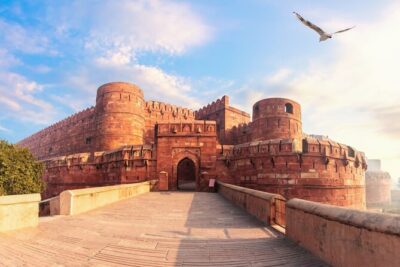
Then you go to Agra Fort, another UNESCO World Heritage site. It is a historical fort and the main residence of the Mughal Empire. It is a different kind of sight than the Taj, more defensive and political, less romantic.
Next is Itmad-ud-Daula, often called Baby Taj. It is a Mughal mausoleum in Agra, with gardens and multiple structures. It is a good counterweight after seeing the Taj, because it feels more intimate and easier to absorb.
If you get decision fatigue on the day, prioritize this order: Taj interior first, then Agra Fort, then Itmad-ud-Daula. You will remember more and feel less rushed.
Khajuraho: Lakshmana Temple, Kandariya Mahadev, and long enough time to appreciate stone carvings
Khajuraho changes the volume. Delhi and Agra push scale. Khajuraho asks you to slow down and look at details.
Day 7: two “anchor temples” then time to explore the rest
You visit Lakshmana Temple, built in the 10th century by Chandela ruler King Yashovarman. Its main idol is associated with Lord Vaikuntha, described with three heads and four arms. That description matters, because it tells you to look for iconography, not just shapes.
Next is Kandariya Mahadev Temple, built in the early 11th century by Chandela king Vidyadhara. After Gazni Mahmud invaded the region and destroyed it, these temples helped restore the religious and cultural identity through architecture. A good guide can help you connect the stories to the carvings you are seeing.
Then you have time to experience the famous Khajuraho temple holy sites, including a longer exploration window. This is where patience pays off. The stone details reward you when you stop treating it like a checklist.
Day 6 to 7 timing reality
You arrive in Khajuraho after the Agra day. Expect travel time to take a chunk out of your energy. The tour still schedules you with a check-in and overnight stay, which is smart. You do not want to arrive exhausted and then force temple time.
Varanasi at the Ganges: Kashi Vishwanath, Sarnath, Ganga walk, and Ganga Aarti seating
Varanasi is the emotional finale. It is also one of the most practical cities to have a plan, because religious life is constant, and you will want the right timing.
Day 8: long drive to Varanasi and arrival rhythm
After breakfast, you travel from Khajuraho to Varanasi, about 400 km and around 7 hours. That is a day where comfort and driver skill matter. You check in, and then the day continues with local activity.
Day 9: Shiva in Kashi, Buddha in Sarnath, and the river as a living stage
You start at Kashi Vishwanath Temple, a riverside Shiva landmark with an 18th-century gold-plated spire and a sacred well. The riverside location is part of the experience. Even when you are just observing, you understand the temple is woven into daily devotion.
Then you head to Sarnath, visited around noon. It is a major Buddhist pilgrimage site, tied to where Lord Buddha first preached the Dharma after enlightenment. You explore ancient ruins of monasteries, which helps you see how religious history keeps layering across centuries.
Later, you walk along the Ganges River. That sounds simple, but in Varanasi the river walk is really the core scene. You go from buildings to ghats, from quiet moments to the bustle of ritual life.
Finally you attend Ganga Aarti, with the best view from your seat. This matters because good viewing space makes the difference between feeling present and feeling stuck behind heads.
Getting around in a private group: sedan vs wagon vs minivan, and why rooms matter
This is a private tour, so you ride with just your group.
Vehicle types are based on group size:
- 4-seater sedan for groups of 1 or 2
- 6-seater wagon for groups of 3 or 4
- 10-seater minivan for groups of 5 to 10
That matters because comfort changes over 10 days. Long drives like Khajuraho to Varanasi (about 7 hours) are easier when your seating and space fit your group.
Rooms are typically twin-sharing by default. If you book for 3 people, the default is triple-sharing unless you pay extra to get 2 rooms. That is worth confirming early, especially if you prefer privacy or need separate beds.
Guides, drivers, and the small details that shape your day
One of the most praised parts in real-world runs is the way the tour matches a driver and local guides to the itinerary.
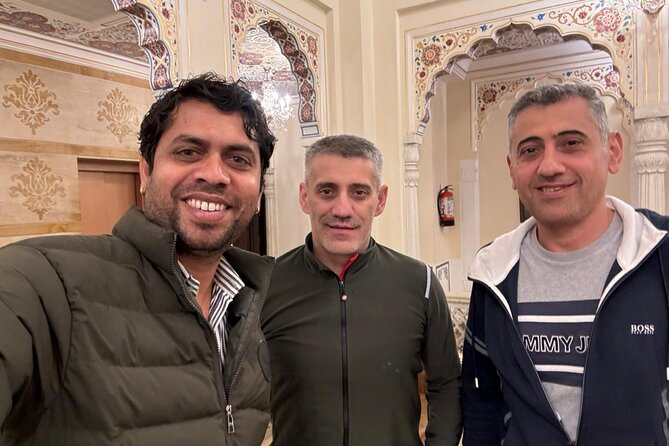
In previous bookings, drivers such as Surendra, Ajay, Man Singh, Deepak, Maan, and Himmett were mentioned as kind, safety-minded, and attentive. You are not just getting a car. You are getting someone helping you keep the day on track.
Local guides in each city are where the big sites become understandable. Without that, Taj Mahal is a photo location. With it, you learn what you are looking at and why it was built.
The tour also includes pickup and drop-off, plus battery bus transport to and from the Taj Mahal parking lot up to the monument. That removes a headache. You spend your energy on the sights instead of logistics.
Who this 10-day private route is best for
This tour fits best if you:
- want a first-timer North India plan that hits major UNESCO sites
- prefer private guiding over big group audio headsets
- like a mix of history and spirituality, with both temples and major monuments
- value sunrise and guided interior time at the Taj Mahal
It may be less ideal if you:
- hate long driving days, especially the Khajuraho to Varanasi transfer
- expect meals to be handled for you, since meals are listed as not included
- want a slow, wandering pace with minimal scheduling, since the itinerary packs many key stops
Should you book this Golden Triangle with Khajuraho and Varanasi?
If you want a “big highlights” trip that still feels organized and explainable, I think this is a strong booking choice. The private guiding and the Taj Mahal morning plan are the two parts that deliver the most return on your time.
I would book it if you are comfortable budgeting separately for monument tickets, tips, and meals. I would hesitate only if you strongly dislike long transfers or you are expecting everything to be fully hands-off.
If you want the most value, plan your days with a simple goal: slow down inside the major sites when your guide is speaking. That is how you turn a checklist into a real memory.
FAQ
Are monument entrance tickets included?
No. Monument entrance tickets are not included. The tour includes sightseeing with private local guides, but you will pay for site entry separately.
Is breakfast included?
Yes. Daily hotel breakfast is included (listed as 9 breakfasts).
How do you get to the Taj Mahal from the parking lot?
The tour includes a battery bus ride to and from the Taj Mahal parking lot up to the Taj Mahal monument.
What vehicle will my private group use?
For groups of 1 to 2, it is a 4-seater sedan. For groups of 3 to 4, it is a 6-seater wagon. For groups of 5 to 10, it is a 10-seater minivan.
How long is the drive from Khajuraho to Varanasi?
The drive is about 400 km and takes around 7 hours.
Can I cancel for a full refund?
Yes. Cancellation is free up to 24 hours in advance for a full refund. If you cancel within 24 hours, the amount paid will not be refunded.
Latest reviews in from New Delhi
- Private Day Trip to Taj Mahal by Car from Delhi★ 5.0 · 16 reviews
- “Overnight Taj Mahal Tour from Delhi by Private AC Car”★ 5.0 · 16 reviews
- New Delhi to Agra Airport/Hotel – One-Way Cab Private Transfers★ 4.5 · 16 reviews
- Private One Day Tour of Taj Mahal, Agra Fort & Fatehpur Sikri from New Delhi★ 5.0 · 16 reviews
- All Inclusive : 5 Days Golden Triangle Tour : Delhi, Agra, Jaipur★ 5.0 · 16 reviews
- Delhi & Taj Mahal Private Day Tour with Lunch and Tickets★ 5.0 · 16 reviews
- From Delhi: Taj Mahal Sunrise Tour with Elephant Conservation★ 5.0 · 16 reviews
- Full day Private tour from Delhi to Agra★ 5.0 · 16 reviews
VIP, compared.
All Inclusive Private Taj Mahal Luxury Tour from Delhi by Car
Read our review →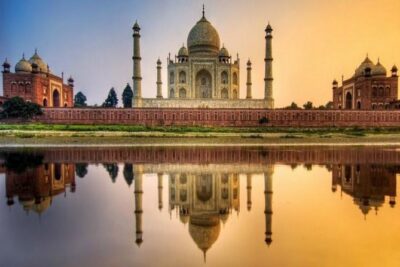
Four-Day Private Luxury Golden Triangle Tour to Agra and Jaipur From New Delhi
Read our review →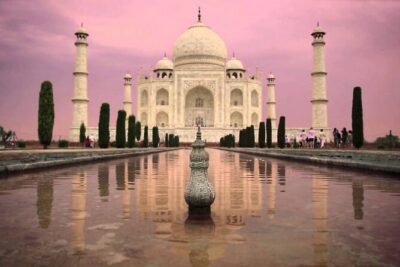
3-Day Private Luxury Golden Triangle Tour to Agra and Jaipur From New Delhi
Read our review →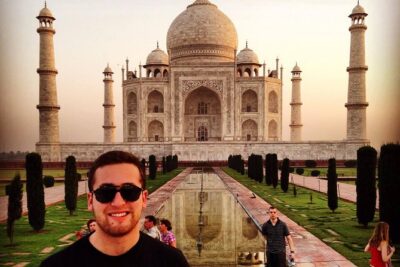
Taj Mahal Sunrise & Sunset All Inclusive Private Luxury Agra Tour
Read our review →
Four-Day Luxury Golden Triangle Tour to Agra & Jaipur From Delhi
Read our review →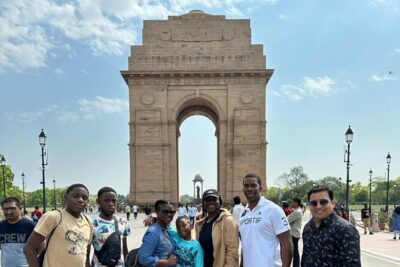
Private Luxury Delhi – Agra – Jaipur Golden Triangle Tour – 3 Nights 4 Days
Read our review →
All Inclusive Private Taj Mahal Luxury Tour from Delhi
Read our review →
5 Days Luxury Kerala Tour with Houseboat Experience
Read our review →Browse the lists this tour appears in