
Reviewed · WORKSHOPS
Hands-on Block Printing Workshop
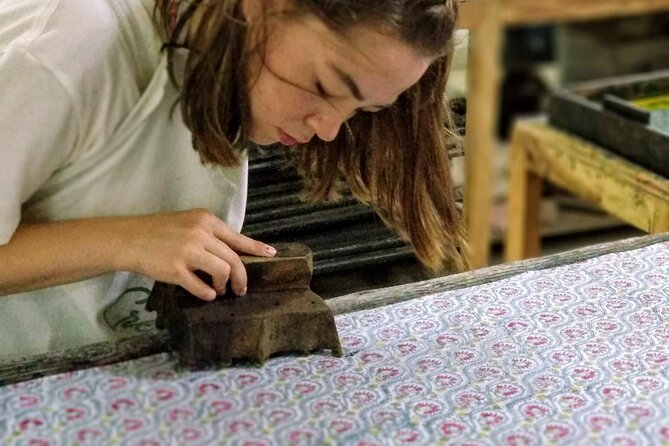
Block printing in Rajasthan turns simple carved wood blocks into something you can wear. In just two hours, you go from tools and patterns to a finished scarf or sarong that looks like it came from a real artisan workshop, not a mass-market souvenir aisle. Traditional technique meets wearable art, with the right amount of structure to keep you moving.
I especially like how small-group instruction keeps the focus on you. With guidance from the team, including Mohit and Vivek, you get practical help fast, and the process stays calm and social at the same time. I also like that the workshop feels truly hands-on, with repetition as a feature, not a bug, so your final print improves because you practiced it.
One thing to consider: you’ll be working with pigments and fabric, so you should wear comfortable clothes you don’t mind getting stained a little. Also, the class is short, so it’s best to think of it as learning the method and creating one strong piece, not mastering every step of block printing.
Key things to know before you go
- Two hours of focused practice, not a long lecture, so you actually print
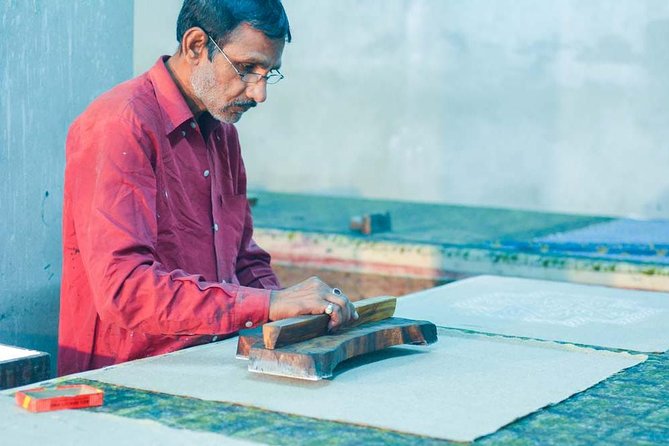
- Small group up to 10, which makes it easier to get help when you make mistakes
- Clear block design concepts using Gad (ground), Rekh (outline), and Datte (filler)
- Water-based pigments and color mixing, so your patterns can look layered and intentional
- You take home a Pico stitch scarf or sarong, finished and ready to wear or gift
- Nearby factory watching, so you see how the pros work right next to your session
What makes this Rajasthan block printing workshop special
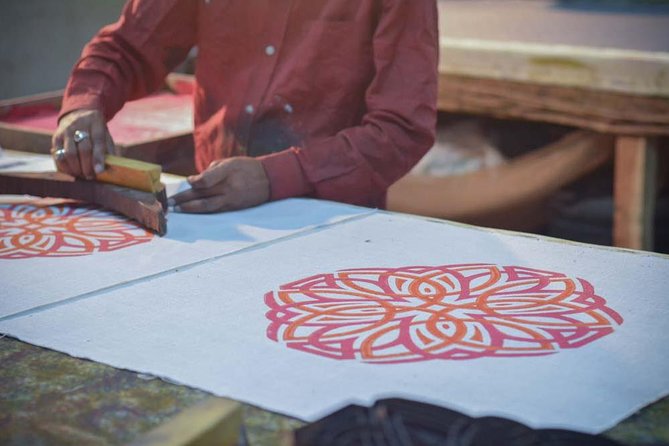
Rajasthan is famous for textile traditions, but this experience avoids the usual tourist script. You are not just watching someone print. You are learning how block printing works, why the designs are built in layers, and how color changes the final look.
The workshop is built around a very practical idea: if you understand how a pattern is constructed, you can make better choices while you print. You learn the history and cultural significance in a way that supports the craft, not distracts from it. Then you get your hands on the real tools.
If you want something off the beaten track that still feels approachable, this is a smart pick. You’ll leave with a piece of textile art you helped create, and it’s specific to your choices: pattern, color combinations, and the way you layer your design.
Line these Jaipur options up side by side
- Pink City Cooking Class
★ 5.0 · 452 reviews - Jaipur Market Tour & Vegetarian Rajasthani Home Cooking Class
★ 5.0 · 113 reviews - Cooking Class in Jaipur – Family Experience with Meal & Transport
★ 5.0 · 101 reviews
Studio setup and how the class actually runs
This is a 2-hour session with a small group limited to 10 participants. That matters more than it sounds. In a tiny class, instructions can be adjusted on the fly, and you won’t spend your time waiting your turn.
Language support is included. The instructor team works in English and Hindi, so you can follow along even if your comfort level in India varies day to day. Reviews from recent visitors highlight that the team keeps guidance clear and the on-site support is friendly, which is a big deal when you’re learning something tactile.
Most sessions follow a simple rhythm:
- A quick introduction to block printing basics
- Learning how the tools and materials work together
- Choosing a design and planning your colors
- Printing, with guidance as you go
- Finishing your scarf or sarong
There’s also a practical bonus. The studio is close enough to a small factory setup that you can watch the pros at work. That kind of context helps you understand what you are practicing, and it makes your work feel more connected to the real craft.
The block lesson: Gad, Rekh, and Datte patterns
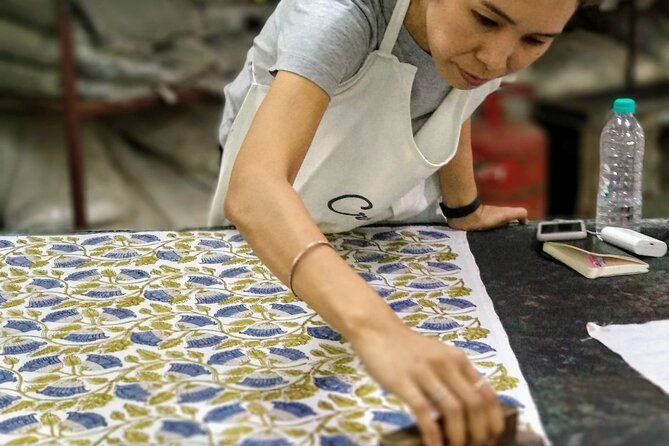
The most useful part of the “what you learn” isn’t the artsy storytelling. It’s the way the workshop explains design construction using Gad (ground), Rekh (outline), and Datte (filler).
Here’s what that means in real workshop terms, and why you should care:
- Gad (ground) is the background structure. It sets the overall rhythm of the motif.
- Rekh (outline) defines the main shapes. This is where crispness matters, because outlines guide the eye.
- Datte (filler) adds detail between the bigger elements. It’s what makes a print look complete, not empty.
Instead of treating the pattern like one flat stamp, you start thinking of it as a composed design. That changes everything. Even if you choose a pattern that looks complex at first, the layered approach makes it manageable.
You also get an overview of the history and cultural significance of block printing. The point is not to memorize dates. The point is to understand why this method became so important in fabric traditions. Block printing is efficient for repeat patterns, and it also allows careful control over line work and color. Once you grasp that, your own printing choices feel more grounded.
Layering and printing techniques you’ll use right away
When people describe block printing as satisfying, they usually mean the repetition. But in this workshop, repetition is paired with actual technique.
You learn to layer a motive design or go for an all-over design using water-based pigments. That’s important because water-based pigments behave differently than oil-based inks. They can spread if applied too heavy, or look faint if your transfer is thin. In other words, you’ll learn how to control pressure and timing, not just repeat a motion.
You also practice mixing and matching colors. This is where your final piece starts to feel personal. Two people can choose the same style of pattern and end up with very different results depending on:
- which color goes down first
- how you alternate darker and lighter elements
- how you use filler details to balance the composition
One of the most helpful bits from recent participants was how supportive the instructors are when your print does not go exactly as planned. In a hands-on class, mistakes are normal. Having someone help you fix them keeps you from feeling stuck and helps you finish with something you’re proud to take home.
A different shape of Jaipur day:
- Jaipur: Private Full Day Sightseeing Tour By Car with Guide
★ 4.9 · 1,839 reviews - 3-Hour Morning Bike Tour of Jaipur
★ 5.0 · 1,253 reviews - Jaipur: Private Full-Day Sightseeing Tour by Tuk-Tuk
★ 4.8 · 573 reviews - Jaipur: Full-Day City Tour with Car, Guide & Skip-the-Line
★ 4.8 · 512 reviews
Choosing your design and making it into a finished scarf or sarong
You don’t start blank. You choose from intricate designs inspired by Sanganeri prints. That matters because Sanganeri motifs have a strong “read” as a pattern. Your work will likely look detailed even when you are still learning the process.
Once you pick your design, you apply it to create your final piece: a Pico stitch scarf or sarong. The wording matters here. You are not leaving with a sample swatch. You’re making a wearable item, so you can use it right away as a wrap, gift, or conversation starter.
You’ll also work through a practical design flow:
- Select the pattern style
- Plan your color combinations
- Print in layers using the block method
- Keep checking how your transfer looks as you go
- Finish your fabric piece
This is the part where the workshop pays off. Even people who expect to be a beginner usually end up surprised by what they can produce in two hours when instruction is clear and the materials are set up for you.
And because the class is small, you’re not left to guess. If you’re off on your placement or color density, you can get timely feedback and correct the next layer.
Watching the pros nearby, and why it changes your perspective
One of the standout details from the experience is that the studio is next to a small factory area where you can watch skilled workers. That proximity can feel oddly motivating.
It does two useful things:
- It shows you block printing is not magic. You see the repeatable steps real artisans use.
- It gives your own work context. When you print your own scarf, you are not just making art, you’re practicing a craft that supports livelihoods.
I like this kind of “nearby reality check” because it keeps the workshop from turning into a bubble. You can still enjoy the creativity, but it stays connected to the work behind it.
Materials you get, and what to bring so you stay comfortable
The workshop provides all necessary materials, including the wooden blocks, pigments, and fabric. That takes away the biggest risk for first-timers, which is showing up unprepared and then feeling stuck while everyone else is ready.
What you should bring is simple: comfortable clothing suitable for a hands-on workshop. Since pigments are part of the process, dress for mess control. Practical rule of thumb: wear something you could wash later without worrying.
If you want photos, consider having a phone with enough battery and a way to keep it protected from splashes. The class is not described as messy chaos, but working with pigments means you should treat your gear gently.
Price and value: what $24 buys in real terms
At $24 per person for a 2-hour workshop, the value comes from three things you actually get.
First, you get instruction with a small group size. With up to 10 participants, you are more likely to receive real coaching than a quick walkthrough.
Second, you get the materials covered, including the finishing item. You take home a Pico stitch scarf or sarong, which is the tangible outcome that makes the price feel fair. You’re not paying for a ticket that ends with watching only.
Third, you get a skill you understand, not just an end product. The workshop teaches block printing structure through Gad, Rekh, and Datte, plus layering and color mixing. Even if you never print again, you’ll know what you’re looking at when you see Sanganeri-style textiles elsewhere.
If you’re deciding between a generic craft stop and something more skill-based, this one is usually the better buy because the clock is on your side. Two hours is enough to learn the basics and produce something you can wear.
Who this workshop suits best
This workshop fits a few kinds of travelers particularly well.
- Solo travelers who want to meet people without forcing conversation. The small group setup supports sociable energy, but you can also focus quietly on your work.
- Beginners who want a guided intro. The class is structured around learning concepts quickly and then practicing immediately.
- Textile lovers and anyone who likes art that has a clear process behind it. Block printing is mechanical enough to feel teachable, but expressive enough to feel personal.
- Gift-minded travelers. A finished scarf or sarong is more meaningful than many typical souvenirs.
If you’re the type who loves to watch artisans at work and also wants to do something yourself, you’ll appreciate the nearby factory watching too.
Quick practical checklist before you book
- Plan for 2 hours of hands-on work
- Wear comfortable clothes you don’t mind getting pigment on
- Expect an intro plus printing time, not just a demo
- Go in with the mindset that you will learn as you print, and your first layers might not be perfect
- If you want a calmer experience, go early in the day when you have energy
Should you book this block printing workshop in Rajasthan?
Yes, if you want a short, skill-based activity with a real outcome. This is the kind of class where you leave holding something you made, and you also understand how it was built. The small group size and supportive instructors, including Mohit and Vivek, make it feel welcoming even when you’re learning in real time.
You should think twice only if you hate hands-on mess risk. If that part sounds stressful, you might prefer a purely viewing-based cultural experience. Otherwise, this workshop is a strong use of time in Rajasthan, especially when you want something authentic, creative, and genuinely practical.
In short: book it if you want to print, not just look.
FAQ
How long is the block printing workshop?
The workshop lasts 2 hours.
What is the price per person?
The price is $24 per person.
What do I take home at the end of the class?
You take home a Pico stitch scarf or sarong that you create during the workshop.
What languages are used during the workshop?
The instructor provides instruction in English and Hindi.
How large is the group?
The class is limited to a small group of up to 10 participants.
Do I get materials, or do I need to bring anything?
All necessary materials are provided, including wooden blocks, pigments, and fabric.
What should I wear for the workshop?
Wear comfortable clothing suitable for a hands-on workshop.
Is there flexibility if my plans change?
You can cancel up to 24 hours in advance for a full refund.
Can I reserve without paying immediately?
Yes, the option to reserve now and pay later is available, so you can book your spot and pay nothing today.
Latest reviews in from Jaipur
- Jaipur Full-Day Tour by Car with Govt Guide★ 5.0 · 43 reviews
- Taj Mahal Tour from Jaipur by Car – Private Day Trip★ 5.0 · 43 reviews
- Jaipur Car tour with English driver★ 5.0 · 44 reviews
- Pushkar Day Trip from Jaipur – Private Car, Safari, Guide & Lunch★ 4.5 · 45 reviews
- Jaipur Private Full Day Tour w/ AC Car & Guide (Eng, Esp, Fr, It)★ 5.0 · 47 reviews
- Golden Triangle Tours★ 5.0 · 47 reviews
- Jaipur Day Tour★ 5.0 · 47 reviews
- Same Day Jaipur Tour By Car★ 5.0 · 47 reviews
Workshops, compared.
5 Senses Tour – Old + New Delhi, Workshops, Lunch all inclusive
Read our review →
Veg and Non veg : Private Cooking Class in Delhi home (7 meal)
Read our review →
Indian Cooking Class in an Authentic Local Home – Learn 6 Dishes
Read our review →
Private Guided Cooking Workshop Experience in Jodhphur
Read our review →
Traditional miniature painting class at Pacific Art
Read our review →Browse the lists this tour appears in