
Reviewed · HERITAGE WALKS
Mumbai heritage walk- Story of Gothic and Art Deco buildings
This kind of walking tour is interesting because it uses buildings as your guide to Mumbai’s rise, from Victorian-era power to Art Deco style and civic pride. I love how the route turns Gothic Revival and Art Deco details into real stories you can picture in your head. I also love the small group size of up to 15, which means you can ask questions and actually get answers. One consideration, this is mainly an exterior-focused heritage walk, so if you want lots of time inside major sites, plan that separately.
The guide leads the whole thing with energy, and the name you’ll hear most often is Pankaj, praised for telling history in a way that feels fun and clear. Snacks are included along the way, which keeps the pace comfortable for a few hours of street-side looking.
Cost is $35 per person for about 3 hours, and the tour earns a 4.9 rating. Still, you’ll want decent walking shoes and good weather, because the plan depends on it.
Key things to know before you go
- Up to 15 people, so the tour feels personal and question-friendly
- Gothic + Art Deco focus, with the Fort area landmarks stitched into one story
- Snacks included, so you can keep your energy up during the walk
- Ticket details matter, with Chhatrapati Shivaji Terminus getting an admission ticket included
- Most stops are outside views, so you should enjoy architecture from the sidewalk
Why Mumbai’s Gothic and Art Deco Buildings Tell a Trading-City Story

Mumbai grew fast through trade, migration, and ambition, and you can read that momentum on the street. This walk is a practical way to understand that the city did not just grow in population, it grew in ideas about what a world-class city should look like.
You’ll spend the time looking closely at the shapes, ornament, and materials that define Gothic Revival and Art Deco. Gothic Revival in Mumbai is not just decoration, it signals institutions, law, education, and status. Art Deco is more about modernity and style, a kind of confidence in form and a taste for symmetry and crisp lines.
If you like architecture but you also want the human context, this tour is built for that. The guide connects street-level views to why these buildings mattered as Mumbai became a major trading center. It’s also one of those rare tours where the stories are not only about what you see, but why people in that era cared.
More Historical Tours in Mumbai
- Heritage Walk: Recommended by Gigi Hadid as a must-do in Mumbai
★ 5.0 · 122 reviews - Best South Mumbai Heritage Walk
★ 5.0 · 122 reviews - Mumbai: South Mumbai Heritage Walking Guided Tour
★ 4.5 · 69 reviews
Meet Your Guide, Route, and the Reality of a 3-Hour Fort Walk
The tour meets in the Chhatrapati Shivaji Maharaj Terminus area in Fort and ends at the Chhatrapati Shivaji Maharaj Vastu Sangrahalaya site. The total time is about 3 hours, and the pace works best if you’re ready for steady walking between photo-friendly vantage points.
The group is capped at 15, and that matters more than you might think. With a big crowd, you mostly watch and hope to hear something. Here, you’re positioned so the guide’s explanations land, including follow-up answers. That’s a big part of why the tour earns that 4.9 rating.
You’ll also have snacks during the walk. It’s a small thing, but it helps you keep your attention on details instead of thinking about when your next meal is.
Stop 1: Chhatrapati Shivaji Maharaj Terminus (CST) and Its Victorian Gothic Revival Blend
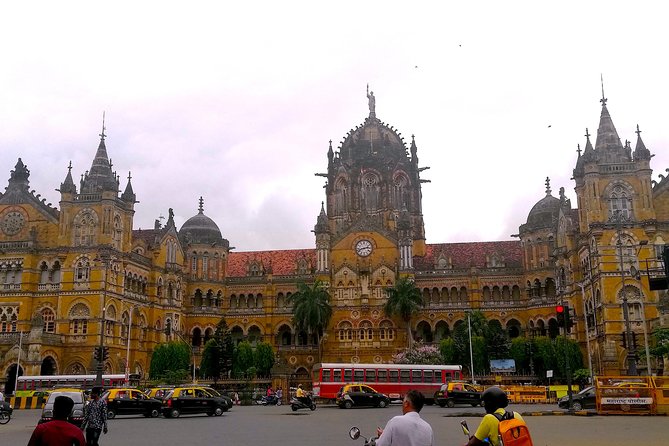
Your first major moment is Chhatrapati Shivaji Maharaj Terminus, a UNESCO heritage building and one of the best-known examples of Victorian Gothic Revival architecture in India. This is not just a pretty facade. The building is designed to project importance, and Gothic Revival is a language that historically signals power and permanence.
What I like about this stop is the way the design blends Gothic elements with Indian creative influences. Even if you’re not an architecture nerd, you can feel the intent: it’s Gothic Revival, but it does not look like a copy-paste from elsewhere. That mix is part of Mumbai’s story, the city taking global styles and translating them into a local identity.
You also get an admission ticket included at this stop, so there’s a practical payoff beyond the street view. You should use the time to look up and around, because the building rewards attention to edges, arches, and decorative patterns.
Stop 2: Eros Cinema’s Art Deco Wedding-Cake Shape
After CST, the mood shifts. Eros Cinema is a classic Art Deco cinema hall viewed from outside, and it’s one of the easiest stops to spot quickly because the design climbs in tiers. The building is often described as looking like a wedding cake as it rises, with a semi-circular tower topping it off.
Art Deco is about geometry and a kind of theatrical optimism, and this cinema hall makes that visible. You’re not just seeing an old movie theater, you’re seeing a statement about modern life at the time it was built.
The tradeoff here is also clear: you’ll see it from outside, and the stop is shorter. That’s fine. It works as a contrast lesson, helping you notice how the architecture changes when the city’s taste changes.
More Walking Tours in Mumbai
- Group Guided Walking Tour in Fort and Colaba
★ 5.0 · 1,073 reviews - Private Guided Walking Tour in Fort & Colaba
★ 5.0 · 895 reviews - Private Guided Walking Tour in Bandra Queen of Suburbs
★ 5.0 · 383 reviews - Private Guided Spiritual Walk in Banganga Hindu Temples
★ 5.0 · 271 reviews
Stop 3: Empress Court and Art Deco as a Status Signal

Next comes Empress Court, an impressive residential Art Deco building. Again, you see it from outside, and the focus is on how living in a place like this was once tied to status and wealth.
This is a good moment to train your eye for Art Deco details, because residential buildings can be subtler than civic monuments. You’ll pay more attention to the clean rhythm of the facade and the confidence in the design rather than expecting dramatic sculpture everywhere.
If your brain tends to switch off during repetitive streetscapes, this stop can help you stay engaged. The guide frames the design as social meaning, not just style.
Stop 4: Bombay High Court and Gothic Justice, Mercy, and Symbolism
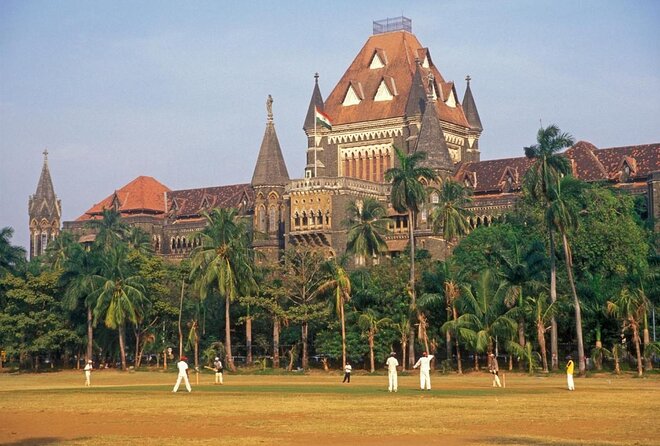
Then you reach Bombay High Court, Principal Bench, a splendid example of Gothic architecture. From the outside, you’ll look for statues of Justice and Mercy on top of the building. These symbols are the point, because Gothic architecture often uses ornament to communicate values.
I like this stop because it’s where architecture turns into a moral billboard. The building is meant to feel official and weighty. The statues make the message harder to miss.
Another perk is that the story here is easy to follow even if Gothic Revival isn’t your thing. You can enjoy the facade while also learning what the symbols were meant to represent.
Stop 5: Rajabai Clock Tower, the Big Ben Moment, and a Moving Origin Story
Your next highlight is the Rajabai Clock Tower, often treated as a Big Ben reference point for Mumbai. But this isn’t just a clock-tower photo stop. You’ll hear the story behind its financing, including the detail that the patron’s visually challenged mother needed the chimes so she could keep her fasts punctually.
That kind of human origin story changes how you look at a landmark. Suddenly the tower is not only about telling time, it’s about caring, planning, and making daily life easier. It’s the sort of detail that makes the architecture feel personal instead of distant.
One practical note: the time at each stop is limited, so be ready. Listen, look, then get a couple of solid photos before you move on.
Stop 6: David Sassoon Library and Reading Room, Seen From the Lobby
At David Sassoon Library and Reading Room, the guide brings you to a magnificent Gothic structure connected with David Sassoon. The big detail here is access: only members are allowed inside, so you’ll see the site from the lobby.
This stop still has value, even with limited interior access, because Gothic reading rooms are meant to inspire focus and learning. Seeing it from the lobby gives you a sense of the building’s intended atmosphere, and the story explains why it was built in the first place.
If you’re the type who wants the full interior experience at every stop, you might feel a pinch. But if you like context, this is a strong example of how the tour balances access reality with meaningful architecture.
Stop 7: Elphinstone College and Gothic Education Through Famous Alumni
Then you shift from libraries to education at Elphinstone College, another remarkable Gothic structure. This stop is short, but the guide ties the architecture to the institution’s influence.
The names you’ll hear include Bal Gangadhar Tilak, Dr B R Ambedkar, and Jamshedji Tata. That alumni list matters because it connects stone and style to people who shaped India’s public life.
This is also a good pause for your brain. By this point in the walk, you’ve seen Gothic used for civic power and justice, and now you see Gothic used for learning. It helps you notice patterns.
Stop 8: Ending at Chhatrapati Shivaji Maharaj Vastu Sangrahalaya (Prince of Wales Museum Area)
The walk ends at Chhatrapati Shivaji Maharaj Vastu Sangrahalaya, housed in a heritage building that was earlier used as a military hospital for Children’s Welfare Exhibitions. This is a fitting closer because it keeps the emphasis on heritage architecture rather than turning into a shopping or photo-only sprint.
Even if your final stop time is brief, it gives you a clean finish line at a major landmark area in Fort. It’s an easy place to continue exploring on your own afterward.
Price and Value: What $35 Buys You in Real Terms
At $35 per person, this tour isn’t expensive, especially for a guided experience in one of Mumbai’s dense heritage pockets. The best value is not just the route, it’s the combination of small group size, built-in narration, and snack support.
Here’s how the pricing makes sense:
- You’re paying for organized storytelling across multiple landmarks in a tight window.
- You get a small group, max 15, which improves the quality of the conversation.
- You get snacks, which helps the tour feel livable at street level.
- Admission ticket is included for CST, so at least one site includes more than an exterior look.
The main “gotcha” is that some stops are specifically outside views, and some admission is not included. That’s not bad, it’s just honest planning. You’ll get the architecture context, but you should not expect every landmark to be an inside visit.
If you like tours that help you see more than you can by yourself, this price feels fair.
Good to Know Before You Go (Weather, Tickets, and Getting Around)
This is a walking tour, so it’s best when the weather cooperates. The experience requires good weather. If conditions are poor, you’ll be offered a different date or a full refund.
You’ll also want to note how tickets work. CST includes an admission ticket in the plan, while other stops list admission as not included. That lines up with what you’ll be doing, which is mostly seeing buildings from outside and learning the design story at street level.
The tour is near public transportation, which helps if you’re juggling other plans in Mumbai before or after. And most people can participate, since the tour is designed for general visitors rather than a hardcore endurance hike.
Finally, you’ll likely get a mobile ticket for the experience. That keeps it simple once you’re in the area.
Who This Walk Suits Best, and Who Might Skip It
This walk is ideal if you:
- love architecture details and want the background that makes those details click
- enjoy history stories that are tied to real buildings, not just timelines
- prefer a small group and a guide who answers questions
- want a concentrated Fort-area route in about 3 hours
You might skip or add a different type of tour if you:
- want lots of interior time at multiple major sites
- dislike walking between closely spaced photo stops
- need a fully museum-style schedule rather than street-side architecture reading
Should You Book This Mumbai Heritage Walk?
If you’re coming to Mumbai for the first time, or if you’ve visited before but you want a sharper sense of the city’s design language, I think this is a smart booking. You get a clear Gothic-to-Art Deco storyline across major landmarks, and the guide quality is a standout. Pankaj’s style, energetic and story-driven with thoughtful answers, is exactly what turns a set of buildings into a connected experience.
Book it if you like learning by looking, and if you can handle mostly exterior viewing. Pass if you want deep museum time on every stop. Either way, aim for good weather, because the Fort streets and the architecture details are what make this walk work.
FAQ
How long is the Mumbai heritage walk?
The tour lasts about 3 hours.
How much does the tour cost?
It costs $35.00 per person.
How many people are in the group?
The tour has a maximum of 15 travelers.
What kind of buildings does the walk focus on?
The walk focuses on Mumbai architecture, especially Gothic and Art Deco styles.
Are snacks included?
Yes, snacks are provided during the walk.
Is admission included for all stops?
Admission ticket inclusion depends on the stop. Chhatrapati Shivaji Maharaj Terminus includes an admission ticket, while other stops list admission as not included.
Where does the tour start and end?
It starts at Chhatrapati Shivaji Maharaj Terminus area in Fort and ends at Chhatrapati Shivaji Maharaj Vastu Sangrahalaya on Mahatma Gandhi Road, Lion Gate, Fort.
Is the tour near public transportation?
Yes, it is near public transportation.
What happens if the weather is bad?
The experience requires good weather. If it is canceled due to poor weather, you will be offered a different date or a full refund.
What is the cancellation policy?
You can cancel for free up to 24 hours in advance for a full refund. If you cancel less than 24 hours before the start time, the amount you paid will not be refunded.
More Heritage Walks in Mumbai
- South Mumbai: Cultural Heritage Walking Tour
★ 4.8 · 45 reviews - Bombay Fort Heritage Walking Tour
★ 5.0 · 27 reviews - Fontainhas Heritage Walk by Make It Happen
★ 5.0 · 2,834 reviews - The Great Indian Food Tour: Old Delhi Food and Heritage Walk
★ 5.0 · 1,698 reviews
Latest reviews in from Mumbai
- Premium Mumbai Sightseeing Tour★ 5.0 · 16 reviews
- Small-Group Bike Tour of Mumbai★ 5.0 · 16 reviews
- Cruise to Mumbai Historical Tour★ 5.0 · 16 reviews
- 3 Hours Early Morning in South Mumbai Heritage Bicycle Tour★ 4.5 · 16 reviews
- Bollywood Studio Tour with Guide and Transport★ 5.0 · 16 reviews
- Bollywood Sightseeing and Celebrity Homes Tour by Private Car★ 5.0 · 16 reviews
- Private Slum tour With Bollywood and Stars Home★ 5.0 · 16 reviews
- Same Day Taj Mahal and Agra Tour from Mumbai with Return Flights★ 4.5 · 16 reviews
Heritage Walks, compared.


The Great Indian Food Tour: Old Delhi Food and Heritage Walk
Read our review →
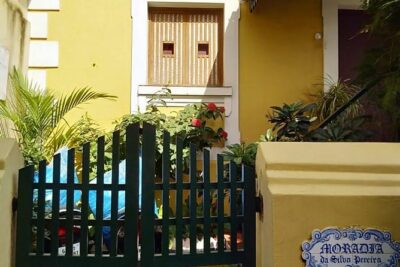
Fontainhas Heritage Walk At Latin Quarters of Goa
Read our review →
Private Heritage Walking Tour in Jaisalmer Fort and Old Bazaar
Read our review →

Browse the lists this tour appears in