
Reviewed · DHARAVI TOURS
Mumbai Full-Day Sightseeing & Dharavi Slum Tour
Mumbai can feel like a lot on day one, so this tour is interesting because it bundles the big, recognizable landmarks with a long visit to Dharavi in one organized loop. Guides such as Jawwad and Preti, and drivers like Saedam and Dipak, are part of the reason people feel well looked after.
I especially like the private format, which means you are not pushed around with strangers and you can ask questions on the fly. I also like the air-conditioned car and the way transportation is handled for you, so you spend time seeing instead of figuring out directions.
One possible drawback: the schedule is packed, with many stops at short durations. If you want a slow, sit-down style day, or if the Dharavi visit feels emotionally heavy, you may want to plan for a lighter pace elsewhere.
Key Things You’ll Notice Right Away
- You get a true private day in a car, not a crowd shuffle
- Door-to-door feel with pickup offered and return to the meeting spot
- A mix of Mumbai icons and real neighborhoods, from CSMT to Dharavi
- Time flexibility at stops, so you can linger when something catches your eye
- Mani Bhavan Gandhi Museum is covered with included admission
- Guide quality matters here, with strong English and patient explanations
A Smart Way to See Mumbai: Icons Plus Dharavi in One Day
This is the kind of tour that works best when it is your first time in Mumbai and you want a clean “orientation day.” You start with places most people recognize from photos, like Chhatrapati Shivaji Maharaj Terminus and the Gateway of India. Then you move into neighborhoods and everyday spaces, including Dhobi Ghat and the long stop in Dharavi.
The biggest win is not just checking boxes. It is getting context as you go. A good guide helps you connect what you see, why the city is built this way, and how daily life looks different block to block. In the comments I read, people repeatedly praised guides for being friendly, patient, and able to answer questions in clear English. That matters in Mumbai, because the city has layers, and you do not want to feel like you missed the story.
That packed-it-all-together structure is also the main trade-off. You will see a lot in about 5 to 7 hours, including travel time. Plan to treat it like a fast but guided walkthrough, not a slow museum-style day.
Other Dharavi walks:
- Dharavi slum tour in Mumbai by Female tour guides of the slum
★ 5.0 · 1,976 reviews - Mumbai: Dharavi Slum, DhobiGhat, and Dabbawallas Tour
★ 4.9 · 689 reviews - Dharavi Slum Tour
★ 5.0 · 625 reviews
The Private Car Experience That Makes the Day Feel Easier
The tour runs as a private activity for your group, with roundtrip transportation in an air-conditioned car. That means you can focus on the sights rather than the logistics, and it also reduces the stress of navigating busy streets on your own.
One detail I really value: you can usually choose how long you spend at each stop. That flexibility is not always true on group tours. Here, it makes sense because some places are best for quick photos, and others you might want to stare at a little longer, like CSMT or the market areas.
Also, the guide setup tends to be a team. In the experiences shared, you might meet a driver such as Saedam or Dipak and a guide such as Jawwad, Javed, Preti, or Subhan. When the car and guide are smooth together, the day feels like it has momentum instead of stop-and-start confusion.
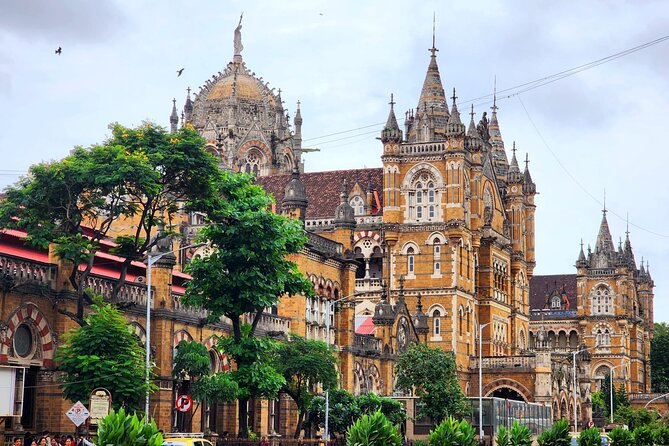
Stop 1: Chhatrapati Shivaji Maharaj Terminus (CSMT), Then You Understand the City’s Scale
You begin at Chhatrapati Shivaji Maharaj Terminus, often called CSMT. It used to be known as Victoria Terminus, and it was designed by British architect Frederick William Stevens. Even if you do not care about trains, CSMT is a strong introduction to Mumbai because it signals big ambition and engineering at a time when the city was growing fast.
Expect about 30 minutes here, and use that time wisely. Look up at the details, then step back for wider views, because station architecture can look like one thing up close and another thing from across a square. Since admission is listed as free, you should not feel pressured to rush through.
A practical tip: if you are photographing, bring your camera strap and keep your phone secure. This is a public area with activity around it, so treat it like any busy transit hub.
Stop 2: Gateway of India, Where the Waterfront Story Begins
Next comes the Gateway of India, the iconic arch built in 1911. It is the kind of monument that instantly tells you you are in Mumbai proper, especially if you are staying in the Colaba area. The monument also acts like a visual checkpoint for Mumbai’s colonial-era footprint, which becomes easier to understand once you have seen CSMT first.
You get roughly 30 minutes here. That is enough for a few photos and a slow scan of the surrounding waterfront. If you want to ask questions, this is also a good moment, because the Gateway frames bigger ideas about how sea access and foreign trade shaped the city.
If the sun is intense, this is a place to think about shade. You will be outside, and your guide can probably suggest the best angles based on the light.
Line these Mumbai options up side by side
- Mumbai: Full-Day Sightseeing Tour of Mumbai
★ 4.9 · 1,822 reviews - Private Full-Day Mumbai Sightseeing Tour with Dharavi Slums
★ 5.0 · 338 reviews - Ultimate Mumbai Full Day: Sights, Bollywood Dance, Lunch & Spices
★ 5.0 · 201 reviews - Mumbai: Private or Group Full-Day City Sightseeing Tour
★ 4.5 · 120 reviews
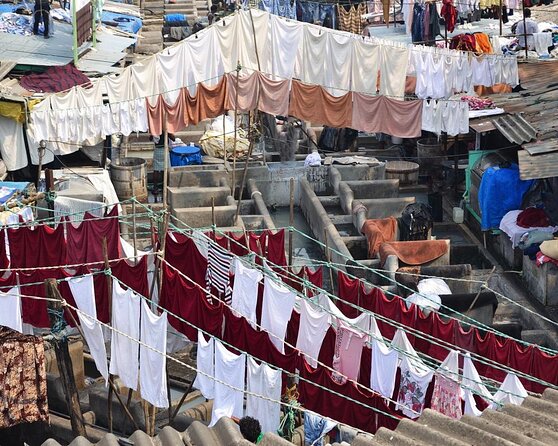
Stop 3: Dhobi Ghat, Laundry Work as a Window Into Everyday Life
Then you go to Dhobi Ghat, a laundry area that is more than an attraction. Think of it as an everyday system that helps the city run, with people carrying out work that has become part of the urban identity.
The stop is shorter, around 20 minutes, and the goal is to understand what you are seeing rather than to treat it like a long photo walk. In the descriptions of the tour, Dhobi Ghat is usually called fascinating for exactly that reason: it forces you to pay attention to work that happens at street level, not just monuments.
Here is the consideration: you may feel a little out of place at first if you are used to clean, quiet tourist sights. Just keep it respectful, stay aware of foot traffic, and let your guide explain what they are seeing.
Stop 4: Oval Maidan, Cricket Territory and Colonial-Era Layout
From Dhobi Ghat you head toward Oval Maidan, the area associated with Mumbai’s cricket culture and a historic sporting setting. You get about 25 minutes at this stop, which is perfect if you want to connect the city’s street-level energy to something structured and rule-based like sport.
Even if cricket is not your thing, Maidan areas in Indian cities often help explain how urban planning works. They provide open space in dense areas, and they create a visible rhythm to city life. Your guide can tie that together as you walk.
The High Court and University of Mumbai Fort Campus Stops
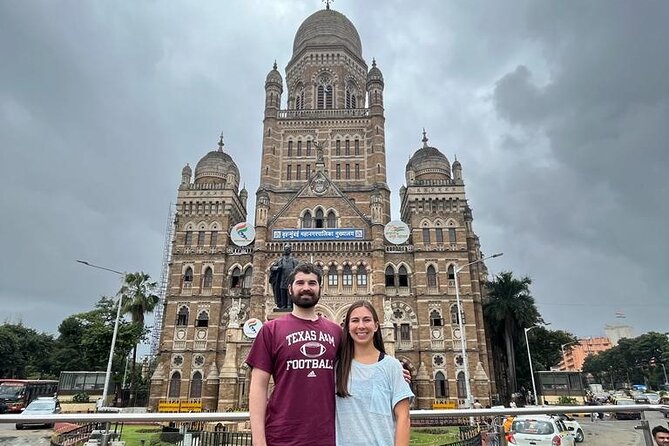
Two quick architectural and institutional stops follow: the High Court of Mumbai and the University of Mumbai Fort Campus.
At the High Court, the tour gives you time to see the impressive civic presence of the legal system, and the way the building signals authority. With most stops in this tour sitting around 15 to 30 minutes, you should treat these as “see it, understand it” moments.
The University campus is similar. You will notice the colonial-era architectural style and the academic environment of the Fort area. Even if you do not tour inside, the setting matters because it shows how Mumbai’s old administrative and education buildings shaped the modern city center.
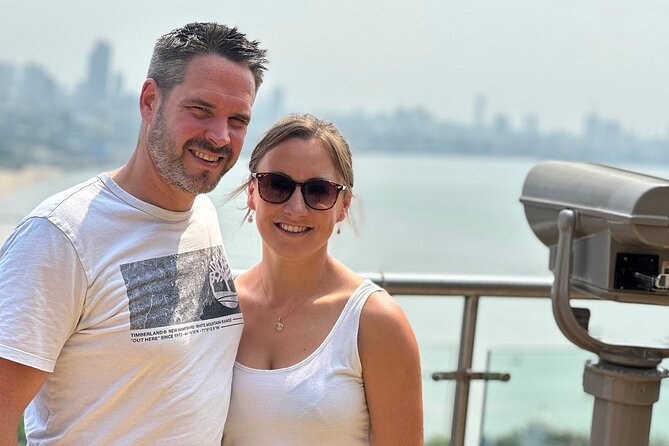
Marine Drive: The Queen’s Necklace View That Changes How You Perceive Mumbai

After Fort-area landmarks, the tour opens up toward the coast with Marine Drive. People often call it the Queen’s Necklace, and for good reason: it curves along the shoreline and gives you that classic Mumbai skyline feeling.
You get about 15 minutes here. That is not long, but it can be enough to capture the arc of the promenade and get the visual break after earlier stone and institutional buildings. Marine Drive also helps you understand Mumbai’s geography, because you can see how much of the city’s identity is tied to the sea.
If you can handle it, take five minutes just looking, not photographing. A quick guided explanation helps, but the view does most of the work.
Malabar Hill, Jain Temple Hill, and a Softer Side of the City
Then you climb into the Malabar Hill area. It is known for affluent residences and a calmer atmosphere, plus panoramic viewpoints that can feel like a reset after the city streets below. The tour keeps this section moving, with short stop times, but the point is to show you how Mumbai stretches from high-end residential viewpoints to everyday neighborhoods.
From there you visit Jain Temple Hill, a spiritual stop with intricate Jain temples. This is one of the moments on the tour where you might feel a different pace. Instead of only buildings and public institutions, you get architecture tied to devotion and daily practice.
Because the stops are relatively short, the best approach is to look closely at details your guide calls out. Temple visits can become a blur if you rush, so ask questions if there is something you do not understand.
Crawford Market and the Food and Shopping Pulse
Next up is Crawford Market, a historic trading hub. The architecture is Victorian, and the market setup gives you a front-row look at commerce in Mumbai.
You spend around 20 minutes here. That is enough time to see the variety of goods, notice how stalls are arranged, and understand why this place is a practical center, not just an architectural stop.
A consideration: markets are active. You might need patience for crowd movement, and you will likely walk through uneven foot paths. Wear comfortable shoes and keep your belongings secure.
Boot House at Kamala Nehru Park, Hanging Gardens, and the Mini Escape
The tour then heads toward Kamala Nehru Park, where you can see the Boot House, shaped like a giant boot. It is a playful architectural landmark, and it works as a break from the heavier civic and religious stops.
After that, you visit Hanging Gardens, perched on Malabar Hill. The idea here is simple: you get a green pause with landscaped areas and city views. It is short, around 15 minutes, but it can change the energy of your day because you are not just staring at buildings.
If you are photographing, bring a steady hand and slow down. Elevated viewpoints can be windy, and you do not want blur from gusts.
Mani Bhavan Gandhi Museum, A Focused Stop With Included Admission
One of the clearest value adds on this tour is Mani Bhavan Gandhi Museum, with admission included. Around 20 minutes is scheduled, which is enough time to capture the basics of Gandhi’s life and the activism connected to the site.
This stop matters because it is not only about Mumbai’s architecture. It adds a national historical thread and helps you connect the city’s influence to political movements. Even if you already know Gandhi’s story, museum context can make things feel more grounded.
If you like museums, you might wish this stop were longer. Still, the included admission and short time pairing makes it realistic inside a full-day sightseeing schedule.
Dharavi: What You Gain From a Guided Visit and How to Handle It
Finally, the day’s centerpiece is Dharavi, with about 2 hours allotted. This part is often described as eye-opening, but the real value is not shock. It is understanding a complex community through the eyes of a local guide and seeing how resilience and small-scale industries shape day-to-day life.
Your guide helps keep it human. A local guide with direct experience, like Subhan, can make explanations feel less like lecture and more like lived context. The tour framing also aims to reduce the risk of feeling lost or unsafe, since you have a plan and a person to ask when you have questions.
How to handle the mood: Dharavi is not a theme park. It can be emotionally intense, and you might notice details that do not fit neat tourist expectations. Keep your tone respectful, listen first, and ask questions if something is unclear.
Practical advice before you go: bring a small water bottle if you usually do. The tour data does not mention refreshments, and the day can add up. Also, go in with the mindset of learning, not judging, and you will get much more out of your time.
Price and Value: Why This $35.23 Full Day Can Make Sense
At $35.23 per person, this tour is priced for travelers who want a lot of structure in a single day. What makes the value feel real is the combination of items that add up on your own: private transportation in an A/C car, a guide, and listed admissions.
The tour includes all fees and taxes plus admission/entry. Mani Bhavan specifically includes its admission. Many other stops are listed as free, which matters because it keeps your spending predictable. You are also not paying separately for each quick stop’s entry, which is a common headache on packed sightseeing itineraries.
The trade-off is time density. You are buying efficiency. If you want slow pacing, you may feel you skim the surface. If you want a high-impact orientation, this is exactly the kind of day that can prevent you from wasting other hours wandering without direction.
Who This Tour Fits Best (And Who Might Prefer Something Else)
This tour fits best if you:
- are visiting Mumbai for the first time and want a guided overview fast
- like having a plan but still appreciate flexibility at stops
- want both famous sights and a serious look at a real neighborhood like Dharavi
- prefer not to worry about navigation, since pickup and transportation are handled
It might be less ideal if you:
- want a long, detailed museum day with minimal walking
- dislike emotionally intense sites and would rather spread that kind of visit across multiple days
- prefer fewer stops and more time at each one
In short, think of this as a guided “day of contrasts,” designed so you do not spend your first day trying to build a route from scratch.
Should You Book This Mumbai Full-Day Sightseeing and Dharavi Tour?
If you want a practical first-day plan, I think it is an easy yes. The standout reason is the guide-and-driver approach, with many people praising English clarity, patience, and a genuinely careful pace. The itinerary also covers a good range, from CSMT and the Gateway of India to Marine Drive, markets, a museum stop with included admission, and the long Dharavi visit.
Book it if you are the type who likes asking questions, taking in architecture, and learning how Mumbai functions beyond the postcard view. Skip it if you are very sensitive to intensity and need a slower, more flexible schedule.
FAQ
How long is the Mumbai Full-Day Sightseeing & Dharavi Slum Tour?
The tour runs about 5 to 7 hours, and the total duration includes transportation time.
Is this tour private?
Yes. It is a private tour/activity, so only your group participates.
Where does the tour start and where do you end?
The tour starts at PizzaExpress Dhanraj Mahal on Chhatrapati Shivaji Maharaj Marg in Apollo Bandar, Colaba. It ends back at the meeting point.
Is pickup offered and is transportation included?
Pickup is offered, and the tour includes roundtrip transportation in an air-conditioned car.
What is included in the price?
The price includes all fees and taxes, plus admission/entry.
Is Mani Bhavan Gandhi Museum admission included?
Yes. Mani Bhavan Gandhi Museum is listed as admission ticket included.
Which stops are included on the route?
The tour includes Chhatrapati Shivaji Maharaj Terminus (CSMT), Gateway of India, Dhobi Ghat, Oval Maidan, the High Court of Mumbai, University of Mumbai Fort Campus, Marine Drive, Malabar Hill, Jain Temple Hill, Crawford Market, Kamala Nehru Park (Boot House), Hanging Gardens, Mani Bhavan Gandhi Museum, and Dharavi.
How long do you spend in Dharavi?
The Dharavi stop is about 2 hours.
Is dinner or alcoholic drinks included?
No. Dinner and alcoholic beverages are not included.
Can I cancel for a full refund?
Yes. Free cancellation is available up to 24 hours in advance of the experience start time for a full refund.
Latest reviews in from Mumbai
- Mumbai Spice Markets and Bazaars Tour with Guide and Transport★ 5.0 · 42 reviews
- Mumbai Dharavi Slum, Dhobi Ghat & Dabbawala Lunchbox Tour★ 5.0 · 43 reviews
- Private Dharavi Slum Tour with Mumbai Sightseeing★ 5.0 · 43 reviews
- Private Guided Tour in Kanheri Cave with Transfers★ 5.0 · 44 reviews
- Private Guided Walking Tour in Dharavi Slums★ 5.0 · 44 reviews
- Bollywood Tour with Original founder★ 4.5 · 44 reviews
- Mumbai Private Cultural Tour with Lunch and Transport★ 5.0 · 44 reviews
- Unveiling Bollywood: Grand Tour of Iconic Real Sets & Their Story★ 4.5 · 44 reviews
Dharavi Tours, compared.

Dharavi slum tour in Mumbai by Female tour guides of the slum
Read our review →


Dharavi Slum Slumdog Millionaire Tour with a Local
Read our review →
Dhobi Ghat Laundry and Dharavi Slum Tour with Local
Read our review →
Browse the lists this tour appears in