
Reviewed · MUMBAI TOURS
Local Transport & Dabbawallah Tour
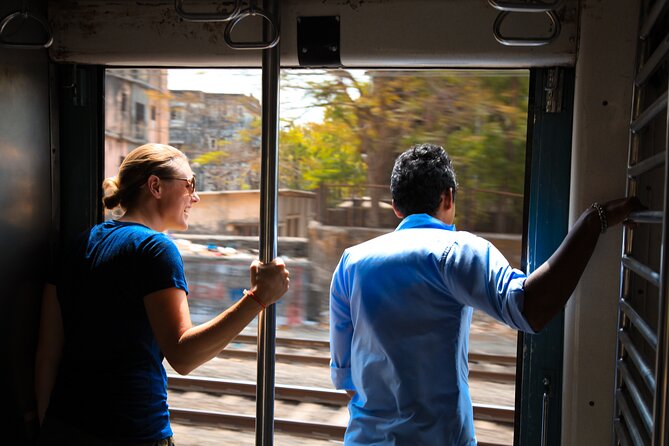
This tour is interesting because it helps you read Mumbai in motion. You ride public transport with a local guide, then anchor it with real-life stops like Dhobi Ghat and the dabawallas around Churchgate. It is the kind of half-day that makes the city feel less mysterious and more usable.
I like that the route balances big-name landmarks with everyday neighborhoods. You also get practical coaching on how to handle crowded rail and quick transfers without turning it into a stress fest. One drawback to note: it is not a sit-back, sightseeing-bus day. You need to be comfortable with crowds, walking, and occasional taxi pooling.
Key things that make this tour worth your time
- Learn the Mumbai rhythm by using train, bus, and taxi instead of just viewing from the roadside
- CST rush-hour moments where you can watch the station at peak times safely from walkways
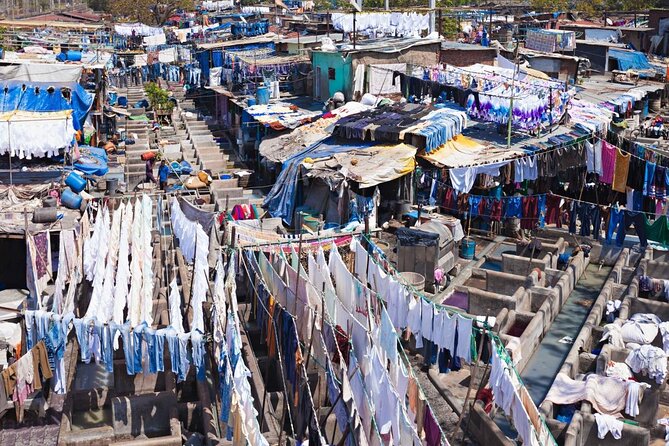
- Dhobi Ghat, the outdoor laundry where you see the daily work that powers parts of the city’s hotels and hospitals
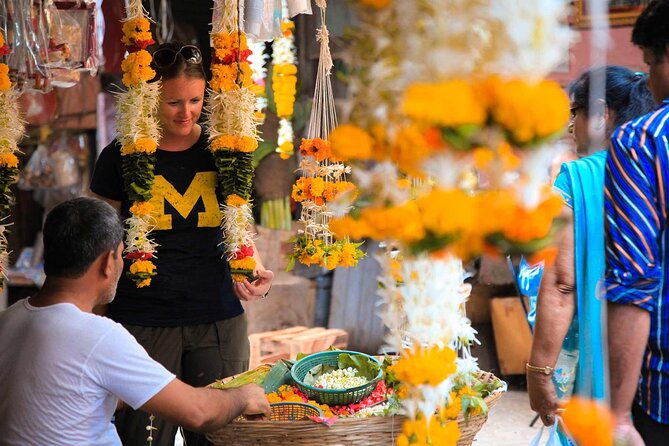
- Flower culture up close at a concentrated stop for blooms used in worship and daily life
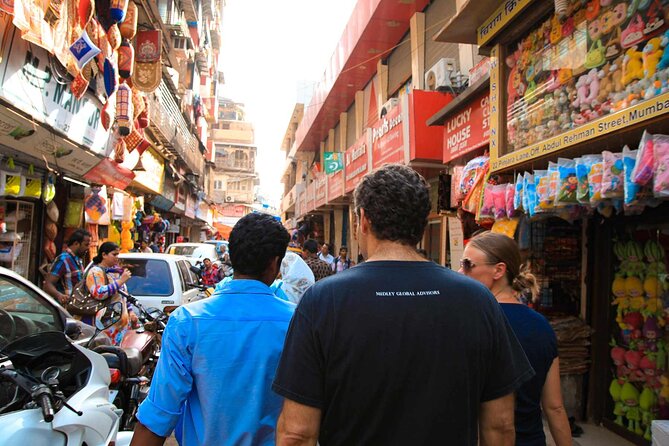
- Chor Bazaar browsing with time for local sweets and shopping for pickles and chutneys
- Dabawallas at Churchgate plus a chance to plan a simple vegetarian lunch near Oval Maidan
A Half-Day Plan That Teaches You Mumbai on Public Transport
This is a smart first foray into Mumbai because it targets what usually overwhelms new visitors. In other cities, you can focus on monuments. In Mumbai, movement is the point. This tour does that by mixing classic South Mumbai sights with short, hands-on moments of city life.
The real win is that you do not only look at Mumbai, you practice being part of it. You go by train, bus, and taxi, and your guide helps you choose the right moments to observe, wait, and move. That is how you go from feeling stuck in a crowd to feeling in control of your day.
You also get a human lens. Stops connect to work, food, and routine rather than just stone and statues. That is why it tends to feel less like a checklist and more like a fast orientation course.
Line these Mumbai options up side by side
- Dharavi slum tour in Mumbai by Female tour guides of the slum
★ 5.0 · 1,976 reviews - Mumbai: Full-Day Sightseeing Tour of Mumbai
★ 4.9 · 1,822 reviews - Private Mumbai Sightseeing Tour (Traveller’s Choice Award Winner)
★ 5.0 · 1,565 reviews
Price and What You Actually Get for $32.45
At $32.45 per person, this tour is good value for what is included. The biggest reason: transportation is covered. Fares are included, so you avoid the daily hassle of changing money for buses and taxis while you are still learning the system.
You also get a local guide, bottled water or a cold drink, and a tight 3.5-hour structure that uses the morning energy while streets and stations are functioning at full speed. For many visitors, that is the difference between a chaotic self-guided day and a smooth one.
One more value point: the group size is kept to a maximum of 25. That is big enough to keep it lively, but small enough that you are not completely lost in a crowd of strangers.
Getting Oriented: Regal Cinema to Churchgate, the practical end points
The tour starts at Regal Cinema in Colaba Causeway, opposite Chhatrapati Shivaji Maharaj Vastu Sangrahalaya. It ends at Churchgate Railway Station, which is convenient for getting to plenty of areas from South Mumbai.
This start and end matter. Colaba and Churchgate sit in the heart of the city’s activity, so after the tour you are not stranded far from the transport web. If you plan your other activities around rail lines, this makes your day easier.
You should also plan for one reality: there is no hotel pickup. That means you need to reach Regal Cinema on your own. The time is also early, with a start at 8:30 am, and the experience runs about 3 hours 30 minutes.
Stop by Stop: Regal Cinema and Chhatrapati Shivaji Terminus at rush hour
Regal Cinema is a gentle opener. It sets a local tone right away, and it is also a clear meeting point, one that is easy to find once you are in the Colaba area. You spend only a few minutes there, but it helps your brain switch from tourist mode into Mumbai mode.
Then you head to Chhatrapati Shivaji Terminus (CST), a UNESCO World Heritage Site. This is one of the best places to understand how Mumbai runs, because the station is intense even when nothing is “touristy” about it.
At CST, you get a short look during busy times. The key is where you watch from. You are on walkways rather than being shoved into platform crush. That is a big safety and sanity factor. The station becomes a living system, with trains arriving and releasing waves of people.
Also, it is a landmark you might recognize from pop culture, which helps you connect the place faster. But the point is not the fame. The point is seeing how daily commuting works at scale.
A different shape of Mumbai day:
- Elephanta Caves & Island Guided Private Tour
★ 5.0 · 1,327 reviews - Group Guided Walking Tour in Fort and Colaba
★ 5.0 · 1,073 reviews - Mumbai: Elephanta Caves Half-Day Guided Tour with Expert
★ 4.8 · 1,032 reviews - Highlights of Mumbai Sightseeing Tour: TRAVELLERS CHOICE AWARDED
★ 5.0 · 915 reviews
Flower power at SHYAM STALL and the Dadar market vibe
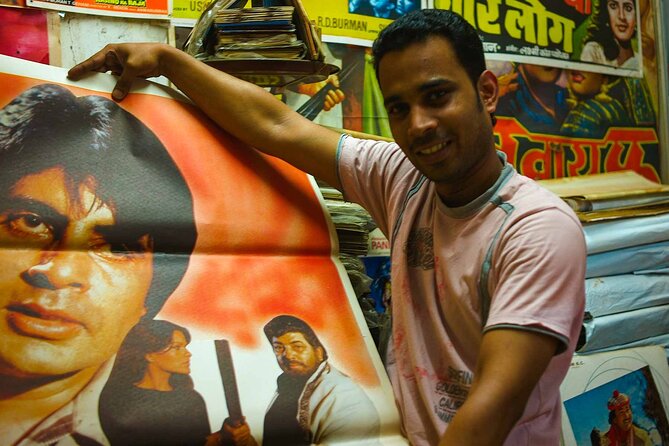
Flowers in Mumbai are not a side detail, they are part of daily life. At this stop, you see them where they matter, in religious practice, in homes, and even in personal styling.
The tour takes you to SHYAM STALL, a concentrated stop where you can see many blooms in one place. The effect is practical: you realize why Mumbai looks so colorful in motion. You also learn to notice flowers as a language, not just decoration.
Time here is short, so treat it like a quick visual lesson. Look for how people buy and arrange, and notice what flowers are used. If you are a photographer, this is also a better time for detail shots than the train rush, because you can slow down.
If you are someone who dislikes shopping scenes, you can keep it simple and focus only on the cultural side. The stop is designed to be educational first, not a hard sell.
Dhobi Ghat: The outdoor laundry that runs like a factory
Dhobi Ghat is where the tour earns its name, because it is work you can actually see. This is the world’s largest outdoor laundry, and it operates as a daily system tied to hospitals and hotels.
You get a meaningful chunk of time here, about 30 minutes. That is long enough to understand the scale. People are scrubbing sheets, fabrics, and laundry in open-air spaces, and you start to grasp why Mumbai relies on neighborhood industries, not only big institutions.
The best way to enjoy this stop is to watch process rather than trying to find one single angle. Notice how workers handle fabrics, how spaces are organized, and how steady the workflow feels. You also get a powerful reminder that “tourism Mumbai” is only one layer of the city.
One consideration: this stop can feel intense if you are sensitive to strong smells or busy activity. If you are comfortable with street-level scenes, you will likely find it fascinating.
Chor Bazaar for browsing, sweets, pickles, and local chaos
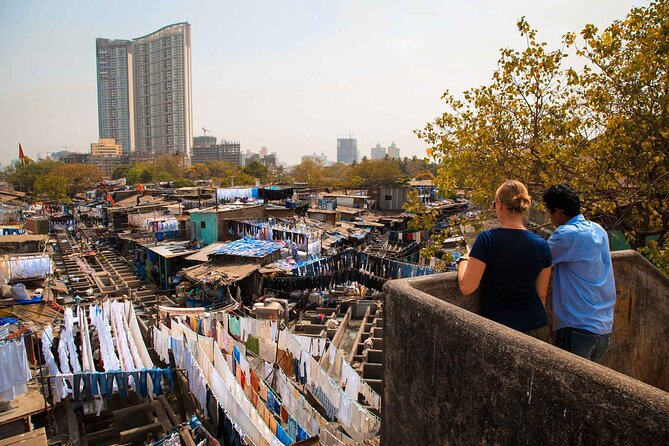
Chor Bazaar is the kind of place you either love instantly or need to approach carefully. It is a large, busy market where you can find almost anything, and it works best when you treat it like browsing theater.
The tour gives you about 30 minutes here. That is enough for a quick walk, a taste, and a couple of shopping choices, without turning the day into a negotiation marathon.
You can try local sweets and also pick up souvenirs like homemade pickles and chutneys. That is a smart souvenir category because it is practical and easy to share. It also gives you a taste of what locals eat, not only what’s sold to tourists.
If you hate crowds, plan to keep your pace light and do not get drawn into the busiest alleys. Market life here moves fast, so you want to stay with your guide’s timing and exit plan.
Dabawallas at Churchgate: how lunch delivery becomes a city system
The final stretch brings you to Churchgate Railway Station and the dabawallas. This is where the tour shifts from watching work to understanding logistics.
You get a glimpse of how the lunch delivery system is organized, with impressive daily scale. The key detail is that you see the operation near transport infrastructure, not in a separate world. It is a reminder that in Mumbai, systems are built around movement.
The tour also includes time for a vegetarian lunch near Oval Maidan. Because food is not listed as included in the tour basics, you should assume you may pay for your meal on the spot. Still, having a planned spot to eat is a big convenience for a half-day.
One more thing that can affect how it feels: taxis. At least one experience noted that the group might split and you could be in more than one taxi when transfers are needed. That means you rely on drivers and follow your timing. It can feel slightly uncertain if you are used to one vehicle, but everything usually works out when you stay flexible.
Guide matters: why people feel safe and leave with confidence
The guides are a standout part of this experience. Names that come up again and again include Bipin Kumar and Bipin, and the common thread is how calm and patient they are in busy transport situations.
This matters more than people expect. When you ride trains and buses in a packed city, you need clear instructions and good judgment. A strong guide helps you know when to board, when to wait, where it is reasonable to stand, and how to keep the group together.
You also get context, not just directions. Guides explain what you are seeing, so CST is not only a photo stop. It becomes a lesson in commuter behavior. Dhobi Ghat becomes more than a spectacle. Chor Bazaar becomes more than a name.
Some people even leave feeling ready to do their own rail rides later. That is the best endorsement of all, because the tour’s real purpose is to build comfort with the city’s rhythms.
Who should book this Local Transport and Dabbawallah tour
This tour fits best if you want to understand Mumbai through daily systems.
You’ll likely enjoy it if you:
- Want a practical first experience in South Mumbai
- Like watching real work and routines, not just monuments
- Are comfortable walking and dealing with crowds
- Prefer public transport over taxis as your main way to get oriented
You might want to choose something else if you:
- Hate dense crowds and can only handle quiet environments
- Want a strictly relaxed sightseeing pace
- Are not able to meet at Regal Cinema and handle transfers on your own
One more timing note: there are days where routines can change. For example, on January 26, Republic Day, the dabawallas may be off, which can shorten some parts of the experience. If your dates fall near major national events, expect the schedule to be flexible.
Should You Book This tour?
Book it if you want a low-cost, high-learning morning that teaches you how to move through Mumbai with less guesswork. The included transport, the guided safety approach, and the mix of CST, Dhobi Ghat, market culture, and dabawallas make it feel like a compact education in city life.
Skip it if you want a peaceful, low-contrast day with minimal crowd contact. This experience is built around the real Mumbai, so intensity is part of the deal.
If you do book, do one thing that pays off fast: plan to arrive at Regal Cinema a bit early and keep a flexible mindset about taxis and timing. That small prep lets the guide do what they do best, which is make the city feel navigable.
FAQ
What is the duration of the Local Transport & Dabbawallah tour?
The tour runs about 3 hours 30 minutes.
Where does the tour start and end?
It starts at Regal Cinema in Colaba Causeway and ends at Churchgate Railway Station.
What time does the tour begin?
The start time is 8:30 am.
How much does the tour cost?
It costs $32.45 per person.
Is hotel pickup included?
No. Hotel pickup and drop-off are not included.
What transportation modes are used?
You’ll travel by train, bus, and taxi during the tour.
Are transportation fares included?
Yes. All transportation on the tour is included, so you do not need to find change for fares.
Is bottled water provided?
Yes. You get bottled water and also a cold drink.
How big is the group?
The maximum group size is 25 travelers.
Is there free cancellation?
Yes. You can cancel for a full refund up to 24 hours before the experience starts.
What if the dabawallah lunch plan changes on special dates?
The experience can shorten when routines change. For example, January 26 (Republic Day) can affect dabawallah schedules.
Latest reviews in from Mumbai
- Premium Mumbai Sightseeing Tour★ 5.0 · 16 reviews
- Small-Group Bike Tour of Mumbai★ 5.0 · 16 reviews
- Cruise to Mumbai Historical Tour★ 5.0 · 16 reviews
- 3 Hours Early Morning in South Mumbai Heritage Bicycle Tour★ 4.5 · 16 reviews
- Bollywood Studio Tour with Guide and Transport★ 5.0 · 16 reviews
- Bollywood Sightseeing and Celebrity Homes Tour by Private Car★ 5.0 · 16 reviews
- Private Slum tour With Bollywood and Stars Home★ 5.0 · 16 reviews
- Same Day Taj Mahal and Agra Tour from Mumbai with Return Flights★ 4.5 · 16 reviews
Mumbai Tours, compared.
Dharavi slum tour in Mumbai by Female tour guides of the slum
Read our review →
Private Mumbai Sightseeing Tour (Traveller’s Choice Award Winner)
Read our review →

Elephanta Caves Half-Day Guided Tour with Expert
Read our review →
Highlights of Mumbai Sightseeing Tour: TRAVELLERS CHOICE AWARDED
Read our review →
Browse the lists this tour appears in