Reviewed · HERITAGE WALKS
Jaipur Heritage Walking Tour – Local life, Havelis and Temples
This Jaipur Heritage Walking Tour works because it turns the Pink City into a walkable slice of daily life, not just a checklist of monuments. I love the way it builds in time for street food and local-market scenes, and you get free bottled water so the walk feels manageable.
I also like the cultural side of the route, especially the Govind Devji Temple aarti ceremony and the craft demonstrations in Tripolia Bazar. One possible drawback is that it runs on foot for about three hours and needs good weather, so rain or poor conditions can shift plans.
Key Highlights You’ll Actually Feel on the Ground

- Local guide energy that keeps the pace sane, with guides like Viru known for clear explanations and adjusting to families
- Hawa Mahal context from its 1799 origin story, designed so royal women could watch market processions
- Jaipur’s only wholesale flower and vegetable market, where the colors and volume make sense fast
- Govind Devji Temple aarti as part of the walk, with a special push toward the morning ceremony timing
- Live craft demos in Tripolia Bazar, including lac bangle making, marble carving, and brass utensil work
- Value math works for $16, since snacks, coffee or tea, and bottled water are included and several stops have no entry fees
Why This Jaipur Heritage Walk Works Better Than a Typical Big-Sight Tour
If your goal is to see Jaipur as a living city, this style of tour is the right tool. Instead of rushing between one landmark and the next, you get a sensible flow: a royal exterior and landmark area, then real lanes and markets, then a temple ceremony, then artisan work you can actually watch.
I like that the tour doesn’t treat street food as a random gamble. You’re pointed toward snacks and vendors during the walking experience, with coffee or tea and snacks included. That matters in India, where you can go from great to not-so-great fast if you’re figuring it out alone.
Also, the tour leans on a local guide who explains what you’re seeing in plain language. In this operator’s experience, the name Viru comes up often, and he’s praised for being thorough and friendly while keeping the group moving at a comfortable rhythm. That’s especially helpful if you’re traveling with kids or you just don’t want to sprint through crowds.
More Historical Tours in Jaipur
- Heritage Walk & Street Food Tasting in Jaipur
★ 5.0 · 158 reviews - Private Full-Day Sightseeing Tour of Jaipur’s Heritage by Car
★ 5.0 · 110 reviews - Jaipur Heritage Walk with Rickshaw Ride
★ 5.0 · 105 reviews
Meeting Point and Pace: What 3 Hours Feels Like
The tour starts at Hawa Mahal Road in the Pink City area (Hawa Mahal Rd, Badi Choupad, J.D.A. Market). It ends back at the same meeting point, so you do not have to hunt for a different drop-off.
It’s about three hours, which is a sweet spot for Jaipur. Long enough to see more than one neighborhood mood, short enough that you can still stack another activity afterward without feeling wrecked. The route includes temple time and a longer craft-market stretch, so you are not just passing by things while walking quickly.
Because it’s designed for walking through narrow lanes, you should plan for close quarters in parts of the old city. Nothing extreme is promised, but you will be in the kind of alley space where you benefit from going slow and following the guide.
Hawa Mahal Road and the 1799 Wind Palace Story
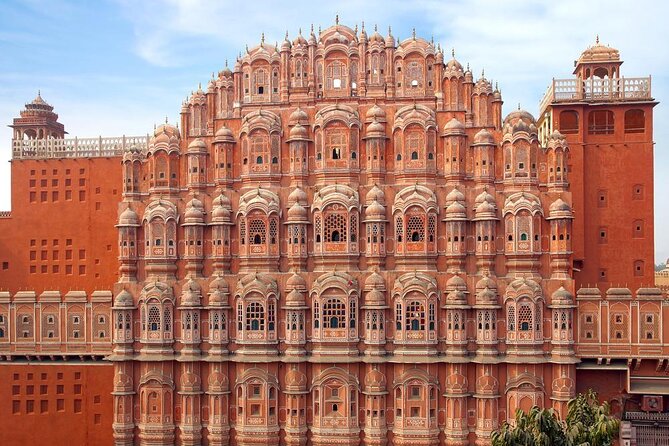
You begin near the area of Hawa Mahal, the Palace of Wind. Even if you do not go inside, it’s worth understanding what you’re looking at. The building was created in 1799 by King Sawai Pratap Singh so the women of the royal court could watch the market processions.
That little origin story changes the way you look at it. It stops being just a pretty facade for photos and becomes a practical piece of royal life. You also get the sense that this whole neighborhood was designed around how people moved and gathered.
One practical note: the admission ticket is not included for the Hawa Mahal stop. The tour includes time there, but if you want to enter, you should expect to pay separately.
City Palace of Jaipur and the Havelis You See From the Lanes
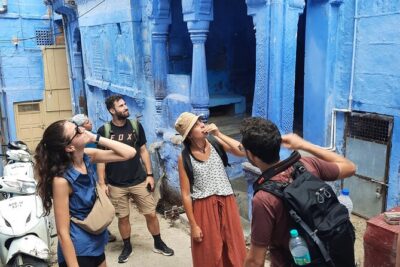
After Hawa Mahal, the walk shifts into the heart of the Pink City, where the tour focuses on old havelis and traditional architecture. You’ll spend time at the City Palace of Jaipur area, with emphasis on narrow lanes, courtyards, and the look of these residence-style compounds.
This is where the tour feels less like sightseeing and more like orientation. Jaipur can look repetitive from a distance, but up close you start noticing patterns: the way courtyard space works, the way frescoes and decorative surfaces catch light, and how the lanes channel movement through the neighborhood.
You also get a simple benefit: this stop’s admission is listed as free, so you’re not getting nickel-and-dimed while trying to enjoy the architecture.
More Temple Tours in Jaipur
- Jaipur Tuk Tuk Sightseeing Tour with Monkey Temple Sunset View
★ 5.0 · 108 reviews - Private Full-Day Jaipur Tuk-Tuk Tour with the Monkey Temple
★ 5.0 · 72 reviews - Jaipur Guided Tour with Monkey Temple
★ 5.0 · 55 reviews - Jaipur: Private Evening Tour with Monkey Temple Sunset
★ 4.6 · 27 reviews
Pink City Flower and Vegetable Market: Wholesale Scale in Real Life
Next you’ll head to the Pink City area for a colorful market experience focused on flowers and vegetables. The tour calls out that this is the only wholesale flower and vegetable market in Jaipur, which is exactly the kind of detail that makes a visit feel purposeful.
You’ll get about 30 minutes here, and the idea is to watch the market as a working place. Wholesale markets can feel chaotic if you show up with no framing, but having the context that it is wholesale changes what you pay attention to. You notice the volume, the sorting flow, and the steady rhythm of commerce rather than treating it like a random street scene.
The stop is listed as free, so you’re paying only for the guide and the overall walk. That keeps the cost side simple.
Govind Devji Temple Aarti: One Ceremony, Big Meaning
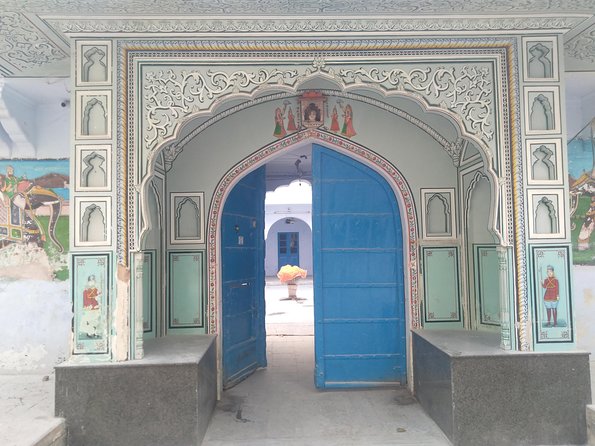
The Govind Devji Temple stop is one of the most meaningful parts of the walk. You’ll see one of the seven ceremonies (aarti) during the program.
The tour specifically advises that you try to attend the morning ceremony. That advice is worth taking seriously if your schedule allows it. Temple routines follow set timing, and ceremonies can be easier to experience when the day is still fresh.
This stop is also listed as free, so again the value stays strong. You’re not paying extra to add a spiritual and cultural moment that usually costs time and planning if you do it on your own.
A practical way to prepare is to keep your expectations grounded. You’re not there for a museum-style experience. You’re there to witness a ceremony as it happens, so be ready to stand, watch, and follow the guide’s cues.
Tripolia Bazar Craft Demos: Lac Bangles, Marble, and Brass Work
The tour ends with a longer stretch at Tripolia Bazar, built around live demonstrations of traditional crafts. This is the section that turns your Jaipur photos into evidence you actually learned something.
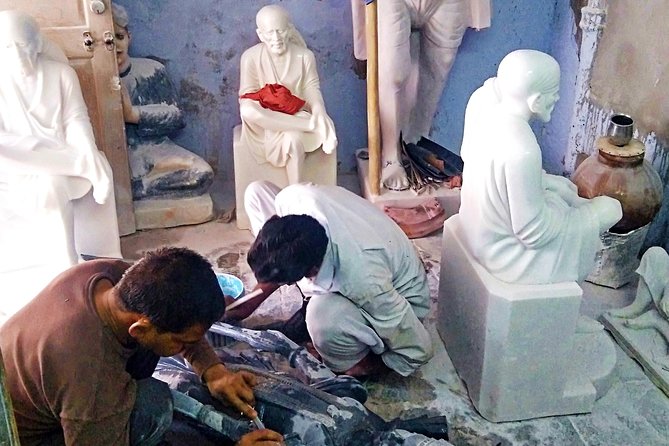
You can see demonstrations tied to lac bangle making, marble carving, and brass utensil crafting. The value here is not just watching, it’s seeing the process in real time instead of hearing a generic explanation from a signboard.
The tour gives about one hour and thirty minutes for this area, and admission is listed as free. That time matters because crafts are detailed work. If you only spend ten minutes in a craft zone on your own, you often miss the best part, which is the step-by-step.
Also, the guide’s role matters a lot here. A good guide helps you connect what you’re seeing to the local life around it, including the idea that many people in Jaipur specialize in one craft and build a living around it.
Street Snacks and Coffee or Tea: How the Tour Keeps It Low-Stress
This is where the tour earns its keep for people who want local food without turning the afternoon into a gamble.
The tour includes snacks, and it also includes coffee and/or tea. Plus, you get free bottled water, which is a smart, practical inclusion for a walking schedule.
The big advantage is that the tour frames street food as part of the day’s route, not a separate plan you have to research on the fly. You also get the benefit of reliable vendors as part of the guided approach.
My tip: go hungry enough to try more than one snack, but not so hungry that you feel pressured to eat everything quickly. The goal is to taste the street food culture while staying comfortable for the rest of the walk.
What You Get for $16: Value That Makes Sense
At $16 per person, this tour is priced like an easy decision for a lot of visitors because several key things are already included. You receive snacks, bottled water, and coffee or tea, plus the guided walking experience that strings together markets, a major landmark area, a temple ceremony, and craft demonstrations.
Several stops are listed with admission fees as free (City Palace area, wholesale market, Govind Devji Temple, Tripolia Bazar). The one place that’s flagged as not included is the Hawa Mahal ticket.
So the real value equation looks like this:
- You pay for the guide and walking structure.
- You enjoy multiple free-fee cultural stops.
- You only budget extra if you decide to pay for entry at Hawa Mahal.
There’s also the small-group feel. The tour description emphasizes small group sizes for personal attention, and it’s described as private in the sense that your group participates. Translation: you are not just part of a crowd. You can ask questions and move at a human pace.
Who Should Book This Tour, and Who Might Skip It
This tour is a strong match if you want:
- A local guide to explain what you’re seeing in markets, temples, and craft alleys
- A short, focused day in Jaipur that does not require planning four separate activities
- A mix of culture and food, with street snacks built in
- Something family-friendly, since guides like Viru have handled kids with an adaptive pace
You might skip it if:
- You want a full deep-dive museum style tour with long seated lectures. This is a walking experience built around scenes.
- You will only travel on your own schedule and cannot be flexible with ceremony timing. The morning ceremony is recommended.
Booking Tip and Practical Notes That Matter
This experience uses a mobile ticket, and you should receive confirmation at booking. It also notes that it is near public transportation, which helps if you plan to arrive on your own and meet the group at the starting point.
The tour does require good weather. If weather causes cancellation, you’ll be offered a different date or a full refund. It also requires a minimum number of travelers, so on a very quiet week you might see date changes. These are not deal-breakers, they’re just the kind of “keep your eyes on the weather” realities you should expect for an outdoor walking format.
Should You Book This Jaipur Heritage Walking Tour?
Yes, if you want Jaipur to feel like a real place within a short window. The combination of market life, an actual temple ceremony moment, and hands-on craft demonstrations in Tripolia Bazar is a lot of meaning for the money, especially because snacks, water, and drinks are included.
Book it when:
- You like walking tours with context, not just photos
- You care about how people live and work in the Pink City
- You want street food without having to guess vendor quality
Skip it when:
- You hate walking and want everything indoors
- You only want the one big landmark at Hawa Mahal and nothing else
If you can go in the morning, aim for that Govind Devji aarti timing. That one choice is the difference between watching a ceremony and missing the best slice of it.
FAQ
How long is the Jaipur Heritage Walking Tour?
It’s about 3 hours.
Is Hawa Mahal admission included?
No. The Hawa Mahal stop lists admission as not included.
What food and drinks are included?
You’ll get snacks, free bottled water, and coffee and/or tea.
Where does the tour start and end?
It starts at Hawa Mahal Rd, Badi Choupad, J.D.A. Market in the Pink City. It ends back at the same meeting point.
Is the temple ceremony included, and what time is best?
Yes, the tour includes one of the temple ceremonies (aarti). The tour specifically advises attending the morning ceremony.
What happens if the weather is bad?
The experience requires good weather. If it’s canceled due to poor weather, you’ll be offered a different date or a full refund.
More Heritage Walks in Jaipur
- Fontainhas Heritage Walk by Make It Happen
★ 5.0 · 2,834 reviews - The Great Indian Food Tour: Old Delhi Food and Heritage Walk
★ 5.0 · 1,698 reviews - Old Goa Heritage Walk by Make It Happen
★ 5.0 · 797 reviews - Fontainhas Heritage Walk At Latin Quarters of Goa
★ 5.0 · 531 reviews
More Walking Tours in Jaipur
- Jaipur Bazaar & Food Walking Tour
★ 5.0 · 281 reviews - Magical Walk of Jaipur
★ 5.0 · 121 reviews - Cultural Walk and Food Tasting In Jaipur
★ 5.0 · 118 reviews - Jaipur Heritage Evening Walk – The Twilight Magic of Pink City
★ 5.0 · 93 reviews
Latest reviews in from Jaipur
- Jaipur Full-Day Tour by Car with Govt Guide★ 5.0 · 43 reviews
- Taj Mahal Tour from Jaipur by Car – Private Day Trip★ 5.0 · 43 reviews
- Jaipur Car tour with English driver★ 5.0 · 44 reviews
- Pushkar Day Trip from Jaipur – Private Car, Safari, Guide & Lunch★ 4.5 · 45 reviews
- Jaipur Private Full Day Tour w/ AC Car & Guide (Eng, Esp, Fr, It)★ 5.0 · 47 reviews
- Golden Triangle Tours★ 5.0 · 47 reviews
- Jaipur Day Tour★ 5.0 · 47 reviews
- Same Day Jaipur Tour By Car★ 5.0 · 47 reviews
Heritage Walks, compared.


The Great Indian Food Tour: Old Delhi Food and Heritage Walk
Read our review →

Fontainhas Heritage Walk At Latin Quarters of Goa
Read our review →
Private Heritage Walking Tour in Jaisalmer Fort and Old Bazaar
Read our review →