

Reviewed · HISTORICAL TOURS
1 day private tour of Hampi world heritage site in car with professional guide
Hampi is the kind of place that feels like you stepped into the 16th century without leaving your modern comfort behind. This private car tour with a professional guide is the practical way to see the big highlights in one day, instead of trying to stitch the sites together yourself.
I especially like the way the day is organized around the most famous monuments, starting with the Vijaya Vittala Temple complex and ending deep in the Royal Enclosures. I also like the guide focus, because key details like legends, styles, and royal functions make the ruins easier to understand, not just “pretty stone.” You’ll also get the benefit of a comfortable drive between stops, with AC in the car.
One possible drawback: 9 hours can feel rushed if you want slow wandering and lots of photo time at every site. If you’re the type who likes to sit, sketch, read, and take breaks, you may wish you had 2 days in Hampi.
Key highlights you should care about
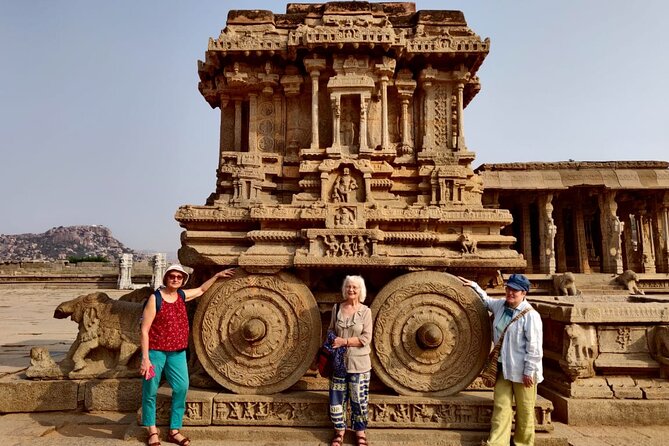
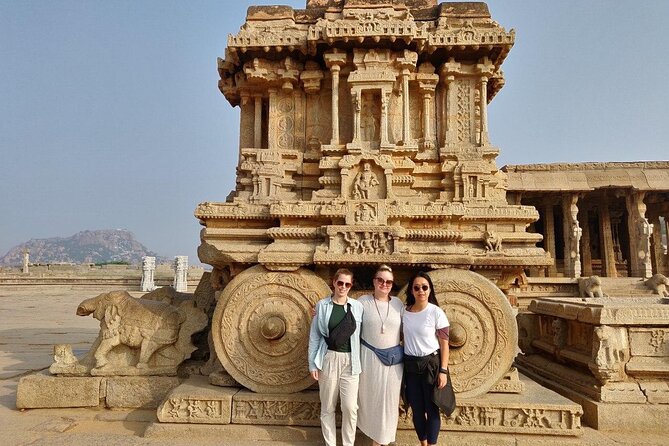
- Vijaya Vittala Temple first: you start with the most iconic architecture and the stone chariot that everyone comes for.
- A full royal-site arc: Queen’s Bath, the Royal Enclosures, Zanana Enclosure, and the palace settings help you understand how Vijayanagara power worked.
- Statues that scale up fast: huge carved forms like the monolithic Sasivekalu Ganesha and the towering Ugra Narsimha are unforgettable up close.
- Virupaksha Temple’s towering stack: an 11-storey temple tower reaching about 165 ft gives you a clear sense of how vertical the old city was.
- Admission tickets included: the day’s main stops include entry, so you are not scrambling for permits mid-tour.
- Private, guided, car-based pacing: you set the rhythm with your guide rather than following a crowded bus schedule.
A one-day Hampi plan that actually works

A 1-day Hampi tour is all about trade-offs. You’ll see a lot, but you won’t “finish” Hampi in the sense of absorbing every corner. The advantage is focus: you hit the most important pieces of the Vijayanagara-era landscape and the oldest worship sites, in an order that helps everything connect.
I like that this is set up as a private experience with only your group. That matters here because guides can explain what you are looking at as you go, instead of repeating the same speech while you wait for a crowd to move.
The pacing is also realistic. The morning is for the biggest visual wow moments, while the later stops help you place those monuments into the bigger story of royal life, water storage, and temple culture.
More Historical Tours in Hampi:
Morning at Vijaya Vittala Temple and the stone chariot
You start at the Vijaya Vittala Temple, often considered the grandest masterpiece in Hampi’s temple world. This temple is built on a polyhedron foundation, and that technical detail is not just trivia, it’s part of why the site looks so “anchored” even in ruins.
Plan to spend about 30 minutes here, including admission. You’ll see the famous stone chariot out in front, the one people picture when they talk about Hampi, and the scale makes the stone craftsmanship feel surprisingly human.
The main drawback at this stop is simple: it’s popular in most ways, meaning your eyes may want to bounce between details. A good guide helps you pick what to look at first so you do not miss the key carvings, the layout, and the logic behind the design.
King’s Balance: legend plus a geometry lesson

Next comes King’s Balance, a huge stone frame east of Purandara Mantapa. The structure is basically a stone beam set on two pillars of stone, and the legend is that Vijayanagara kings used it to weigh generous gifts.
You only have about 15 minutes at this stop, so it’s less about deep exploration and more about quick context. The value is that the guide can explain why a “simple” frame became a story device for power, giving meaning to what otherwise might feel like another rock structure in the open air.
If you are the type who likes to read the ground itself, you might feel the time is short. Still, for a one-day plan, it’s a smart add-on because it connects monuments to royal behavior rather than just architecture.
Virupaksha Temple: oldest in Hampi, tall enough to anchor your view
Virupaksha Temple is your next big piece of the puzzle, and it’s one you should not rush. This is from the Hoysala period and described as the oldest temple in Hampi, so it helps balance the day between older roots and Vijayanagara splendor.
Expect about 30 minutes here, with admission included. The tower is said to have eleven storeys and reach around 165 ft in height, which is one reason this stop is so powerful for orientation. When you see it, you start to understand how the city must have felt when these spaces were active and full.
One consideration: if you are focused on photos more than explanations, you might spend too little time letting the guide connect Virupaksha to the larger religious landscape. Give your guide a chance to point out what makes it older, not just taller.
Sasivekalu Ganesha: the monolith that makes you stop walking
Then you hit Sasivekalu Ganesha Temple, known for a single-block carving of Lord Ganesha. The statue is about 8 feet tall, and that size difference from “typical” shrine statues is exactly why this stop lands hard even on a fast schedule.
You’ll have around 15 minutes here, admission included. The carving style and the rock form are the focus, and a guide’s comments help you notice how the single-block approach shapes the final figure.
The only real drawback is time pressure. With only a short window, you’ll want to choose: do you want more time looking at the details, or do you want more time absorbing the overall form from a bit farther back? Either way is fine, but decide early so you don’t feel scattered.
Ugra Narsimha and the serpent detail
After that, you visit the Statue of Ugra Narsimha, listed as the biggest idol of Hampi. It stands about 22 feet tall and was carved by a Brahmin during Krishnadevaraya’s time, which adds that royal-era authorship feeling to what you are seeing.
You’re given about 15 minutes here, admission included. There is also a serpent with an open hood visible at the back, which is the kind of small but memorable detail that makes the statue feel alive, not just oversized.
If you like symbolism, this is a strong stop because the guide can explain why that serpent detail matters in the broader shrine setting. If you do not care about symbolism and only want the photo, you can still get the payoff, but you’ll miss some meaning.
Royal Enclosures: Queen’s Bath, durbar spaces, and power infrastructure
Royal Enclosures are the heart of the royal story in Hampi, and you get about 1 hour here, with admission included. This area is described as the seat of power of the Vijayanagara kingdom, with durbar halls, platform areas, tanks, underground chambers, and temples.
You start at Queen’s Bath, which is where many people first feel the “planned” nature of this complex. The point of slowing down here is to see that these weren’t only places to worship. They were also places to stage authority, manage water, and run daily operations for a kingdom.
Because this stop runs longer, it’s also where your guide matters most. A strong guide helps you sort out what is ceremonial, what is practical, and what is defensive or administrative in feel, even though the whole place is now in ruins.
Zanana Enclosure and the Lotus Mahal angle
Next is the Zanana Enclosure, the royal women’s area in the larger royal setup. You’ll spend about 20 minutes here, admission included, and the star mentioned is the Lotus Mahal.
The Lotus Mahal is described as a palace that is two-storied, surrounded by a rectangular wall. That description matters because it changes how you look at the structure, you start seeing it as a boundary and a setting, not just a standalone building.
This is also a good time to reset. You’ve been through tall temples and giant monoliths, and now you get a different architectural mood. If you like looking at rooms and how spaces would have been used, you’ll appreciate this section more than if you only care about temple exteriors.
Hazara Rama Temple and the last temple stop
Within the Royal Enclosures area, you visit Hazara Rama Temple. It’s the only temple in the Royal Enclosure mentioned here, and it is dedicated to Lord Ram, an incarnation of Vishnu.
You’ll have about 20 minutes at this stop, admission included. In a day that has many temple forms, this one helps you round out the religious side of royal life, showing how devotion fit inside the power zone rather than staying outside it.
The drawback here is the “late-day focus” effect. By now you may be tired, so if you can, give yourself a moment to stand back and let the guide explain what makes this temple placement different.
Underground Shiva Temple and the water-and-temple mix
Before the tour ends, you visit an underground temple of Shiva, along with an excavated water tank and an administrative enclosure. This is one of the most interesting ways Hampi is presented in a one-day sweep because it shifts the story from surfaces to the systems below.
You get about 20 minutes here, admission included. The main value is learning that water management and administration were part of the same built world as temples.
If you are tempted to rush because it sounds less dramatic than the giant statues, resist that urge. The underground setting and the mention of a water tank connect the day’s stops into one idea: this was not random ruin, it was a whole working city concept.
Price and value: what $125 per person covers
At $125 per person for about 9 hours, this private tour is priced like a proper guided experience, not a ticket-and-go pass. The value is in three things you can actually feel during the day: a professional guide, private car transport, and admission tickets included for the listed stops.
The reviews you can rely on are very consistent about the guide-led explanation and the comfort of the drive. One example is a guide named Akhil, who led a full-day route and helped make the monuments feel connected rather than like a checklist. Another is Kumar, who was described as knowledgeable and engaging, which is exactly what you need at Hampi, where small carvings and layout details can be easy to miss.
Is it worth it for everyone? If you are traveling with limited time, this is one of the cleanest ways to maximize a single day. If you have extra days, you might get even more value by doing a slower 2-day approach, but that is a different trip plan.
Timing: 8:00 am start and how to pace yourself
The tour starts at 8:00 am, and the total time is about 9 hours. That schedule is common for Hampi because you want the daylight for open-air monuments and you also want time to move between sites without feeling stuck.
You’ll also notice the stop lengths are intentionally varied. Major architectural anchors like Vijaya Vittala and Virupaksha get around 30 minutes, while quicker stops like King’s Balance and the statue points get about 15 minutes each. That means you should bring your energy for the “big” pieces early, then let the guide help you keep momentum on the shorter stops.
Since this is an open-air archaeological site, plan on some time on your feet between points. The private car helps with the travel segments, but the monuments themselves still require attention and walking.
Getting the most from a guided Hampi day
This kind of tour pays off when you treat it like a guided learning walk, not just sightseeing. The best approach is to ask simple questions when the guide points something out, especially at the royal sites where legends and functions get mixed into the architecture.
Two spots where your guide input will likely feel most worthwhile are the Royal Enclosures and the transition from Virupaksha into the larger Vijayanagara-era story. Those areas are where it becomes easy to lose the “why” unless someone explains it in plain language.
Also, keep your expectations aligned with the format. You’re not trying to memorize everything. You’re trying to leave with a clear sense of how the city worked, where power sat, and why certain monuments became the icons.
Who this private tour fits best
This is a great match if you want a focused Hampi highlights day without the stress of coordinating transport and finding the right entrances. It’s also a strong fit if you value explanation, because the guide is part of what makes the monuments readable.
It’s less ideal if you want a long, slow, independent wander with hours to spare at each site. The tour is designed to cover the major anchors, and that structure naturally limits how long you can linger wherever you personally get hooked.
Good news: the tour notes say most travelers can participate, and the car-based setup usually helps people who prefer not to rely on public transport for hopping between sites.
Should you book this 1-day private Hampi tour?
Book it if you have limited time and you want the best-known Hampi monuments in a single day with a professional guide and admission tickets included. The route through Vijaya Vittala, Virupaksha, the monolith statues, and the Royal Enclosures gives you a rounded feel for both sacred space and royal power.
Consider a different plan if Hampi is your main destination and you can add extra time. A one-day format can’t replace slow hours of looking, resting, and re-visiting your favorite corners. If you are certain you want depth over coverage, more time in Hampi will serve you well.
FAQ
What time does the tour start?
The tour starts at 8:00 am.
How long is the Hampi private tour?
It lasts about 9 hours.
Is this tour private or shared?
It is a private experience, so only your group participates.
Are admission tickets included?
Yes, admission tickets are included for the listed stops.
Is pickup offered, and how will you get to the sites?
Pickup is offered, and it is described as near public transportation. The tour is done in a car.
What is the cancellation policy?
You can cancel for a full refund up to 24 hours before the experience start time. Free cancellation is available, with the cut-off based on local time.
Latest reviews in from Hampi
Historical Tours, compared.


The Great Indian Food Tour: Old Delhi Food and Heritage Walk
Read our review →

Old Delhi Food, Heritage&Cultural Walk with Rickshaw ride to Masterji Kee Haveli
Read our review →
Fontainhas Heritage Walk At Latin Quarters of Goa
Read our review →
Blue City Heritage Private Walking Tour With Pickup and Drop-Off
Read our review →

Private Heritage Walking Tour in Jaisalmer Fort and Old Bazaar
Read our review →Browse the lists this tour appears in