
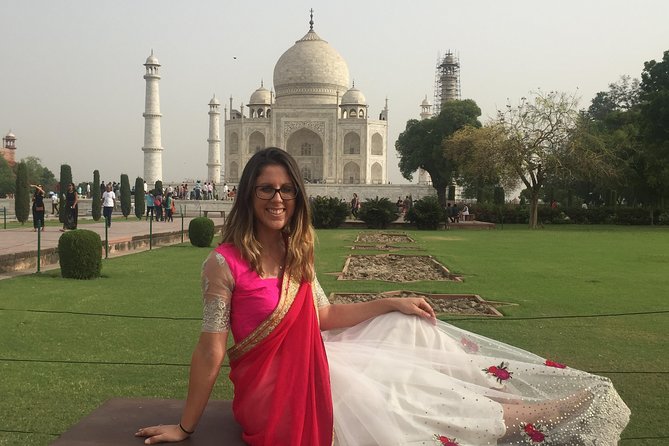
Reviewed · 6-DAY EXPERIENCES
Golden Triangle 6 Days
This Golden Triangle trip works because it packs Delhi, Agra, and Jaipur into a tight schedule without making you juggle tickets, timing, or transport. It is a classic route, but the real value is how the plan keeps you moving with a guide and cars lined up.
I really like the hotel pickup and drop-off part, because it removes a lot of on-the-ground stress in big cities. I also like that the operator often sets you up with drivers known for being careful and easy to communicate with, like Surendra or Sumit, plus coordination through Manoj for smooth logistics.
The main drawback to consider is pacing, you will be driving between cities. Also, you still need to budget for monument entrance fees, since they are not included.
Key things to know before you go
- Hotel pickup and drop-off makes the days feel more manageable, especially on arrival and departure days.
- Skip-the-line privileges at many stops can save time, even though you will still need to pay entry fees.
- Five nights of shared accommodation with breakfast keeps the trip price focused on logistics and guided access.
- Early morning Taj Mahal timing is built in, which is usually the best way to experience the monument before the crowds.
- A private setup for your group keeps the schedule practical and avoids constant regrouping with strangers.
Golden Triangle in 6 Days, why it is a smart hit-list
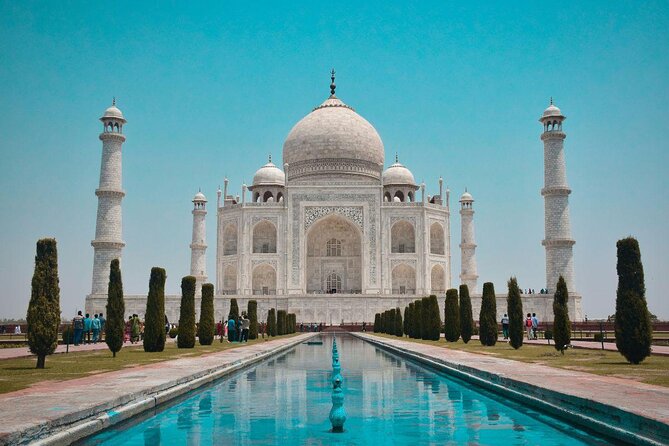
If you want India’s most iconic visuals in one concentrated trip, the Golden Triangle route is hard to beat. Delhi gives you major Mughal landmarks plus a feel for modern India. Agra delivers the Taj Mahal. Jaipur throws in Rajasthan palace spectacle and big, striking viewpoints that feel like they belong in a postcard.
The reason this tour format is worth your attention is simple: it handles the heavy lifting. You get round-trip transportation around each city, a guide for commentary so you do not miss context, and hotel pickup and drop-off so you are not figuring things out mid-route.
More Golden Triangle circuits:
- 3-Days Private Golden Triangle Tour: Delhi, Agra & Jaipur by Car
★ 5.0 · 1,107 reviews - 3-Days Private Golden Triangle Tour: Delhi, Agra & Jaipur by Car
★ 5.0 · 1,098 reviews - 3-Day Delhi, Agra and Jaipur Private Tour – India Golden Triangle
★ 5.0 · 812 reviews
Price and what you really get for $544.27 per person

At $544.27 per person, you are paying for the big trip costs that are often hard to assemble yourself: intercity transport, hotels (shared rooms), and a guide for multiple days.
What is not included matters for budgeting. Monument entrance fees are not included, and you should expect to pay at least for the main sights even with skip-the-line assistance. Alcohol is also not included, though it is available to purchase.
One good way to think about the value is this: if you try to DIY the same route, you will likely spend time and energy negotiating transport and guides on the fly. This plan buys you structure. If you hate logistics more than crowds, that structure is a real win.
Hotel pickup, shared rooms, and the pace question
This trip includes hotel pickup and drop-off and uses a private driver setup for your group. It also includes five nights of shared accommodations with breakfast, which is a cost-control move. Shared lodging can be fine if you are traveling as a couple or with friends who you are comfortable sharing space with. If you want lots of privacy, you should plan on paying extra or choosing a different lodging option.
Pacing is the other thing. This is a whirlwind, by design. You will see a lot, but you will also spend time in the car. If you have limited tolerance for long drives, consider how much sightseeing time you actually want each day.
Day 1 Delhi airport to your hotel base
Your first day is all about getting settled. A driver picks you up from the airport and transfers you to a Delhi hotel, then you rest.
This matters more than it sounds. Delhi is not a city where you want your first experience to be rushing for transport or trying to decipher directions after a long flight. By starting with a transfer, you can arrive, drop bags, and reset for your monument days.
Day 2 Delhi highlights, Qutub Minar through Lotus Temple
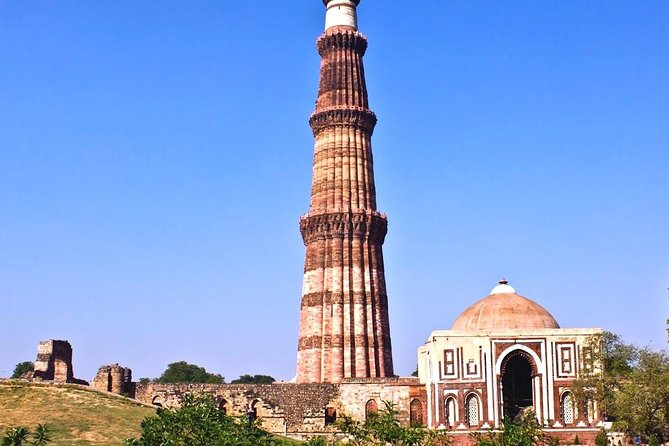
Day 2 is packed with Delhi’s most important visual stops. You are looking at multiple eras of power, architecture, and religion, all within a single day. The value of a guide here is that the sites can feel random if you only look at photos. With commentary, the connections start to click.
Qutub Minar: the UNESCO star
Qutub Minar is part of the Qutb complex, a UNESCO World Heritage Site in Delhi. It is a tall tapering minaret with five stories, rising about 73 meters, and it gives you an immediate sense of how monumental Indian craftsmanship can be.
What I like about starting here is scale. Even if you are not into architecture, the height and the tower form make the place instantly memorable.
Note: admission is not included, and the stop time you get is about 1 hour.
Humayun’s Tomb: Mughal grandeur with perspective
Humayun’s Tomb is the tomb of Mughal emperor Humayun, commissioned in the late 1500s by Empress Bega Begum. It is a major stop because it represents Mughal-era tomb architecture in a way that is easier to understand than some of the later mega-complexes.
If you want better photos, aim to slow down and look for symmetry and the way the structure frames its garden setting. That design logic helps you “read” the building.
Admission is not included, and you have about 1 hour.
Red Fort: Old Delhi’s big statement
The Red Fort, also known as Lal Qalʿah, is a Mughal fort built in the mid-1600s. It is one of the anchors of Old Delhi, and it helps you understand why so many people still associate Delhi with Mughal history.
In a jam-packed schedule, Red Fort is one of the places where a guide’s context makes a difference. You can walk through it quickly, or you can understand what you are looking at, and that changes the experience.
Time here is around 1 hour and admission is not included.
Jama Masjid: one of the largest mosques in India
Jama Masjid is one of the biggest mosques in Delhi and was built under Shah Jahan. This is a short stop, about 30 minutes, and the good news is that admission is listed as free for this stop.
What to do with limited time: focus on the main prayer hall area and the courtyard rhythm. The size can surprise you, and it helps to have context so it does not feel like just another big building.
Lotus Temple: modern worship, clean lines
Lotus Temple is a Bahá’í House of Worship, known for its flower-like shape. It is dedicated in 1986, so it is much more modern than the Mughal stops around it.
I like that the temple gives you a visual reset. After hours of fort and tomb architecture, this one feels designed for calm and clarity.
This stop runs about 30 minutes, and admission is not listed as included.
Day 3 Agra Fort and Mehtab Bagh, setting up the Taj
Day 3 shifts you from Delhi to Agra. Two stops are listed here, both useful because they help you understand Agra beyond the one famous monument.
Agra Fort: the Mughal residence era
Agra Fort was a main residence for Mughal emperors until the capital shifted to Delhi in 1638. It is a historical fort that gives you a sense of the daily power center behind the famous monuments.
A practical note: forts can feel samey if you rush. In your time on this stop, ask the guide to point out what makes this fort different, because the layout and function matter.
Stop time is around 2 hours, and admission is not included.
Mehtab Bagh: the Taj Mahal viewing setup
Mehtab Bagh is known as a great spot for Taj Mahal viewing and is tied to Mughal-era storytelling about garden views across the river. Even if you already plan to see the Taj tomorrow, this stop is smart because it gives you a “preview angle.”
Try to treat it as a warm-up. You will likely understand tomorrow’s view better after seeing how the monument lines up from here.
Stop time is about 1 hour, admission is not included.
Day 4 Sunrise Taj Mahal plus Fatehpur Sikri en route
Day 4 is the big one: Taj Mahal time.
Taj Mahal: the early start plan is the right move
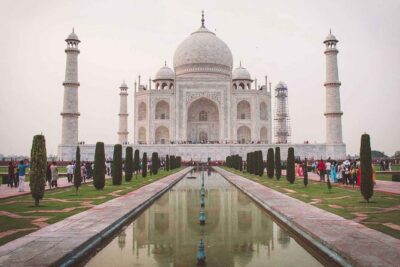
The tour is set for an early morning visit, at sunrise or after breakfast. Taj Mahal built by Mughal emperor Shah Jahan in memory of Mumtaz Mahal between 1631 and 1653. That story is not background noise here. It is part of why the monument hits so hard emotionally.
Practical advice: if your body can handle it, choose the sunrise option. Light changes the stone, and the crowds tend to be more manageable earlier in the day. Two hours is typical here, so you can do a slow walk and still have time to step back and take in the overall composition.
Admission is not included, and the stop duration is about 2 hours.
Fatehpur Sikri: Akbar’s dream capital stop
After the Taj visit, the plan is to return to the hotel for checkout and depart Agra to Jaipur, stopping at Fatehpur Sikri along the route.
Fatehpur Sikri is described as the dream capital of Akbar. The stop time here is about 1 hour, and admission is listed as free.
One drawback with an hour: you will not get the full sense of a place that people spend longer exploring. Treat this as a highlight taste. If you love it, you might want to come back later in a longer trip.
Day 5 Jaipur palace and astronomy hits, Amer to Jal Mahal
Jaipur is where the Golden Triangle starts to feel like Rajasthan in full color. You get fort drama, city palace structure, classic viewpoints, and the whimsical look of Hawa Mahal.
Amber Palace (Amer Fort): Rajasthan scale and craft
Amber Palace is located in Amber, about 11 kilometers from Jaipur. It is described as one of Rajasthan’s most famous forts, and it was originally the capital of the state.
This is a stop where you will want time to notice craftsmanship, not just the big walls. With about 2 hours here and admission not included, you can still do a thoughtful walkthrough.
City Palace of Jaipur: royal center in the middle of town
The City Palace is at the center of Jaipur, and the city itself is described as the first planned city of medieval India, divided into nine blocks. The palace anchors that planned layout.
Stop time is about 1 hour, and admission is not included. With limited time, I recommend focusing on the areas that show why this was the royal center, not trying to sprint through every room.
Jantar Mantar: giant astronomical instruments
Jantar Mantar is a collection of nineteen architectural astronomical instruments built by Kachwaha Rajput king Sawai Jai Singh II, the founder of Jaipur.
Stop time is about 45 minutes and admission is not included. This is one of those places where a guide can turn confusion into understanding fast. If you ask even a few questions, you can leave with a mental model of how these instruments were built to measure the sky.
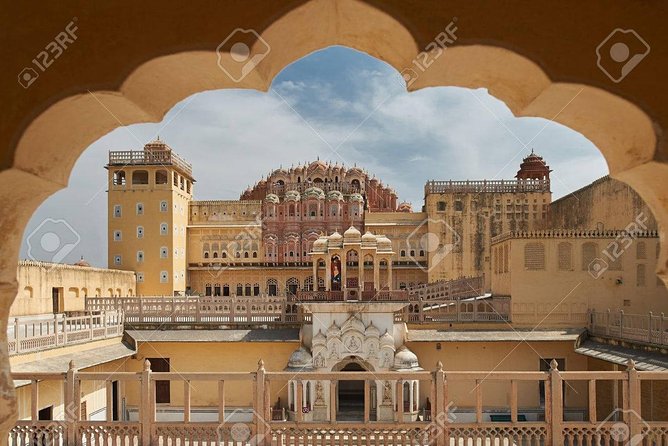
Hawa Mahal: Palace of Wind photo favorite
Hawa Mahal is made with red and pink sandstone and sits on the edge of the City Palace, extending to the Zenana. The name alone tells you what to look for: the façade and the window-like openings.
Stop time is about 30 minutes, and admission is not included.
Short time works here because most of the impact is visible right away. Still, step back and look at it from a couple of angles so you do not only photograph the closest wall.
Jal Mahal: Water Palace for a quick break
Jal Mahal, the Water Palace, is in the middle of Man Sagar Lake in Jaipur. You have about 15 minutes, and admission is listed as free.
This is a good “blink-and-breathe” stop. If you want a full view, time it right and take a moment just to watch the water area rather than rushing to the next photos.
Day 6 Jaipur to Delhi, drive or fly
Your last day is transportation and departure. The plan is to depart from Jaipur to Delhi around 5 hours by road. The alternative mentioned is you can take a flight from Jaipur.
This matters for planning your energy. If you are the type who gets travel-sick or simply hates being in a car, consider choosing the flight if it fits your schedule. If you enjoy seeing more countryside during the route, the road drive may feel more relaxed than airport time.
Skip-the-line access, guides, and how to make the most of it
Skip-the-line privileges at many stops are included, which can be meaningful in India where ticket lines can vary day to day. Still, remember this is not the same thing as skipping everything. Entrance fees are not included, so you will still need to plan for payment.
The guide role is the other big piece. This tour is heavy on Mughal and Rajasthan architecture, and context helps you connect dots like:
- why each site was built
- how power shows up in design
- what you are looking at beyond the postcard surface
Also, the tour is set up as private for your group. That usually means fewer awkward waiting moments, and you can ask questions without feeling like you are interrupting a crowd.
Who this Golden Triangle 6-day tour suits best
This tour fits best if you want:
- a guided route through Delhi, Agra, and Jaipur without planning each day yourself
- hotel pickup and drop-off to reduce stress on arrival and between stops
- skip-the-line help at many major sights
- a clear sequence of “must-sees” with transport included
It may not be your best match if:
- you need maximum downtime each day
- you strongly prefer private, non-shared accommodations
- you dislike long drives and rapid transitions between cities
If you are traveling as a couple, a small family, or a group of friends who can share rooms comfortably, you will likely enjoy the practicality.
Should you book this Golden Triangle 6 Days?
I think you should book it if you want a classic Golden Triangle circuit with the messy logistics handled. The combination of hotel pickup and drop-off, a guide for commentary, and skip-the-line access at many stops is the kind of value that saves time and mental energy.
I would book with extra care if your budget is tight for entrance fees, or if you are sensitive to fast pacing. With shared lodging, it is also worth checking what room setup you are getting in the final confirmation.
If you want the most important sights in the least planning time, this is a strong, practical choice for a 6-day India starter route.
FAQ
Where does the tour start?
Day 1 includes a driver pickup from the airport and transfer to a Delhi hotel. You then spend the night in Delhi before continuing the sightseeing days.
How many nights of accommodation are included?
The tour includes five nights of shared accommodations.
Is breakfast included?
Breakfast is included, listed as breakfast (4) in the package details. You should confirm the exact breakfast count in your final booking confirmation since the itinerary mentions multiple hotel nights.
Are hotel pickup and drop-off included?
Yes. Hotel pickup and drop-off are included.
Is there a guide during the tour?
Yes. A local guide provides commentary as you travel between stops.
Do I need to pay monument entrance fees?
Yes. Monument entrance fees are not included. Skip-the-line privileges are included at many stops, but entry tickets are still typically required.
Is alcohol included?
No. Alcoholic drinks are not included, though they are available to purchase.
Is this private or shared with other people?
This is set up as a private tour/activity, so only your group participates.
Is a mobile ticket provided?
Yes. A mobile ticket is listed as part of the tour features.
What is the cancellation policy?
You can cancel for free up to 24 hours in advance of the experience start time for a full refund. If you cancel less than 24 hours before, the amount paid will not be refunded.
Latest reviews in from Chandigarh
- Private 7 Days Shimla Manali Hill Stations Tour From Chandigarh★ 5.0 · 30 reviews
- Full Day Private Agra Tour from Delhi by Car★ 5.0 · 41 reviews
- The Hipster Chandigarh Architecture History Tour★ 5.0 · 54 reviews
6-Day Experiences, compared.
5 Nights 6 Days Private Golden Triangle Tour – Delhi Agra Jaipur
Read our review →
Experience Andamans® – 6 Days Andaman Tour Package with Havelock & Neil
Read our review →
Golden Triangle Tour: Private Delhi Agra Jaipur 5 Nights 6 Days
Read our review →

Private 6-Day Ranthambhore Tiger Tour including Delhi, Agra and Jaipur
Read our review →
Browse the lists this tour appears in