
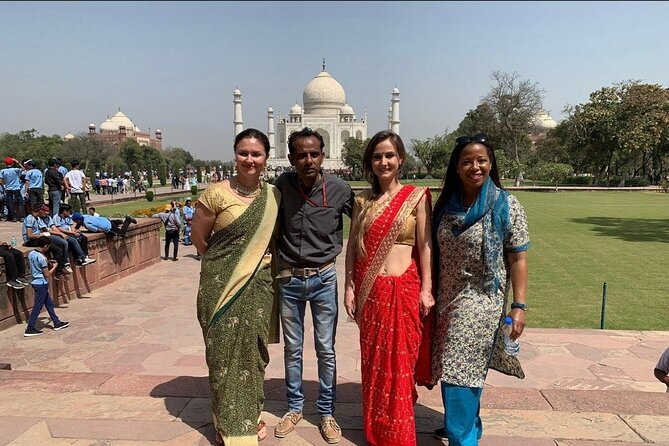
Reviewed · VIP
4-Days Private Luxury Golden Triangle Tour Agra Jaipur New Delhi
A Golden Triangle tour works because it groups three mega-cities that would take you twice the time and stress to line up on your own. What makes this one feel different is the door-to-door private transfers and a guide who helps you turn “big sights” into something you actually understand.
I especially like that you get a private local guide for the heavy hitters, so the forts, tombs, and palaces land with context, not just photos. I also like the practical extras, like air-conditioned car time, bottled water, and the battery bus ride that simplifies the Taj Mahal parking area.
One consideration: monument entrance fees are not included, and that cost adds up. Plan for a separate entrance budget and keep some flexibility for traffic, since transfer times are approximate.
Key highlights worth planning around
- Private, air-conditioned door-to-door transfers that cut down the daily routing headaches
- Early Taj Mahal timing with a guide inside the complex for the best use of your limited days
- Battery bus access up to the Taj Mahal area, so you spend less time shuttling from parking
- Sight-by-sight guidance in Delhi, Agra, and Jaipur, so you get the why behind the wow
- Optional hotel stays for 3 nights plus daily breakfast, useful if you want to travel light
- High customer-service scores, including quick problem-solving if dates or details need fixing
A smooth Golden Triangle route that saves your energy
If you’ve ever tried to do Delhi, Agra, and Jaipur in a DIY sprint, you know the real enemy is not distance, it’s time. You lose hours figuring out transport, buying tickets, and rechecking where you’re supposed to be next. This tour’s biggest value is that it packages the route into a simple rhythm: pick-ups, a private car with a driver, and guided sightseeing blocks that move you through the cities efficiently.
Also, this is a private tour, so you’re not stuck waiting behind other groups. That matters in places like Old Delhi, where traffic and crowds can feel like a constant wave. The day is structured, but the pacing is still designed around your group rather than a set bus schedule.
You’ll be traveling by private vehicle, and your guide typically helps with entrance tickets so you’re not spending your precious morning standing in lines. The goal is clear: help you see the big monuments while keeping you comfortable enough to enjoy the details when you get there.
More Golden Triangle circuits:
- 3-Days Private Golden Triangle Tour: Delhi, Agra & Jaipur by Car
★ 5.0 · 1,107 reviews - 3-Days Private Golden Triangle Tour: Delhi, Agra & Jaipur by Car
★ 5.0 · 1,098 reviews - 3-Day Delhi, Agra and Jaipur Private Tour – India Golden Triangle
★ 5.0 · 812 reviews
Price and what you really get for your money

The listed price is $173.07 per person for the 4-day experience. That number is only meaningful when you look at what’s included, because the “real” cost of this kind of trip is usually transport plus guides plus hotels.
Here’s what’s covered:
- Private, air-conditioned car with driver for transfers between cities and sites
- Bottled mineral water during journeys
- Parking, fuel surcharge, and taxes
- Airport or station pick-up and drop, plus pickup from Delhi, Noida, or Gurugram if needed
- All sightseeing with private local guides
- Battery bus ride to and from the Taj Mahal parking lot up to the monument area
- Breakfast included for 3 days (only if you book the option with hotels)
Then there’s what’s not included:
- Entrance fees for monuments in all cities, listed at about $90 per person
- Lunch and dinner
- Tips for the driver and guide, plus personal expenses
- Travel insurance, and flight or train tickets
So is it good value? For most people, yes, because you’re paying to avoid the most time-consuming parts of a Golden Triangle trip: coordination and ticket logistics. The private guides also change the experience. A monument like the Taj Mahal is impressive no matter what, but the difference is whether you understand the layers behind it while you’re standing there.
If you’re the type who wants “see everything” results without turning the trip into a spreadsheet, the included transport and guides are where your money goes to work.
Day 1 in Delhi: UNESCO towers, a lotus temple, and Old Delhi energy
Day one is a full sweep of Delhi highlights, and the order is smart. You start with two architectural icons, then move into central landmarks, then shift into Mughal-era Delhi and Old Delhi markets.
Qutub Minar first, for that big-sky scale
You’ll begin at Qutub Minar, a UNESCO World Heritage site with a height around 73 meters. It was constructed in 1193 by Qutub-ud-din Aibak, and the guide typically helps you read the structure as more than just a tower. When you see it up close, it’s the kind of monument that makes you immediately understand why UNESCO put a spotlight on Delhi’s early layers.
Plan about an hour. If you’re sensitive to crowds, go in with patience. This is one of those places where you’ll want slow looking time, not just a quick photo and move on.
Line these New Delhi options up side by side
- Old & New Delhi City Tour – Half or Full Day Options Available
★ 5.0 · 4,811 reviews - Half Day Private Delhi City Tour
★ 5.0 · 4,474 reviews - Same Day Taj Mahal, Agra Fort & Baby Taj Tour from Delhi by Car
★ 5.0 · 4,304 reviews - Taj Mahal Day Tour from Delhi by Superfast Train – TOP RATED TOUR
★ 5.0 · 4,166 reviews
Lotus Temple for calm contrast
Next is the Lotus Temple, known for its flower-like shape and open-door approach regardless of religion. It was built in 1986, and it’s a nice contrast after the older stone work of Qutub Minar. This stop is usually short, around 30 minutes, but it gives your brain a breather before the more intense Old Delhi sections.
India Gate and Parliament House, quick but meaningful
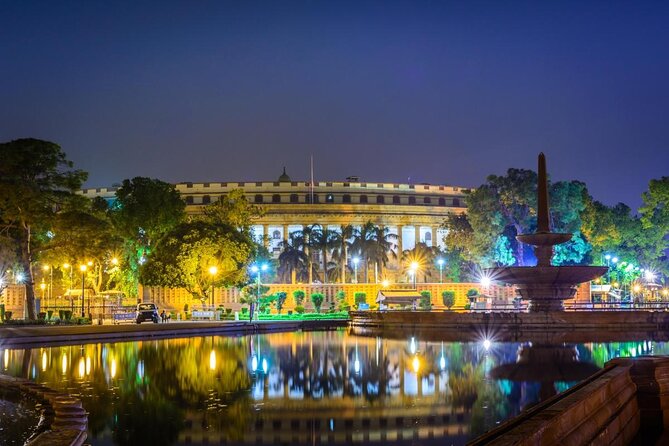
You’ll pass by India Gate, a war memorial near Rajpath. People treat it like a picnic spot, and it can feel almost casual in a way that surprises first-timers. Then you’ll see Parliament House (Sansad Bhavan), designed around the idea of the Ashoka Chakra motif.
These are shorter stops, but they help you understand how modern India occupies the same city space as the monumental past.
Jama Masjid and Humayun’s Tomb for Mughal Delhi
Then the tour turns toward Mughal Delhi with Jama Masjid, built under Shah Jahan between 1650 and 1656. Expect an hour. It’s a major mosque in scale and a powerful place to stand and feel history layered over an active city.
After that, you’ll visit Humayun’s Tomb, the tomb commissioned in 1558 by Humayun’s chief consort. Humayun’s Tomb is often a bridge monument, connecting older Mughal design ideas to what later becomes the grand logic of the Taj Mahal era.
Chandni Chowk, where you see the city in motion
The last major Delhi stop on day one is Chandni Chowk, Old Delhi’s market heart. It’s about an hour, and you’ll get a chance to browse spices, dried fruit, silver jewelry, saris, and the kind of side streets where the “best” finds are usually the small, practical ones. You’ll likely feel sensory overload. That’s normal. Just slow down when you can.
Lunch and the drive to Agra
After sightseeing, you’ll have time for lunch at a local restaurant, then set off toward Agra via the Yamuna Expressway. The drive is roughly 3 hours, and traffic will shape the timing. You’ll check in to your Agra hotel and have the rest of the day free.
This is a smart end to day one. It prevents the “tired, cranky, still sightseeing” problem that ruins the later days.
Day 2 in Agra: the Taj Mahal sunrise approach plus forts and “Baby Taj”
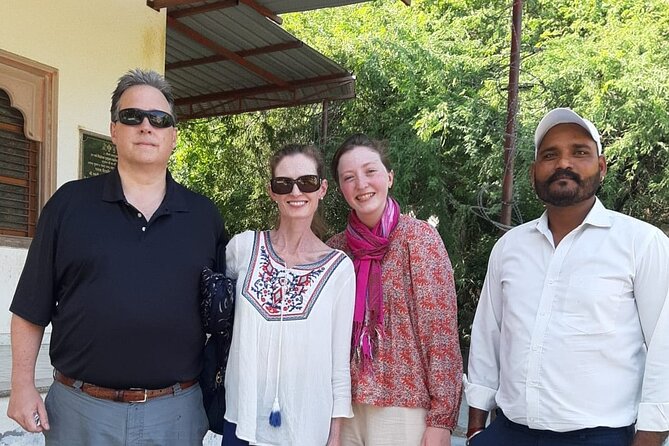
Day two is built around the Taj Mahal experience, and it starts early. You’ll watch the sunrise over the Taj Mahal, then go inside with your guide for about two hours. The sunrise timing is the advantage here. The light changes quickly, and the marble looks different at each stage of the morning.
Taj Mahal inside: more than a pretty building
The Taj is described as a tomb commissioned by Mughal Emperor Shah Jahan in the 1630 era. When you’re inside, it helps to have a guide explaining the tomb’s role in the Mughal worldview, the planning of the complex, and why this site became an enduring symbol. Without context, it’s still breathtaking. With context, it sticks.
Just note that entrance fees are separate, so make sure you have time and budget for them.
Agra Fort: the power side of the city
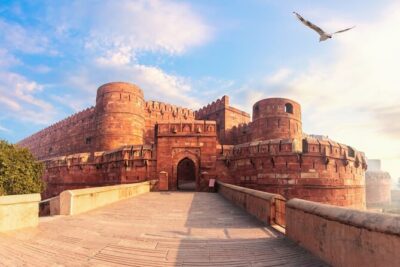
Next is Agra Fort, another UNESCO World Heritage site. You’ll spend about an hour as the guide walks you through palaces, balconies, and gardens. This stop shifts your perspective from romance to rulemaking. It’s where you start to see how emperors designed both appearance and authority.
Itmad-ud-Daula and the “Baby Taj” effect
You’ll also visit Itmad-ud-Daula, often nicknamed the Baby Taj. It’s a Mughal mausoleum with a more intimate scale than the Taj, and that contrast can make it easier to appreciate the details. This stop is about 30 minutes.
Chand Baori: the stepwell that steals the show
Finally, you’ll head to Chand Baori, a massive ornate stepwell reached by 3,500 steps. Even though you don’t necessarily climb all the way, the sight of geometric depth is the point. It’s an unusual stop for first-time Golden Triangle trips, and it breaks up the “fort and tomb” pattern.
Then you move on to Jaipur and check into your hotel for the night.
Day 3 in Jaipur: forts, palaces, and a photo-friendly mix of icons
Jaipur is where the Golden Triangle starts to feel like an actual journey, not just a list. The day includes forts, royal architecture, astronomical instruments, and plenty of snapshot moments, but it’s still structured so you don’t lose half the day to “where do we go next?”
Panna Meena ka Kund: a quick stepwell stop that’s worth it
You begin with Panna Meena ka Kund, a stepwell near Amber Fort. It’s short, around 15 minutes, but it helps you see the city’s design thinking beyond just palaces.
Amer Fort area: Jaipur’s signature fort energy
Then you visit Jaipur’s most famous fort, typically associated with the Amber Fort area. The guide leads a roughly two-hour tour of palaces, squares, and monuments. This is where Jaipur’s story becomes physical: you can feel the planning, the ceremonial spaces, and the way power was displayed.
Jal Mahal: the photo break in a lake setting
You’ll stop at Jal Mahal, the palace in the middle of Man Sagar Lake. The time here is about 15 minutes, mostly for photos. It’s one of those stops that’s simple in logistics but effective visually. Even if you’re not a big photo person, the setting is a good reset.
City Palace: the royal administrative center
Next is Maharaja’s City Palace, about an hour to explore. This was the administrative and ceremonial seat. City Palaces can feel like museums sometimes, but here the guide’s role matters because it helps you understand what you’re looking at in terms of how the city functioned.
Jantar Mantar and the science of seeing stars
You’ll then visit Jantar Mantar, a UNESCO site built in 1734 with 19 astronomical instruments constructed by Sawai Jai Singh II. This stop is around an hour, and it’s genuinely different from the rest of the day. It’s a reminder that this era of royal architecture wasn’t only about decoration. It was also about calculation and observation.
Hawa Mahal: the breeze palace, seen up close
Next is Hawa Mahal, the Palace of Breeze. It’s a five-storey pyramidal structure made of red and pink sandstone. You’ll have about 15 minutes. Don’t rush it, because the whole point is the facade, the windows, and the design meant to manage air and light.
Albert Hall Museum and Patrika Gate for modern Jaipur flavor
Then you have a couple of shorter stops. Albert Hall Museum is visited for about 15 minutes. After that, you’ll see Patrika Gate at Jawahar Circle, with popular photo angles.
Royal Gaitor Tumbas: a quieter, carved finish
You’ll end day three at Royal Gaitor Tumbas, about an hour. This complex has intricate carvings and temples, and it feels less like a checklist stop and more like a chance to slow down. If you like details, you’ll appreciate it.
Day 4 in Jaipur: Birla Mandir, Galtaji, and an easy final wrap
Day four is a lighter day, with two temple stops that give a different flavor from palaces and forts.
Birla Mandir Temple: white marble latticework
First is Birla Mandir, dedicated to Vishnu. It’s known for intricate latticework in white marble and a calm setting that works well for a half-hour visit. It’s a good final cultural stop because it’s visually striking and peaceful compared to the more crowded palace areas.
Galtaji Temple: the monkey temple with three pools
Then you’ll visit Galtaji Temple, also called the Abode of Monkeys, famous for its pools and layered structure. It’s about 30 minutes. It can be lively, so expect activity around the pools and steps. If you’d rather have controlled, quiet moments, keep your expectations realistic and just enjoy the energy.
After the final stop, the tour ends back at the meeting point area.
Hotels, transfers, and the private comfort angle
This is where the “private luxury” label mostly shows up in practice. You’re not just getting transport. You’re getting a consistent ride experience with a driver and air conditioning, plus bottles of mineral water in transit. That sounds small until you’re stuck in Indian heat with no plan for comfort.
If you book the option that includes hotels, you get 3 nights accommodation and daily breakfast for 3 days. Rooms are generally twin-sharing. If you’re traveling as a group of 3, you should expect triple-sharing by default, unless you pay for 2 rooms.
One more practical detail: your guide can help you buy entrance fees at monuments so you don’t have to sit in ticket queues. That’s a real time saver, especially in peak areas.
And since pickup is offered from the airport, railway station, hotel, or locations in Delhi, Noida, and Gurugram, you can build a trip that starts clean rather than scrambling on arrival.
Guides and customer service: what the high marks mean for you
One of the strongest signals from the tour’s reputation is how much attention is paid to execution. People rate it highly for driver quality and guide performance, which matters more than you’d think. In a tour like this, bad driving or unclear guidance turns monuments into chores.
There’s also a clear theme of quick customer support. If something goes wrong with your booking details, the operator has shown a willingness to catch issues early and respond fast.
For you, that translates to less worry. Golden Triangle trips have enough moving parts without adding “did we book the right date” anxiety to the mix.
Who should book this 4-day Golden Triangle plan
This tour fits best if:
- You want a private route through Delhi, Agra, and Jaipur without juggling tickets and transport
- You care about context, so guides matter to you
- You have limited time and want the major sites done in a tight but comfortable plan
- You prefer hotel comfort for evenings and a structured day schedule
It might not be ideal if:
- You want to wander slowly with no schedule at all
- You’re highly price sensitive, because monument entrance fees and meals are additional
- You prefer long, unhurried museum time and are likely to feel rushed by a multi-stop day
Should you book it?
If you want the Golden Triangle highlights with fewer headaches, I think this is a strong choice. The combination of private guides, air-conditioned transfers, and Taj logistics is where the value lives, and the high ratings for driver and guide quality are reassuring.
Book it if you want to maximize your 4 days and keep your energy for the monuments themselves. Just go in with a clear budget for entrance fees and meals, and you’ll be set for a trip that feels well-run from sunrise in Agra to temple time in Jaipur.
FAQ
Are monument entrance fees included
No. Entrance fees are not included, and they are listed at about $90 per person. Your guide can help you buy the entrance fees so you do not have to wait in ticket queues.
Is hotel accommodation included in the tour price
Hotel accommodation is included only if you book the option that includes hotels. The tour includes 3 nights of accommodation and daily breakfast for 3 days when that option is selected.
Will I have a guide during sightseeing
Yes. All sightseeing is done with private local guides, and the tour provides an English-speaking guide. If you need another language, you can request it at booking.
How do the airport pick-up and drop work
Pickup is offered from Indira Gandhi Intl Airport and also from airports, railway stations, hotels, or other pickup locations in Delhi, Noida, and Gurugram. The experience ends back at the meeting point.
Does the tour include transport between cities
Yes. You travel by private, air-conditioned car with a driver, with door-to-door transfers each day.
Is there free cancellation
Yes. You can cancel for a full refund up to 24 hours in advance of the experience start time. If you cancel less than 24 hours before, the amount paid will not be refunded.
Latest reviews in from New Delhi
- Taj Mahal Day Tour By Superfast Train From Delhi: TOP BOOKED TOUR★ 5.0 · 42 reviews
- Same Day Tour of Taj Mahal with Our Real Historical Experience★ 5.0 · 42 reviews
- Manali Tour Package★ 4.5 · 43 reviews
- Taj Mahal Tour with Agra Fort – All-Inclusive Day Trip from Delhi★ 5.0 · 43 reviews
- Private Day Trip to Haridwar and Rishikesh from Delhi by Car★ 5.0 · 43 reviews
- Taj Mahal Same Day Tour by India’s Fastest Train★ 5.0 · 43 reviews
- Royal Taj Mahal Day Experienc From New Delhi By First Class Train★ 5.0 · 43 reviews
- 5-Day Private Delhi, Agra and Jaipur with Ranthambhore Tiger Tour From Delhi★ 5.0 · 44 reviews
VIP, compared.
All Inclusive Private Taj Mahal Luxury Tour from Delhi by Car
Read our review →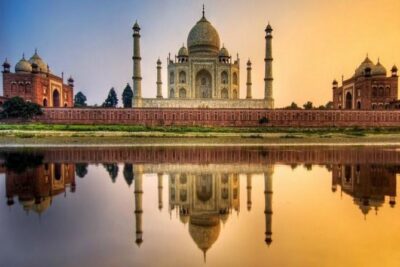
Four-Day Private Luxury Golden Triangle Tour to Agra and Jaipur From New Delhi
Read our review →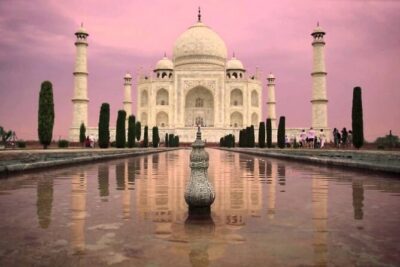
3-Day Private Luxury Golden Triangle Tour to Agra and Jaipur From New Delhi
Read our review →
Taj Mahal Sunrise & Sunset All Inclusive Private Luxury Agra Tour
Read our review →
Four-Day Luxury Golden Triangle Tour to Agra & Jaipur From Delhi
Read our review →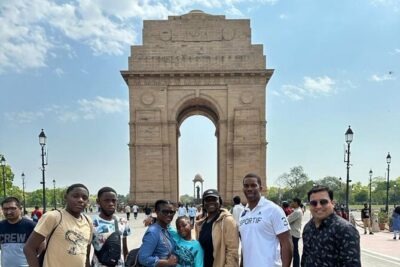
Private Luxury Delhi – Agra – Jaipur Golden Triangle Tour – 3 Nights 4 Days
Read our review →
All Inclusive Private Taj Mahal Luxury Tour from Delhi
Read our review →
5 Days Luxury Kerala Tour with Houseboat Experience
Read our review →Browse the lists this tour appears in