
Reviewed · GOA TOURS
Saligao Village Saunter by Make It Happen
Saligao Village Saunter is interesting because it mixes a calm village saunter with Indo-Portuguese architecture and a real hosted stop for high tea inside a local home. You get a structured walk that still feels personal, not like a rushed bus tour.
I especially like how the route focuses on the village wards, where you can actually see homes, a chapel, and a cemetery, plus the surrounding paddy fields. I also like the small group setup, because it makes it easier to ask questions while your guide points out details you might otherwise miss.
One consideration is that this is a walking tour that runs outdoors, and the experience requires good weather. Plan on proper shoes, and have a little patience for narrow lanes and a steady pace for about 2.5 hours.
Key highlights you will care about
- Small group size (max 15) keeps the pace comfortable and Q-and-A easy
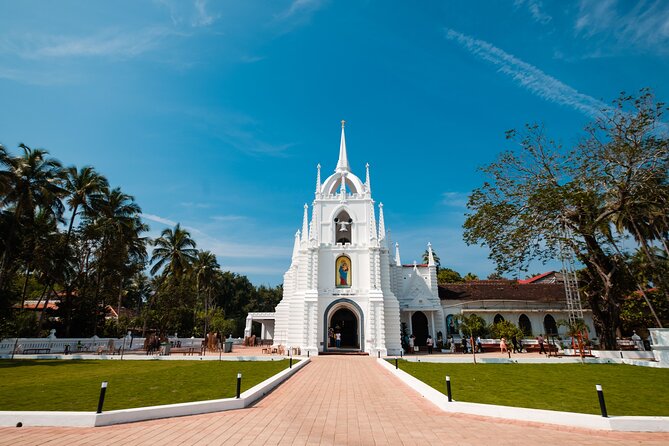
- Goa’s only Gothic style church adds a standout architectural stop
- Hosted high tea at an Indo-Portuguese home means you sit down and actually experience local life
- Village wards with paddy fields give you perspective beyond the main roads
- Saligao Institute is a key landmark that reflects why this village became prosperous
Saligao Village Saunter: what makes this walk feel different

Goa is famous for beaches, but Saligao offers something quieter and more “everyday” in a good way. This tour is built around the residential wards of Saligao, a village known as more prosperous than many in the region because of the business acumen of its early settlers. That prosperity shows up in the architecture, in the way homes were designed, and in the landmarks you pass along narrow walking lanes.
The other thing that makes this experience click is the pacing. You are not just looking from the outside. The tour gives you a chance to step into an Indo-Portuguese home for high tea hosted by the owners. That shift, from street-level views to sitting in a heritage space, is where the tour becomes more than sightseeing.
You also get a mix of classic and unexpected. Yes, you’ll see Indo-Portuguese homes and a chapel and cemetery, but you’ll also visit Goa’s only Gothic style church. That contrast helps you understand how layered Goa’s building styles can be, even in one small area.
Line these Goa options up side by side
- Fontainhas Heritage Walk by Make It Happen
★ 5.0 · 2,834 reviews - BLive Electric Bike Tours – Discovery of Divar Island
★ 5.0 · 1,147 reviews - Old Goa Heritage Walk by Make It Happen
★ 5.0 · 797 reviews
Your 2.5-hour afternoon plan, step by step
This experience runs for about 2 hours 30 minutes, starting at 4:00 pm. That late-afternoon timing is useful in Goa because the light can be softer, and you can finish your walk with tea rather than ending in the full heat of the day.
The tour starts at Mae De Deus Church (GQWP+R47, Chogm Rd, Muddavaddi, Saligao, Goa 403511). It ends back at the meeting point, so you are not left figuring out a long return route.
Here is how the flow works in real life:
Stop in Saligao’s village wards (classic architecture and real lanes)
Early on, you explore the village wards of Saligao, described as a residential area packed with splendid Indo-Portuguese homes, plus a chapel and a cemetery. You’ll also get views of paddy fields stretching toward a hill.
What I like about this part is the “walkable geography” of it. You can see how the village is laid out: the lanes, the homes facing the street, and the way agriculture and living spaces sit side by side. This is the kind of scene that does not translate well through a single photo, but it becomes clear as you move through it.
A look at Goa’s only Gothic style church
Next, the route takes you to Goa’s only Gothic style church. Even if you are not the type to obsess over architecture, a Gothic church is a strong visual marker, and it helps break up the Indo-Portuguese look you’ll see elsewhere.
This stop matters because it gives you context. You are not only seeing homes influenced by different eras. You are also seeing a distinct style of worship space that stands out in Goa.
A different shape of Goa day:
- Varca Coastal E-Bike Tour: Scenic Beachside Adventure
★ 5.0 · 668 reviews - Fontainhas Heritage Walk At Latin Quarters of Goa
★ 5.0 · 531 reviews - Feni and Tapas – Food Trail with Tastings & Drinks by Make It Happen
★ 5.0 · 409 reviews - Village Vibes: Cansaulim Coastal E-Bike & Japanese Tea Tour
★ 5.0 · 292 reviews
Breeze through Saligao by fields, lanes, and contemporary touches
After the church, the tour keeps moving through the wards. You’ll pass areas flanked by fields and continue spotting the elaborate Indo-Portuguese homes. The route also includes a chance to see contemporary Goan art and architecture, so you get more than “old buildings.” You get a sense of how the area continues to develop while still honoring its earlier look.
This is a good moment for your guide to point things out. When someone explains what you are seeing, it turns random facades into clues about how people lived and how they express identity today.
High tea at a heritage Indo-Portuguese home (the emotional payoff)
The final segment is the part you likely booked for: high tea hosted at a heritage home. You get to visit an Indo-Portuguese home for high tea, hosted by the owners, plus a show around the property.
This is where the tour shifts from exterior views to interior life. Sitting down also naturally slows the pace. You can ask questions while you eat and drink, and you’ll get a more human read on the place you just walked through.
Indo-Portuguese streets, chapel and cemetery, and why “small” matters
Saligao’s appeal is not about big-ticket sights. It’s about the details of a village that is still functioning as a village. The tour highlights the historic Indo-Portuguese architecture you can spot in homes, plus the chapel and the cemetery.
If you have only done Goa’s more famous tourist loops, this kind of architecture can be a revelation. Indo-Portuguese buildings tend to feel specific and personal: the structures look made for families, not monuments. Even the cemetery and chapel stops help because they connect the architecture to community life across generations.
Also, the route is designed so you are not stuck staring at one spot. You move between viewpoints quickly enough to keep momentum, but slowly enough to absorb what changes from lane to lane. Those narrow lanes and colorful edges you pass matter more than they sound on paper.
And then there is the agricultural framing. Seeing the paddy fields and the hill viewpoints makes it easier to understand why this village grew in the way it did. The prosperity here is not just “money.” It is also tied to how the area works day to day.
The Gothic church stop: one “wow” moment in the middle of the walk
A single standout stop can make a short tour memorable. This one has that in the form of Goa’s only Gothic style church.
Gothic style usually signals features you can spot quickly: shapes and vertical feel that differ from more Portuguese-inspired architecture. Even without architectural vocabulary, you’ll likely recognize that the church reads differently at a glance.
Think of this stop as a way to reset your eyes. The Indo-Portuguese visuals may blend together if you walk too fast, but a Gothic church is a clear marker that helps your brain categorize what you are seeing.
High tea hosted at a local home: what you should expect
The included experience is coffee and/or tea plus high tea hosted at an Indo-Portuguese home by the owners. You also get a tour/show around the property.
This is the most “authentic interaction” part of the itinerary, because you are inside a private space. It is also where the small-group format pays off. With a max of 15 travelers, you are more likely to feel included rather than herded.
Practical note: you’ll want to treat this like an invitation, not a set piece. Dress comfortably and keep your group energy calm. You will be inside a heritage home, and your guide will likely connect the architecture and family life to what you saw outside.
One detail I really like from the experience style is that your guide tends to go beyond facts. In particular, you may hear thoughtful attention to local trees and plants, and the tone can be friendly even if you are traveling with a child. That kind of human warmth changes the feel of a cultural walk.
Saligao Institute: the landmark that explains the village’s prosperity
Midway through, the tour includes Saligao Institute, highlighted as a prominent landmark tied to the village’s prosperity. The institute is described as located in the residential wards, surrounded by Indo-Portuguese mansions, and the narrow walking lanes are part of the visual experience.
Why this matters: a landmark like this helps you connect the architecture to the people behind it. You are not only looking at old houses. You are also seeing where community life, civic identity, or village pride gets expressed.
If you enjoy walking tours, this stop is a useful anchor. It gives your guide a clear point to explain why Saligao looks the way it does, and why early settlers’ business skills shaped the village.
Price and value: about $14.54 for a hosted tea stop

At $14.54 per person, this tour is priced like a bargain, but not in a suspicious way. The key value driver is the included hosted high tea at a local Indo-Portuguese home.
Most walking tours without food can still cost close to this price in tourist areas. Here, the meal component and the access to a private heritage property create stronger value than you’d get from a simple architecture walk.
You are also paying for a guide-led route, and the format is designed for a group of up to 15. That combination usually means you get more than a quick narration. In this case, the guide’s attention to details like local flora and the way the village wards connect visually is part of what makes it enjoyable.
Logistics that actually affect your day
A few details can make or break an afternoon, so here’s the practical side.
Start time and meeting point
The tour starts at 4:00 pm at Mae De Deus Church. Plan to arrive a few minutes early so you’re not scrambling to find the group.
Mobile ticket
You get a mobile ticket, which is convenient. Just make sure your phone battery is charged, because you’ll need it at check-in.
Transportation
Private transportation is not included. The meeting point is listed as near public transportation, so you can handle getting there on your own fairly easily. If you are staying farther away, check your best local route ahead of time.
Walking pace and footwear
It’s a village saunter, not a museum shuttle. You’ll be moving through lanes, and some sections will feel less open than a main road. Wear shoes you’re happy to walk in for about 2.5 hours.
Weather matters
This experience requires good weather. If the tour is canceled due to poor weather, you should expect to be offered a different date or a full refund.
Who should book this tour, and who might skip it
This tour is a great fit if you want a Goa experience that is more human-sized. You should book it if you like:
- village architecture and real neighborhood streets
- short guided walks with time to ask questions
- the chance to sit down for hosted tea in a local home
It might not be your best choice if you want major sights, big museums, or a nonstop action schedule. This is about place, pace, and people.
Should you book Saligao Village Saunter?
If your goal is to see Goa beyond beaches, I think this one is a smart add. For about $14.54, you get a guided look at Indo-Portuguese homes, a chapel and cemetery, a stop at Goa’s only Gothic style church, and then the big finish: high tea hosted by the owners inside a heritage home.
Book it if you can handle a walking tour outdoors and you are free for a late afternoon start at 4:00 pm. If the weather is iffy, keep an eye on forecasts so you can react quickly if conditions change.
FAQ
How long is the Saligao Village Saunter?
It lasts about 2 hours 30 minutes (approx.).
What time does the tour start?
The start time is 4:00 pm.
Where do I meet the guide?
The meeting point is Mae De Deus Church, GQWP+R47, Chogm Rd, Muddavaddi, Saligao, Goa 403511, India.
Is transportation included?
No. Private transportation is not included.
How many people are in the group?
The tour has a maximum of 15 travelers.
What is included in the price?
Coffee and/or tea, plus high tea hosted at an Indo-Portuguese home by the owners of the house.
Do I need cash or a printed ticket?
You receive a mobile ticket.
Is this tour suitable for most people?
Most travelers can participate.
What happens if the weather is bad?
This experience requires good weather. If it is canceled due to poor weather, you will be offered a different date or a full refund.
What is the cancellation window for a full refund?
You can cancel for a full refund up to 24 hours in advance of the experience start time.
Latest reviews in from Goa
- North Goa Sightseeing Full Day Tour ( 09 am – 05 pm )★ 3.5 · 44 reviews
- Old Goa Heritage & Culture E-Bike Tour★ 4.5 · 46 reviews
- Latin Quarter Food Trail by Make It Happen★ 5.0 · 47 reviews
- CULTURAL & HISTORIC DAY TOUR ATTRACTIONS – Churches, Temples & Spice Plantation★ 4.5 · 53 reviews
- Glimpses Of Goa: Churches,Temple and Spice Plantation★ 5.0 · 65 reviews
- Private Beach Photoshoot in North Goa by Professional Photographer★ 4.5 · 78 reviews
- Chandor Heritage Trail by Make It Happen★ 5.0 · 79 reviews
- Private Aguada Jail Heritage Walk Tour★ 5.0 · 102 reviews
Goa Tours, compared.


BLive Electric Bike Tours – Discovery of Divar Island
Read our review →

Varca Coastal E-Bike Tour: Scenic Beachside Adventure
Read our review →
Fontainhas Heritage Walk At Latin Quarters of Goa
Read our review →
Feni and Tapas – Food Trail with Tastings & Drinks by Make It Happen
Read our review →
Village Vibes: Cansaulim Coastal E-Bike & Japanese Tea Tour
Read our review →
Browse the lists this tour appears in