
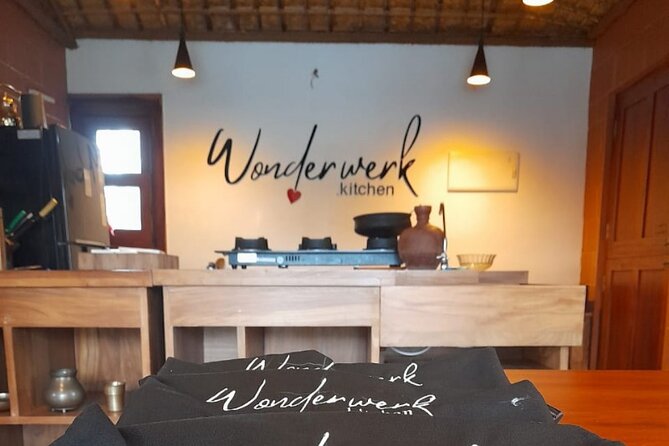
Reviewed · KERALA BACKWATER CRUISES
Learn Traditional Kerala Meal in Kumarakom
Food in Kerala is famous for a reason, but what makes this experience worth your time is the order of operations. You start by gathering ingredients in the local market in Kumarakom, then you cook your meal back in the kitchen. It turns the usual eat and run approach into a practical, step-by-step food lesson.
I especially like the market-to-kitchen flow, because you learn what to look for before the cooking even starts. I also like that the class can be built around your preferences (vegetarian, fish, or meat), so the meal feels personal instead of one-size-fits-all.
One thing to keep in mind: this experience requires good weather, so if conditions are poor, you may need to shift dates or get a refund.
Key highlights that matter on the ground
- Local market sourcing: learn how to spot fresher produce and common Kerala ingredients before you cook
- Flexible menu choices: vegetarian options plus fish and meat dishes based on what your group prefers
- Hands-on cooking: you follow techniques for spices and masalas, not just watch from the sidelines
- Host-led, clear instruction: Jesvanth explains methods in an easy-to-follow way while keeping things lively
- Sulaimani Tea included: a finishing cup of special tea with warm conversation after you eat
Where the Kerala Meal Really Begins: The Kumarakom Market Run
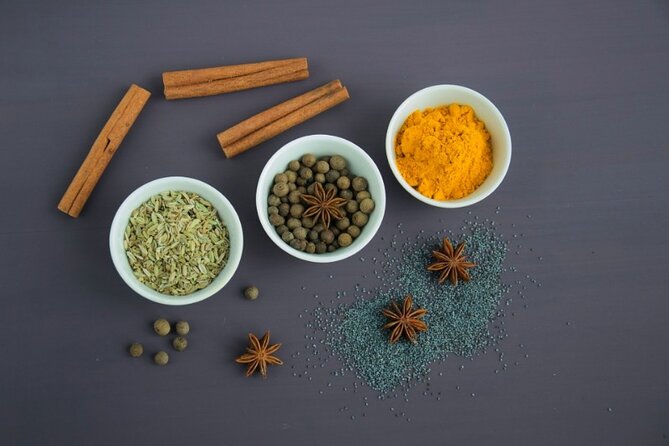
If you only do the cooking part, you miss a huge slice of the point. Kerala cuisine is spice-led, but it is also ingredient-led. This class starts with a visit to the local market so you can see what people actually buy day to day, and why.
You’ll walk through stalls to pick up the essentials for the meal, and you get help with the basics of how ingredients are chosen. The focus is not fancy shopping or rare finds. It is the practical stuff: understanding what goes into typical Kerala meals, and how to identify fresher produce when you are standing in front of it, not guessing at home later.
This is one of the most valuable parts for you because it teaches you a method. Once you know what “fresh” looks and smells like for the ingredients you are using, you can apply that skill in any kitchen. For example, you can buy tomatoes, chilies, herbs, or other basics with more confidence, instead of treating recipes like strict rules.
And yes, you’re also paying attention to spices. Kerala cooking uses spices in layers, not in a single dump. In the market, the lesson is setting you up for that later in the kitchen, so when you start cooking you understand why certain masalas show up in a specific way.
Practical tip: wear comfortable shoes. Even if the walk is short, markets mean uneven ground and lots of standing.
More backwater days:
- Cochin: Backwater Village Eco Boat Cruise with Lunch
★ 4.8 · 502 reviews - Full Day Backwater Village Punting Boat Cruise
★ 5.0 · 393 reviews - 5 Days Luxury Kerala Tour with Houseboat Experience
★ 4.5 · 279 reviews
Meeting in Kumarakom, Pickup Included, and a Realistic 4-Hour Plan
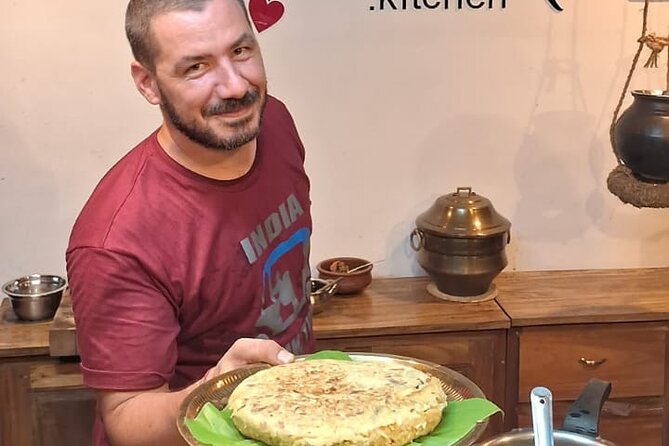
The meeting point is Cheepunkal, Kavanattinkara, Kumarakom, Kerala 686563, India. Pickup is offered, and the experience ends back at the meeting point, so you are not signing up for a long, open-ended logistics puzzle.
The total duration is about 4 hours. That time length matters. It’s long enough to do real cooking, but short enough that you can still enjoy the rest of your day in Kerala without feeling dragged.
You’ll get a mobile ticket, and confirmation comes within 48 hours of booking, subject to availability. The experience is private, meaning only your group participates. That usually makes questions easier and pace more flexible, especially if you are cooking with kids or you are the curious one in the group asking why a spice is added at a certain moment.
There is also a comfort factor built in. Service animals are allowed, and the meeting point is near public transportation. So if you are not using the pickup option, you still have a realistic way to get there.
Choosing Your Dinner: Vegetarian, Fish, or Meat, Based on Preference
One of the best parts of this class is that your meal is not forced into a single track. The cooking plan can include vegetarian dishes, fish, and meat dishes depending on the preferences of the individuals in your group.
If you’re vegetarian, you won’t feel like you’ve been handed a consolation prize. You’ll be introduced to a variety of vegetarian meals. That matters because Kerala vegetarian food can go beyond the basics, with different spice profiles and cooking techniques that still feel like the real thing.
If you’re eating non-veg, the class structure supports that too. You can expect dishes that reflect common Kerala flavors, and the focus stays on technique, not just on the final plate. In other words, even if the ingredients differ, you’re learning the same cooking logic behind masalas.
For you, the value here is control. You can choose what you want to learn to cook. That makes the experience easier to connect to when you think about taking skills home.
A small consideration: you are limited by what your group chooses. If half the group wants vegetarian and half wants non-veg, you might end up with a broader menu and more steps. That can be fun, but it also means the kitchen time stays busy.
The Cooking Session with Jesvanth: Spices, Masalas, and Hands-On Steps
Cooking classes can be either useful or entertaining. This one aims for useful. The lesson in the kitchen is built around how spices are combined, and the cooking techniques behind Kerala meal prep.
Jesvanth guides the session, and the teaching style shows up clearly in the reviews: instructions are explained in a way that is easy to follow, even if you have never cooked Indian food before. That is exactly what you want from a class like this, because Kerala cooking uses a lot of spices and the order matters.
Here’s what you can expect from the cooking itself:
- You start with spice basics, including how to think about masalas and why they are built in stages.
- You then move into the actual dish prep while you’re learning methods along the way.
- You cook together, then you sit down for the meal you helped make.
The biggest takeaway is not memorizing a recipe line by line. It’s understanding the cooking technique. Once you learn how spices and masalas are combined, you can adapt recipes later based on what you find at your local market.
Also, the kitchen setup is described as clean and well maintained in the reviews, which is more important than people think. If you’re chopping and cooking in close quarters, you want confidence that the space is organized and comfortable.
Practical tip: be ready to cook. Even if you are just assisting, your hands will be busy. If you like a quiet, sit-and-watch experience, this may feel more active than you expect.
Line these Kochi options up side by side
- Adventure Tuk Tuk Tour in kochi – A Private Guided Tour with Hotel Pick up
★ 5.0 · 579 reviews - Kochi: Private Tuk-Tuk City Tour with Hotel Pickup
★ 4.8 · 292 reviews - Half Day Tuk Tuk Tour in Kochi – Private Tour with Hotel Pick up
★ 5.0 · 278 reviews - Funny and helpful Tuk Tuk Tour in Kochin
★ 5.0 · 240 reviews
Eating Together in Kumarakom: Warm Conversation and Sulaimani Tea
After cooking, you get to share the food together. The class doesn’t treat the meal like a rushed afterthought. You’ll sit down, eat what you made, and have warm conversation.
One detail that stands out is the included cup of special tea called Sulaimani Tea. It’s served as part of the wrap-up, so you get a gentle ending rather than a sudden cut after lunch. That matters because food experiences are about connection as much as ingredients. Kerala cooking culture often comes with stories at the table, and this class keeps that tone.
In practice, this meal setup helps you digest what you learned. You can ask questions while eating. You can taste-test what you made and compare how flavors land when you use the technique you just practiced.
It’s also a nice pacing break. Cooking can be sweaty and fast. Sitting down afterward makes the experience feel complete instead of like a work assignment with spices.
What You’ll Really Learn (Beyond the Recipes)
If you want to take something home that lasts, focus on the skills this class trains.
You learn how to:
- Identify fresher produce in a market setting, so you understand what good ingredients look like before you start cooking
- Think about Kerala meal ingredients and how common items show up across dishes
- Combine spices and masalas using technique, not just guesswork
- Follow clear cooking directions in an Indian kitchen environment with real hands-on participation
That list sounds “educational” on paper, but in real life it changes what you do next time you cook. Instead of treating Indian cooking like a mystery, you start seeing it as repeatable steps and flavor logic.
I also like that the experience stays grounded in everyday cooking. You’re not being taught to chase exotic ingredients. You’re learning how local people build meals with what they can get and what tastes right.
And if you are the kind of person who likes to understand the why, the market portion helps you get your bearings fast. You stop feeling like you are just following instructions. You understand what the ingredients are doing.
Price and Value: Is $89.89 Worth 4 Hours?
At $89.89 per person, you’re paying for more than a meal. You’re paying for the whole structure: pickup support, market sourcing, a guided cooking session, and the included tea and meal at the end.
Here is what makes it feel like value:
- You get a real shopping component, which changes the whole context of the class
- You cook yourself, with instruction from Jesvanth
- You get a meal at the end, including Sulaimani Tea
- The experience is private, so it’s built for your group, not a big shuffle
The time factor helps too. Four hours is enough to feel like you did something meaningful. It’s not a tiny tasting tour, and it’s not an all-day cooking marathon either.
Who pays attention to value: If you want to bring home usable skills, this price can make sense because it teaches you ingredient selection and cooking technique. If you only care about eating, you might still enjoy it, but the learning part will be the main value you’re buying.
Who This Kerala Meal Class Fits Best
This is a strong fit if you:
- Want a hands-on cooking experience tied to real sourcing in Kumarakom
- Prefer learning the why behind spices and masalas
- Are traveling as a couple or small group and want a private class instead of a crowd scene
- Have mixed dietary preferences, because the cooking can be vegetarian, fish, or meat based on what your group wants
It’s also a good option if you like conversation over food. Multiple reviews point to Jesvanth’s warmth and the way he keeps the session engaging. You will be busy, but you won’t feel like you are trapped in a classroom.
If you dislike active participation, or if you’re looking for a totally hands-off cultural tour, this might not match your style. The cooking is part of the deal.
Should You Book This Traditional Kerala Meal Experience?
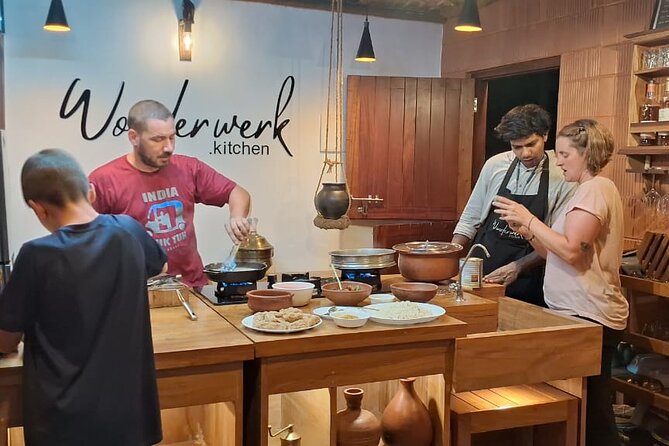
My take: I’d book it if you want practical Kerala cooking knowledge, not just a pretty plate.
The reasons are simple. You get a market start that teaches ingredient selection. Then you cook with instruction, so you leave with technique you can actually reuse. Finishing with the meal and Sulaimani Tea makes the whole thing feel like a complete experience, not a stop-and-stare event.
I’d hesitate only if you know you might struggle with the active cooking pace, or if your travel timing is tight and you cannot shift plans because the experience needs good weather.
If your schedule gives you flexibility, this one is worth it for the way it connects sourcing, cooking, and eating into a single, learnable rhythm.
FAQ
How long is the Learn Traditional Kerala Meal experience in Kumarakom?
It lasts about 4 hours.
Where is the meeting point, and is pickup offered?
The meeting point is Cheepunkal, Kavanattinkara, Kumarakom, Kerala 686563, India. Pickup is offered, and the activity ends back at the meeting point.
Is the tour private?
Yes. It is a private tour/activity, and only your group will participate.
Can I choose vegetarian or non-vegetarian dishes?
Yes. The experience covers traditional Kerala meal preparations including vegetarian, fish, and meat dishes, based on individual preferences. Vegetarian participants will be introduced to a variety of vegetarian meals.
Is Sulaimani Tea included?
Yes. The experience includes Sulaimani Tea served with warm conversation after cooking.
What if the weather is poor or the minimum number of travelers is not met?
The experience requires good weather. If it is canceled due to poor weather, you’ll be offered a different date or a full refund. If the minimum number of travelers is not met, you’ll also be offered a different date or a full refund.
Latest reviews in from Kochi
- One hour Backwater Tour and tuk tuk tour in kochi with pickup★ 5.0 · 16 reviews
- Tuk Tuk tour in Cochin with Port pick-up★ 5.0 · 16 reviews
- Private 3 Bedroom Luxury Houseboat Trip in Alleppy Backwaters★ 5.0 · 17 reviews
- Scenic Kerala : Hills, Wildlife, Backwaters & Beach Bliss- 7 Days★ 5.0 · 17 reviews
- Kochi: Kathakali Evening Show with Transfers★ 4.2 · 17 reviews
- Village Bike Tour & Birdwatching★ 5.0 · 18 reviews
- Kochi Exclusive Local Sightseeing Tuk-Tuk Tour★ 5.0 · 18 reviews
- 5 Day Private Tour of Tigers, Taj Mahal and Palaces from Cochin★ 5.0 · 18 reviews
Kerala Backwater Cruises, compared.

5 Days Luxury Kerala Tour with Houseboat Experience
Read our review →
4 Days Best of Kerala Tour with Private Houseboat, Sightseeing & Car
Read our review →
6 Nights 7 Days Kerala Private tour with Hillstations,Backwater &Beaches
Read our review →
8 Days Kerala Private Tour (3 Star) with Munnar, Houseboat & Cab- Iris Holidays
Read our review →
Half Day Village Backwater Eco Country Boat Cruise :Group Tour from Fort Cochin
Read our review →Browse the lists this tour appears in