
Reviewed · MARKETS
Mumbai by Dawn: Market Tour of Flowers, Fish, and More
This dawn market route is interesting because it takes you straight into how Mumbai buys, sells, and works, from Dadar Flower Market to CSMT. I especially like the fact that you get an English-speaking local guide plus hotel pickup and drop-off, and I love that there is an included local train ride to connect the stops in a very Mumbai way. The main catch is practical: there is no food or drink included, so plan your breakfast timing and bring something small if you need it.
In the small details, the tour feels built for real morning life, not staged sightseeing. You move from colorful wholesale trade to the working port, then to the laundry ghats and finally to one of Mumbai’s most famous stations. If you prefer slow museum pacing, you might find this early schedule a bit intense, but if you like the energy of streets waking up, it is a great fit.
Key things to know before you go
- English-speaking guides who explain what you’re seeing in plain terms, including how the markets function day to day
- Hotel pickup and drop-off so you are not figuring out early-morning transport on your own
- An included local train ride that adds a real commute feel between major stops
- Flowers, vegetables, fish, and laundry in one route, so you see multiple sides of Mumbai’s daily economy
- Flexible pacing, since the guides can adjust the route if you have limited time or a change in energy
- CSMT at the end to tie the morning trading story to a landmark with major architectural presence
Morning markets from Dadar to CSMT: the real idea of the route

This tour is designed around a simple promise: you will see Mumbai’s morning trade as a connected story. You start with the wholesale pulse in the Dadar area, where flowers and vegetables are moving fast and you can feel how seriously vendors and buyers work the day’s supply. Then you head toward the port and the laundry ghats, two places where the city’s labor is visible in a way most visitors miss.
The ending at Chhatrapati Shivaji Maharaj Terminus, or CSMT, matters because it gives your morning context. Markets can feel chaotic if you only look at them as sights. When you finish at a major historic railway station, the whole morning starts to make more sense, including why transport and trade shaped Mumbai’s growth.
More Shopping Tours in Mumbai
- Mumbai Street Food and Evening Bazaar Tour
★ 5.0 · 172 reviews - Mumbai Street Food & Bazaar Tour with Local Transport
★ 5.0 · 51 reviews - Mumbai Street Food & Market Tour
★ 4.8 · 17 reviews
Hotel pickup and the included local train ride: how you save time
The logistics here are refreshingly straightforward. You get hotel pickup and drop-off, and the package includes a local train ride experience as part of the route. That matters because dawn traffic and early station access can be confusing if you’re figuring things out independently, especially when you are trying to arrive before the busiest flow.
What I like about the train portion is that it is not a photo stop. It is a movement between areas, which helps you understand the geography of the city, not just the sequence of attractions. Also, having the guide handle the pacing means you are less likely to get stuck outside a location when the crowd thickens.
Dadar Flower Market and Vegetable Market: where morning color turns into business
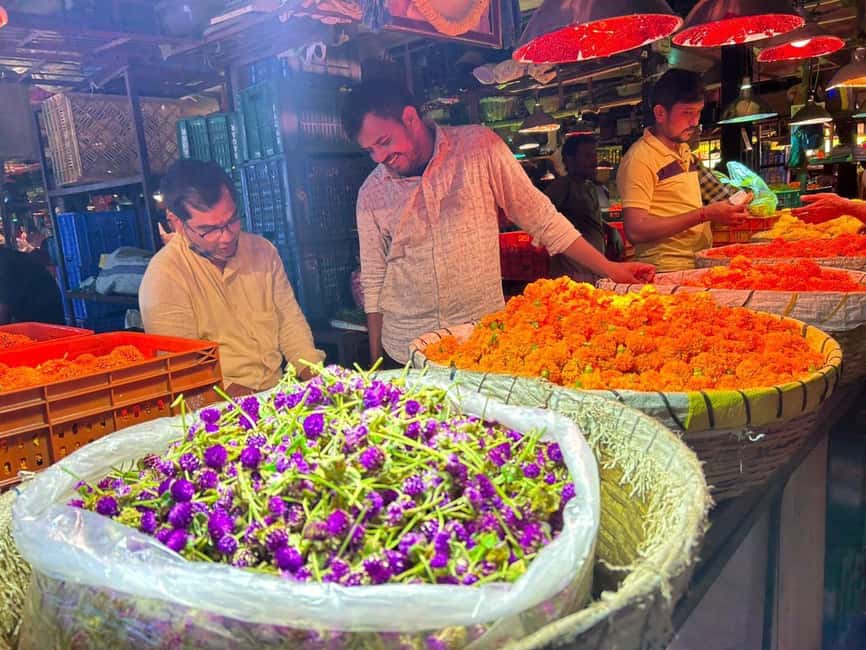
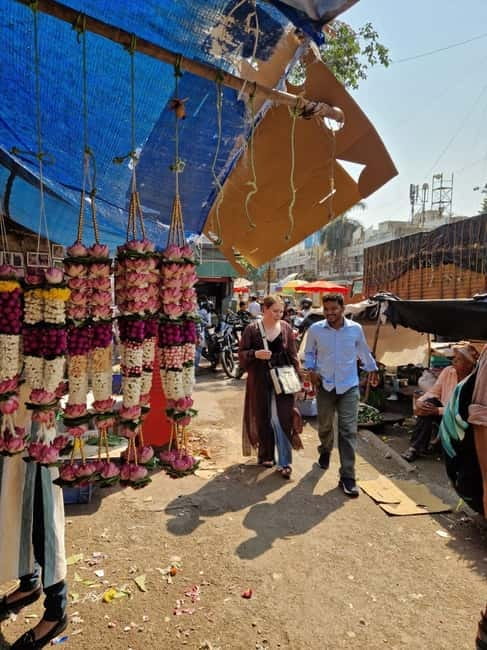
Dadar Flower Market is the first emotional hit of the tour. Expect crowds, busy counters, and a strong sensory experience built on color and scent. Flowers in particular look like art until you stand close enough to see the trade mechanics, the speed of decisions, and the way vendors organize lots for delivery.
Then you shift from flowers to vegetables, and that change is part of the value. Flowers grab your attention, vegetables show you the working backbone behind daily life. You’ll also get a feel for how purchases happen quickly, often with little time wasted, because this is an operating marketplace, not a slow walk-through.
The guides tend to make this portion click quickly. People often talk about names like Sharon and Abhi for their ability to explain what’s happening while still keeping the walk moving. If you like asking questions, this is a great time. The guide can translate what you are seeing into everyday terms.
Sassoon Dock Fish Market: seeing the port side of Mumbai
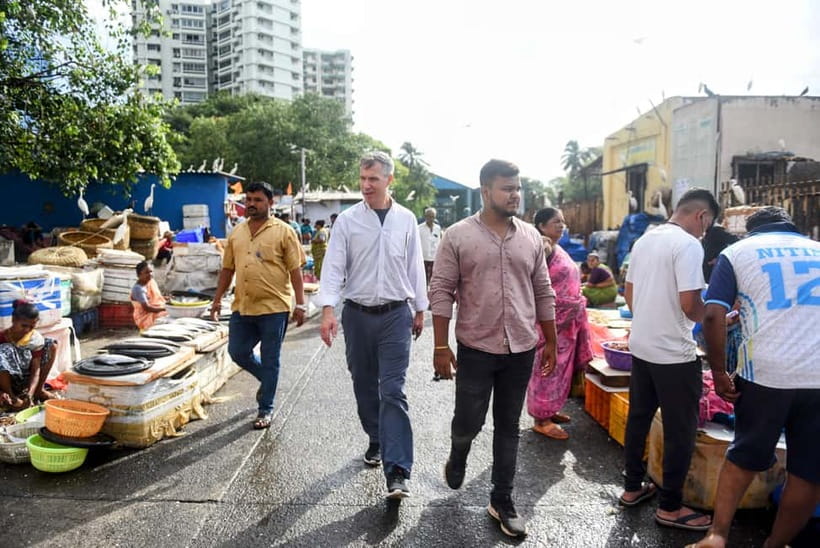
Sassoon Dock Fish Market takes the morning from colorful and agricultural to sea-level and industrial. Fish markets have their own rhythm. You’ll notice the urgency, the close handling, and the way buyers and sellers communicate through speed and routine. Even if you do not eat seafood, the market shows you the city’s link to the coast and the supply chain that keeps meals possible.
One drawback to keep in mind: fish markets can be intense. If strong smells or busy crowds make you uncomfortable, you might want to position yourself thoughtfully and stay flexible. The guide can help you focus on what’s important visually while you keep your comfort level in check.
A different shape of Mumbai day:
- Dharavi slum tour in Mumbai by Female tour guides of the slum
★ 5.0 · 1,976 reviews - Mumbai: Full-Day Sightseeing Tour of Mumbai
★ 4.9 · 1,822 reviews - Private Mumbai Sightseeing Tour (Traveller’s Choice Award Winner)
★ 5.0 · 1,565 reviews - Elephanta Caves & Island Guided Private Tour
★ 5.0 · 1,327 reviews
Dhobi Ghat: laundry work you can actually see
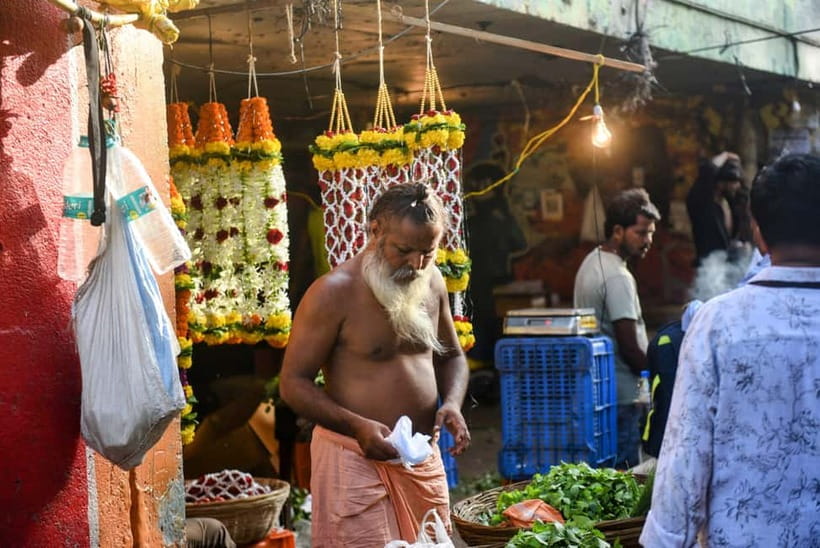
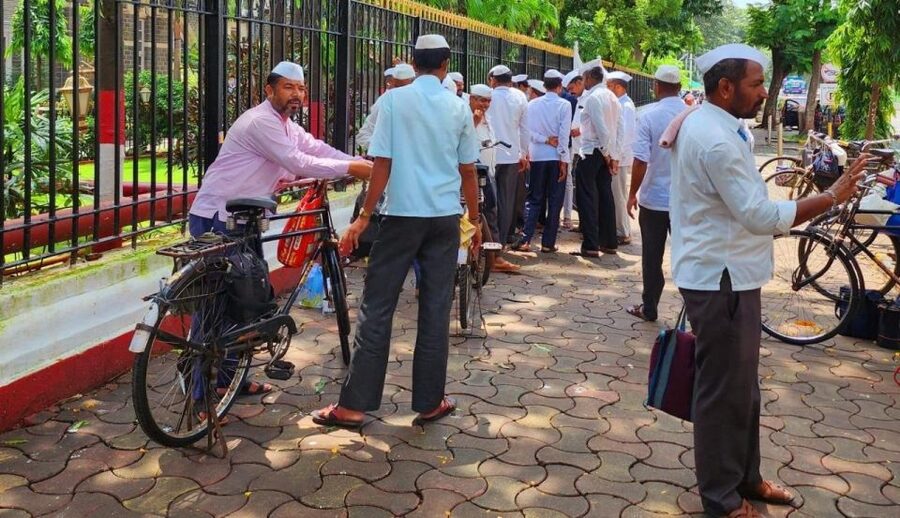
Dhobi Ghat is a powerful contrast to the sales-focused markets. Here, you’re watching large-scale laundry work that relies on skill, repetition, and timing. It helps to think of it as a living workplace rather than a viewpoint. You get the chance to witness how labor supports daily life in a dense city.
I also like that this stop gives you a different kind of context for Mumbai. Many visits focus on shopping streets or monuments. Dhobi Ghat reminds you that the city runs on behind-the-scenes work. When guides like Chirag or Ayan explain what you’re seeing in plain English, the place stops feeling like an isolated spectacle and starts feeling like a functioning part of Mumbai’s economy.
CSMT at the end: why this station stop feels like closure
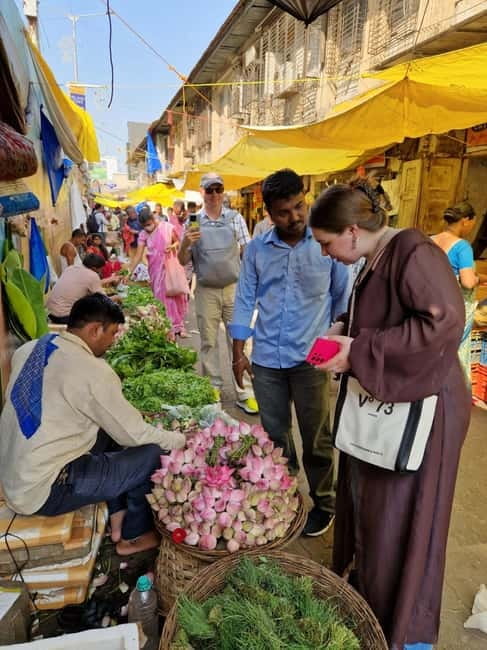
Finishing at CSMT is smart, because the station acts like a bookend. You start with commerce and logistics, then you arrive at a landmark that reflects how transport and empire-era engineering shaped Mumbai. It’s not just a background photo. It changes how you read the morning you just experienced.
Also, your timing helps. The morning light and the walking rhythm make the station feel more alive than it does on a late-day stop. If you care about architecture, CSMT is one of the best places to anchor the morning route, especially with a guide who can point out what to look for without turning it into a lecture.
People have praised guides like Abhishek, and also others such as Ayan, for explaining history and architecture in a way that stays tied to what you’re actually standing in front of.
All-inclusive value: what $17 per person really buys
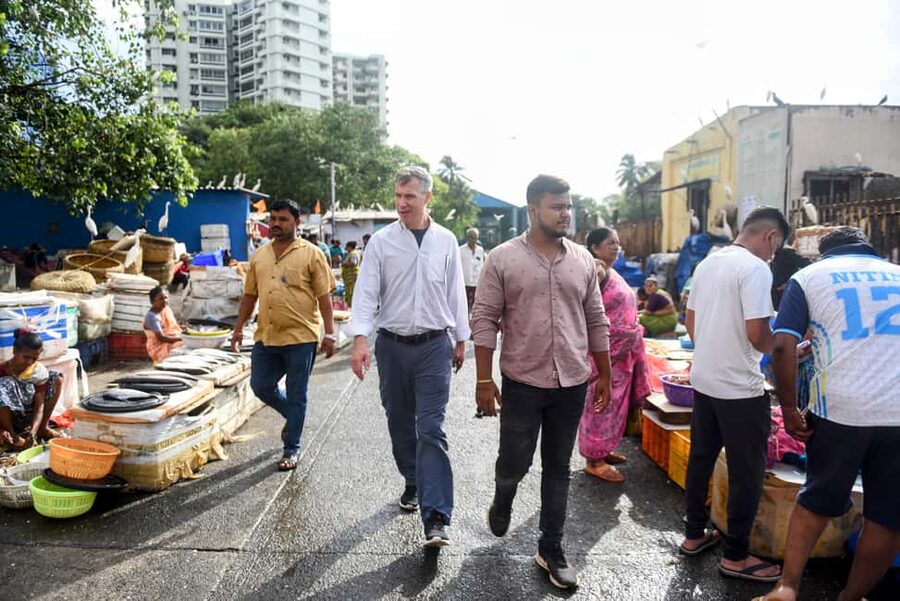
At around $17 per person, the big value is not just the sights. It’s the combination. You get a local English-speaking guide, hotel pickup and drop-off, and the route includes the local train ride experience. For a morning tour, those pieces add up quickly if you pay for them separately.
The only clear gap is food and drink. Since nothing is included, you should treat this as a morning activity, not a meal. I like to think of it as you’re trading breakfast for a front-row seat to how Mumbai works. If you need breakfast for energy, grab something before pickup or plan a quick stop afterward.
Compared with many city tours that charge more for less, this one feels like it gives you serious morning access at a price that doesn’t punish you for getting out of bed.
Guide and driver quality: the difference between seeing and understanding
This tour’s reputation is strongly tied to the people running it. Names that come up often include Sharon, Ayan, Abhi, Chirag, Abhishek, Sheron, and Subhan, along with drivers such as Deepak, Satyam, Mahesh, Wasim, Pranav, and Branav. The consistent theme is that the guides use clear English and connect the visuals to daily life.
What you should care about as a reader is this: a market tour can turn into chaos if you only follow a group line. A good guide helps you look past the noise. They explain why the piles are arranged a certain way, how transactions happen quickly, and what each stop means for the city as a whole.
The drivers also play a real role. One of the best parts of early tours is getting from place to place without stress, and the calm professionalism of drivers like Deepak, Satyam, and Mahesh shows up in how smoothly the day runs.
Who should book this dawn market tour

I think this tour fits best if you want a hands-on, street-level morning and you like seeing how a city actually functions. It’s especially good for:
- First-time visitors who want more than monuments, and want Mumbai’s daily economy
- Food-adjacent travelers, even if you do not eat fish, because the markets explain sourcing and supply
- Architecture fans who like ending with a major landmark like CSMT
- People who are comfortable with crowds and early starts
If you strongly dislike busy indoor areas, or you have a low tolerance for intense market smells, it might be less enjoyable. You can still go, but you’ll want to manage your expectations and your comfort.
Practical tips for a smoother morning
This is an early tour in active working areas, so comfort matters more than style. I’d plan on:
- Comfortable closed-toe shoes for walking through market lanes
- Light layers, since mornings can shift from cool to warm fast
- A small plan for food since nothing is included, especially if you get lightheaded without breakfast
- Keeping your phone secure and your hands free while moving through crowds
Also, bring curiosity. If you ask smart questions, you’ll get more out of each stop. Guides are usually ready to explain history and how daily routines work, and names like Sharon, Abhi, and Chirag show up in feedback for doing that well.
Should you book Mumbai by Dawn market tour?
If you want one early morning that covers a lot of ground without feeling like you’re rushing through boxes on a checklist, I say book it. The combination of pickup and drop-off, an English-speaking guide, and a route that includes a local train ride makes this good value at about $17 per person.
Skip it only if you hate crowded, working environments or you need food included. Otherwise, this is the kind of tour that turns Mumbai from a skyline into a real place you understand through the people who run it every day.
FAQ
What does the tour include?
It includes hotel pickup and drop-off, guided stops through Dadar Flower Market and Vegetable Market, exploration of Sasson Dock Fish Market and Dhobi Ghat, a visit to CSMT, and a local train ride experience.
Which places will we visit?
You will visit Dadar Flower Market, the Vegetable Market, Sassoon Dock Fish Market, Dhobi Ghat, and Chhatrapati Shivaji Maharaj Terminus (CSMT).
Is there a guide?
Yes. The tour includes a local English-speaking guide.
Is food or drink included?
No. Foods and drink are not included.
Is transportation included?
Yes. The package includes local transportation details via pickup and drop-off, and it also includes a local train ride experience.
How much does it cost?
The price is $17 per person.
What language is the tour offered in?
The tour is offered in English.
Can I reserve now and pay later?
Yes. It offers Reserve & Pay Later, which lets you book your spot and pay nothing today.
When can I cancel for a full refund?
You can cancel up to 24 hours in advance for a full refund.
Latest reviews in from Mumbai
- Mumbai Spice Markets and Bazaars Tour with Guide and Transport★ 5.0 · 42 reviews
- Mumbai Dharavi Slum, Dhobi Ghat & Dabbawala Lunchbox Tour★ 5.0 · 43 reviews
- Private Dharavi Slum Tour with Mumbai Sightseeing★ 5.0 · 43 reviews
- Private Guided Tour in Kanheri Cave with Transfers★ 5.0 · 44 reviews
- Private Guided Walking Tour in Dharavi Slums★ 5.0 · 44 reviews
- Bollywood Tour with Original founder★ 4.5 · 44 reviews
- Mumbai Private Cultural Tour with Lunch and Transport★ 5.0 · 44 reviews
- Unveiling Bollywood: Grand Tour of Iconic Real Sets & Their Story★ 4.5 · 44 reviews
Markets, compared.
Delhi Food Walk: Rickshaw Ride, Street Eats & Market Tour
Read our review →
Private Heritage Walking Tour in Jaisalmer Fort and Old Bazaar
Read our review →
Old Delhi Food-Spice Market-Temples Tour Soon Featured on NETFLIX
Read our review →Old Delhi Odyssey: A Tour of Religion, Spice Market, & Best Food
Read our review →
Bengaluru Pete City Market Half-Day Walking Tour
Read our review →
Experience Bangalore – City Tour, Authentic Food & market (Food/Culture/History)
Read our review →Browse the lists this tour appears in