
Reviewed · WORKSHOPS
Traditional Kolam Class in Pondicherry
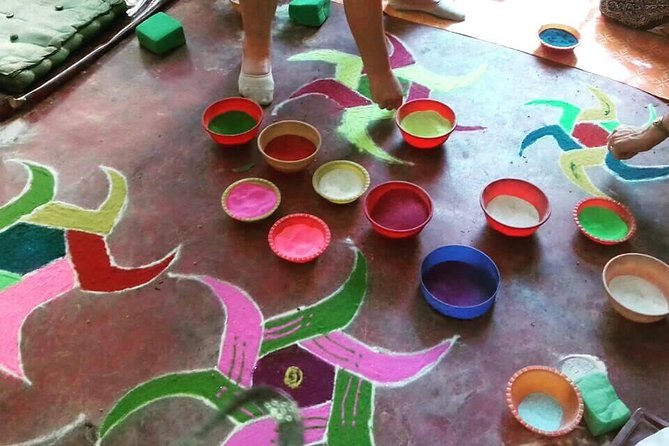
A traditional Kolam class in Pondicherry is interesting because it turns a daily neighborhood art into a skill you can actually make with your own hands, using rice powder and color powder. I especially like the way instructors such as Lakshmi guide people with calm, step-by-step attention. You do not need to be an artist to start.
I also like that the lesson covers more than just how to draw. You’ll get the history behind Kolam and understand why it matters in South India, not only as decoration but as a meaningful part of everyday life. That context makes your finished design feel personal.
One consideration: it’s a small group class, with up to 6 people, so the pace is friendly but not a private workshop. If you’re aiming for a very detailed, highly complex pattern, plan to focus on doing the basics confidently during the time you have.
Key things I think you’ll enjoy most
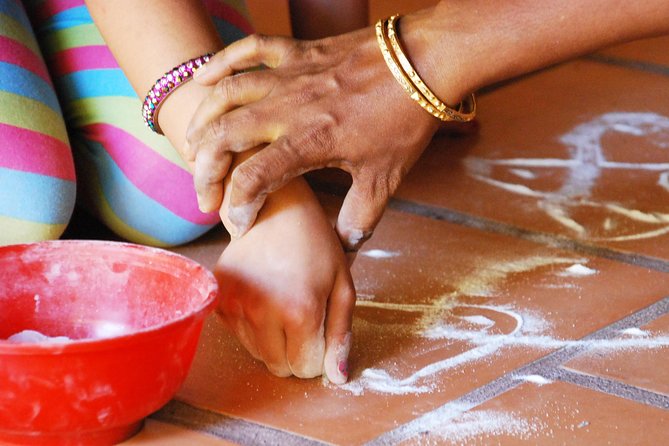
- Hands-on Kolam drawing using rice powder and color powder, so you leave with something you made
- A small group size (max 6 per booking), which keeps the attention practical
- Sita Cultural Centre in White Town as a real, local setting for craft learning
- History and meaning of Kolam so it feels grounded in South Indian culture
- Clear instructor coaching you can follow even if it’s your first time
- You can send your designs home after the class, so it does not feel like a one-and-done souvenir
Kolam in Pondicherry: Why this craft feels more personal than sightseeing
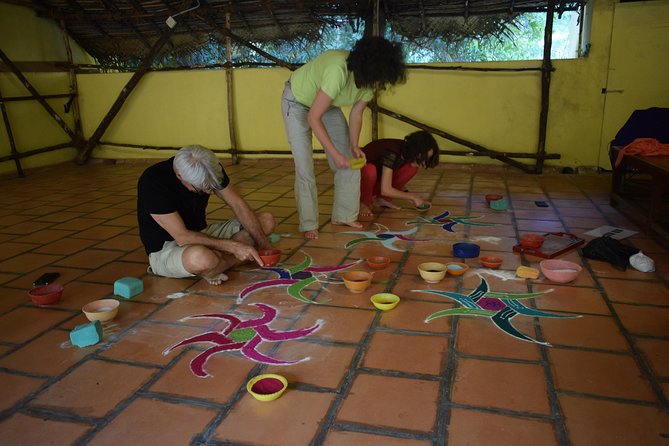
Kolam is one of those arts you usually see in passing, drawn in front of homes, then forgotten as you move on. This class is designed to slow that down. You’re learning rice powder patterns that many people in South India create in everyday spaces, and the instructor explains the history of the art form so it lands with meaning, not just technique.
That matters in Pondicherry, where you’ll likely spend time bouncing between lively streets and major sights. Kolam gives you another angle: craft traditions. It’s a way to spend time with local culture that does not require a special event or a long wait.
I like that the session is framed as a family-friendly activity, not an intimidating art studio. The minimum age is 6, and most people can participate. So even if you are traveling with kids, you’re not scrambling to find a structured workshop that works for everyone.
Line these Pondicherry options up side by side
- Indian Cooking Class in Pondicherry
★ 5.0 · 67 reviews - Pink City Cooking Class
★ 5.0 · 452 reviews
Sita Cultural Centre in White Town: getting to the class
The class takes place at Sita Cultural Centre, located at 22, Kandappa Mudaliar St, White Town, Puducherry, 605001. It’s in the White Town area, which is handy because it’s easy to fit into a day of walking and local exploring.
It’s also listed as near public transportation. You won’t need to arrange a special ride, and there’s no hotel pickup or drop-off included, so you’ll go on your own from wherever you’re staying.
You’ll want to plan around the time slot. There are two starting options:
- A morning class that starts at 10:00 am
- An afternoon class that starts at 3:00 pm
The session runs about 1 hour 30 minutes. You’ll finish back at the same meeting point, so you’re not guessing where you end up at the end of the workshop.
What happens during the 90 minutes: a clear Kolam workflow
This isn’t just a demo where you watch someone else draw. The structure is built so you actually practice. Here’s what you can expect as the session unfolds.
Step one: learn the tools, then put them to use
In the classroom, the instructor explains how to use rice powder and color powder. The goal is to help you understand how the material behaves and how to control your movement while drawing your pattern.
This is the part that makes the difference for first-timers. Kolam can look precise in photos, but the class is built around learning technique in real time. You’re not left to guess what to do next.
Step two: drawing Kolam patterns with guidance
As you move through your Kolam design, you get instruction during the session, not only at the beginning. The instructor uses a friendly, encouraging approach, which is especially helpful if you’re the type who gets self-conscious about making a first attempt.
A detail I’d pay attention to: the lesson includes time to try the techniques yourself. That is what turns a class into a skill-building experience, not a lecture.
Step three: finishing your own drawing
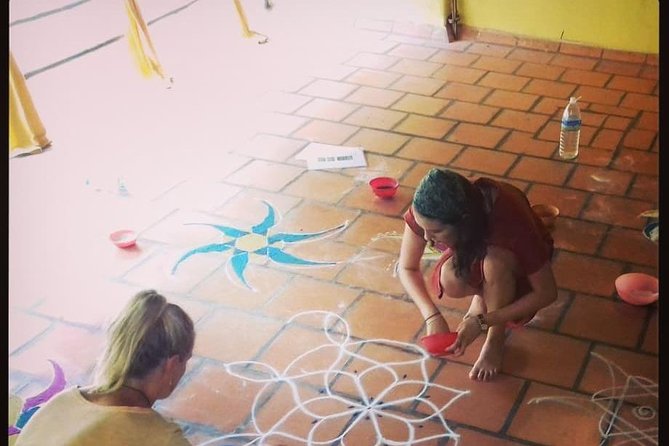
By the end of the session, you’ll make your own Kolam drawing. The class is designed with that outcome in mind, so even with a short duration, you should leave feeling like you accomplished something tangible.
The workshop also includes an option to share designs later. After you’re back home, you’re welcome to send your own designs, which is a nice touch if you want to keep practicing.
History and meaning: how Kolam becomes more than powder art
One of the best parts of this class is that you’re not asked to treat Kolam like a craft trick. The instructor explains the history of this South Indian art form, and the lesson touches on why Kolam is special in daily life.
You’ll learn that Kolam realization is described as a special moment for women in South India. That might sound poetic, but the point is practical: this art form is tied to identity and routine, not just decoration.
So when you draw your own pattern, you’re doing it with a bit more context. Your design is not only about lines and symmetry. It’s connected to a tradition of creating something in front of the home space, using materials like rice powder.
If you’re the kind of traveler who likes to understand why something exists, not just how it’s made, this historical framing is a big part of the value.
Instructor energy: why Lakshmi’s coaching makes it easier
The instructor experience is one of the most praised parts of this class. Lakshmi, for example, is described as personable and encouraging, and that tone matters. When you’re learning a craft that looks complex, the biggest barrier is often confidence, not skill.
In this session, the coaching is step-by-step. You’re given guidance, then you’re given time to try. That rhythm helps you catch mistakes early, and it keeps the whole group comfortable.
Another subtle benefit: the instructor’s enthusiasm for culture and traditional crafts keeps the class engaging. You’ll likely find yourself paying attention more than you would in a rushed, purely transactional activity.
Materials included: what you do not have to worry about
You do not need to hunt for supplies. The class includes all required materials. That means you show up and use:
- Rice powder
- Color powder
- The materials the instructor provides for the drawing process
You also get a professional instructor, so you’re not on your own with a printed guide.
This is part of what makes the price feel fair. At $9.62 per person, you’re paying for instruction plus the materials, in a session that runs about 1.5 hours. For a craft activity, that’s a strong deal, especially if you’re trying to balance cost with something meaningful.
Food and drinks are not included. So if you plan to do this in the morning or afternoon, just keep a snack or meal plan in mind around it.
Group size and pacing: what max 6 people means for your experience
This is a small group class, with a maximum of 6 people per booking. That size is important because it affects how much individual attention you can get. In a larger workshop, instructors often switch to a show-and-tell rhythm.
Here, the class is set up so the instructor can explain technique and help you during your attempts. You still need to work within the 1 hour 30 minute window, but you’re not treated like a spectator.
Also, there is a minimum age of 6 years, so it’s structured to work for families. If you’re traveling with kids, this is a rare kind of activity where everyone can participate without needing advanced art skills.
Value in practice: when this $9.62 class makes sense
Let’s talk value in a real travel way. You could spend money on a guided tour that gives you facts and photos. This workshop is different. You’re paying for:
- live guidance from a professional instructor
- materials included
- a finished product you make yourself
- cultural context, not just technique
Because the duration is about 1 hour 30 minutes, it also fits into a day without eating your whole schedule. That matters if you’re planning multiple experiences in Pondicherry.
And since a mobile ticket is provided, you’re not scrambling with paperwork. The class is also confirmed within 48 hours of booking, based on availability, so you’re not left waiting too long.
One more practical angle: booking is described as typically done about 5 days in advance. That’s not a long lead time. If you decide last minute, you might still get a slot, but it’s safer to plan ahead so you can pick the time that matches your day.
Practical considerations before you go
A few things to know so the experience stays smooth:
- No hotel pickup or drop-off is included, so you’ll arrange your own way to Sita Cultural Centre.
- The class starts at 10:00 am or 3:00 pm, so build your day around those times.
- The experience ends back at the meeting point, so you can plan your next stop nearby.
- Since it’s a rice powder and color powder drawing activity, you should expect a bit of mess in the process. Wear or bring something you do not mind getting dusty.
If you want the most satisfying outcome, go in with a simple goal: learn the steps, finish your design, and enjoy the cultural context as you create it.
Should you book the Traditional Kolam Class at Sita Cultural Centre?
If you want one authentic Pondicherry experience that’s hands-on, short, and affordable, this class is a strong yes. You’ll get instruction, materials, and a cultural story behind Kolam, and you’ll leave with a design you made yourself.
Skip it only if you want a long, fully narrated cultural program, or if you’re expecting a private lesson. The small group format is part of the charm, but the class is still designed for a 1 hour 30 minute session.
If you’re traveling with kids age 6 and up, or you simply want something more meaningful than another photo stop, this is exactly the kind of craft workshop that makes a place feel real.
FAQ
Where is the Traditional Kolam Class held?
The class takes place at Sita Cultural Centre, 22, Kandappa Mudaliar St, White Town, Puducherry, 605001, India.
What time does the class start?
There are two starting options: 10:00 am for the morning class and 3:00 pm for the afternoon class.
How long is the class?
The class lasts about 1 hour 30 minutes.
How much does it cost?
The price is $9.62 per person.
What is included in the ticket?
Your ticket includes a professional instructor and all required materials for the class.
Is food or drinks included?
No. Food and drinks are not included.
Is hotel pickup or drop-off included?
No. Hotel pickup and drop-off are not included.
What is the minimum age to join?
The minimum age is 6 years.
How large are the groups?
The class has a maximum of 6 people per booking.
What is the cancellation policy?
Free cancellation is available. You can cancel up to 24 hours in advance of the experience for a full refund. Changes made less than 24 hours before the start time are not accepted, and refunds are not given within 24 hours of the start time.
Latest reviews in from Pondicherry
- The Unique Pondicherry City Bike Tour★ 4.5 · 58 reviews
- Indian Cooking Class in Pondicherry★ 5.0 · 67 reviews
Workshops, compared.
5 Senses Tour – Old + New Delhi, Workshops, Lunch all inclusive
Read our review →
Veg and Non veg : Private Cooking Class in Delhi home (7 meal)
Read our review →
Indian Cooking Class in an Authentic Local Home – Learn 6 Dishes
Read our review →
Private Guided Cooking Workshop Experience in Jodhphur
Read our review →
Traditional miniature painting class at Pacific Art
Read our review →Browse the lists this tour appears in