
Reviewed · ANDAMAN ISLANDS TOURS
Marine Trail
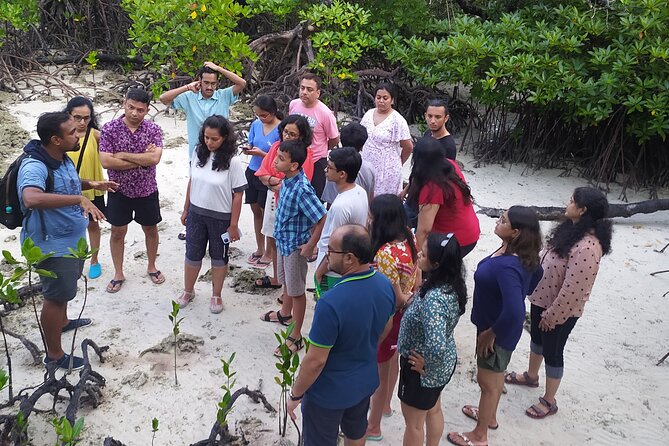
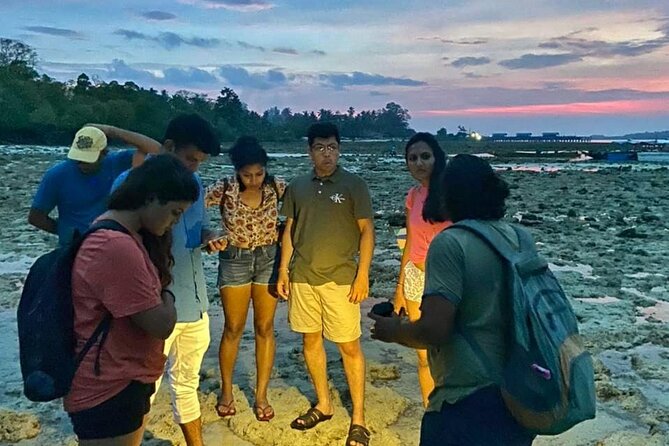
What makes the Marine Trail so compelling is how it turns the shoreline into a living classroom. At low tide, the mangrove, seagrass, and coral reef habitats get exposed, and you walk through shallow lagoons where tiny creatures are on full display. For a special bonus, full moon and new moon nights can add a glowing, UV-light version of the trail.
I love how this stays small (up to 20 people), so questions do not get lost. I also love that you are guided by fully trained naturalists who can point out the details of corals, fish, crustaceans, and molluscs that most people would walk past without a clue.
One thing to consider is that you do need good footing and balance. It is a dry walk with water up to ankle-deep, and it is not recommended if you have difficulty walking.
Key things that make this Marine Trail special
- Low-tide access to the ecosystem: When the tide drops, you can explore habitats that are normally underwater
- Ankle-deep walking, not a boat trip: You get a close, grounded look at sea life along the beach
- Small group size: Maximum 20 travelers means more time for spotting and explanations
- Day or night depending on moon phase: Full moon and new moon can bring rare night trails
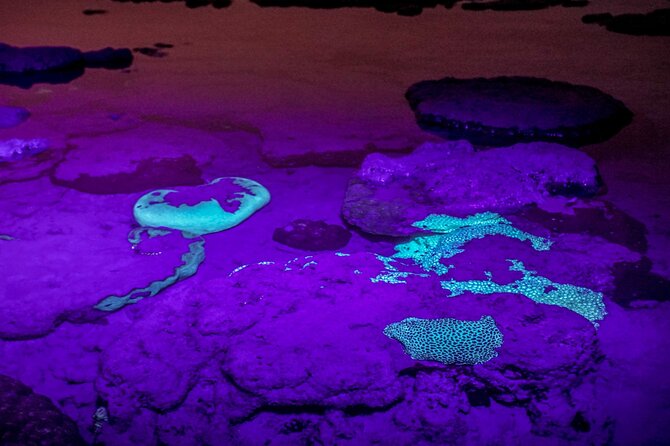
- UV torches for biofluorescence: Corals and sea anemones can glow in neon colors
- A guide who knows the ecosystem: You learn how mangroves support fish, crustaceans, and more
The low-tide walk that changes everything on Havelock
On Havelock Island, the ocean is always working, always shifting. The Marine Trail uses that fact. It starts when the tide goes low, which exposes the mangroves, seagrass, and coral reef habitats along the coastline. Instead of watching from above, you are on foot in shallow waters, so you can actually see how these habitats connect.
This is one of the rare activities in the Andamans that is both nature focused and approachable. The water stays at most ankle-deep, so you are not doing technical snorkeling or anything like that. You are essentially doing a guided shoreline safari, where the tide does half the guiding for you.
If you are the type who enjoys learning how ecosystems work, this tour makes sense fast. Mangroves are not just trees by the sea. They are nurseries and shelters. Seagrass and reef structures add more hiding places and feeding grounds. The trail is designed to show you that whole chain in a way that feels real, not abstract.
Line these Andaman Islands options up side by side
- Experience Andamans® – 6 Days Andaman Tour Package with Havelock & Neil
★ 4.5 · 570 reviews - Experience Andamans® – Andaman Honeymoon Package
★ 5.0 · 201 reviews - Scuba Diving For Non Swimmers at Havelock Island
★ 5.0 · 97 reviews
Meet your guide, get tide-ready, and set expectations
You start and end back at the same meeting point in Swaraj Dweep (Andaman and Nicobar Islands 744211). The activity runs daily within the 7:00 AM to 7:00 PM window, and confirmation comes at the time of booking. You also use a mobile ticket, so you will want your phone charged and ready.
Because the start depends on the tide and the day’s conditions, the experience can feel a little like nature-led timing rather than strict clockwork. That is normal here. The good news is the total duration is about 2 hours, so even if the schedule adjusts slightly, you are not committing a whole day.
A big value point is the group size, capped at 20 travelers. That matters more than it sounds. In a smaller group, a naturalist can pause for a question, point at tiny details, and help everyone locate what they are seeing. You are not herded down a line.
Walking the mangrove fringe and exposed lagoons
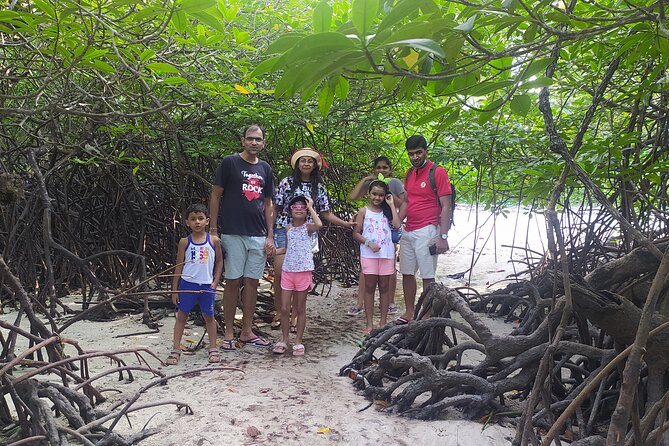
Once the tide drops, the shoreline opens up into lagoons and shallow zones. This is where the “marine trail” really earns its name. You explore on foot through an area where mangroves and sea grass are exposed enough to look at closely, and where coral reef life can be visible around the margins.
Your walk is described as a dry activity, with water at max ankle-deep. Translation: you can move through the habitat without needing specialized gear. But you still need to be careful. The shoreline can be uneven, slimy in places, and full of small shells and reef fragments.
The guides focus on the ecosystem, not just the wow factor. You learn how corals fit into the tropical seas, and you hear explanations about the fish and other creatures that live in and around the mangroves. That ecosystem context is a big reason this feels worth doing, especially if you have already seen beaches but want something more grounded.
What you can spot: tiny movers and reef neighbors
This is not a tour where you only see big animals from far away. It is about spotting small, interesting marine life that you would miss anywhere else.
The experience includes the chance to see things like:
- Sea urchins
- Sea cucumbers
- Crabs (including smaller types like decorator crabs during night trails)
- Shrimps
- Sea sponges
- Corals
- Brittle stars
- Sea anemones
- Pipefish, a close relative of sea horses
- And more, with surprises that can vary day to day
Here is what I think is especially valuable for your brain as a traveler. You are not just learning names. You are learning roles. For example, sea anemones and corals are part of the reef network. Sea urchins and brittle stars show up as reef-associated creatures. The mangrove edges connect land life to marine food chains.
If you are visiting with kids, this kind of spotting game is often easier than it sounds. The guide can make it fun without turning it into nonsense. For nature fans, it becomes a mini field lesson you can actually walk through.
A different shape of Andaman Islands day:
- Ancient Lava Stream Trek through dense Tropical forest.
★ 5.0 · 58 reviews
How the day trail feels: family-friendly but still a real walk
The Marine Trail is designed to work for the whole family. That does not mean it is a sit-and-smile activity. You are walking in shallow coastal water for roughly 2 hours. If your group is comfortable with light walking, you will likely enjoy it.
You also get a small-team feel, up to 20 travelers, which helps when families move at different speeds. The guide’s job is not just spotting creatures, it is also making sure everyone can safely navigate the exposed habitat.
Still, there is one clear caution: it is not recommended for travelers with difficulty to walk. If walking on uneven shore is hard for you, this might feel stressful rather than fun. It is better to choose a different Andaman activity that matches your pace.
The rare night version: full moon and new moon trails
One of the most unusual parts of this experience is the option for a night version. If you visit during full moon or new moon, the trail can run after dark, which changes what you notice and what comes out.
As it becomes dark, many alien-like marine animals come out. You might see creatures such as:
- Squids
- Sea slugs
- Cone snails
- Mantis shrimps
- Decorator crabs
- Plus other night-active marine life
This is not a “just because it is dark” gimmick. Night changes behavior. You get a different show of movement and hunting patterns. That is why night trails are described as rare and exotic, and it is also why they are worth planning for if your dates align.
If you can handle walking after dark, and you are curious about how ocean life behaves outside daylight hours, this is the version to aim for. If you prefer daytime clarity, the regular low-tide walk can still be fascinating.
Biofluorescence with UV torches: the neon coral moment
For night trails, the team uses UV torches to show the magical phenomenon of biofluorescence. The key detail is that the effect can make corals and sea anemones glow in neon colors.
The guide’s role here is important, because you are not just staring at glowing spots. You are learning what you are seeing and how it relates to living organisms and reef life. The area can light up like a neon party, which sounds playful, but the educational payoff is real. It turns a hard-to-see feature of marine biology into something you can observe directly.
Practical note: this is a visual experience. You will want to keep your attention on what the naturalists point out rather than trying to rush your own discoveries. Small details matter more at night, since everything is less visible without guidance.
Value and pricing: is $33.55 per person worth it?
At $33.55 per person for about 2 hours, the price is surprisingly reasonable for what you get: a small group, expert naturalists, and access to an ecosystem you normally cannot walk into at all. Also, the tour is not a mass wildlife chase. You are learning slowly and spotting carefully.
Value here comes from three things:
- Timing control: Low tide is what makes this possible.
- Specialized interpretation: Mangroves, seagrass, and corals have a lot going on. A trained guide helps you see it.
- Night option: Full moon and new moon can add UV biofluorescence and night-active species.
One more value factor: it is popular enough that the average booking window is about 25 days in advance. That suggests demand, and it usually helps to lock in plans early so you get the timing that fits your itinerary.
If you want a “do we actually learn something” activity in South Andaman that still feels like an adventure, this sits in a sweet spot.
Logistics that actually matter before you go
You do not need scuba gear. You do need to treat this like a nature walk on a tidal shoreline.
- Bring footwear you can get wet and that gives grip on wet surfaces.
- Wear clothing you are okay with getting damp in ankle-deep water.
- Follow your naturalist’s instructions closely, especially on night trails.
- Plan for good weather. The activity requires it. If poor weather cancels it, you should be offered a different date or a full refund.
This activity also uses mobile tickets. Keep your phone handy, not buried in a bag.
Also, the experience has a maximum of 20 travelers, but your actual group might vary by day. Either way, you will be moving as a group along exposed shoreline areas.
Who this Marine Trail suits best (and who should skip it)
This is a great match if you are:
- A nature fan who likes learning what you are seeing
- Traveling with kids who enjoy spotting small animals and following a guide’s clues
- Looking for something off the beaten path that still feels safe and family-friendly
- Interested in the unusual biology side of marine life, especially biofluorescence
Skip it or consider an alternative if you:
- Have difficulty walking or have trouble with uneven, wet ground
- Prefer purely sightseeing-from-a-distance experiences
- Struggle with night walking, if your dates aim for the full moon or new moon option
If you are choosing between a beach day and this, I would pick the Marine Trail if you want a story you can tell later. It is not just scenery. You leave with a mental map of how mangroves, seagrass, and reefs support marine life.
Final call: should you book Marine Trail in Havelock?
I’d book this if you want a hands-on feeling without getting in the water beyond ankle-deep. The combo of small group size, trained naturalists, and the tide-driven habitat access makes it a rare kind of value. Daytime alone is interesting, but if you can time your visit around full moon or new moon, the night version with UV torches and biofluorescence is the kind of experience you will remember.
Do not book it if walking on a tidal shoreline is hard for you. And if your trip is tight and you hate waiting on weather, build flexibility, since good weather matters here.
FAQ
FAQ
How long is the Marine Trail experience?
It runs for about 2 hours.
Where does the Marine Trail start and end?
It starts in Swaraj Dweep, Andaman and Nicobar Islands 744211 and ends back at the same meeting point.
What time of day does it operate?
It operates daily within 7:00 AM to 7:00 PM.
Do I need anything special like snorkeling gear?
The activity is described as a dry walk with water up to ankle-deep, so you do not need snorkeling gear based on the information provided.
Is it only a daytime activity?
There is a daytime trail, and during full moon or new moon you may be able to experience the night version.
What marine life can I expect to see?
You may see sea urchins, sea cucumbers, crabs, shrimps, sea sponges, corals, brittle stars, sea anemones, pipefish, and other creatures. On night trails, you might see squids, sea slugs, cone snails, mantis shrimps, and decorator crabs.
What is the role of UV torches?
On night trails, UV torches are used to help you see biofluorescence, when corals and sea anemones glow in neon colors.
How big are the groups?
The tour has a maximum of 20 travelers.
Who should not take this tour?
It is not recommended for travelers with difficulty to walk.
Latest reviews in from Andaman Islands
- Scuba Diving For Non Swimmers at Havelock Island★ 5.0 · 97 reviews
- Experience Andamans® – Andaman Honeymoon Package★ 5.0 · 201 reviews
- Ancient Lava Stream Trek through dense Tropical forest.★ 5.0 · 58 reviews
- Experience Andamans® – 6 Days Andaman Tour Package with Havelock & Neil★ 4.5 · 570 reviews
Andaman Islands Tours, compared.
Experience Andamans® – 6 Days Andaman Tour Package with Havelock & Neil
Read our review →
Experience Andamans® – Andaman Honeymoon Package
Read our review →Scuba Diving For Non Swimmers at Havelock Island
Read our review →
Ancient Lava Stream Trek through dense Tropical forest.
Read our review →Browse the lists this tour appears in